



 MAIN MENU
 My Supplies
 Get Help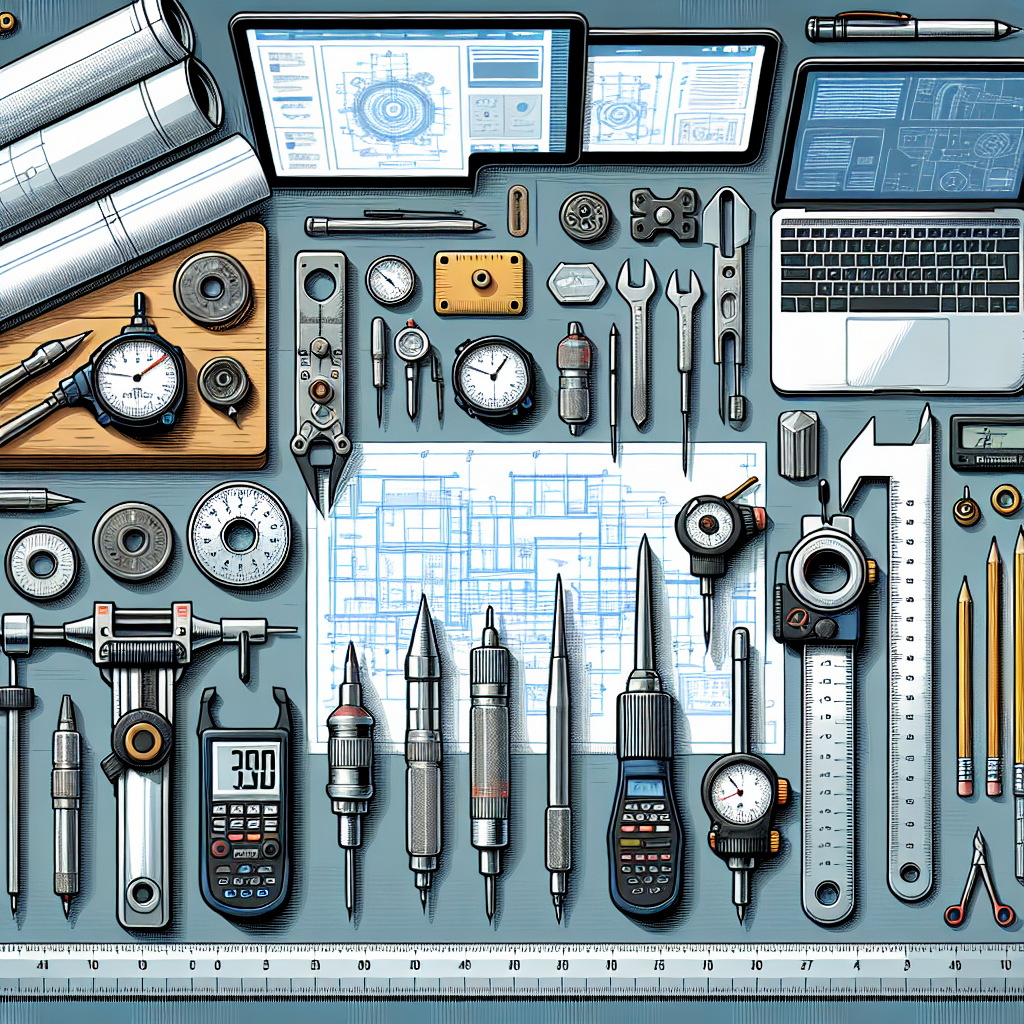
Precision Measuring Tools for Accurate Project Planning
Types of Precision Measuring Tools
If you think measuring tools are just for carpenters and tailors, think again! Precision measuring tools are the unsung heroes of every industry, from aerospace to automotive. They can mean the difference between a flawless project and a catastrophic failure.
Consider this: a construction company loses an average of $1.6 million annually due to measurement errors. That's not chump change, folks! Having the right measuring tools can save your business from those costly pitfalls.
Calipers
Calipers come in various styles—digital, dial, and vernier—but they all serve the same purpose: providing precise measurements of internal and external dimensions. A digital caliper is particularly handy for those who prefer reading numbers without squinting at a scale. Imagine a small electronics manufacturer trying to ensure their components fit perfectly; digital calipers help them achieve that with ease.
Micrometers
When it comes to measuring thickness or diameter with extreme accuracy, micrometers are your best friend. These tools can measure down to one-thousandth of a millimeter! Picture an aerospace engineer working on jet engine components; even the tiniest deviation could lead to failure in flight. Micrometers ensure every part is within spec.
Laser Distance Measurers
Gone are the days of fumbling with tape measures! Laser distance measurers provide quick and accurate readings over long distances without needing two people or an awkward stretch. For instance, a facility manager surveying a warehouse can simply point and click—no more guesswork involved!
(Digital) Levels
(Digital) levels have evolved from their traditional bubble counterparts into high-tech gadgets that offer precise leveling on various surfaces. These tools are essential for ensuring installations—like shelving or machinery—are perfectly horizontal or vertical. Imagine a restaurant owner overseeing renovations; using a digital level guarantees that everything looks sharp and professional.
Measuring twice has never been more critical than in today's fast-paced industries. By investing in precision measuring tools like calipers, micrometers, laser distance measurers, and digital levels, businesses can prevent costly mistakes while delivering high-quality results.
Selecting the Right Measuring Tool for Your Project
Imagine you're a project manager at a bustling construction site, and the foreman just called to say that the beams you ordered are too short. Cue panic! The wrong measuring tool can turn your project timeline into a comedy of errors, costing you both time and money.
Selecting the right measuring tools isn’t just about picking something off the shelf; it’s about understanding your project's specific needs. Whether you're building a new office or designing intricate machinery, each scenario demands precision tailored to its unique requirements.
Assessing Your Needs
First things first: what exactly are you measuring? Is it length, width, depth, or something more complex like angles? For example, if you're working on a renovation in an older building with uneven walls, a laser distance measurer can save you from squinting at tape measures while trying to calculate those awkward angles. On the other hand, if you're crafting components for an aerospace project where every millimeter counts, then micrometers are non-negotiable.
Types of Measuring Tools
- Calipers: Great for internal and external dimensions.
- (Digital) Levels: Perfect for ensuring everything is straight.
- Micrometers: Ideal for ultra-precise thickness measurements.
- Laser Distance Measurers: Fast and accurate over long distances.
(Digital) levels can be particularly useful in renovation projects where aesthetics matter. Imagine a restaurant owner wanting to ensure their new shelving is perfectly aligned. A digital level not only provides accuracy but also eliminates any guesswork—no more crooked shelves!
Choosing the right tool can prevent costly mistakes and save time.
…and let’s not forget about versatility. A multi-functional tool like calipers can measure both internal and external dimensions—perfect when space is tight or when you need to switch tasks quickly. This adaptability can be a lifesaver on busy job sites.
'Now, here's where it gets interesting: many professionals overlook calibration. A tool that has been used extensively might drift from its original accuracy. Regularly checking calibration ensures that your measurements remain precise—something that could make or break your project.'
Final Thoughts
As you gear up for your next project, take a moment to evaluate what measuring tools will serve you best. With the right selection in hand, you'll not only enhance accuracy but also boost efficiency across all stages of your work.
Calibration and Maintenance of Measuring Tools
A staggering 75% of professionals admit to using measuring tools that haven't been calibrated in over a year. If you think that’s just a minor oversight, consider this: even a small miscalculation can spiral into significant errors, costing your project time and money.
Imagine you're a project manager at a high-stakes construction site, and the contractor just reported that the beams are misaligned by half an inch. That’s not just a minor inconvenience; it could mean redoing weeks of work! Calibration is the unsung hero here, ensuring your measuring tools are as precise as they were when they first came out of the box.
Why Calibration Matters
Think of calibration as the regular oil change for your measuring tools. If you skip it, you're risking performance issues. Over time, environmental factors like temperature changes or physical wear can cause your tools to drift from their original settings. This drift might seem negligible at first—like measuring an inch but getting 0.98 instead—but over longer distances or multiple measurements, those discrepancies add up fast.
- Increased accuracy: Regular calibration keeps measurements precise.
- Cost savings: Avoid expensive rework due to measurement errors.
- Consistency: Ensures repeatability in measurements across projects.
How to Maintain Your Measuring Tools
(Spoiler alert: It’s easier than you think!) Start by creating a maintenance schedule tailored to how often you use each tool. For instance, if you're using digital calipers daily on construction sites, aim for monthly checks. On the other hand, laser distance measurers used less frequently might only need quarterly calibrations.
- 1. Inspect regularly: Check for physical damage or wear.
- 2. Clean after use: Dust and debris can affect accuracy.
- 3. Store properly: Keep tools in protective cases to avoid impact damage.
- 4. Calibrate routinely: Follow manufacturer guidelines for calibration frequency.
(And yes, I see you rolling your eyes—maintenance sounds boring! But think of it this way: maintaining your tools is like investing in insurance for your project’s success.) So next time you reach for that trusty micrometer or caliper, remember that keeping it calibrated is just as important as choosing the right tool in the first place.
Integration of Measuring Tools into Project Management Software
Picture this: a project manager juggling timelines, budgets, and team dynamics while trying to keep track of measurements from various precision tools. It’s a recipe for chaos! Integrating measuring tools into project management software can be the game-changer that turns that chaos into harmony.
A recent survey revealed that 68% of project managers believe that measurement errors are the leading cause of project delays. With stakes this high, it’s crucial to have a streamlined process for managing those measurements right within your project management software.
Why Integration is Essential
Think about it: when measuring tools operate in isolation, you lose valuable time transferring data from one system to another. Imagine a construction firm where site workers use laser distance measurers but then manually enter measurements into spreadsheets later. This not only introduces human error but also creates bottlenecks in workflow.
Integrating measuring tools directly into your project management software allows for real-time data entry and analysis. For instance, if a contractor measures the height of a wall using a digital level, that data can be instantly uploaded to the project dashboard. Everyone involved—from architects to contractors—can access accurate measurements without delay.
Choosing the Right Integration
(Not all integrations are created equal!) When selecting software, consider compatibility with your existing measuring tools. Some platforms offer built-in support for popular devices like laser distance measurers and digital calipers, while others require custom API setups. A mid-sized manufacturing company might benefit from an all-in-one solution that seamlessly incorporates their micrometers and calipers into their workflow.
- Ensure compatibility with existing measuring tools.
- Look for software with user-friendly interfaces.
- Prioritize systems that allow real-time updates and collaboration.
Key takeaway: Effective integration minimizes errors and enhances collaboration across teams.
(The Tech Behind Integration)
(Let’s geek out for a second.) Many modern project management tools now feature cloud-based capabilities that allow teams to access measurement data from anywhere. This is especially useful for remote teams or projects spread across multiple sites. Imagine field engineers submitting measurements directly from their smartphones while on-site—no more waiting until they return to the office!
This tech-savvy approach not only boosts efficiency but also ensures everyone is on the same page—literally! Plus, having all measurement data centralized means you can generate reports quickly, allowing for better decision-making during critical phases of your projects.
As you implement these integrations, keep an eye on user feedback. The goal is not just to have tech for tech's sake; it should genuinely enhance how your team collaborates and executes projects.
In conclusion, integrating measuring tools with your project management software transforms how you track progress and maintain accuracy. As you streamline these processes, think about how much smoother your next project could go with real-time data at everyone's fingertips.
Impact of Precision on Project Outcomes
Ever heard of a construction project that went belly-up because of a tiny measurement error? It happens more often than you'd think! For instance, a mid-sized construction firm once miscalculated the height of a new office building by just two inches, which might sound trivial. But that two inches led to a domino effect: re-engineering plans, delayed permits, and ultimately, a six-month project delay costing them hundreds of thousands in penalties.
Precision measuring tools are not just fancy gadgets; they are the backbone of successful project outcomes. Take laser distance measurers, for example. They can provide accurate readings that eliminate human error during measurements. A facility manager using one instead of a traditional tape measure can save time and avoid costly mistakes when surveying large spaces.
The Ripple Effect of Precision
Think about it: when you nail down precise measurements at the start, you set the stage for everything else. It’s like laying the foundation for a house; if it’s off by even a fraction, you’ll be dealing with structural issues down the line. In our earlier construction example, had the team used digital levels and laser distance measurers from the get-go, they would have caught that height miscalculation before it became a costly blunder.
- Improved accuracy leads to higher quality outputs.
- Reduced rework saves time and resources.
- Increased client satisfaction boosts repeat business.
Important takeaway: Investing in precision measuring tools can prevent errors that snowball into major project setbacks.
(The Cost of Inaccuracy)
(Spoiler alert: it’s not pretty!) A study found that measurement errors account for approximately 30% of total project costs in construction alone. For businesses operating on tight margins, those numbers can be devastating. Imagine being a small contractor who loses out on essential projects due to reputational damage stemming from avoidable mistakes!
(And let’s not forget about safety.) In industries like aerospace or automotive manufacturing, precision is non-negotiable. A minuscule error in measurements could lead to catastrophic failures—think faulty parts on an aircraft or misaligned components in an engine. The stakes are high; thus, having reliable measuring tools isn't just beneficial—it's essential.
(So what’s next?) As you plan your upcoming projects, take stock of your current measuring tools. Are they up to par? If you’re still relying on outdated methods or inaccurate devices, consider making an upgrade. Your bottom line—and your peace of mind—will thank you!
Emerging Technologies in Precision Measurement
Imagine a world where measuring tools are so advanced that they can predict the future of your projects. Sounds like science fiction? Well, buckle up because emerging technologies in precision measurement are turning that dream into reality.
In fact, a recent study found that companies using advanced measuring technologies have reported up to 50% reductions in project errors. That's not just a statistic; it's a game changer for industries where precision is paramount.
Smart Measuring Devices
Smart measuring devices, equipped with IoT capabilities, are revolutionizing how we approach precision measurement. Picture this: a construction site where laser distance measurers automatically sync data to project management software in real-time. No more manual entries or risk of human error! This tech-savvy approach not only boosts efficiency but also ensures everyone is on the same page—literally.
(AI) Enhanced Accuracy
(Artificial Intelligence) is not just for robots anymore; it’s infiltrating the world of measuring tools too! AI algorithms can analyze measurement data and identify patterns that humans might overlook. For instance, an AI-powered micrometer could learn from previous measurements to suggest adjustments before they become costly mistakes.
Augmented Reality (AR) Integration
Ever thought about using AR for precision measurement? With AR glasses, you could visualize measurements directly on-site. Imagine walking through a renovation project and seeing digital overlays showing where walls should be placed or how much space is available—all while you’re standing there! This futuristic approach minimizes guesswork and maximizes accuracy.
(Key takeaway: Emerging technologies like smart devices, AI, and AR are transforming precision measurement into an intuitive and error-proof process.)
(Now here’s the kicker): as these technologies continue to evolve, staying updated on the latest tools will be crucial for maintaining competitive advantage. The construction industry alone stands to benefit immensely from these innovations—so why not get ahead of the curve?
{
“@context”: “https://schema.org”,
“@type”: “BlogPosting”,
“mainEntityOfPage”: {
“@type”: “WebPage”,
“@id”: “https://shop.hubzonedepot.com/precision-measuring-tools-accurate-project-planning”
},
“headline”: “Top Measuring Tools for Accurate Project Planning”,
“description”: “Discover precision measuring tools for accurate project planning. Ensure success with the best selection of tools at HubZone Depot.”,
“image”: [
“https://shop.hubzonedepot.com/images/precision-measuring-tools.jpg”
],
“author”: {
“@type”: “Person”,
“name”: “Elisa”
},
“publisher”: {
“@type”: “Organization”,
“name”: “Hubzone Depot Shop”,
“logo”: {
“@type”: “ImageObject”,
“url”: “https://shop.hubzonedepot.com/logo.png”
}
},
“datePublished”: “2023-10-01”,
“dateModified”: “2023-10-01”,
“articleBody”: “
Precision Measuring Tools for Accurate Project Planning
Types of Precision Measuring Tools
If you think measuring tools are just for carpenters and tailors, think again! Precision measuring tools are the unsung heroes of every industry, from aerospace to automotive. They can mean the difference between a flawless project and a catastrophic failure.
Consider this: a construction company loses an average of $1.6 million annually due to measurement errors. That's not chump change, folks! Having the right measuring tools can save your business from those costly pitfalls.
Calipers
Calipers come in various styles—digital, dial, and vernier—but they all serve the same purpose: providing precise measurements of internal and external dimensions. A digital caliper is particularly handy for those who prefer reading numbers without squinting at a scale. Imagine a small electronics manufacturer trying to ensure their components fit perfectly; digital calipers help them achieve that with ease.
Micrometers
When it comes to measuring thickness or diameter with extreme accuracy, micrometers are your best friend. These tools can measure down to one-thousandth of a millimeter! Picture an aerospace engineer working on jet engine components; even the tiniest deviation could lead to failure in flight. Micrometers ensure every part is within spec.
Laser Distance Measurers
Gone are the days of fumbling with tape measures! Laser distance measurers provide quick and accurate readings over long distances without needing two people or an awkward stretch. For instance, a facility manager surveying a warehouse can simply point and click—no more guesswork involved!
(Digital) Levels
(Digital) levels have evolved from their traditional bubble counterparts into high-tech gadgets that offer precise leveling on various surfaces. These tools are essential for ensuring installations—like shelving or machinery—are perfectly horizontal or vertical. Imagine a restaurant owner overseeing renovations; using a digital level guarantees that everything looks sharp and professional.
“,
“@id”:”https://shop.hubzonedepot.com/precision-measuring-tools-accurate-project-planning#blog-post”
}
article blockquote,article ol li,article p,article ul li{font-family:inherit;font-size:18px}.featuredimage{height:300px;overflow:hidden;position:relative;margin-top:20px;margin-bottom:20px}.featuredimage img{width:100%;height:100%;top:50%;left:50%;object-fit:cover;position:absolute;transform:translate(-50%,-50%)}article p{line-height:30px}article ol li,article ul li{line-height:30px;margin-bottom:15px}article blockquote{border-left:4px solid #ccc;font-style:italic;background-color:#f8f9fa;padding:20px;border-radius:5px;margin:15px 10px}article div.info-box{background-color:#fff9db;padding:20px;border-radius:5px;margin:15px 0;border:1px solid #efe496}article table{margin:15px 0;padding:10px;border:1px solid #ccc}article div.info-box p{margin-bottom:0;margin-top:0}article span.highlight{background-color:#f8f9fb;padding:2px 5px;border-radius:5px}article div.info-box span.highlight{background:0 0!important;padding:0;border-radius:0}article img{max-width:100%;margin:20px 0}