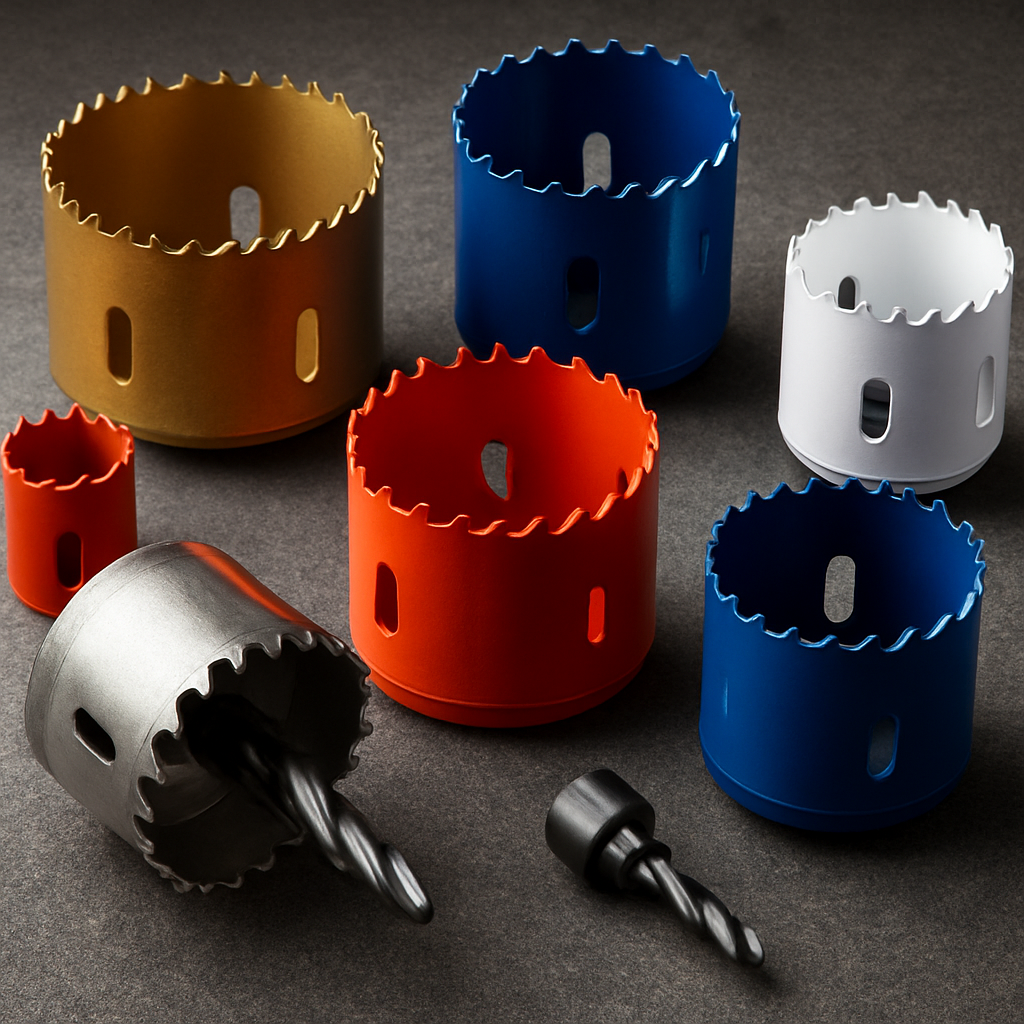

Hole Saws Buying Guide: Sizes, Materials, and Best Uses for Pros

Hole Saws Buying Guide: Sizes, Materials, and Best Uses for Pros

For professionals who specify tools and run fleets, hole saws are a small purchase that can cause big downtime when the wrong size, material, or arbor is chosen. This guide cuts straight to the decisions that matter: matching bi-metal, carbide, diamond, and grit options to wood, metal, tile, and masonry; which diameters to stock by trade; and the RPM, feed, and lubrication windows that actually extend tool life. You will get concrete size recommendations, operating parameters, replacement thresholds, and procurement steps to lower cost per hole and keep crews moving.

1. Quick reference: common hole saw sizes and trade uses

Key point: Stock hole saws by function, not by every available diameter. A small set of well chosen diameters covers most conduit, plumbing, HVAC, and access needs; carrying every size wastes capital and creates tool-room clutter.

Diameter to use-case mapping

Diameter Typical trade uses and notes
3/4, 1, 1-1/4 inch Conduit and low-voltage cable access, thermostat and sensor lead entries. Use thin-wall sheet metal hole saws or bi-metal for short runs.
1-1/2, 2, 2-1/2 inch Plumbing cleanouts, small pipe penetrations, standard single-gang electrical feed-throughs. Keep both bi-metal and a spare arbor with 1/4 inch pilot for stability.
2-3/8, 2-1/2, 2-11/16 inch Common electrical box knockouts and firestop penetrations. Match arbor thread and pilot size to box templates.
3, 4, 5 inch HVAC collars, larger access panels, and mechanical service penetrations. Prefer heavy duty bi-metal or carbide for frequent metal work.
6 inch and up Floor drains, large ductwork, service ports and retrofit patches. Use drill press or hydraulic drive on large diameters when precision and crew ergonomics matter.

Practical insight: For facilities with mixed trades, prioritize the 1-1/2 to 4 inch cluster. This range covers most recurring needs and yields the best return on branded bi-metal or contractor packs from manufacturers like Milwaukee or DEWALT. Buying a full hole saw kit with dozens of seldom-used small diameters is a common procurement mistake.

  • Stocking recommendation for a small contractor: keep 8 SKUs – 3/4, 1, 1-1/4, 1-1/2, 2, 2-1/2, 3, 4 inch. Reorder when inventory falls below 2 pieces per SKU.
  • Stocking recommendation for a medium facilities team: keep 12 SKUs plus 2 arbors – add 2-3/8, 2-11/16, 5, 6 inch. Use a quick-change arbor to reduce downtime on multi-crew jobs.
  • Trade-specific note: HVAC crews should invest in extra 3 and 4 inch heavy duty bi-metal saws and a spare pilot bit; electrical crews should prioritize the 2-3/8 and 2-11/16 sizes used for box knockouts.

Tradeoff to accept: Buying premium carbide or diamond saws for every diameter is unnecessary unless you cut abrasive or hardened surfaces daily. For mixed-use fleets, pair mid-range bi-metal hole saws for metal and wood with targeted carbide or diamond hole cutters for tile, porcelain, and stainless work.

Concrete example: An HVAC technician installing rooftop duct collars will typically use a 4 inch hole saw on sheet metal and a 4 inch diamond grit saw for passing through roof tile. On a retrofit job the technician carried two 4 inch saws – one Lenox bi-metal for the duct and one Bosch diamond-grit for the tile – which avoided swapping teeth mid-day and kept the crew on schedule.

Inventory action: Start by consolidating to 6-12 core diameters based on trade mix, add quick-change arbors, and track hole counts for three months to set reorder points. Use Hubzone Depot for bulk pricing and HUBZone-compliant sourcing when scaling purchases.

2. Hole saw construction and material types explained

Bottom line: the physical construction of a hole saw – the tooth material, how the teeth are attached, and the body design – determines cutting speed, heat tolerance, and how the saw fails. Choosing the wrong construction is the single biggest cause of premature waste and downtime in professional shops.

Key construction variables that matter on the job

Tooth metallurgy and attachment: Bi-metal saws use a high-speed steel tooth strip welded to a spring steel body for flexibility; carbide-tipped saws braze carbide teeth or inserts onto a steel body for abrasion resistance; diamond and carbide-grit cups use an abrasive matrix bonded to a steel shell. How teeth are joined determines whether the saw tolerates shock, bending, or heat cycling.

  • Bi-metal: best for mixed wood, plastics, thin and mild steel. Trades value the flexibility and easy re-sharpening in some brands, but the teeth dull on abrasive materials.
  • Carbide-tipped: required for hardened steels and production runs on stainless. Far higher initial cost but much longer life on tough alloys; cannot be re-sharpened cheaply.
  • Carbide-grit / diamond-grit: thin, aggressive cutting for tile, porcelain, and fiberglass where teeth would fail. Faster through abrasive substrates but wear quickly on reinforced concrete.
  • Diamond core / continuous rim: intended for masonry, tile, and concrete. Use wet where possible; dry-cut diamond cups are useful for short, portable work but have shorter life.

Practical trade-off: choose bi-metal for generalist crews and bulk metal/wood work because the cost-per-hole is low and failures are gradual. Buy carbide-tipped or diamond for predictable, high-volume specialty tasks; they pay back only when hole counts or material abrasiveness justify the premium.

Concrete example: on a plant retrofit cutting 304 stainless conduit plates, the crew switched from bi-metal to Starrett carbide-tipped hole saws. Running at low RPM with cutting oil, a single carbide-tipped 4 inch saw produced several hundred clean holes before signs of wear, avoiding repeated saw swaps and rework that had been common with bi-metal alternatives.

Interface and body details you cannot ignore: kerf width, gullet size, and cup depth affect chip evacuation and heat buildup; heavy-duty saws use larger arbors and thicker bodies to resist flex on large diameters. If you mismatch arbor or pilot geometry you will get walking, chatter, and broken pilots even with the correct tooth material.

Match tooth type to substrate and the expected hole count. Overbuying carbide wastes budget; underbuying it costs time and creates scrap.

Procurement note: standardize on a small set of body styles and one or two arbor standards so crews can swap saws quickly. For arbor options and quick-change systems see DEWALT hole saws and Milwaukee Hole Saws. Hubzone Depot can bundle matched arbors and saws to reduce compatibility mistakes.

3. Matching hole saw type to material: specific recommendations

Choose by substrate and expected hole count. The right hole saw is the one that survives the job without costing hours in swaps or rework. For procurement that matters: plan around the dominant materials your crews see and accept that one diameter often needs two saw types (a generalist bi-metal and a specialty carbide or diamond) rather than one do-it-all saw.

Material-specific guidance and limits

Wood and soft materials: Use fast-cut bi-metal or purpose wood hole saws from Irwin or Diablo for throughput and clean evacuation. Use higher RPMs (typically 1,500–3,500 for small diameters), backer board to prevent tearout, and a brad-point pilot bit for precision. Avoid carbide here; it is overkill and brittle when hit by knots.

Mild steel and thin sheet metal: High-quality bi-metal such as Lenox Fast Cut or the Milwaukee Hole Dozer is the practical choice. Run low RPM (250–700 depending on diameter), use cutting oil, and let the saw do the work—force causes heat and tooth failure. For thin sheet, prefer tooth geometries made for thin-wall to reduce grabbing and burrs.

Stainless and hardened steels: Buy carbide-tipped or premium bi-metal rated for stainless (Starrett and Bosch offer carbide-tipped models). Operate at very low RPM (100–400 on larger diameters), use constant cutting fluid, and use intermittent feeds to avoid welding chips to teeth. Carbide lasts far longer but tolerates shock poorly—avoid plunging or bending the arbor.

Masonry, tile, and concrete: Use diamond-core or diamond-grit cups (Bosch Diamond Core, DEWALT diamond) and wet-cut where possible for life and chip control. For porcelain and glazed tile choose continuous-rim diamond to avoid chipping; for block and brick use segmented/wet cores. Dry diamond cups work short-term, but expect far shorter life and more dust control problems.

Composites and fiberglass: Carbide-grit or diamond-grit hole cutters are usually required. Keep RPMs moderate to avoid melting resin, use gentle feed, and back the piece to prevent delamination. Bi-metal teeth will dull almost immediately on abrasive composite fillers.

  • Quick pairing cheat sheet: Wood → bi-metal/wood saw; RPM 1,500–3,500; standard threaded arbor.
  • Sheet metal → Lenox/Milwaukee bi-metal; RPM 250–700; use thin-wall tooth geometry and a low-profile pilot.
  • Stainless/hardened → carbide-tipped; RPM 100–400; heavy-duty arbor and continuous cutting oil.
  • Tile/concrete → diamond core/grit; wet cutting where possible; use drill platform or wet-system arbor.
  • **Composites → carbide-grit; moderate RPM; backer and variable feed to prevent melt/delam.

Practical trade-off: Carrying a matched pair of saws for the busiest diameters—one branded bi-metal plus a carbide or diamond counterpart—costs more up front but saves time and eliminates emergency reorders. For procurement teams, that means stocking duplicates for 2–4 high-frequency diameters rather than buying single units of many seldom-used sizes.

Real-world example: A facilities crew replacing ceiling fixtures on a tile ceiling used a 2-3/8 inch DEWALT diamond hole saw to cut the tile and a Lenox bi-metal 2-3/8 inch for the underlying steel pan. Keeping both saws on the cart avoided mid-job blade swaps, prevented cracked tiles, and cut the fixture-change time by roughly 30 percent on that building.

Procurement note: Standardize on 2 arbor standards (threaded and quick-change) and buy matched saw types per high-use diameter. For bulk and HUBZone-compliant purchasing, see Hubzone Depot to bundle arbors, pilot bits, and the correct saw types together.

Judgment call many make incorrectly: Buying the most expensive carbide or diamond saw for every diameter wastes budget when the job mix does not demand it. The sensible approach is to classify jobs by substrate and hole count, then assign carbide/diamond only to the predictable, high-wear tasks where the tool repays its cost in reduced downtime and scrap.

Next consideration: confirm arbor thread, pilot-bit style, and expected hole counts before placing orders so kits arrive job-ready and crews do not improvise adapters on site.

4. Arbor, pilot bit, and drill compatibility

Direct point: Arbor, pilot bit, and driver choice determine whether a hole saw cuts straight, lasts, and can be changed fast on the job. Mismatched arbors or the wrong pilot geometry cause walking, vibration, broken pilots, and ruined workpieces far more often than poor tooth metallurgy.

Arbor types and the tradeoffs that matter

Threaded arbors vs quick-change: Threaded mandrels are the workhorse for larger diameters and heavy metal cutting because they clamp tightly and tolerate side load. Hex-shank quick-change arbors speed swaps for high throughput on small to medium saws but are weaker under sustained torque – they are a productivity tool, not a heavy-duty substitute. For masonry cores use dedicated wet-core mandrels or SDS adapters built for axial load.

Pilot bit geometry and common failure modes

Pilot selection matters: Use a brad-point or reduced-walk pilot for precise starts in wood and tile, and a split-point or heavy-duty twist pilot for metal to resist skating. Replaceable pilots are worth the small extra cost because a broken pilot is cheaper than regrinding a saw or risking arbor damage. Beware pilots that extend past the cup on deep cuts – they bind in swarf and snap.

Driver platform, chuck, and RPM compatibility

Match torque and speed to diameter and material. Small hole saws work well with a cordless 18V brushless drill using a hex quick-change when cutting wood or thin metal. For larger diameters, stainless, or masonry, use a 1/2 inch corded drill or a drill press that holds steady at low RPM. Do not use hammer function with hole saws unless you are using a core bit designed for masonry.

  • Compatibility checklist: Verify arbor thread standard against the saw before ordering to avoid on-site adapters
  • Pilot bit check: keep spare pilot drill bit for holesaws matched to each arbor, prefer replaceable pilots for high-use kits
  • Drill capacity: confirm chuck aperture and torque curve – many impact drivers have too little sustained torque for 3 inch plus cuts
  • Clearance and feed: ensure back of arbor clears the saw cup and plan for chip evacuation on deep cuts
Arbor Type Typical max diameter Best driver Primary weakness
Threaded mandrel Up to 6 inch and larger with heavy bodies 1/2 inch corded drill or drill press Requires correct thread match and is slower to swap
Hex quick-change Up to 3 inch typical Cordless 18V brushless drill or impact driver for small jobs Lower torque tolerance on long runs
SDS/adapters and wet-core mandrel 6 inch plus for masonry cores Hammer drill or dedicated core drill Specialized, heavier and more expensive

Concrete example: An electrical gang runs frequent 2-3/8 inch knockouts on sheet metal. They standardized on a hex quick-change arbor and an 18V brushless drill for speed, but keep a threaded heavy-duty mandrel for jobs where they hit thicker steel or stainless. That one small procurement decision cut swap time on routine installs and prevented repeated pilot breakage on tougher panels.

Quick-change systems increase crew throughput, but match the arbor strength to the saw diameter and substrate. Speed without matching torque is a false economy.

Procurement action: Standardize on two arbor standards in your kits – one threaded heavy-duty mandrel and one hex quick-change – and require replaceable pilots with each hole saw in purchase orders. For bundled options and HUBZone-compliant sourcing see Hubzone Depot and compare quick-change systems from DEWALT and Milwaukee.

Next consideration: after standardizing arbors and pilots, document the drill platform and maximum RPM per saw in your tool room so crews cannot mix high RPM with large diameter hole saws on the same driver.

5. Operating parameters that extend hole saw life

Key point: tool life is mostly decided at the spindle — speed, feed pressure, and cooling outweigh brand claims when you want consistent production. Set the driver and technique to the material and diameter before you pull the trigger; getting those three wrong accelerates wear far faster than cheap teeth or a worn arbor.

Surface speed first, then RPM

Match surface speed: aim for an appropriate cutting speed in feet per minute (SFM) for the substrate, then calculate RPM from the hole saw diameter with the formula RPM = (SFM 12) / (π D). Working to SFM keeps you honest — larger diameters must run much slower than small ones to hit the same cutting conditions.

Practical ranges to use as starting points: nonferrous alloys and wood run at higher SFM than ferrous metals; stainless and hardened steel require the lowest SFM. Treat the ranges as starting points and back off under load or when chips heat up. If your driver stalls at this speed, switch to a platform with more low-end torque rather than increasing feed.

Feed, duty cycle, and cooling

Feed control matters more than brute force. Apply steady, moderate pressure so the teeth cut cleanly; aggressive plunge or constant heavy push generates heat and causes tooth welding or brazing. On metals, use an intermittent pecking rhythm to break chips and clear the gullets — this is not slower in total time once you eliminate rework.

Cooling and lubrication are non-negotiable on metal and preferred for long diamond runs. Use a light cutting oil for steels and a water feed or wet-core system for diamond work in masonry and tile. Dry-running diamond cups are convenient but shorten life dramatically; budget for wet systems when you hit routine masonry.

  • Quick fixes for a saw that dulls fast: step the RPM down, increase lubrication, reduce feed, or swap to a carbide or diamond cutter if abrasive material is present.
  • Cordless vs corded: cordless tools give mobility but often lose RPM under load; for long runs on large diameters or stainless choose a corded variable-speed drill or drill press.
  • Arbor torque check: snug threaded mandrels to spec and inspect for runout; a bent arbor multiplies heat and kills teeth quickly.

Concrete example: A maintenance crew switched from an 18V cordless to a corded variable-speed drill for repetitive 4 inch stainless penetrations. By calculating SFM and running at the resulting low RPM with continuous cutting oil and short pecks, they extended each carbide-tipped saw's life to several hundred holes and eliminated the frequent tooth glazing they had been fighting.

Practical trade-off: run slower with the right cooling and you get longer tool life; run faster and risk shorter life plus more scrap. Invest in the right arbor/drill platform before upgrading blade metallurgy.

Actionable checklist: 1) Calculate target SFM and set RPM for your diameter; 2) pick the right lubricant (cutting oil for steel, water for diamond); 3) enforce pecking/intermittent feed on metals; 4) use a corded low-RPM/high-torque driver for large diameters. For safety procedures and powered tool guidance see OSHA power tools.

6. Safety, setup, and cutting techniques for professionals

Start with verification, not the drill. Confirm what lies behind the surface, isolate services, and pick the cutting method that controls hazard first—then worry about speeds or tooth metallurgy. This order saves crews from the two common failure modes: hidden services and uncontrolled dust or fluid exposure.

Pre-job setup and verification

Survey and control. Use multi-sensor detectors, pull junction-box layouts, and check building drawings when available. If the work is in an occupied space, add containment and a HEPA vacuum to the setup for masonry or tile cuts.

  • Isolation: lockout/tagout electrical and mechanical services when cutting near wiring, pipes, or sprinkler mains.
  • Backing and support: use sacrificial plywood or a thin sacrificial plate behind fragile finishes to prevent breakout and to support the arbor during final breakthrough.
  • Drill platform: for vertical ceiling holes or long runs, use a drill press, drill guide, or centering jig rather than relying on the pilot to hold alignment.
  • Dust and water plan: pick wet cutting with a GFCI and ground-fault-aware setup for diamond hole saws, or use dust extraction collars and HEPA vacuums when wet cutting is impractical.

Cutting techniques that reduce rework and increase safety

Controlled engagement beats brute force. Begin at low speed to seat the pilot, then increase to target RPM for the saw and substrate. For thin laminates or drywall, cut the face layer at reduced RPM or cut from the back to avoid splintering.

  • Pilot strategy: prefer a short, replaceable pilot drill bit for holesaws sized to the arbor collar; when precision matters, use a guide bushing or centering jig instead of relying solely on the pilot.
  • Intermittent cutting for metal: on thick or stainless surfaces, use short engagement bursts and pause to clear chips—this controls heat without needing constant high-pressure coolant systems.
  • Stabilization: for large diameter hole saws fit an arbor stabilizer or use a two-person technique to control torque reaction and prevent sudden grab.
  • Chip evacuation: reverse the saw occasionally off the cut to clear swarf, or withdraw to let a vacuum clear chips; do not bury the pilot in chips on deep cuts.

Trade-off to accept: wet cutting extends diamond cup life and suppresses dust, but it forces electrical safety controls and sometimes slows productivity. If the site cannot support water containment and GFCI protection, budget for more frequent dry-cup replacement and stronger dust control measures.

Concrete example: During an occupied hospital corridor retrofit the mechanical crew needed multiple 2 inch penetrations through ceramic tile and thin concrete backer. They used a small diamond hole saw with a continuous water feed, a portable pump into a contained basin, and a HEPA vacuum pulling at the source. The extra setup time prevented contamination in adjacent areas and avoided rejection from infection control inspectors.

Do not trust the pilot alone for alignment on critical or finished surfaces — use a guide or backing plate. Pilot bits are convenience tools, not precision jigs.

On-site safety checklist: 1) Confirm hidden services and LOTO; 2) Choose wet or dry cut strategy and set up GFCI if using water; 3) Clamp and back fragile surfaces; 4) Use HEPA extraction for masonry/dust; 5) Issue appropriate PPE (eye protection, NIOSH-rated respirator for silica, hearing protection) and document controls. For official powered-tool guidance see OSHA power tools. For procurement of containment and extraction gear contact Hubzone Depot.

7. Maintenance, lifecycle, and procurement strategy

Measure life by holes, not by feel. For professional hole saws fleets the only reliable replacement signal is a tracked hole count combined with a short visual inspection. Track holes-per-saw by diameter and tooth type, log any sudden increases in feed force or chatter, and retire tools when cutting quality or cycle times degrade noticeably.

Inspection checklist (daily or after heavy runs)

  • Tooth condition: look for rounded tips, missing carbide inserts, or glazed edges — these reduce cutting efficiency and increase heat.
  • Gullet and rim: check for packed chips, crushed gullets, or uneven rim wear that indicate heat or feed problems.
  • Arbor and thread fit: verify there is no play, stripped threads, or excessive runout at the mandrel.
  • Pilot fit and straightness: replace bent or mushroomed pilots; broken pilots are cheap compared with a ruined arbor or out-of-square hole.
  • Cut quality: increased burrs, burning, or slow advance per pass are practical signals to stop and inspect.

Practical trade-off: resharpening bi-metal saws is only worthwhile at scale and with the right shop equipment; carbide-tipped and diamond cups are usually replaced rather than reworked. Budget for replacement parts (pilot bits, arbors, pilots) in the same procurement cycle as new saws — missing small parts kills uptime faster than a dull cup.

Cost-per-hole calculation you can use today. Compute break-even by dividing total cost (saw + expected arbor/pilot share) by expected holes. Example: a $40 bi-metal that does 100 holes on abrasive sheet steel costs $0.40/hole; a $180 carbide-tipped saw that does 1,000 holes costs $0.18/hole. If your operation will produce hundreds to thousands of the same holes, the premium cutter pays back — otherwise the cheaper saw with good technique wins.

Inventory strategy that reduces emergency buys. Standardize on two arbor families (a heavy threaded mandrel and a quick-change hex) and maintain a 14–30 day buffer for high-use diameters. Use days-of-supply reorder rules tied to historic hole counts rather than fixed unit thresholds to avoid overstocking seldom-used sizes. Bundle arbors, spare pilots, and appropriate lubricants in each SKU so crews get job-ready kits.

Maintenance workflow to preserve life. Clean saws after each use, remove swarf, apply a light protective oil for storage, and run a quick runout check before installing. Tag saws that have logged high-hole counts or been used on abrasive substrates and route them to a tool crib for reassignment or disposal. Consider QR-code tracking on saws so crews scan on issue and return — the data quickly shows where carbide makes sense.

Concrete example: A university facilities team audited 90 days of cutting and found three diameters accounted for 70 percent of holes. They standardized those diameters with matched threaded mandrels and bought two extra carbide units for the busiest diameter. By pre-bundling arbors, pilots, and cutting oil they eliminated same-day emergency buys and reduced crew downtime on retrofit runs.

Buy premium cutters where projected hole counts exceed the break-even point; otherwise optimize technique, lubrication, and arbor quality first.

Procurement action: Run a 90-day consumption audit, pick 6 core diameters to standardize, require bundled arbors and pilots on POs, and negotiate consolidated pricing. For HUBZone-compliant sourcing and matched bundles see Hubzone Depot or compare arbor/saw pairings at Milwaukee Hole Saws.

Next consideration: run the numbers for your common substrates now — a short audit and SKU consolidation will reveal where a higher upfront spend on carbide or diamond reduces total cost per hole and eliminates costly mid-job improvisation.

8. Brand and product recommendations for common professional scenarios

Practical rule: pick a brand by the routine material and hole count, not by marketing. One good bi-metal set and one purpose-built carbide or diamond cutter for the busiest diameters will outperform a cupboard of mismatched cheap saws in uptime and total cost per hole.

Generalist contractor / service crews

Recommendation: stock a mid-range bi-metal hole saw set and a compact diamond-grit option for tile. Brands that hit the sweet spot are DEWALT bi-metal contractor packs for wood/metal versatility and Milwaukee Hole Dozer for frequent sheet-metal work; add a Bosch or DEWALT diamond-grit 2–4 inch cup for finish-surface penetrations. Use a hex quick-change arbor for speed on small to medium diameters, but keep one threaded mandrel for any heavier-gauge work.

High-volume metal fabrication and retrofit

Recommendation: go premium on metallurgy and arbors. For recurring holes in mild and stainless steels choose Lenox Fast Cut bi-metal for mild steels and Starrett or Bosch carbide-tipped models for stainless and harder alloys. Pair these with heavy threaded mandrels and a corded, high-torque drill platform to preserve carbide life and avoid pilot-breakage. Expect to pay more up-front but gain predictable life and fewer interruptions.

Tile, masonry, and exterior envelope specialists

Recommendation: build around diamond core technology. Bosch Diamond Core cups and DEWALT diamond hole saws are the practical choices for porcelain, glazed tile, and concrete; use wet-core mandrels or portable wet systems for best life. For small, awkward penetrations consider diamond-grit hole cutters rather than full continuous-rim cores to reduce setup complexity on scaffolds or lifts.

Trade-off to accept: diamond and carbide pay off only when use is predictable. If your crew does tile or stainless work less than monthly, a focused pool of rented or centrally issued premium cutters reduces capital tied up in slow-moving SKUs.

Fleet/maintenance managers buying for mixed trades

Procurement move: standardize on two core hole saw families (a workhorse bi-metal from DEWALT or Milwaukee and a carbide/diamond specialist) and require arbors and spare pilot drill bit for holesaws be bundled. This reduces adapter errors and emergency buys and keeps crews job-ready across materials.

  • Quick judgment: prefer Milwaukee/Lenox for aggressive sheet-metal cycles, Starrett/Bosch for carbide needs, and DEWALT for broad contractor kits.
  • Arbor pairing: mandate one threaded mandrel per kit for heavy work and one hex quick-change for routine installs.
  • Stocking tip: duplicate the two busiest diameters per crew rather than buying every odd size once.

Concrete example: A municipal HVAC shop with predictable 3 and 4 inch duct penetrations standardized on Milwaukee Hole Dozer bi-metal for sheet metal and purchased Bosch diamond-grit 3 and 4 inch cutters for roof tile transitions. They kept two threaded mandrels and one quick-change per van. The result: fewer mid-job returns for spare cutters and a reliable parts budget tied to known hole counts.

Buying judgment — avoid buying premium carbide/diamond for every diameter. Spend on premium where hole counts and material abrasiveness guarantee payback; standardize the rest on quality bi-metal kits and proper arbors.

Procurement action: run a 90-day usage review, pick 4 core diameters to standardize, and issue POs that bundle the specified saw, the correct arbor, and spare pilot bits. For HUBZone-compliant bulk purchases and matched bundles see Hubzone Depot.

{
“@context”: “https://schema.org”,
“@type”: “BlogPosting”,
“mainEntityOfPage”: {
“@type”: “WebPage”,
“@id”: “https://shop.hubzonedepot.com/hole-saws-buying-guide”
},
“headline”: “Hole Saws Buying Guide: Sizes, Materials & Uses”,
“description”: “Explore our comprehensive Hole Saws Buying Guide. Discover sizes, materials, and best uses for professional projects. Shop the best options now!”,
“image”: [
{
“@type”: “ImageObject”,
“url”: “https://example.com/image1.jpg”,
“caption”: “Photo realistic image of a workshop layout showing a labeled set of hole saws arranged by diameter from 3/4 inch to 6 inch, with arbors and pilot bits nearby on a pegboard.”
},
{
“@type”: “ImageObject”,
“url”: “https://example.com/image2.jpg”,
“caption”: “Photo realistic close-up of four hole saws arranged side-by-side: a bi-metal with stamped teeth, a carbide-tipped saw with discrete carbide inserts, a diamond-core cup showing continuous rim, and a diamond-grit hole saw.”
}
],
“author”: {
“@type”: “Person”,
“name”: “Elisa”
},
“publisher”: {
“@type”: “Organization”,
“name”: “Hubzone Depot Shop”,
“logo”: {
“@type”: “ImageObject”,
“url”: “/images/logo.png”
}
},
“datePublished”: “”,
“dateModified”: “”,
“@graph”:[
{
“@context”:”https://schema.org”,
“@type”:”FAQPage”,
“@id”:”https://shop.hubzonedepot.com/hole-saws-buying-guide#faq1″,
“@graph”:[
{
“@type”:”Question”,
“@id”:”https://shop.hubzonedepot.com/hole-saws-buying-guide#faq1-q1″,
“_questionText”:”What are the common hole saw sizes and trade uses?”,
“_acceptedAnswer”:{
“@type”:”Answer”,
“_text”:”Stock hole saws by function, not by every available diameter…”
}
},
{
“@type”:”Question”,
“@id”:”https://shop.hubzonedepot.com/hole-saws-buying-guide#faq1-q2″,
“_questionText”:”How does hole saw construction affect performance?”,
“_acceptedAnswer”:{
“@type”:”Answer”,
“_text”:”The physical construction of a hole saw – the tooth material, how the teeth are attached…”
}
},
{
“@type”:”Question”,
“@id”:”https://shop.hubzonedepot.com/hole-saws-buying-guide#faq1-q3″,
“_questionText”:”What are some material-specific recommendations for hole saws?”,
“_acceptedAnswer”:{
“@type”:”Answer”,
“_text”:”Choose by substrate and expected hole count. The right hole saw is the one that survives the job without costing hours in swaps or rework…”
}
}
]
},
{
“@context”:”https://schema.org/”,
“@type”:”SpeakableSpecification “,
“__speakable”:{
“__cssSelector”:[“h1″,”p.introduction”]
}
}
]
}article blockquote,article ol li,article p,article ul li{font-family:inherit;font-size:18px}.featuredimage{height:300px;overflow:hidden;position:relative;margin-top:20px;margin-bottom:20px}.featuredimage img{width:100%;height:100%;top:50%;left:50%;object-fit:cover;position:absolute;transform:translate(-50%,-50%)}article p{line-height:30px}article ol li,article ul li{line-height:30px;margin-bottom:15px}article blockquote{border-left:4px solid #ccc;font-style:italic;background-color:#f8f9fa;padding:20px;border-radius:5px;margin:15px 10px}article div.info-box{background-color:#fff9db;padding:20px;border-radius:5px;margin:15px 0;border:1px solid #efe496}article table{margin:15px 0;padding:10px;border:1px solid #ccc}article div.info-box p{margin-bottom:0;margin-top:0}article span.highlight{background-color:#f8f9fb;padding:2px 5px;border-radius:5px}article div.info-box span.highlight{background:0 0!important;padding:0;border-radius:0}article img{max-width:100%;margin:20px 0}


Masonry Tools: Must‑have Equipment and Sourcing Tips for Contractors

Masonry Tools: Must‑have Equipment and Sourcing Tips for Contractors

The right masonry tools separate a productive crew from one that falls behind and racks up avoidable costs. This guide delivers a prioritized, crew ready list of essential hand and power tools, the specs that matter for durability and OSHA silica compliance, and practical sourcing tactics for buy versus rent decisions and integrating HUBZone and supplier diversity partners. You will get model recommendations, estimated price ranges, sample quantities for a four person crew, maintenance schedules, and a procurement checklist you can use immediately.

Essential hand tools and small accessories every masonry crew needs

On-site speed and consistent joints come from the right hand tools, not brute force. For masonry crews the core kit centers on a reliable set of mason's trowels, a pointing trowel, a handful of jointer tools, a good brick hammer, and accurate level and layout tools. Practical picks that hold up under daily use are Marshalltown brick and finishing trowels, Bon Tool margin and pointing trowels, Estwing brick hammers, and Stabila or Empire level tools for masonry.

Selection criteria that matter

Choose for durability and maintainability over cheap initial price. Blade material, temper, and handle attachment determine how long a trowel or jointer will stay useful. Magnesium and high-carbon steel are lighter and have better feel; stainless resists corrosion but can be stiffer. Prioritize replaceable handles and serviceable parts—welded or riveted one-piece tools save headaches compared to glued handles that fail after a season.

  • Essential accessories and typical per-crew counts: Mason's line and pins (2–3 spools and 10 pins), brick tongs (1 set for delivery handling), tape measure (1 per lead mason), chalk line (1), bucket handle jointer (2), tempering board / hawk (2), rubber mallet for masonry (1).

Care and inspection pay off in reduced downtime. Rinse mortar off tools each shift, flatten and hone chisel edges weekly, and inspect handles and rivets for looseness. Replace a warped trowel or mushroomed hammer face immediately—running a compromised tool costs time and leads to inferior work that requires rework.

Trade-off to accept: buy fewer premium tools and keep spares for wear items, rather than stocking many low-cost tools. Premium Marshalltown or Bon Tool trowels cost more up front but last longer and produce faster, cleaner work; cheap trowels are common failure points that slow a crew down mid-job.

Concrete example: On a 4-person crew laying a 1,200 ft2 veneer, we keep three Marshalltown brick trowels in rotation, two pointing trowels, two jointers, one backup level, and one spare brick hammer. Having that spare set prevented a full day stoppage when a lead mason dropped a trowel and bent the blade during elevated work; swap to the spare and the crew continued with minimal delay.

Include at least one spare of every high-wear masonry hand tool on the truck. Downtime from a broken trowel or worn jointer costs more than the spare's purchase price.

Procurement tip: consolidate frequent hand tool buys with a single supplier to get volume discounts and predictable delivery. For sourcing and supplier diversity options see Hubzone Depot tools collection.

Next consideration: match tool choices to your typical job mix. If your crews do a lot of tuckpointing or grinding, budget for extra chisels and a quality brick hammer; if you mostly lay block, prioritize larger jointers and brick tongs. For regulatory controls around dust-generating tasks, refer to OSHA guidance at OSHA crystalline silica.

Power tools and cutting equipment: what to buy or rent and why

Pick purchases for daily wear and rent for heavy, intermittent work. For most crews the buying backbone should be angle grinders, cordless rotary hammers for light demolition, and a reliable portable wet saw that lives on the truck. High-cost, low-frequency machines — large block saws, heavy walk-behind concrete saws, and scaffolding hoists — are usually better rented to avoid storage, maintenance, and transport overhead.

Decision factors that actually matter on the jobsite

Prioritize three specs over brand alone: cutting capacity (blade diameter and arbor), dust-control compatibility (water feed or shroud + vacuum hookup), and serviceability (easy seals, available spare parts). Battery runtime matters, but for sustained masonry cutting you still want corded or gas options because batteries underperform on continuous load and generate downtime from charging cycles.

Tool category When to buy When to rent
Handheld grinders and small saws Buy: daily use, common across projects; keep spares for wheels and guards Rent only if very occasional cutting needs exist
Truck-mounted or portable wet saw (MK Diamond, Husqvarna) Buy if your crew cuts material every week; buy models with integrated water and universal blade sizes Rent for single-project spikes or specialty blades
Walk-behind/concrete floor saws and large block saws Buy only for very high-volume, repeat business Rent: preferred for short-term projects and to avoid heavy maintenance

Trade-off to accept: wet cutting with water drastically reduces respirable silica but introduces water management and electrical safety tasks. You will spend on water connections, pumps, and wet-compatible PPE and must plan drainage or collection. If a jobsite cannot handle wet methods, budget for a high-capacity HEPA vacuum and compatible dust shroud — those vacuums are not optional under OSHA rules for many tasks (see OSHA crystalline silica).

Concrete example: A masonry subcontractor renovating a brick façade rented a Husqvarna K770 cut-off saw and a compatible dust shroud for a three-week job where most cuts were through reinforced brick. They paired the saw with a Bosch HEPA vacuum and set up a water collection tray for slurry. Renting avoided a $6,000 heavy saw purchase, provided a machine already fitted with a certified shroud, and included blade rental — saving time and ensuring compliance without long-term capital outlay.

Key point: insist on dust-control accessories in every rental quote. If a shroud or vacuum is optional, treat that as non-compliant for silica-prone cuts and budget accordingly.

Procurement tip: include blade compatibility and spare-parts lists in purchase orders and rental SOWs. Negotiable items to demand: included diamond blades, blades per hour guarantees, trained operator support, and on-site service windows. For supplier options and consolidation see Hubzone Depot tools collection.

Final consideration: plan procurement around workflows, not tools. Specify dust-control as a line item, standardize on blade sizes where possible to reduce spare SKUs, and treat rentals as extensions of your tool fleet — negotiate consumables, delivery windows, and training into rental contracts so the machine arrives ready to meet regulatory and productivity needs.

Mixing, material handling and site equipment

Mixing and handling choices determine whether the crew spends the day laying units or moving material. Get the mix right and you reduce rework, interruptions, and physical toll on the crew. The equipment decisions here are operational levers, not nice to haves.

Mixers and pumps: choose for throughput and consistency

Forced action versus drum mixers. Use forced action mixers from manufacturers such as Multiquip or Imer when you need consistent, homogenous mortar for repeatable joints on larger jobs. Portable drum or paddle mixers are okay for spot work and repairs but they produce variable mixes and increase retempering time.

Mortar pumps when handling distance or height is the bottleneck. A Kushlan or Imer mortar pump pays for itself quickly on multi story jobs where hand carrying mortar costs significant labor. The tradeoff is service complexity and cleaning time at shift end; pumps require flushing and trained operators.

  • Typical 4 person crew baseline: 1 forced action mixer or 1 mortar pump (for multi story), 2 heavy duty wheelbarrows (Kushlan Super Duty), 1 mortar buggy, 1 pallet jack, 1 set of block lifters or clamps.
  • Spare parts to stock: 1 extra mixing paddle, pump seals and spare hoses, two replacement belts for drum mixers, and an emergency spare wheelbarrow tire.
  • Water and waste planning: put a settling tank or containment tray on site to capture slurry and avoid drainage issues that slow work.

Material handling matters more than many crews assume. Cheap wheelbarrows, poor pallet handling and manual lifting are the largest single sources of lost productivity and musculoskeletal injury on medium sized masonry jobs. Spend on robust trolleys, pallet jacks and a scaffold hoist for vertical work rather than buying another hand tool set.

Concrete example: On a three story CMU renovation the subcontractor rented a scaffold hoist and used a mortar pump instead of hand mixing and carrying. The crew reduced time spent hauling by roughly two hours per day and avoided a lifting related lost time incident. Renting the hoist and pump also avoided truck storage and maintenance costs after the job finished.

Procurement judgment: buy mixers and heavy handling gear only when utilization is predictable across projects. For intermittent high value needs, rent from United Rentals or local houses and demand cleaning, safety checks and dust or slurry control accessories in the rental SOW. Neglecting that detail shifts hidden costs back to you.

Operational checklist: schedule daily mixer washdown, keep one spare mixing paddle and pump seal kit on site, label hoist weight limits, and require pump flushing procedures in the toolbox talk. For procurement options see Hubzone Depot tools collection and Hubzone Depot procurement services.

Key limitation: wet mixing and pumps control dust but create slurry disposal and electrical safety tasks. Plan containment and lock out procedures before you commit to wet methods.

Next consideration: align your mixing and handling plan with dust control and access constraints early in the bid so procurement can price rental windows, water containment and operator training into the quote rather than add them later as change orders.

Safety and regulatory compliance for masonry work

Start from the control, not the tool. For masonry jobs the compliance question is whether your method and accessories prevent respirable crystalline silica exposures to the required level — pick tools that make compliance straightforward and document the controls.

Regulatory anchor: follow the OSHA crystalline silica standard. That means proactive exposure assessment, engineering controls (water or local exhaust), written procedures, training, and records — not ad hoc PPE after the fact.

Practical control choices that actually work on site

Wet systems reduce airborne dust; shrouds plus HEPA vacuums control it when water is impractical. In practice you will use both: portable wet saws (MK Diamond, Husqvarna) for cutting, and dust shrouds with a Nilfisk or Bosch HEPA vacuum for grinders and tuckpointing. Pick machines engineered to accept shrouds and vacuums rather than jury‑rigging adapters.

Trade-off to plan for: water controls lower airborne silica but introduce slurry, electrical and slip hazards that require containment, GFCI and disposal procedures. Sometimes a certified shroud + HEPA is the cleaner operational choice for interior or limited water-access jobs.

PPE and medical program realities. Specify NIOSH‑approved respirators in procurement: use N95 for low-exposure, but require P100 or PAPR for sustained or uncertain exposures. Budget and schedule formal fit testing, training, and medical surveillance where respirator use is required — OSHA citations more often come from missing fit test records than from lack of respirators themselves.

Operational controls that reduce oversight headaches. Sequence cutting and grinding away from the crew, use temporary enclosures or negative pressure for confined work, and replace dry sweeping with HEPA vacuum housekeeping. These steps lower monitoring frequency and simplify documentation.

Procurement and contract language you must include. When buying or renting, require vendors to supply water feeds, certified dust shrouds, and HEPA vacuums as part of the SOW. Ask for OEM compatibility statements for shrouds and blades and include acceptance criteria on delivery (shroud present, vacuum HEPA filter installed, training included). If you use rental houses, put these terms in writing to avoid last‑minute noncompliant equipment.

  • Documentation checklist: exposure assessment, written control plan, respirator fit test records, employee training logs, rental SOWs showing dust controls, and vendor blade/shroud compatibility statements
  • Site actions: designated cutting stations, slurry containment plan, HEPA housekeeping schedule, and daily tool inspection for dust-control interfaces

Concrete example: A contractor doing a 6‑week brick tuckpointing job set up a single cutting station under an enclosure. They rented a wet-capable MK Diamond saw for large cuts and supplied shrouded grinders with a Bosch HEPA vacuum for grinding. They kept respirator fit test records and a daily HEPA vacuum log; during an inspection the documentation and controls eliminated a stop‑work order and avoided rework.

Key judgment: do not treat dust control as an afterthought in specs. Incorporate it into procurement language, equipment selection, and crew schedules — this is where compliance and productivity intersect.

Minimum contract requirements to list on POs and rental SOWs: water feed or certified shroud, HEPA vacuum model and filter level, on‑site training delivery, and an acceptance checklist signed at delivery. For supplier diversity and procurement help see Hubzone Depot procurement services.

Next consideration: make exposure monitoring and vendor compatibility checks part of the bid review so procurement can price compliant methods accurately rather than discover them as change orders on day two.

Sourcing strategies: buy, rent or outsource and where to shop

Make acquisition decisions on utilization and mobilization cost, not on the sticker price alone. Calculate expected hours of use, transport and storage friction, and the availability of compatible dust-control accessories before you decide to buy, rent, or subcontract a service.

A practical decision framework

Rule of thumb: if a tool will be used across projects enough that annual rental spend approaches the purchase price within two years, buy; otherwise rent. Adjust the threshold up for items with heavy maintenance or storage costs (blades, pumps, hoists).

  • Buy when: crews use the item weekly, spare parts and quick repairs are needed, or the tool integrates with other owned fleet (e.g., grinders, cordless rotary hammers, mason's straight edge tool).
  • Rent when: the item is heavy, bulky, or used per-project (walk-behind saws, large block saws, scaffolding hoists); rentals avoid long-term maintenance and storage overhead.
  • Outsource when: the task is specialized, high-risk, or intermittent and requires certified operators (large demolition, precision diamond cutting, or when a turnkey service provides containment and disposal).

Negotiation levers that actually move price and risk: bundle consumables and blades into the contract, require on-delivery acceptance checklists (shroud present, HEPA vacuum model), demand operator certification or rental training, and add a spare-parts kit to rentals. These are often negotiable and reduce downstream delays.

Procurement detail that gets overlooked: include HUBZone supplier credentials, W-9, and vendor diversity certificates in initial RFQs so supplier diversity goals are satisfied without slow follow-ups. If you want a consignment-style tool crib at the site, spell out replenishment cadence and ownership terms in the SOW.

Real-world use case: A mid-size masonry contractor bought a fleet of cordless grinders and trowels for day-to-day crews, rented a truck-mounted wet saw and scaffold hoist for a three-week exterior rehab, and outsourced large precision cuts to a diamond-cutting subcontractor that included slurry capture. The combination cut setup time, removed the need to store oversized equipment, and kept the project schedule tight.

Limitation: rental rates can mask true costs — delivery, blade rental, damage waivers, and missed pickup fees add substantial expense. Always compare a bundled rental SOW to a two-year TCO for purchase.

Must-have SOW clauses: dust-control accessory included (water feed or certified shroud + HEPA), spare diamond blades, on-site training session, delivery/pickup windows, liability for damage, and provision of HUBZone or diversity documentation when required. See Hubzone Depot tools collection for vendor options and OSHA crystalline silica for regulatory anchors.

Decide procurement approach at bid stage: specify dust-control and spare parts in the RFQ, list HUBZone/diversity documentation as mandatory attachments, and run a quick two-year rental-versus-buy TCO before signing any rental SOW. This prevents scope gaps and change orders on day one.

Maintenance, tool lifecycle and inventory management

Maintenance and inventory discipline determine whether your crew finishes on schedule or chases tools and parts. Treat maintenance as a predictable cost center, not an occasional chore: unattended wear causes the same failures over and over and multiplies downtime across crews.

Categorize tools by failure mode. Hand tools fail mostly from physical damage and corrosion; power tools fail from bearing wear, brushes, seals and battery degradation; consumables (diamond blades, grinding wheels) wear by cutting hours. Knowing the dominant failure for each category lets you set inspection intervals and spare rules that actually match field reality.

A practical maintenance cadence

  1. End-of-shift (every shift): clean mortar and slurry off blades/metal, park tools in dry storage, note damage on a shift log.
  2. Weekly: inspect grinders and saws for guard integrity, check diamond blade runout, test battery health on cordless tools and rotate batteries into chargers.
  3. Monthly: service brushes and seals on corded motors, calibrate levels and measuring tools, replace worn seals and any cracked handles.
  4. Quarterly: deep-clean vacuums and change HEPA filters per hours-used, run a tool crib audit, reconcile missing items and repair history.
  5. Annual: review total hours on high-wear items, retire tools past useful life, renegotiate service contracts or purchase replacements based on actual failure data.

Battery care is an overlooked lifecycle driver. Store batteries at 40–60 percent charge, avoid extreme temperatures on site, and serial-number batteries so you can retire weak cells before they strand a crew. For crews relying on cordless grinders or rotary hammers, a disciplined battery rotation saves more production hours than buying an extra tool.

Tool tracking: choose the simplest system that enforces behavior. Small contractors get the most value from a labeled tool crib with a weekly physical audit and a photographed handoff log. Larger operations benefit from ToolWatch or GigaTrak with barcode or RFID for automated check-in/out. Expensive RFID systems are tempting, but they rarely pay off for crews under a dozen regular users.

A quick TCO method you can use today. Add purchase price + expected annual repairs + annual downtime cost (hours lost × labor burden) over an expected life in years, then divide by years to get an annualized ownership number. Compare that to realistic rental and parts expense for the same period before deciding to replace or continue repairing.

Concrete example: A foreman replaced a 5‑year old angle grinder after tracking three repairs in 12 months and logging four half-day stoppages due to tool failure. The new unit cost twice what a repair would have been, but eliminated the stoppages and reduced unplanned rental spend — net savings on labor and rentals covered the purchase within a single busy quarter.

Warranty and repair pathways affect life expectancy. Register tools on purchase, keep serial numbers and receipts in a central folder, and negotiate a local service window when buying high-value saws or pumps. For rentals, require service response times and replacement terms in the SOW so a failure during a cut day does not become your problem to solve.

High-impact actions to reduce downtime: institute daily clean-and-log at shift end; serial-number batteries and rotate them; run a monthly tool crib audit; track high-wear items by cutting hours not calendar time; require rental SOWs to include on-site replacements.

Key trade-off: investing in disciplined maintenance and modest tracking will typically beat expensive loss-prevention tech for ROI on small-to-mid sized crews. Buy the right maintenance habits before buying the high-tech toys.

Takeaway: build a simple, enforced maintenance routine and matching spare strategy before expanding your fleet. That discipline cuts emergency rental costs, keeps your crew productive, and preserves warranty value — all things procurement needs documented for future buy versus rent decisions. For procurement support and spare parts sourcing see Hubzone Depot procurement services and keep dust-control and safety records aligned with OSHA crystalline silica.

Procurement checklist, sample budget and crew equipment template

Start procurement with acceptance criteria, not a parts list. Define what success looks like at delivery: dust-control accessories installed, OEM compatibility statements for shrouds and blades, serialized warranties and an on-site replacement window. That single change prevents underpowered rentals, unusable blades, and the common last-minute charge order when a delivered saw lacks the required shroud or a HEPA vacuum.

Quick procurement checklist

Checklist item Why it matters Acceptance criteria (to put on the PO/SOW)
Dust-control package Ensures OSHA silica compliance and avoids stop-work Wet feed or certified shroud + HEPA vacuum model and filter rating; training included
Compatibility and spares Prevents downtime from non-standard blades/parts List of accepted blade sizes, spare blades, and spare seals on delivery
Service & replacement window Keeps schedule when equipment fails 4-hour on-site replacement or same-day swap during critical cut days
Documentation for supplier diversity Satisfies procurement reporting and HUBZone goals W-9, HUBZone certificate and vendor diversity docs attached to quote
Acceptance checklist signed at delivery Catches missing accessories and training gaps Signed checklist confirming shroud, vacuum, blades, and demo/training

Sample budget method: treat tools as a project line item and budget by percentage rather than SKU. For a short exterior job with a four-person crew, allocate roughly 35 percent to power-tool rentals/purchases, 20 percent to hand tools and PPE, 25 percent to rental windows and logistics (delivery/pickup), 10 percent to consumables (blades, discs, filters), and 10 percent to spares and maintenance. This forces realistic bidding: if rental + deliveries exceed the 25 percent allocation, push that into the scope as an owner cost or price the contract upward.

Crew equipment template (fill per project) Baseline for a 4-person crew Spare policy
Hand tools and layout aids Issue a labeled tool crib with assigned leads; keep 1 spare per two crew members Maintain 50 percent spare coverage for high-wear hand tools
Power tools and blades Inventory by hours of use (e.g., grinders, wet saw, cordless kits); list battery count and chargers Stock two spare blades per active saw and one backup grinder
Site equipment (mixers, pumps, hoists) Specify rental windows and acceptance criteria; indicate who cleans/flushes pumps Rented items: require on-site replacement terms; owned: one spare critical seal kit
PPE and HEPA vacuums Assign respirators with fit-test records and one HEPA per cutting station Rotate filters monthly during heavy cutting; keep one backup vacuum

Practical trade-off: keep fewer high-quality items with strict spare rules rather than many cheap backups. In practice, crews recover hours from reliable tools and predictable spare supply; cheap duplicates increase retrieval friction and inventory noise.

Concrete example: a contractor bidding a 2-week tuckpointing package set a tool line at 8 percent of bid value, required vendors to include certified shrouds in quotes, and mandated a signed acceptance list at delivery. When a rented grinder failed on day three the supplier replaced it within the agreed window and the crew lost less than an hour versus the typical half-day delay they had experienced before adding that clause.

Key point: put dust-control, spare-blade counts and vendor diversity documents as mandatory attachments to RFQs so procurement and field crews get the right equipment on day one.

Procurement action: require a two-year TCO worksheet and include HUBZone/diversity documentation in initial RFQs. For procurement support see Hubzone Depot procurement services and align dust-control with OSHA crystalline silica.

{
“@context”: “https://schema.org”,
“@type”: “BlogPosting”,
“mainEntityOfPage”: {
“@type”: “WebPage”,
“@id”: “https://shop.hubzonedepot.com/masonry-tools-essential-equipment-tips”
},
“headline”: “Top Masonry Tools: Essential Gear & Sourcing Tips”,
“description”: “Discover must-have masonry tools and expert sourcing tips for contractors. Equip your projects with the best tools today!”,
“image”: {
“@type”: “ImageObject”,
“url”: “https://shop.hubzonedepot.com/images/masonry-tools.jpg”,
“height”: 800,
“width”: 1200
},
“author”: {
“@type”: “Person”,
“name”: “Elisa”
},
“publisher”: {
“@type”: “Organization”,
“name”: “Hubzone Depot Shop”,
“logo”: {
“@type”: “ImageObject”,
“url”: “https://shop.hubzonedepot.com/images/logo.png”,
“width”: 600,
“height”: 60
}
},
“datePublished”: “”,
“_dateModified_ “: “”,
“_wordCount_ “: “”,

“@type”:”FAQPage”,”mainEntity”:[{“@type”:”Question”,”name”:”What are the essential hand tools for masonry?”,”acceptedAnswer”:{“@type”:”Answer”,”text”:”Essential hand tools include mason’s trowels, pointing trowel, jointer tools, a brick hammer, and accurate level and layout tools.”}},{“@type”:”Question”,”name”:”When should I buy or rent power tools for masonry work?”,”acceptedAnswer”:{“@type”:”Answer”,”text”:”Buy power tools for daily use and rent for heavy, intermittent work. Purchase angle grinders and cordless rotary hammers; rent high-cost, low-frequency machines like large block saws.”}},{“@type”:”Question”,”name”:”How do I ensure safety and compliance in masonry work?”,”acceptedAnswer”:{“@type”:”Answer”,”text”:”Ensure compliance by following OSHA silica standards: use wet systems to reduce dust, shrouds plus HEPA vacuums when water is impractical, and maintain proper PPE usage.”}}],

“speakable”:{
“@type”:”SpeakableSpecification”,
“xpath”:[
“/html/head/title”,
“/html/head/meta[@name=’description’]/@content”
]
}
}article blockquote,article ol li,article p,article ul li{font-family:inherit;font-size:18px}.featuredimage{height:300px;overflow:hidden;position:relative;margin-top:20px;margin-bottom:20px}.featuredimage img{width:100%;height:100%;top:50%;left:50%;object-fit:cover;position:absolute;transform:translate(-50%,-50%)}article p{line-height:30px}article ol li,article ul li{line-height:30px;margin-bottom:15px}article blockquote{border-left:4px solid #ccc;font-style:italic;background-color:#f8f9fa;padding:20px;border-radius:5px;margin:15px 10px}article div.info-box{background-color:#fff9db;padding:20px;border-radius:5px;margin:15px 0;border:1px solid #efe496}article table{margin:15px 0;padding:10px;border:1px solid #ccc}article div.info-box p{margin-bottom:0;margin-top:0}article span.highlight{background-color:#f8f9fb;padding:2px 5px;border-radius:5px}article div.info-box span.highlight{background:0 0!important;padding:0;border-radius:0}article img{max-width:100%;margin:20px 0}
Cutting Tools Comparison: Improve Productivity and Reduce Replacement Costs

Cutting Tools Comparison: Improve Productivity and Reduce Replacement Costs

Production managers, procurement leads, and shop owners are under constant pressure to lower cost per part and stop unplanned downtime, and choosing the right cutting tools changes both. This article compares major tool families—milling cutters, lathe tools, drill bits, indexable inserts, carbide and PCD/PCBN options—against objective metrics like cost per part, tool life, changeover time, and surface finish. You will get a simple TCO model, two worked examples, and a procurement playbook to rationalize SKUs, consolidate suppliers, and cut replacement costs on a defined pilot.

Executive decision framework and key takeaways

Direct verdict: swapping the right cutting tools changes cost per part by a meaningful margin—expect typical improvements of 15 to 35 percent in tooling-related costs and 10 to 25 percent in throughput for common swaps (for example, indexable inserts for heavy hogging or coated solid carbide for high-speed finishing). These are real, implementable gains when you measure tool life, changeover time, and machine cost together rather than comparing unit price.

Five decision inputs you must capture

  • Material being cut: abrasive alloys or composites push toward PCD/PCBN or diamond-coated options; mild steels and cast iron behave differently.
  • Operation type: classify the cut as roughing, finishing, drilling, or threading and score the priority between material removal rate and surface finish.
  • Batch size and run length: short runs favor stocked solid carbide or HSS; long runs shift economics to indexable systems and regrind programs.
  • Machine capability and fixturing: available spindle power, rigidity, and runout limits set the upper bound for aggressive tooling choices.
  • Allowable downtime and changeover cost: quantify tool change minutes into machine hourly cost to see the real penalty of frequent replacements.

Prioritized checklist for quick decisions: Use the following as a short decision rule rather than a one-size-fits-all answer.

  1. Choose indexable inserts when you have large diameters, heavy material removal, or sustained long runs and you need minimal downtime for refreshes.
  2. Choose solid carbide for high-speed finishing, tight tolerances, small diameters, and when surface finish or chatter limits matter.
  3. Invest in PCD or PCBN only when you have abrasive workpiece materials or very high-volume parts where tool life multiples justify the premium and your machines are stable.

Practical tradeoff: indexable systems lower replacement cost and reduce lost production time, but they increase upfront toolholding complexity and require strict insert management. Solid carbide reduces fixturing complexity and yields better concentricity, yet frequent replacement or regrind cycles raise inventory and logistics overhead.

Concrete example: a medium-volume aerospace bracket line switched from 12 mm solid carbide end mills to a 3-insert indexable cutter for roughing. Tool change time fell by 60 percent, cutting cycle per part dropped 12 percent, and annual tooling spend for that operation fell by roughly 28 percent after accounting for regrind and insert consumption. The shop kept solid carbide for the finishing passes where surface finish and tolerance mattered.

What operators get wrong: people assume the cheapest cutter buys today is cheapest overall. In practice, coating and substrate choices often flip the ranking because tool life and scrap avoidance dominate costs. Use published tool life guidance from vendors like Sandvik Coromant or Kennametal only as starting points; validate on your machine and material mix.

Key action: run a 90-day pilot on your highest-spend operation. Collect part counts per tool, tool change minutes, machine hourly cost, and scrap rate. Feed those numbers into a simple TCO sheet and decide whether to switch to indexable, coated carbide, or PCD/PCBN. If you want Hubzone-enabled sourcing or a pilot run, start at shop.hubzonedepot.com.

Next consideration: pick the single operation where tool change time visibly interrupts shifts and run the pilot there first. If the machine is not rigid enough for your chosen upgrade, buy stability before upscale tooling or the tool cost advantage evaporates.

Head-to-head comparison of cutting tool categories

Direct comparison rule: when comparing cutting tools, judge them by three operational outcomes — cost per part produced, production interruption cost (time lost to tool changes or regrinds), and capability (surface finish, tolerance, and achievable MRR). These three metrics expose the real trade-offs between solid carbide end mills, indexable milling cutters, PCD/PCBN, brazed carbide/HSS drills, and saw/router tooling.

Indexable vs solid carbide trade-off: indexable systems win on replaceable cutting edge cost and quick refreshes for heavy hogging, but they bring higher complexity in toolholding, balance, and insert inventory. Solid carbide end mills are lower complexity and better for tight-tolerance finishing, yet their economics collapse if tool life is short and tool change time is high.

When to pick PCD/PCBN: reserve PCD or PCBN for abrasive materials, composites, and very high-volume finishes where substrate wear dominates. They are not a cure for poor machine/setup rigidity — cheap gains evaporate if machines introduce chatter or runout. See PCD grade guidelines from Element Six and match the grade to abrasive load before buying.

Drills and holemaking reality: brazed carbide and HSS drills remain useful for low-volume and non-critical holes; modular or indexable drilling heads reduce inventory and regrind logistics for medium- to long-run holemaking. For example, swapping to a modular drilling line from a vendor such as Walter can simplify stock and reduce downtime because you replace a cutting head, not the whole shank.

Practical limitation worth noting: tool coatings and substrate choice can only deliver their promised life if cutting parameters, coolant delivery, and toolholding are controlled. In practice, shops that chase coated carbide without first addressing runout, coolant nozzle placement, and presetting see little return on the higher unit cost.

Concrete example: a contract machinist replaced uncoated solid carbide roughing end mills with a 3-insert indexable roughing cutter (Kennametal/Seco-class system) for a medium-diameter steel job. The shop kept a carbide finishing pass; insert indexing reduced the frequency of full tool swaps, simplified regrind accounting, and let the shop buy inserts in bulk rather than stocking full-end mills.

Practical selection notes

Choose indexables when the part family has large-diameter cuts, MRR is high, and you can standardize holders. Choose solid carbide for small diameters, tight tolerances, and finishes you cannot correct with secondary operations. Only buy PCD/PCBN after a short-machine trial validates expected life gains on your actual machines and fixtures.

Category Best-fit operations Inventory/management impact Practical selection note Example
Solid carbide end mills High-speed finishing, small-diameter profiling Keep many SKUs for diameters and coatings; simple tooling, less holder complexity Use coated carbide for finishing; verify runout < 0.01 mm for consistent life Mitsubishi solid carbide end mills
Indexable milling cutters Heavy roughing, large-diameter milling, long runs Fewer holder SKUs but manage insert types and edge counts Prioritize clamping torque, insert inventory discipline, and balanced holders Kennametal indexable milling systems
PCD / PCBN tooling Abrasive alloys, composite finishing, extremely high-volume parts High unit cost, low replacement frequency — track by part counts not minutes Validate on-machine; confirm fixtures and spindle stiffness first Element Six PCD grades
Brazed carbide & HSS drills Low- to medium-volume holemaking, manual setups Wide SKU spread for diameters; modular heads reduce SKU count Switch to replaceable-head drills for medium runs to reduce logistics Sandvik Coromant CoroDrill line
Saw blades / router bits / specialty Woodworking, non-ferrous cutting, large-cut cross-sections Keep matched teeth and re-tipping programs in supplier contracts Use diamond or carbide-tipped for abrasive work; maintain sharpening schedule Walter and Seco specialty saw tooling
Key takeaway: pick a tool family to solve the single biggest cost driver on the operation — if changeover and downtime dominate, prioritize indexable systems; if finish and tolerance dominate, prioritize solid carbide and invest in presetting and runout control. For sourcing and consolidation help, engage a HUBZone supplier via shop.hubzonedepot.com.

Total cost of ownership methodology and worked examples

TCO components and a spreadsheet-ready formula

Core formula: convert every input to a per-part cost and add the machine-time cost that differs between tool choices. Use this spreadsheet-ready expression: Costperpart = (Toolcost + Regrindordisposal + Changeovercosttotal + Inventorycarryingcost) / Partspertool + Machinetimecostperpart + Scrapcostperpart.

What to include (not optional): tool purchase or amortized body cost, consumable cost (inserts), realistic parts-per-tool life measured on your machine, the total minutes lost to changeovers over that life converted at your machine hourly rate, and inventory carrying cost (use your finance rate and average days-on-hand). If coatings or presets change Partspertool validate on-shop before committing.

Worked example inputs (paste these into a sheet)

Assumptions used below: machine hourly cost = $90/hr; tool inventory carrying rate = 20%/yr with average 30 days in stock. Keep these cells editable in your spreadsheet.

Example A — 12 mm solid carbide end mill (Mitsubishi-class)
Inputs: Toolcost = $45; Partspertool = 1,200; Changeoverminutespertool = 6; Regrindordisposal = $5; Inventorycarrypertool = $0.75 (calculated). Machinetimeperpart = 2.5 min.
Calculations: Toolunit = 45/1200 = $0.0375. Changeovercost = (6 90/60)/1200 = $0.0075. Inventory = 0.75/1200 = $0.0006. Machinetimecost = 90 2.5/60 = $3.75. Total = $3.7956 per part.

Example B — Indexable milling cutter with 10 inserts (Kennametal/Seco-class)
Inputs: Body+initialinserts = $340; Effectivepartsperfullset = 5,000; Changeoverminutesperset = 8; Regrindordisposal = $0; Inventorycarryperset = $5.60. Machinetimeperpart = 2.25 min.
Calculations: Toolunit = 340/5000 = $0.068. Changeovercost = (8 90/60)/5000 = $0.0024. Inventory = 5.6/5000 = $0.0011. Machinetimecost = 90 2.25/60 = $3.375. Total = $3.4465 per part.

Result and interpretation: with these inputs the indexable cutter is ~ $0.35 cheaper per part. The dominant line item is machine time; tooling line items are small but still decisive when production volumes are large. Do not ignore a 10-15% cycle-time improvement — it compounds across thousands of parts.

Sensitivity check (spreadsheet-friendly): double-check two scenarios by changing single cells: 1) halve indexable effective parts to 2,500 (abrasive material), 2) reduce solid carbide changeover from 6 to 2 minutes using a presetter. In the worked numbers above indexable still wins when insert life halves; reducing carbide changeover helps but rarely closes the gap unless machine-hour cost is very low or carbide life increases sharply.

Practical limitation: vendors publish tool-life minutes under ideal conditions. In the real shop you will see 10–40% different life. Always run a short on-machine trial to establish Partspertool and measure average changeover minutes — these two inputs typically flip supplier or tool-family decisions more often than the unit price does.

Concrete use case: a medium-volume parts line pasted the two example tables into their ERP-enabled TCO sheet, ran a 30-day validation, and found indexable tooling saved $0.32 per part after instrumenting changeover time with a stopwatch and logging parts-per-tool. They kept solid carbide for finishing because the indexable left edge quality marginal for the tolerance band.

Key takeaway: build the TCO calculator with editable cells for machinehourlycost, partspertool, and changeover_minutes. Those three drive the result. If you want help running a pilot and feeding real shop data into a TCO model, start at shop.hubzonedepot.com.

Procurement strategies and supplier selection

Direct point: procurement choices and supplier terms determine more of your realized tooling cost than the last decimal on the unit price. Consolidation, regrind agreements, consignment, and measured SLAs routinely change effective cost per part and downtime exposure more than switching coating grades or a single vendor model.

SKU rationalization trade-off: reduce SKUs to cut order processing, inventory carrying, and mismatch errors, but avoid a single-source supply chain for critical cutters. Practical mitigation: pick up to two primary suppliers and keep one qualified backup for every critical SKUs such as carbide cutters, indexable holders, and specialty PCD inserts.

Contract clauses that move the needle: prioritize lead-time commitments, regrind and insert rebate programs, consignment or vendor-managed inventory (VMI), rapid replacement windows for emergency POs, and agreed-on pilot KPIs (parts per tool, average changeover minutes). Include technical support hours, tool presetter calibration visits, and a small-sample run requirement before full roll-out.

HUBZone supplier selection: include certification and capacity checks in the procurement scorecard so supplier diversity objectives are real and executable. Ask HUBZone suppliers for machining references, on-machine trial results, and a stated maximum turnaround for inserts and regrinds. If you need sourcing help or to count spend toward diversity goals, start at shop.hubzonedepot.com.

Vendor scorecard (practical template)

Criteria Suggested weight Benchmark (acceptable) Evidence required
On-time delivery lead time 25 Emergency replacement < 24 hours; standard < 5 days Recent delivery report; SLA clause
Tool life and trial performance 20 Measured parts-per-tool within 85% of vendor claim 30-day on-machine trial data
Regrind / insert rebate terms 15 Credit or rebate for returned bodies/inserts Contract clause + sample credit transaction
Inventory management capability (VMI/consignment) 15 Kanban or consignment option for top 20 SKUs Process diagram + pilot plan
Technical support and training 10 On-site support within 72 hours Service roster; training schedule
Certification & capacity (HUBZone/ISO) 15 Valid HUBZone and ISO 9001 or equivalent Certification documents
  1. Negotiation playbook: Aggregate annual spend across sites to improve leverage and ask for price ladders tied to volume.
  2. Define top 20 SKUs and demand a 90-day pilot with agreed KPIs before converting full inventory.
  3. Insist on regrind or insert return credits and map how returned stock will be processed and reimbursed.
  4. Negotiate consignment or VMI for the highest-turn SKUs and include replenishment triggers and max days-on-hand.
  5. Add quarterly supplier reviews with scorecard results and a contractual right-to-exit if KPIs miss targets for two consecutive quarters.

Concrete example: A mid-size job shop consolidated seven tooling vendors to two strategic suppliers, moved 18 high-turn carbide SKUs to consignment, and cut annual purchase order lines from 2,400 to 800. The supplier provided monthly KPIs and a regrind credit, and the shop recovered working capital previously tied up in stocked end mills while keeping a qualified backup supplier for emergency needs.

Key takeaway: pursue consolidation and contractual services (regrind, VMI, SLAs) before chasing marginal unit price reductions. If you need help running a pilot that satisfies supplier diversity goals, Hubzone Depot can source HUBZone-certified tooling and run the initial analytics at shop.hubzonedepot.com.

Next consideration: pick one production line, run a 90-day supplier pilot with clear KPIs from the scorecard, and tie the pilot outcome to a contract decision that includes consignment or regrind terms rather than a simple price list change.

Tool maintenance, monitoring, and process optimization

Straight answer: paying attention to maintenance and simple monitoring yields bigger, more reliable reductions in replacement cost than swapping to a marginally cheaper cutter. Tool choice matters, but uncontrolled setup and poor data turn good tooling into expensive consumables.

Where to start: lock down three shop fundamentals before buying extra carbide or exotic coatings — accurate presetting, runout control, and targeted coolant delivery. If any one of those is missing, expect inconsistent tool life and surprises in your TCO model.

Practical steps to reduce replacements and extend life

  • Preset and verify: use a presetter (for example Zoller or Haimer) for all finish and diameter-critical cutters to eliminate machine time spent on offsets and to capture true tool_length and runout data.
  • Measure runout and balance: set an actionable runout threshold for each operation and record offenders; correct spindle or holder issues before blaming the cutter.
  • Document coolant patterns: capture nozzle angle, pressure, and lubricant type per operation in an SOP so coolant setup is repeatable across shifts.
  • Indexable inventory discipline: assign a cradle or bin for inserts and log index counts; treat inserts like serialized consumables so you stop replacing entire bodies unnecessarily.
  • Simple telemetry first: add cycle counters and an ERP tool-life field before investing in machine sensors; you will get 80% of the decision value for a small fraction of the cost.

Trade-off to accept: buying a presetter and enforcing SOPs costs time and a small capital outlay, and in very low-volume shops the payback can be slow. In lines where machine-hour cost is high or runs are consistent, the investment pays back quickly. Decide by comparing your machine-hour rate against the estimated minutes saved per changeover.

Common misconception: shops often expect coating or a pricier substrate to solve premature wear. In practice coatings fail to deliver when coolant is misdirected, or holders introduce runout. Fix setup and monitoring first; only then upgrade coatings or move to PCD/PCBN.

Concrete example: a medium-size job shop instituted presetter use on finishing end mills and added a simple cycle counter to the ERP for roughing cutters. Operators began recording actual parts per cutter and runout at setup. Within a month the shop identified a toolholder batch with excessive runout and shifted several finish passes to holders that met the new tolerance — tool life stabilized and unplanned replacements dropped, enabling the shop to negotiate a regrind program with a supplier.

Focus maintenance investment where it removes variability: presetting for finish passes, runout checks for small diameters, and coolant targeting for abrasive materials.

Actionable next step: run a 30-day shop experiment: 1) pick one finish tool family and preset every new tool, 2) log partspertool and changeover minutes in ERP, 3) correct any holders exceeding your runout limit. If you want help structuring the pilot or sourcing presetters and documented SOPs, start at shop.hubzonedepot.com.

Case scenarios and ROI illustrations

Straight point: the two biggest levers that move ROI on cutting tools are parts per tool and machine-hour cost converted from changeover minutes. Run a short pilot that measures those two inputs and you will be able to predict whether a tooling switch pays back — not a vendor brochure or list price.

Scenario 1 — High-volume line: switch to indexable inserts

Baseline: the line runs 200,000 identical steel parts per year using a 12 mm solid carbide end mill that costs $50 and lasts 800 parts. Machine time per part is 1.8 minutes; changeover takes 6 minutes. Machine hourly cost used for this shop = $110.
Action taken: equip the line with an indexable milling body and stocked inserts (Kennametal-class system), standardize holders, and train operators to index inserts instead of replacing whole end mills. Effective parts per full insert set conservatively estimated at 5,000. Machine cycle improves modestly to 1.65 minutes because roughing MRR increases.
Result: calculated per-part cost falls by about $0.27; annualized savings ~ $53,000. One-time line equip cost estimated at $6,000; payback less than two months.
Practical caveat: this only holds if your fixtures and spindle runout are within tolerance; indexables amplify balance and clamping issues. Validate insert life on your machine before full rollout. See Kennametal for indexable system examples and on-machine trial guidance.

Scenario 2 — Job shop: adopt coated solid carbide for finishing

Baseline: a job shop produces 50,000 precision finishing passes per year with uncoated / low-grade carbide costing $30 and lasting 600 parts. Machine time per part is 1.2 minutes; changeover 4 minutes. Machine hourly cost = $75.
Action taken: move to higher-grade coated solid carbide end mills, mandate presetter use to cut changeover time, and tighten coolant/nozzle SOPs. Coated cutters cost $95 and last about 2,400 parts in the shop trial; cycle drops to 1.1 minutes and changeover falls to 2 minutes.
Result: per-part cost drops roughly $0.14; annual savings ~ $7,100. Upfront tooling plus presetter/training ~ $4,500; payback around eight months.
Limitation: coated carbide wins for surface finish and tighter tolerances, but it fails to deliver if runout or coolant was the root cause of wear. Fix process first, then upgrade the cutter.

Metric Scenario 1 baseline Scenario 1 after Scenario 1 delta Scenario 2 baseline Scenario 2 after Scenario 2 delta
Tool cost per tool $50 $420 (body + inserts) $30 $95
Parts per tool 800 5,000 600 2,400
Machine time per part 1.8 min 1.65 min -0.15 min 1.2 min 1.1 min -0.1 min
Changeover minutes (per lifecycle) 6 4 -2 4 2 -2
Per-part savings (approx.) $0.27 $0.14
Annualized savings (conservative) $53,000 $7,100
Estimated payback ≈ 1–2 months ≈ 8 months

Key sensitivity to present: show leadership two knobs in your ROI slide — change partspertool and machinehourcost. If either drops sharply the preferred solution can flip; that is why on-machine validation and a 30–90 day pilot are mandatory before scaling.

One-page summary to present: list per-part delta, annualized savings at current volumes, required CAPEX to equip the line, and payback months. Attach two sensitivity rows showing results if partspertool falls by 50% and if machine-hour cost falls by 30%. If you want Hubzone-enabled sourcing or help structuring the pilot, start at shop.hubzonedepot.com.

Buyer checklist, decision matrix, and spreadsheet templates

Practical premise: Buyers who insist on measured inputs instead of sales copy cut wrong turns. A compact checklist plus a weighted decision matrix forces objective trade-offs — machine-hour exposure, parts-per-tool, and changeover minutes should dominate scoring, not just unit price.

Checklist fields to collect from shop floor and procurement

Field Required format / example Why it matters
Cycle time per part (runtime) mm:ss or minutes (e.g. 2.40) Drives machine-time cost per part and amplifies small cycle improvements
Observed parts per tool integer (count from trial) Converts tool cost into per-part cost — the single most decisive metric
Changeover minutes per lifecycle minutes (total minutes lost over tool life) Transforms frequent replacements into real machine-dollar losses
Tool purchase and per-insert cost currency ($) Needed for amortizing body vs consumables in the spreadsheet
Inventory days on hand & finance rate days; annual % (e.g. 30 days; 15%) Permits a simple carrying-cost per tool; often ignored but material
Supplier terms impacting TCO lead time; regrind/credit policy; VMI availability Operational constraints that change effective cost and downtime risk
Toolholding / setup complexity qualitative (Low / Medium / High) Affects variability, training needs, and setup time risk
Observed scrap or rework attributable to tool parts or % of batch Captures cost of poor surface finish or lost tolerances

Weighting and a compact decision matrix: Normalize each metric to a 0–1 scale (best = 1). Use a weighted sum: Score = SUM(Weighti NormalizedValuei). Recommended starting weights: Machine-time impact 40%, Parts-per-tool 25%, Changeover impact 15%, Tool cost 10%, Supplier terms 10%*. Adjust weights for your operation (example: for finish-critical work increase supplier/quality weight).

Spreadsheet columns (exact labels to paste into Excel): Option, ToolCost, PartsperTool, ChangeoverMinutes, MachineTimeperPartmin, InventoryDOH, FinanceRatepct, ScrapperPart, SupplierScore. Then add formula columns: ToolCostperPart = ToolCost/PartsperTool, ChangeoverCostperPart = (ChangeoverMinutes (MachineHourlyCost/60))/PartsperTool, MachineTimeCostperPart = MachineTimeperPartmin (MachineHourlyCost/60), InventoryCarryperPart = (ToolCost FinanceRatepct InventoryDOH)/365/PartsperTool, TotalCostperPart = SUM(ToolCostperPart, ChangeoverCostperPart, MachineTimeCostperPart, InventoryCarryperPart, Scrapper_Part).

Quick implementation tip: lock MachineHourlyCost as a single input cell (e.g., Sheet!$B$1) so you can rerun sensitivity scenarios quickly. Create dropdowns for Supplier_Score (1–5) and map it to a small monetary adjustment or tie-breaker rather than letting subjective ratings dominate the math.

Concrete example: a fabricator compared modular drilling heads with stocked brazed step drills. The modular head had a higher per-item price but delivered 3× measured parts-per-tool and halved changeover minutes using a simple cradle. Using the template above the modular head scored higher for TCO; the shop trialed it on a single cell and avoided a line stoppage during a material run that would have cost several hundred dollars in lost production time.

Limitation and trade-off: a matrix is only as good as the measurements feeding it. If PartsperTool is estimated from vendor claims rather than on-machine sampling you will bias decisions toward the vendor narrative. Short, directed trials under real-fixturing conditions are inexpensive insurance.

Actionable next step: populate the checklist for your highest-turn operation, paste the exact column labels into a spreadsheet, capture two weeks of real parts-per-tool and changeover minutes, and run the weighted matrix. If you want a pre-populated template or sourcing help that factors in HUBZone suppliers, request a pilot at shop.hubzonedepot.com.

Takeaway: force the math before you buy: gather measured parts-per-tool and changeover minutes, weight machine-time heavily in the matrix, and only scale recommended changes after a short on-machine validation.

How Hubzone Depot Shop supports tool procurement and next steps

Direct capability: Hubzone Depot Shop combines supplier consolidation, HUBZone-certified sourcing, and analytics-driven auditing so procurement teams stop treating cutting tools as catalog SKUs and start managing them as cost-and-downtime drivers. We do more than quote prices — we map tool families to operations, negotiate regrind and consignment terms, and instrument a short pilot so decisions are based on your shop data.

Services that matter in practice

  • Procurement consolidation and contract setup: consolidate top SKUs, implement tiered pricing, and write regrind/insert-credit clauses into supplier agreements.
  • HUBZone supplier sourcing and compliance: identify certified suppliers that count for diversity spend while verifying throughput capacity and lead-time guarantees.
  • Analytics and small-parcel auditing: reconcile invoices, reduce freight and handling waste, and surface SKU rationalization opportunities from real spend data.
  • Pilot management and TCO validation: run 30–90 day on-machine trials, collect partspertool and changeover time, and deliver a spreadsheet-ready TCO with sensitivity scenarios.
  • Operational enablement: help specify presetters, toolholding, and VMI/consignment setups so process changes stick on the shop floor.

Practical trade-off: using a HUBZone supplier often improves supplier-diversity reporting and reduces procurement overhead, but some certified suppliers are smaller and require staged volume rollouts. We mitigate that by qualifying capacity, establishing dual-source plans for critical SKUs, and including emergency replacement SLAs in contracts.

Concrete example: A medical-device contract shop engaged Hubzone Depot Shop to run a 60-day pilot on finishing cutters and indexable roughing bodies. Hubzone Depot consolidated 14 high-turn SKUs to a two-supplier program, set up consignment for the top 8 items, and implemented a simple TCO sheet fed by operator-run part counts. The shop reduced PO lines by about 40 percent and cut average days-on-hand for those SKUs by roughly 20 percent within three months, while meeting its supplier-diversity targets.

What Hubzone Depot needs from you to start

  • Top 20 tooling SKUs with current unit price and supplier — so we know where spend concentrates.
  • Recent three-month usage by SKU (parts consumed or tools used) or at minimum cycle counts per operation.
  • Observed partspertool or expected tool life and average changeover minutes per tool family.
  • Machine-hour cost or burdened labor rate and current inventory days-on-hand for tooling.
  • Any existing regrind, consignment, or VMI arrangements and critical lead-time requirements.
  1. Pick one high-impact operation (where tool changes interrupt shifts) and commit to a 30–90 day pilot.
  2. Share the data items above with Hubzone Depot via the intake form at shop.hubzonedepot.com.
  3. Run the pilot with agreed KPIs (partspertool, changeoverminutes, cycletime) while Hubzone Depot provides sourcing, scorecarding, and TCO analysis.
  4. Decide scale-up based on pilot sensitivity (swap won’t scale if partspertool drops below the pilot assumption; we’ll model that for you).
Immediate next step: to request a pilot, submit the SKU and usage extract at shop.hubzonedepot.com. Hubzone Depot will return a scoped plan within five business days showing expected admin savings, proposed contract terms (regrind/VMI), and a 30–90 day measurement protocol.

Takeaway: treat Hubzone Depot Shop as an operational extension: they run the pilot, validate partspertool and changeover minutes on your machines, and build the contract mechanics that lock in savings — you still must own the on-machine measurement and the final go/no-go decision.

{
“@context”: “https://schema.org”,
“@type”: “BlogPosting”,
“headline”: “Cutting Tools: Boost Productivity & Save Costs”,
“description”: “Explore cutting tools comparison to enhance productivity and lower replacement costs. Discover top picks for your needs at HubZone Depot.”,
“author”: {
“@type”: “Person”,
“name”: “Elisa”
},
“url”: “https://shop.hubzonedepot.com/cutting-tools-comparison-improve-productivity-save-costs”,
“publisher”: {
“@type”: “Organization”,
“name”: “Hubzone Depot Shop”,
“url”: “https://shop.hubzonedepot.com”
},
“mainEntityOfPage”: {
“@type”: “WebPage”,
“@id”: “https://shop.hubzonedepot.com/cutting-tools-comparison-improve-productivity-save-costs”
},
“datePublished”: “”,
“dateModified”: “”,
“@graph”: [
{
“@context”: “https://schema.org”,
“@type”: “FAQPage”,
“mainEntity”: [
{
“@type”: “Question”,
“name”: “What are the key benefits of using the right cutting tools?”,
“acceptedAnswer”: {
“@type”: “Answer”,
“text”: “

Swapping the right cutting tools can significantly change cost per part by a meaningful margin, typically improving tooling-related costs by 15 to 35 percent and throughput by 10 to 25 percent for common swaps.


}
},
{
“@type”: “Question”,
“name”: “What factors should be considered when choosing cutting tools?”,
“acceptedAnswer”: {
“@type”: “Answer”,
“text”: “

  • Material being cut: abrasive alloys or composites push toward PCD/PCBN or diamond-coated options.
  • Operation type: classify the cut as roughing, finishing, drilling, or threading.
  • Batch size and run length: short runs favor stocked solid carbide or HSS; long runs shift economics to indexable systems.
  • Machine capability and fixturing: available spindle power, rigidity, and runout limits set the upper bound for aggressive tooling choices.
  • Allowable downtime and changeover cost: quantify tool change minutes into machine hourly cost to see the real penalty of frequent replacements.


}
}
]
},
{
“@context”:”https://schema.org/”,
“@type”:”SpeakableSpecification”,
“@id”:”SpeakableSpecification-1″,
“_speakable”:{
“@value”:[“headline”, {“@id”:”BlogPosting”}]
}
}
]
}article blockquote,article ol li,article p,article ul li{font-family:inherit;font-size:18px}.featuredimage{height:300px;overflow:hidden;position:relative;margin-top:20px;margin-bottom:20px}.featuredimage img{width:100%;height:100%;top:50%;left:50%;object-fit:cover;position:absolute;transform:translate(-50%,-50%)}article p{line-height:30px}article ol li,article ul li{line-height:30px;margin-bottom:15px}article blockquote{border-left:4px solid #ccc;font-style:italic;background-color:#f8f9fa;padding:20px;border-radius:5px;margin:15px 10px}article div.info-box{background-color:#fff9db;padding:20px;border-radius:5px;margin:15px 0;border:1px solid #efe496}article table{margin:15px 0;padding:10px;border:1px solid #ccc}article div.info-box p{margin-bottom:0;margin-top:0}article span.highlight{background-color:#f8f9fb;padding:2px 5px;border-radius:5px}article div.info-box span.highlight{background:0 0!important;padding:0;border-radius:0}article img{max-width:100%;margin:20px 0}

Drill Sets Buying Guide: How to Choose Sets That Save Time and Cost

Drill Sets Buying Guide: How to Choose Sets That Save Time and Cost

Choosing the right drill sets is rarely about the lowest sticker price; it is about matching bit materials, set composition, and driver compatibility to real workloads so crews spend time drilling, not replacing bits. This guide walks procurement and facilities leaders through the specific criteria that cut downtime and total cost of ownership: material and coating choices, impact-rated compatibility, case organization, and supplier selection including HUBZone-certified sourcing. You will get a reproducible cost-per-use formula, ready-made set templates for common use profiles, and a procurement checklist to use on your next purchase.

Define Your Use Profile and Critical Materials

Start with frequency and failure modes, not features. List the tasks your crews perform every week and the materials they hit most often — concrete anchors, through-holes in mild steel, countersinking in plywood, or stainless fastener removal. That simple inventory drives what bit materials, coatings, and sizes actually save time and money on the job.

Map tasks to material choices

Task Material to favour Typical bit sizes and types
Concrete anchors, anchor bolts Carbide-tipped masonry or high-quality masonry HSS 3/16, 1/4, 3/8 masonry bits; SDS-plus where hammer drills used
General woodwork and framing Uncoated HSS or brad-point for clean holes 1/8 to 1/2 wood bits; step bits for sheet tasks
Mild steel holes and fastenings HSS with titanium nitride or black oxide 1/16 to 1/2 twist bits; screwdriving sets
Stainless and hardened alloys Cobalt (8%) or carbide for reamer-style cuts 1/16 to 3/8 cobalt twist bits; spot drills for thick sections

Practical constraint: a single all-in-one drill sets purchase is almost always a compromise.** In practice, crews either pay in downtime (wrong bit, slower cut) or in replacements (using cheap HSS on stainless). Plan for a compact core kit plus 1–2 specialty tiers rather than one jumbo kit that bloats inventory.

  • Core question: What are the top three materials you drill each month? Use that to decide primary bit material.
  • Inventory rule: Keep core sizes in duplicate when use is high; carry specialty bits (cobalt, carbide, masonry) as single-source spares.
  • Driver check: Match your bit selection to the powered tool — if crews use impact drivers, prioritize impact-rated driver and screw bits.

Concrete example: A small facilities team at a mid-size school drills dozens of concrete mountings and occasional stainless repair bolts. The smart buy was a compact masonry set (Makita A-98360-style masonry bits) for anchors, a 29-piece Irwin cobalt set for stainless taps, and a 50-piece DeWalt titanium HSS set for general metal and wood. That combination eliminated daily trips to the supply room and cut bit-related work halts by more than half in three months.

Judgment: Choose materials by failure mode, not by marketing.** Cobalt costs more but holds geometry on stainless; carbide is superb for abrasive concrete aggregate but brittle if used in hand-held, high-vibration settings. For mixed workloads, a versatile drill set strategy with targeted specialty bits outperforms a cheapest-first approach.

If more than 20% of your holes are in hardened metal or concrete, budget for specialty bits — that threshold is where higher upfront cost usually reduces total cost of ownership.

Next step: Tally weekly hole counts by material and tool type, then pick a core kit plus one specialty kit. Use Hubzone Depot tools for HUBZone-compliant sourcing and consult the technical guides at Pro Tool Reviews when sizing choices get tight.

Bit Materials, Coatings, and When to Choose Each

Short version: pick the substrate first, coating second.** The base metal of a drill bit — HSS, cobalt-alloy, or carbide — determines toughness and heat resistance. Coatings such as titanium nitride only slow wear; they do not turn a weak bit into a heavy-duty bit. Choosing by coating alone is a common procurement mistake that inflates replacement frequency and hides mismatch between bit capability and workload.

Substrate trade-offs: HSS, cobalt, carbide

HSS (high-speed steel): reliable and cheap for wood and mild steel, easy to resharpen, but will dull quickly on stainless and hardened alloys. Cobalt (about 8%): alloyed HSS with higher red-hardness; holds edge on stainless and tougher alloys and tolerates higher cutting temperatures. Carbide-tipped: extremely hard and wear resistant for abrasive or high-volume masonry and laminated composites, but brittle — a carbide bit will chip under side-loading or if dropped.

Practical insight: for operations that hit stainless, hardened fasteners, or continuous metal-drilling cycles, cobalt is generally the best cost-to-performance balance. Carbide pays off when you run hundreds of holes in concrete, tile, or abrasive composites per week. For mixed-use sites, buy a compact cobalt set for metal work and reserve carbide for dedicated masonry stations.

Coatings and what they actually buy you

Titanium nitride (TiN): lowers friction and delays wear on mild steel and wood, but the coating wears away; the underlying HSS still determines life. Black oxide: improves corrosion resistance and chip evacuation modestly; useful for storage in harsh environments. Nitride and specialty PVD coatings: can improve life noticeably on good substrate bits but are more expensive and shine only when the base material is already high quality.

  • Key trade-off: coated cheap HSS can feel like value initially; in heavy use the coating will fail and the bit behaves like plain HSS. Spend a bit more on a quality substrate rather than banking on coatings to compensate.
  • Driver compatibility: coatings do not make a bit impact-rated. If crews use impact drivers, choose bits specified for impacts (e.g., Shockwave-style) rather than relying on coated bits for durability.

Concrete example: a mid-size HVAC service crew replaced plain HSS bits on rooftop stainless-clamp installs every 2–3 weeks. Switching to an Irwin cobalt set for stainless tasks and keeping a DeWalt titanium HSS set for general sheet metal reduced bit-related work stoppages and lowered bit spend by nearly 40% over six months. The cobalt bits tolerated heat and regrinding; the TiN set handled the lighter sheet-metal drilling without unnecessary cost.

Judgment call: if more than one operator is likely to use the kit and you cannot control bit misuse, choose the tougher substrate. Cheap coated sets are cost-effective only in low-intensity, single-operator contexts. For fleet purchases buy substrate-grade bits and request impact-rated driver bits for crews using cordless and impact drill sets.

Takeaway: prioritize substrate over coating. Buy cobalt for mixed metal and stainless use, carbide for high-volume masonry/composite work, and HSS/TiN only for low-intensity wood and mild-steel tasks. For HUBZone-compliant sourcing and vetted kits, consider Hubzone Depot.

Driver Compatibility and Impact-Rated Bits

Hard truth: if your crews run impact drivers, non-impact driver bits are your single biggest predictable failure. Impact drivers deliver rapid, high-torque impacts that shred standard screwdriver bits where the shank meets the tip. Buying the wrong bits looks cheap on paper but costs in mid-shift stoppages and repeated one-off purchases.

What impact-rated means in practice

Impact-rated bits are engineered to flex and absorb shock. They use tougher steel grades, thicker cross-sections at the hex shank, and geometries that avoid shear points. Milwaukee Shockwave-style designs and DeWalt Impact Ready lines are examples of vendor approaches that reduce tip fracture and shank mushrooming under repeated impacts.

Practical limitation: impact-rated bits are not magic. They stand up to torque and sudden reversals but still wear faster on hardened stainless or when used as twist-drill substitutes. Reserve impact driver bits for fastening and quick driver tasks; use purpose-made twist bits (cobalt or carbide) for through-holes in metal or masonry.

Driver-bit matching checklist

  • Match shank style: use 1/4-inch hex impact bits for quick-change chucks rather than round-shank HSS bits.
  • Match duty to task: use impact-rated driver bits for screws and self-drilling fasteners; use cobalt or carbide twist bits for drilling through metal and masonry.
  • Length and hold: prefer shortened bits for high-torque drivers to reduce bending moment; use bit holders with magnetic sockets that accept 1/4-inch hex impact bits.
  • Torque control: train operators to use low-speed/high-torque settings for stubborn fasteners and avoid hammering the tool against the workpiece, which breaks bits faster than torque alone.
  • Inspect regularly: check for mushrooming or rounded tips; replace bits before they slip and damage fasteners or operator productivity.

Concrete example: A facilities crew replacing standard Phillips bits with the Milwaukee Shockwave 50-piece impact driver set cut on-site driver-bit failures from daily to monthly. They paired those impact bits with a compact cordless impact driver and shortened 25 mm bits for tight spaces; the result was fewer interrupted installs and fewer lost fasteners during emergency repairs.

Judgment call: if more than half your fastening operations use cordless impact drivers, standard driver bits are a false economy. Spend on impact-rated driver bit sets and shorter, thicker lengths for the crew. For mixed workflows, keep two kits at the station: an impact-driven screw kit and a separate twist-bit kit for drilling — that split minimizes cross-use and extends life of both bit types.

Key takeaway: Prioritize impact-rated driver bits for crews using impact drivers. Evaluate bit length, shank style, and operator training together — the cheapest bit that fits will still cost you in downtime if it is not designed for impact use. For vetted impact kits, see Milwaukee Shockwave and source HUBZone-compliant sets at Hubzone Depot.

Set Composition and Organizational Design to Save Time

Clear principle: assemble drill sets around tasks, not completeness.** A compact core of high-use sizes plus a small set of specialty bits and a disciplined case layout stops most downtime; volume or random overstock does not.

Designing the kit: component priorities

Kit anatomy: start with core twist bits for the materials you hit daily, add an impact-rated driver assortment, one masonry subset, and one precision or cobalt subset for stainless. Keep extensions, a countersink, and a step bit or two in the same kit so crews do not detour for single items.

  • Refillability over variety: pick a kit where worn items are standard SKUs you can buy in bulk. That lowers procurement friction and eliminates bespoke reorder requests.
  • Modularity: use smaller removable trays or pouches inside a larger case so a technician can grab a task-specific module (e.g., metalworking) and leave the rest locked in the van.
  • Label-first layout: visible size labels on every slot reduce search time and loss; printed trays beat handwritten tags every time.

Three practical set templates (what to stock)

  • Minimal maintenance kit (single tech, compact storage): 10–15 core HSS/TiN twist bits for 1/16 to 1/2 inch, a 25-piece impact driver bit pack, three masonry bits (3/16, 1/4, 3/8), 1 countersink, 1 extension — all in a foam-tray case sized for a service bag.
  • Standard contractor kit (crew van): 30–50 piece mix: full driver set (impact-rated), 15 cobalt twist bits for metal, 8 carbide-tipped masonry bits, step bits for sheet metal, extra 1/4-inch hex shank stock for quick swaps; store in stackable, lockable case compatible with van shelving.
  • Metalworking kit (fabrication bench): 1 set of 29–40 cobalt twist bits, dedicated chucking reamers and spot drills, several short-length impact-rated driver bits for self-drilling fasteners, and grouped spare stock in labeled bulk bins for fast replenishment.

Trade-off to accept: highly protective, foam-cut cases reduce loss and damage but increase weight and cost. For mobile crews prefer modular soft pouches plus a small hard case for fragile carbide bits; for bench work, invest in heavy-duty cases and shadow boards.

Concrete example: A three-person HVAC service team switched to modular van kits: each technician carried a core tray plus a metal module stored in the van. When a stainless clamp job came in, they swapped in the metal module and completed the job without returning to base for specialty bits. The change eliminated unscheduled supply runs and shortened service calls by observable minutes per job.

Operational insight: standardizing set contents across a fleet pays off only if you also standardize replenishment. Designate 2–3 high-wear SKUs as blanket reorder items and keep them in a central fast-ship bin so techs get same-quality replacements immediately — that is where purchase policy saves labor hours.

Key takeaway: simpler, modular kits with labeled slots and a small specialty tier beat oversized all-in-one sets for saving technician time and lowering replacement chaos. For HUBZone-compliant sourcing and vetted kit options, see Hubzone Depot tools and equipment and use buyer guides at Pro Tool Reviews.

Next consideration: after you lock the kit design, write a one-line replenishment policy for each kit (when to replace, who orders, preferred SKUs). Organizational design without a reorder rule is only a nicer-looking supply cabinet.

Durability, Warranty, and Supplier Selection

Bottom line: the warranty and supplier handling around a drill sets purchase usually deliver bigger uptime wins than a marginally better bit spec. A bit that is slightly tougher but takes two weeks to replace costs real labor and schedule disruption; a standard bit with same-day cross-ship does not.

What to read in the fine print

Warranty reality: lifetime or limited lifetime warranties often cover manufacturing defects and exclude normal wear, misuse, or improper tool pairing. That distinction matters because most operational failures are wear or misuse rather than factory defect. Ask for explicit language on wear coverage, replacement turnaround, and whether impact-rated driver bits are treated differently under the warranty.

  • Replacement SLA: specify an advance replacement or 48-hour cross-ship for critical SKUs rather than a vague replace-or-refund clause
  • Coverage scope: require explicit mention of wear, breakage from normal use, and exclusions such as improper chucking or using non-impact bits in impact drivers
  • Proof and process: define minimal proof of failure and a streamlined RMA process that does not require shipping the whole kit first
  • Bulk and contractor packs: confirm if warranty applies per-unit inside contractor packs and whether partial returns are allowed without restocking fees
  • Authorized reseller status: procure through an authorized dealer to prevent warranty denials

Supplier selection beyond warranty: stock location, reorder lead time, and SKU standardization determine real cost. Suppliers that list attractive unit prices but have 7-14 day lead times create hidden costs. Prefer vendors that will commit to blanket reorder SKUs, local stocking, or rapid drop-shipment for common driver and twist-bit SKUs.

Compliance and supplier diversity: buying from a HUBZone-certified supplier can satisfy procurement goals while keeping competitive terms. Verify certification yourself at SBA HUBZone and include HUBZone supplier clauses in the PO. Hubzone Depot offers traceable sourcing and can be used when you need documented supplier diversity for contracts – see Hubzone Depot procurement solutions.

Trade-off to accept: cheaper long-lead suppliers reduce item price but increase holding or downtime costs. If your hourly outage cost exceeds the per-unit savings multiplied by lead time, choose a slightly higher unit price with faster replacement and local stock.

Concrete example: A campus facilities group switched their contractor packs to a supplier that guaranteed 48-hour replacement for worn cobalt and impact driver bits. They negotiated a PO clause for advance replacement on critical SKUs and standardized on single-reorder SKUs. Within three months they reduced unscheduled work delays because technicians no longer waited days for replacement bits.

Procurement action list: insert these clauses into your next purchase order – 1) advance replacement SLA for top 10 SKUs, 2) explicit wear and breakage coverage for impact-rated bits, 3) authorized reseller confirmation, 4) local stock or drop-ship option, 5) HUBZone certification and documentation when required.

Next consideration: run a 90-day pilot with your chosen supplier using a short SKU list and measure replacement turnaround, RMA friction, and bit longevity before committing to fleet-wide rollout.

Cost Per Use Calculation and Worked Example

Hard fact: the cheapest kit at checkout is often the most expensive per hole once you include replacements, shipping, and technician downtime. Cost-per-use forces you to convert qualitative claims about durability into numbers you can compare across vendors and set compositions.

Formula and how to use it

Core formula: Cost per use = (annualized acquisition + annual replacement handling + annual maintenance) / annual uses. Use uses as holes, fastenings, or driver engagements — whichever tracks your workload. Include replacement-handling (SLA delays, admin time, shipping) because those are real costs for operations.

Important nuance: substrate life is best measured in uses, not months. Estimate how many holes each set produces before you consign it to replacement or resharpening — that converts lifespans into reproducible figures for budgeting and break-even analysis.

Line item Cheap HSS set (assumptions) Premium cobalt set (assumptions)
Unit cost per set $40 $240
Useful life (holes per set) 1,200 12,000
Replacements per year (for 10,400 holes) 8.67 0.87
Annual set cost $346.67 $208.00
Replacement handling (downtime + shipping) $216.67 $21.67
Maintenance / sharpening $0.00 $10.00
Total annual cost $606.67 $243.67
Cost per hole (annual cost / 10,400 holes) $0.058 (5.8¢) $0.023 (2.3¢)

Concrete example: A light fabrication shop that drills about 10,400 holes per year (40/day, 5 days/week) found that replacing cheap HSS sets every ~1,200 holes cost roughly $606.67 per year versus $243.67 for a premium cobalt set when you include replacement handling and sharpening. That is a ~ $362 annual saving and a cut in cost-per-hole from about 5.8 cents to 2.3 cents.

Trade-off and limitation: premium bits lower per-use cost once run volume exceeds a very small threshold, but they raise two practical risks: theft/loss and misuse-driven failures. High-value cobalt or carbide bits are attractive targets for mobile crews, and brittle carbide chips if misused. Protect the investment with controlled storage (bench-only premium bits) or modular kits so vans carry affordable spares.

Break-even insight: using the numbers above and counting $30 per replacement handling, the premium cobalt option becomes cheaper at roughly 280 holes per year. That puts the decision boundary far lower than most teams assume — if you drill a few hundred holes annually, premium substrate already pays back.

Practical next step: populate a simple spreadsheet with these columns: unit cost, uses per unit, handling cost per replacement, maintenance per year, and annual uses. Test three candidate sets (cheap HSS, TiN, cobalt) and compute cost-per-use. Use that output to set a procurement rule: specify the max acceptable cost-per-hole and require suppliers to provide expected uses per SKU.

Where to check durability claims: cross-check manufacturer life claims with hands-on reviews such as Pro Tool Reviews and require your supplier to commit to an advance-replacement SLA for critical SKUs. If you need HUBZone-compliant sourcing, include Hubzone Depot procurement terms in the PO so replacements are traceable and fast.

Recommended Drill Bit Sets by Budget and Use Case

Match purchase profile to operational reality. Pick sets not by catalog completeness but by where the kit will live and who will use it: a bench-operated fabrication cell, a mobile service van, or a spare-parts drawer in facilities. Each context changes what pays back — toughness, impact-rating, or replaceability.

Budget tiers and what they actually buy you

  • Budget / Occasional Use (lowest cost): Neiko 10115A or similar budget HSS twist-bit packs. Good for low-frequency drilling on wood and mild steel; expect short life on stainless and frequent replacements. Source: general distributors and local retailers; keep these in individual tech bags, not as fleet spares.
  • Value / General Contractor (best balance): DeWalt DW1361-style titanium-coated HSS sets and DeWalt Impact Ready driver assortments. Offer solid performance for mixed wood/metal work and fastener tasks without the premium price. Use these where crews need reliable, everyday bits and occasional masonry support.
  • Premium / Heavy Duty (lowest cost-per-use): Milwaukee Shockwave impact-rated driver sets and Irwin cobalt twist-bit kits for metal. Buy these for crews doing frequent fastening or sustained metalwork — they reduce mid-shift failures and replacements but carry higher upfront cost and theft risk.
  • Specialist / High-Volume Masonry and Precision: Makita A-98360-style carbide-tipped masonry bits for repeated concrete drilling and Bosch Daredevil or dedicated step/forstner sets for woodworkers. Keep these as station-specific kits rather than van stock unless your crews drill concrete daily.

Trade-off to accept: premium substrate and impact-rated driver bits cut replacement frequency, but they also increase inventory value and become targets for loss. For mobile crews, a practical compromise is a compact, replaceable core (value set) in each toolbag plus locked premium modules left in the van or at the bench for heavy tasks.

Compatibility note: always verify shank style (1/4-inch hex for impact bits vs round or straight shank for chucks) and length. A high-quality cobalt twist bit used as an improvised driver bit will still fail faster; match the set to the tool rather than forcing a single all-in-one set.

Concrete example: A municipal waterworks operation split purchases by role: field crews received DeWalt Impact Ready driver packs and a small HSS kit for emergency fixes, while the shop was stocked with Irwin cobalt twist-bit sets and Makita masonry bits for scheduled repairs. That separation reduced emergency return trips to the shop and kept premium bits where they deliver maximum life without van loss.

Procurement tip: run a 60–90 day pilot with 10 techs: issue one of each candidate kit (budget, value, premium), track bit replacements and downtime, and measure cost-per-repair. Use those results to lock SKUs, specify shank types in the PO, and include a minimal advance-replacement clause with your supplier. For HUBZone-compliant sourcing, consider ordering through Hubzone Depot.

Next consideration: pick one or two standard SKUs per tier and make them the default reorder items across your fleet — that reduces procurement friction and keeps replacements predictable. After that, enforce where premium kits are stored so durability gains do not evaporate into shrinkage.

Procurement Checklist and Quick Decision Flow

Practical starting point: choose the smallest procurement decision that removes uncertainty from the field. Long procurement forms and multiple spec options are where delays and wrong buys happen; a short, decision-focused flow gets you from need to order without analysis paralysis.

Quick decision flow

  1. Identify the workbank: quantify weekly holes, fastenings, and the three most common substrates. Use a simple tally for two weeks — this is your workload baseline.
  2. Match substrate to substrate-grade: pick HSS/TiN for light wood and mild steel, cobalt for frequent stainless or alloy work, carbide for repetitive masonry/composite drilling.
  3. Decide driver pairing: if >50% of fastening uses an impact driver, require impact-rated driver bit sets and 1/4-inch hex shanks in the spec.
  4. Set case and module rules: require modular trays or removable pouches for specialty tiers so premium bits are bench-only or van-locked.
  5. Determine SLA and reorder policy: pick a supplier that will commit to a 48–72 hour replacement for the top 10 wear SKUs or provide local stocking options.
  6. Authorize pilot: buy one kit per candidate SKU, run 60 days, measure replacements and admin time, then scale the winning SKU.

Trade-off to accept: prioritize speed-to-replace over marginal cost savings. A supplier that can ship replacements overnight often saves more productive hours than a 10% cheaper unit price with a 10-day lead time.

Concrete example: A medium-sized machine shop used this flow and discovered their true bottleneck was slow replacement. They specified a single cobalt SKU for bench cells and required the reseller to hold a small local stock. The result: technicians stopped interrupting jobs to scavenge bits and the shop cut unscheduled downtime from the replacement lag.

Procurement checklist (actionable items to paste into a PO or RFQ)

  • Workload baseline attached: include two-week tally of holes/fastenings by substrate and tool type.
  • SKU lock: specify exact manufacturer and model numbers for the core kit and specialty modules; forbid unspecified substitutions without approval.
  • Impact compatibility: require explicit labeling for impact-rated driver bits and shank style (1/4-inch hex vs round).
  • Advance replacement SLA: state replacement turnaround (hours) for top SKUs and whether advance replacement is permitted.
  • Warranty coverage detail: ask for explicit language about wear, breakage under normal use, and RMA steps that do not require returning the entire kit first.
  • Stock location and lead time: require supplier to state stock location and committed lead times for each SKU; prefer local stock or vendor-managed inventory.
  • HUBZone and certification: request HUBZone certification docs when supplier diversity objectives apply; verify at SBA HUBZone.
  • Reorder rule: define who orders replacements, threshold quantities, and preferred shipping method (overnight for top 10 wear items).

Small wins matter: lock 2–3 high-wear SKUs to a fast-replace clause and make replenishment automatic. That one change reduces technician delays far more than switching brands every quarter.

Sample PO clause to copy: Supplier shall maintain local stock or provide an advance-replacement option for the following SKUs: [list top 10 wear SKUs]. Replacement SLA: 48 hours. Warranty: cover breakage and wear under normal use for impact-rated bits. Supplier must provide HUBZone certification upon award if requested. Use Hubzone Depot procurement solutions for HUBZone-compliant sourcing.

Maintenance, Storage, and Training to Maximize Lifespan

Core point: durability is operational, not just material. A premium drill set still fails fast if bits are stored wet, handled roughly, or users never learned the right tool-for-task boundary. Treat maintenance, storage, and operator behaviour as a single system you must manage together.

Daily and weekly maintenance routines

Daily check (one minute): every tech looks at the bit tips they used that day — look for tip rounding, chipped edges, and mushroomed hex shanks. If a driver bit slips in the fastener, retire it immediately.

  1. Quick cut test: drill one hole in scrap of the typical material weekly; if feed rate drops noticeably, flag the bit for replacement or resharpening.
  2. Visual standard: remove any bit with a visible chip or a tip profile changed by more than a hairline — small damage doubles slip risk under torque.
  3. Record and tag: mark retired bits with a simple RETIRED label and log SKU and failure mode in the inventory sheet so procurement sees real wear patterns.

Storage matters more than most buyers admit. For mobile kits use modular locked pouches with a small hard-case insert for fragile carbide or cobalt bits. For bench storage, invest in a humidity-controlled cabinet or desiccant packs if you work in coastal or unheated environments; rust is a silent lifecycle killer that coatings do not mask indefinitely.

Low-cost tracking that works: attach a barcode or simple RFID label to each module and scan on issue/return. Even a once-per-week reconcile against usage reduces loss sharply. If you already use a CMMS, feed bit withdrawals into the same work order so replacements trigger automatically.

Sharpen or replace? Know the real breakpoint. Cobalt and HSS get value from resharpening; carbide does not reliably recover field geometry after heavy use. Budget time for controlled resharpening of cobalt bits at the shop bench and treat carbide as consumable — that decision lowers overall downtime even though it raises per-unit spend for carbide.

Training that sticks: short, practical sessions beat long manuals. Train technicians on three enforced boundaries: correct bit selection, correct holder/shank pairing, and a two-step inspection routine (visual + cut test).

  1. Onboard (30 minutes): hands-on demo with the kits they will carry; sign-off required.
  2. First-week follow-up (15 minutes): supervisor spot-checks and logs two uses per tech into the inventory system.
  3. Quarterly refresh (20 minutes): review failure trends, replace worn SKUs, and adjust kit composition.

Trade-off to accept: stricter controls reduce shrinkage and extend life, but they add friction. If you cannot enforce kit return and inspection, prioritize locking premium bits in bench-only modules and give techs affordable, replaceable spares for field use.

Concrete example: A municipal hospital implemented a one-minute daily check plus weekly cut test and barcode tracking for van kits. Within two months they stopped emergency runs for broken bits during critical maintenance windows and reduced ad-hoc bit purchases because the inventory log revealed two chronically failing SKUs that were replaced with appropriate cobalt alternatives.

Practical rule of thumb: spend 30 minutes per month on inventory and training per team of 5 technicians. That small cadence typically prevents multiple unscheduled service calls and preserves high-value bits long enough to justify their higher upfront cost. For HUBZone-compliant sourcing and replacement logistics, see Hubzone Depot procurement solutions.

Next consideration: pick one enforcement lever now — kit locking, barcode issue, or mandatory weekly cut test — and make it policy. Choose the easiest to implement and measure the drop in emergency bit replacements over 60 days.

{
“@context”: “https://schema.org”,
“@type”: “BlogPosting”,
“mainEntityOfPage”: {
“@type”: “WebPage”,
“@id”: “https://shop.hubzonedepot.com/drill-sets-buying-guide”
},
“headline”: “Ultimate Drill Sets Buying Guide – Save Time & Cost”,
“description”: “Discover the best drill sets to save time and reduce costs. Expert tips on choosing the perfect set for your needs. Shop now at HubZone Depot!”,
“image”: [
“https://example.com/photos/1×1/photo.jpg”,
“https://example.com/photos/4×3/photo.jpg”,
“https://example.com/photos/16×9/photo.jpg”
],
“author”: {
“@type”: “Person”,
“name”: “Elisa”
},
“publisher”: {
“@type”: “Organization”,
“name”: “Hubzone Depot Shop”,
“logo”: {
“@type”: “ImageObject”,
“url”: “https://shop.hubzonedepot.com/logo.jpg”
}
},
“datePublished”: “”,
“dateModified”: “”,
“@contextFaqPage”: {
“@type”: “FAQPage”,
“@contextFaqListElement1” : {
“@type” : [“Question”,
{“text” : “”},
{“acceptedAnswer” : {
“@type” : [“Answer”,
{“text” : “”}
]}
}]
},
“@contextFaqListElement2” : {
“@type” : [“Question”,
{“text” : “”},
{“acceptedAnswer” : {
“@type” : [“Answer”,
{“text” : “”}
]}
}]
}
},
“@contextSpeakableSpecification”:{
“@type”:”SpeakableSpecification”,”xpath”:[
“/html/head/title”,”/html/head/meta[@name=’description’]/@content”,”/html/body/h1″]
}
}article blockquote,article ol li,article p,article ul li{font-family:inherit;font-size:18px}.featuredimage{height:300px;overflow:hidden;position:relative;margin-top:20px;margin-bottom:20px}.featuredimage img{width:100%;height:100%;top:50%;left:50%;object-fit:cover;position:absolute;transform:translate(-50%,-50%)}article p{line-height:30px}article ol li,article ul li{line-height:30px;margin-bottom:15px}article blockquote{border-left:4px solid #ccc;font-style:italic;background-color:#f8f9fa;padding:20px;border-radius:5px;margin:15px 10px}article div.info-box{background-color:#fff9db;padding:20px;border-radius:5px;margin:15px 0;border:1px solid #efe496}article table{margin:15px 0;padding:10px;border:1px solid #ccc}article div.info-box p{margin-bottom:0;margin-top:0}article span.highlight{background-color:#f8f9fb;padding:2px 5px;border-radius:5px}article div.info-box span.highlight{background:0 0!important;padding:0;border-radius:0}article img{max-width:100%;margin:20px 0}

Essential Concrete Tools for Construction Teams: A Practical Procurement Guide

Essential Concrete Tools for Construction Teams: A Practical Procurement Guide

Getting the right concrete tools separates durable work from expensive rework. This practical procurement guide supplies procurement-ready specs, buy versus rent thresholds, vendor and spare-parts criteria, and the safety and silica compliance callouts construction teams must enforce. Expect prioritized tool lists, brand and model examples, and sample RFP language you can drop into bids and purchase orders.

Procurement planning for concrete operations

Start with demand, not catalogs. Define how many crews, what project types, and the expected monthly hours for each core activity before you spec tools. Procurement that begins with brands or price lists wastes budget on low-use equipment and invites downtime when service or parts are distant.

Buy versus rent is a function of utilization and risk. Use a utilization threshold such as 200 hours per year for large items (power trowels, large mixers, ride-on saws). Below that, rental plus delivered setup is almost always cheaper when you include maintenance, storage, and replacement-part risk.

A practical procurement framework

  1. Define scope and cadence: List project types (sidewalks, slabs-on-grade, structural pours) and how often they occur over 12 months.
  2. Map tasks to tools: For each task record the minimum crew configuration and which concrete tools are mission critical versus optional.
  3. Set purchase triggers: Specify utilization thresholds, lead-time risk tolerance, and local service requirements that push an item to buy.
  4. Capture TCO elements: Purchase price, expected life in hours, routine maintenance cost, parts lead time, storage and transport costs.
  5. Lock vendor performance clauses: Lead times for spares, guaranteed response windows, and required certification paperwork including silica control guidance.

Practical tradeoff to watch for. Buying reduces recurring rental fees but increases exposure to maintenance and obsolescence. If your sites are regionally dispersed, the true cost of ownership is usually dominated by logistics and parts availability, not the sticker price.

Item Task Purchase Trigger Spare Parts to Order with First Unit
Internal vibrator (probe set) Consolidation for structural slabs >250 hours/year or multiple simultaneous pours 2 probe tips, 1 spare hose, 1 throttle cable
Portable cement mixer (3.5 cu ft) Small pours, repairs, form work <200 hours/year, use rental for large pours Drive belt, engine air filter, mixing paddles
Concrete saw (walk-behind) Control joints, remedial cutting Buy if >150 cuts/year and local blade supply is reliable 2 diamond blades, water pump spare parts

Concrete Example: A municipal contractor running sidewalk and curb programs discovered frequent delays from rented power trowel availability. They purchased one ride-on trowel because their schedule required weekend pours; the purchase paid for itself in two projects by eliminating transit and setup delays. They still rent a second unit during peak season to avoid overcapitalizing.

Include safety and compliance deliverables in the procurement package such as vendor-provided silica control recommendations and PPE compatibility. See OSHA crystalline silica rules at OSHA Silica.

Key decision rule: set a clear utilization threshold per equipment class, require vendor service radius or dealer coverage in contracts, and mandate a spare-parts list on first delivery to avoid the most common source of downtime.

Handheld finishing and layout tools

Key point: the right handheld tools remove variability at the end of the process. Small differences in a float trowel or edger translate to visible surface defects and callbacks, so procurement should treat finishing hand tools as precision consumables rather than generic hardware.

  • Bull float (long-handled): buy magnesium or aluminum models with replaceable strike edges for large slabs; prefer models with corrosion-resistant pivot fittings and modular handles from suppliers like Bon Tool or Kraft.
  • Screed tools and blade runners: select hardened aluminum or light-steel screeds with replaceable blades; look for blade coupling systems that make field replacement quick.
  • Trowels for concrete (steel and finishing): spec blade temper, edge profile, and ergonomic handles; Marshalltown is a reliable source for both edging and finishing blades — see Marshalltown.
  • Concrete edger and groover: choose sizes that match joint spacing and include spare groover knives; prefer adjustable depth stops on groovers for consistent joint depth.
  • Finishing broom and texturing mats: specify synthetic or tampico bristles depending on final texture, and order at least two sizes of mats for decorative work.
  • Kneeboards and long-handled corner finisher: inexpensive but mission-critical; require reinforced edges and non-slip surfaces to reduce operator fatigue.

Procurement criteria to demand: ask vendors for blade temper grade, corrosion finish (galvanized or stainless options), handle attachment warranty, and availability of replacement blades or knives. Buy tools with replaceable components. If a trowel is cheap but welded as a single piece, you will be buying another one after the handle breaks on day two.

Trade-off judgment: stainless blades resist rust but are softer and can need more frequent re-sharpening; tempered carbon steel holds an edge longer but requires drying and light oiling after use. For crews working multiple pours per week, tempered carbon steel with a planned maintenance routine gives the best finish for the dollar.

Concrete Example: on a fast-track warehouse slab project the superintendent specified an extra set of Marshalltown float trowels, two magnesium bull floats, and three groovers per crew. When a weekend pour ran late, the spare trowels prevented a half-day delay while one set was cleaned and reconditioned; the minor upfront spend avoided rental fees and kept the finishing team productive.

Quantities, storage, and spare-parts policy

Recommended baseline for a 10-person finishing crew: 6 finishing trowels, 2 edging trowels, 2 groovers, 1 bull float, 2 screed blades, 2 kneeboards, and 2 finishing brooms. Increase trowel count by 25% for high-turnover schedules or abrasive aggregates.

Storage and maintenance: require corrosion control – hanging racks in a ventilated cabinet, quick-clean brushes, and a 6-month sharpening/reconditioning cadence. Include spare blade packs and broom heads in the first delivery so crews are not forced to use worn tools mid-project.

Procurement rule: include a spare-parts kit with first shipment and require vendor confirmation of replacement blade lead time. Small up-front cost eliminates the most common cause of finishing delays.

Practical limitation: premium handheld tools improve outcomes only if paired with trained finishers and a simple maintenance routine. Buying the top brand does not substitute for crew skill or scheduled tool care.

Power equipment for mixing, cutting, and grinding

Immediate point: failures in power equipment create stop-work conditions far faster than shortages of handheld tools. A clogged pump on a walk-behind saw or a worn mixing paddle on a portable cement mixer will idle crews for hours, so specify machines for uptime, not just specs on paper.

Procurement callouts that matter

  • Engine and drive compatibility: match engine horsepower and fuel type to expected duty cycles; prefer easy-start diesel or proven Honda engines on mixers and vibrators where continuous runtime matters.
  • Cutting and grinding containment: buy or require water-feed kits and shrouds for saws and grinders to control silica — wet cutting reduces airborne dust and aligns with OSHA rules (OSHA Silica).
  • Blade and disk ecosystem: specify arbor size, blade diameter, and diamond bond types in the contract so vendors supply compatible spares quickly; demand two spare diamond blades with first delivery.
  • Service network over specs: prioritize dealers with regional service coverage and stocked wear parts; a high-spec saw is worthless if the nearest dealer is two days away.
  • Vibration and ergonomics: for grinders and saws require anti-vibe handles and clear M/Hz or RPM specs to limit operator fatigue and tool drift on precision cuts.

Trade-off to accept: high-end, heavy-duty units reduce cycle time but increase transport and maintenance demands. For intermittent or short runs prefer rental of large mixers and ride-on trowels; buy when equipment sees consistent use across projects or when schedule risk from rentals outweighs capital cost.

Concrete Example: a concrete contractor handling multi-day road repairs kept a Husqvarna K770 for daily joint cutting and purchased a 3.5 cu ft Multiquip Whiteman mixer for quick patch work. For foundation pours they rented a larger volumetric mixer delivered for the job; this split reduced capital tied up in rarely used large mixers while ensuring the crew had a reliable walk-behind saw on site.

Practical limitation: cordless concrete grinders and battery saws are convenient but battery runtime and torque fade under sustained loads. Use cordless for detail and tight access; use corded or petrol units for continuous surface prep and long cuts to avoid mid-shift battery swaps and unexpected downtime.

Judgment call: when choosing between similar models, pick the one with documented spare-parts lead times and a dealer that will commit to guaranteed response windows. In practice, that reduces repair time more than a small advantage in advertised RPM or engine HP.

Procurement rule: require vendors to deliver a starter spare kit (blades/disks, pump seals, mixing paddles), certify recommended silica controls, and confirm a local service contact in writing before award.

Consolidation, testing, and curing equipment

Immediate reality: poor consolidation or inadequate curing is the single most common procurement-driven cause of early-age cracking and low compressive strength you will see in the field. Buy and spec the right hardware and materials up front because fixing these failures costs more than the equipment that prevents them.

Consolidation equipment specifics to require: internal vibrator probe sets with clear Hz and amplitude ratings, spare probe tips, and hose assemblies rated for repeated flexing. Lock in probe diameters (e.g., 25 mm, 35 mm, 50 mm) and at least two lengths per probe type to match slab and column thicknesses. Require vendors to state motor RPM and vibration frequency and to supply a maintenance kit with replacement tips and hose couplings on first delivery.

What often goes wrong and how to avoid it

Practical trade-off: high-frequency vibrators speed air release but can cause segregation if the operator over-works the concrete; lower frequency, larger amplitude probes consolidate denser mixes better in deep sections. Specify probe selection guidance from the vendor and include an on-site training hour requirement in the contract so crews use the right probe for the right mix.

Testing gear procurement notes: buy calibrated slump cones, air meters, thermometer kits, and a field-capable data logger for time-stamped test records. Require calibration certificates within 30 days of delivery and a vendor commitment for annual recalibration. For nuclear or electronic moisture/density gauges, insist on vendor-supplied calibration curves and local service availability.

Curing materials and application equipment: specify curing compounds by coverage rate (ft2/gal), VOC class if relevant to site regulations, and minimum recoat time. For water curing prefer portable sprinkler systems or low-pressure curing pumps with timed controllers; when using membrane-forming curing compounds require sprayers with uniform output (nozzles listed) and a backup sprayer in the first shipment.

Equipment Critical specs to lock in Procurement red flags
Internal vibrator (probe) Freq/amp, probe diameters, hose flex rating, spare tips included No stated Hz/amp specs, or single probe length fits all
Field test kit Calibration certificate, data logger with exportable CSV, spare cones Delivered without calibration paperwork or limited data export
Curing compound + sprayer Coverage rate, VOC class, nozzle type, backup sprayer Vendor won't state coverage or lacks nozzle specification

Concrete Example: On a multi-bay industrial slab the contractor specified 40 mm and 25 mm vibrator probes, a vendor training hour, and a dedicated curing-sprayer with a spare pump. During a hot-weather pour the crew swapped to the larger probe in thicker bays and used the timed sprayer overnight; early-age strength tests met design values and plastic shrinkage cracking was minimal compared with past projects where neither probe sizing nor timed curing were enforced.

Procurement judgement: require probe frequency/amplitude data, calibration certificates, and a vendor training hour as contract deliverables. These items reduce project risk more reliably than buying the most expensive unit on paper.

Buy spares on day one: include 2 probe tips per probe size, one backup hose assembly, spare sprayer nozzles, and a calibrated slump cone. The first 48 hours after delivery are when projects most commonly fail because teams lack replacements.

Next consideration: tie warranty and service language to measurable outcomes: require vendors to commit to replacement part lead times and provide a one-page troubleshooting guide for field crews. If the vendor resists these operational terms, treat that as a red flag on reliability.

Reinforcement and formwork tooling

Immediate reality: rebar and formwork tooling determine whether a pour starts on time and finishes within tolerance. The wrong tying tool, incompatible form tie, or missing consumable will stall a crew faster than a broken trowel ever will. Procurement should treat these items as schedule-critical equipment, not incidental hardware.

Rebar tying tools – what to require: pick cordless tiers with documented ties per charge and a recommended battery-spares ratio. Demand compatibility data for common bar sizes and spacing patterns, a vendor-stated cycle time per tie under load, and a charging infrastructure plan so crews do not cannibalize batteries midshift. The tradeoff is clear: cordless tiers cut fatigue and speed but shift risk to battery logistics and replacement-battery cost.

Formwork tooling – practical considerations: prefer modular hardware that fits multiple panel systems, but recognize the vendor-lock risk. Proprietary form ties and clamp systems speed setup and reduce tiebacks, yet they create long-term parts dependency and higher upfront spend. If your organization rotates projects across multiple general contractors, specify universal connector options or require the vendor to stock adaptors.

Cutting and bending for rebar: for site benders and cutters choose machines rated for the largest bar you will bend plus one size above for margin. Hydraulic units give throughput and reduced operator effort, pneumatic units simplify service in shops with compressed air, and electric bench units reduce onsite noise but demand stable power. Maintenance availability and replacement jaw lead times are more important than 5 percent faster cycle claims.

Concrete Example: a mid-size contractor moved from manual tying to a cordless rebar tier fleet. Initial runs cut tying time by roughly half, but after two weeks the crew experienced downtime because batteries were not charged and spare packs were insufficient. The remedy was simple and procurement driven – add two spare batteries per tool, a locking charging cart, and require vendors to ship an initial spare-battery set with first delivery.

Operational clauses to include in purchase orders

Include these contract items: vendor throughput verification tests, list of compatible rebar sizes and tie counts per charge, spare-parts lead times in days, one onsite training hour per 10 tools, and a three year parts availability commitment. Link the vendor to your logistics by requiring battery inventory tagging and a basic charging-rotation SOP to be supplied on day one. Use Hubzone Depot sourcing if you need supplier diversity and documented HUBZone credentials – see Hubzone Depot procurement solutions.

Key procurement tradeoff: prioritize tools that solve your busiest bay. Faster machines and modular form systems reduce labor cost but increase vendor dependence and spare-part exposure. Buy spares and charging infrastructure with the initial order to remove the most common schedule risk.

Next consideration: align your spare-parts and consumable buys with the tooling contract rather than on an ad hoc basis. That single change reduces stoppage risk and administrative overhead more than chasing marginal unit-cost savings at bid time.

Safety, PPE, and regulatory compliance

Immediate requirement: treat PPE and silica controls as line-item deliverables, not optional extras. Procurement decisions here influence schedule risk, insurance exposure, and regulatory penalties — so specify controls, filters, and training in the contract language up front.

What to lock into purchase orders and rental agreements

Contract deliverables to demand: require vendor-supplied documentation that includes a site-specific silica control plan, manufacturer certification for respirator cartridges or P100 filters, and an equipment maintenance schedule showing expected service intervals. Also require proof of dealer or technician coverage within your service radius and a one-hour vendor-led toolbox talk on using the supplied controls.

Trade-off to plan for: wet cutting and water-fed shrouds reduce airborne silica but create slurry and wastewater that must be contained and disposed of to local regulations. Local exhaust ventilation (LEV) systems avoid slurry but add upfront cost, demand power, and need routine filter changes. Choose the control that fits site logistics and then buy the consumables and waste-management hardware for it.

Concrete Example: a road-repair subcontractor specified a Husqvarna K770 with its factory water kit, then added a supplier clause requiring two spare pump seals and 12 replacement P100 filters on delivery. The vendor also conducted a one-hour on-site training on wet-cut setup and slurry capture. That procurement language prevented a three-day stoppage the week the pump seal failed and eliminated a near-miss for unprotected cutting.

Requirement Sample procurement clause
Silica control plan Vendor shall provide a written silica control plan for cutting/grinding operations within 5 business days of award, referencing OSHA Silica, and certify implementation steps.
Respirators and filters Supply NIOSH-approved respirators and 12 P100 cartridges per 10 units delivered; vendor to provide certification labels and one year of filter part numbers.
Training and documentation Deliver one on-site 60-minute tool-and-control training per delivery, plus PDF SOPs for daily checks, filter replacement, and emergency procedures.
Service and spares Confirm dealer within 100 miles with spare-parts lead time ≤72 hours for critical components or provide loaner equipment until repairs are complete.
Operational judgement: prioritize verified service coverage and consumable availability over marginal differences in tool specs. A nearby dealer with spare filters and seals prevents more downtime than a higher-rated machine located farther away.

Takeaway: make silica controls, respirator supplies, vendor training, and dealer service commitments contractual line items — that single change cuts the largest legal and schedule risks tied to concrete tools.

Procurement checklist, RFP language, and TCO templates

Immediate point: turn the tool list into measurable contract deliverables. For concrete tools procurement, the line items that matter are not just make and model but spare-kits, response times, acceptance tests, and a documented plan for consumables and training. Vendors who will not commit to those operational terms are rarely reliable partners in the field.

  1. Define functional spec: list required performance metrics – ties per charge, probe Hz and amplitude, blade diameter, and expected throughput.
  2. Set buy versus rent rule: include a utilization trigger and logistics cost factor instead of a blanket rule.
  3. Require spare-kit on first delivery: minimum list for that class of tool and required quantities.
  4. Service SLA: maximum travel time or parts lead time and vendor obligation to provide loaner equipment for critical outages.
  5. Acceptance testing: onsite functional test with checklist and signoff window.
  6. Preventative maintenance schedule: vendor-supplied intervals and labor rates for PMs.
  7. Consumables commitment: list filters, blades, tips with initial quantities and unit part numbers.
  8. Warranty with remedies: clear response times and remedies for missed SLAs.
  9. HUBZone and diversity preference: contract language and required certification documents.
  10. Freight and installation terms: responsibilities, crating, and unpacking checks.
  11. Training and documentation: number of onsite training hours and deliverable SOPs.
  12. End of life and spare parts window: guaranteed parts availability period and notice requirements.

Sample RFP language you can drop into purchase orders

Sample Warranty Clause: Vendor shall warrant equipment for a minimum of 12 months from acceptance. Vendor must respond to critical repair requests within 48 hours, provide a loaner unit for mission-critical items if repair exceeds 72 hours, and supply an initial spare-kit defined in Appendix A. Remedies for failure to meet SLA shall include reimbursement of documented downtime costs up to the lesser of actual loss or 10 percent of equipment value per incident.

Lead Time and Parts Clause: Vendor must disclose stocked part numbers and commit to parts delivery within 72 hours to locations within the service radius. If parts cannot be delivered within 72 hours, vendor will provide a temporary replacement or expedite shipping at vendor cost. Supplier shall include a current dealer map and single point of contact for escalations.

HUBZone Preference Clause: Buyer prefers HUBZone certified suppliers and will award additional evaluation credit for verified HUBZone status. Supplier shall attach a current HUBZone certification document and provide a traceable invoicing tag for spend reporting. See Hubzone Depot procurement solutions for supplier matching services.

Cost Component Initial (Year 0) Annual (Years 1-N) Notes
Purchase price Enter unit cost Include installation and training
Initial spare-kit List parts and cost Required on first delivery
Preventative maintenance Annual PM labor + parts Vendor schedule and rates
Consumables Stock for first 6 months Replenish per usage Filters, blades, tips
Transport and storage Crating and delivery Onsite storage cost Include rack or charging cart
Estimated downtime cost Model lost hours x labor rate Adjust yearly Use project-specific hourly burden
Residual value / disposal Estimated resale value Useful life assumption

Concrete Example: a campus renovation RFP required a walk-behind saw with two spare diamond blades, a 72-hour parts SLA, and one onsite training hour. During the second week of cutting a blade shattered; the vendor shipped a replacement the same day under the SLA and loaned a blade so the crew continued work without delay. The small upfront spend on spares and SLA avoided a multi-day schedule ripple and unbudgeted overtime.

Key procurement judgement: prioritize documented uptime commitments and an initial spare-kit over small unit price savings. In practice, short parts lead times and a committed local service contact reduce total project cost far more reliably than marginally cheaper equipment.

Vendor shortlist and how Hubzone Depot supports sourcing

Practical reality: a tight vendor shortlist removes procurement ambiguity and forces vendors to compete on uptime and support, not just unit price. Choose suppliers that can document parts availability, regional service coverage, and a clear spare-kit policy up front.

Curated vendor shortlist (what to expect from each)

  • Marshalltown – excellent for finishing hand tools and replaceable blades; procurement caveat is limited heavy-equipment support so bundle with a service dealer for power tools.
  • Husqvarna – industry-standard concrete saws like the K770; strong blade ecosystem and aftermarket parts, but verify local dealer SLA for emergency blades.
  • Wacker Neuson – rollers, power trowels, and internal vibrators with robust dealer networks; prioritize models with documented spare-parts lists and local technician coverage.
  • Multiquip Whiteman – dependable portable mixers and pumps; check fuel/engine options to match site logistics and request spare drive belts with first delivery.
  • Max USA – cordless rebar tiers and charging infrastructure; confirm battery spare ratios and replacement cycle commitments before fleet purchase.
  • Troxler / Humboldt – testing and field instrumentation; require calibration certificates and on-site calibration turnaround time in the contract.
  • Bon Tool / Kraft – long-handled floats, screeds, and edging tools; good for modular handle systems and replaceable strike edges.

Tradeoff to manage: prioritize vendors that commit to parts and service over those offering the lowest sticker price. In practice, a 3-5 percent premium for a vendor with a 24-48 hour parts SLA and local technicians reduces schedule risk materially.

Hubzone Depot role: we do supplier discovery and compliance validation so you do not trade speed for diversity. Services include HUBZone supplier matching, verification of certification documentation, spend analytics to find duplication, and small-parcel auditing to cut freight waste. If you need a HUBZone-certified source for a Husqvarna K770 or Marshalltown finishing kit, Hubzone Depot will validate certification, confirm dealer maps, and attach spare-kit requirements to the PO via our procurement services portal – see Hubzone Depot procurement solutions.

Concrete Example: A municipal crew needed saws, internal vibrators, and rebar tiers for a sequence of traffic-control pours. Hubzone Depot matched them with a HUBZone-certified dealer who delivered two K770 saws with a starter blade pack, supplied two spare vibrator probe tips per probe size, and provided onsite equipment orientation. The result: no lost days from delayed blades and documented spend that met diversity reporting requirements.

Judgment: dual-source critical classes. Use a primary OEM for parts depth and a certified HUBZone or small-business partner as a short-lead backup or for consumables consignment. That combination secures both uptime and supplier-diversity objectives without creating single-vendor exposure.

Require a written parts lead-time commitment and an initial spare-kit in every award. Vendors that refuse this are a procurement risk, regardless of brand reputation.

Operational tip: include a contract line requiring vendor-provided dealer maps, a named local service contact, and proof of HUBZone certification where diversity credit is requested. These three items close the most common gaps that create stop-work events.

{
“@context”: “https://schema.org”,
“@type”: “BlogPosting”,
“mainEntityOfPage”: {
“@type”: “WebPage”,
“@id”: “https://shop.hubzonedepot.com/concrete-tools-procurement-guide”
},
“headline”: “Top Concrete Tools for Construction Teams | HubZone Depot”,
“description”: “Discover essential concrete tools every construction team needs. Explore our practical guide for smart procurement at HubZone Depot.”,
“image”: [
“https://shop.hubzonedepot.com/images/concrete-tools.jpg”
],
“author”: {
“@type”: “Person”,
“name”: “Elisa”
},
“publisher”: {
“@type”: “Organization”,
“name”: “Hubzone Depot Shop”,
“logo”: {
“@type”: “ImageObject”,
“url”: “https://shop.hubzonedepot.com/logo.png”
}
},
“datePublished”: “2023-10-01”,
“dateModified”: “2023-10-01”
}article blockquote,article ol li,article p,article ul li{font-family:inherit;font-size:18px}.featuredimage{height:300px;overflow:hidden;position:relative;margin-top:20px;margin-bottom:20px}.featuredimage img{width:100%;height:100%;top:50%;left:50%;object-fit:cover;position:absolute;transform:translate(-50%,-50%)}article p{line-height:30px}article ol li,article ul li{line-height:30px;margin-bottom:15px}article blockquote{border-left:4px solid #ccc;font-style:italic;background-color:#f8f9fa;padding:20px;border-radius:5px;margin:15px 10px}article div.info-box{background-color:#fff9db;padding:20px;border-radius:5px;margin:15px 0;border:1px solid #efe496}article table{margin:15px 0;padding:10px;border:1px solid #ccc}article div.info-box p{margin-bottom:0;margin-top:0}article span.highlight{background-color:#f8f9fb;padding:2px 5px;border-radius:5px}article div.info-box span.highlight{background:0 0!important;padding:0;border-radius:0}article img{max-width:100%;margin:20px 0}

Plumbing Tools Every Facilities Team Should Have and Where to Source Them

Plumbing Tools Every Facilities Team Should Have and Where to Source Them

For facilities teams, the right plumbing tools determine whether a leak is a five-minute fix or a multi-day outage. This concise guide lists the plumbing tools every crew should keep on hand, from pipe wrench, basin wrench and pipe cutter to toilet auger, Teflon tape and drain snake, and tells you where to buy dependable versions that fit typical maintenance budgets.

Frequently Asked Questions

Short answers matter: buy the right plumbing tools for the job, and budget for a few rental items. Facilities teams save time and money by owning portable hand tools and small-power drain tools, and renting heavy equipment like commercial drain augers or sewer cameras when needed.

Buying versus renting

Practical insight: Own reliable plumbing hand tools and a basic drain-cleaning kit; rent specialized, expensive equipment. Buying a quality pair of water pump pliers or a decent pipe cutter pays for itself after a few jobs. A sewer camera or 3-inch electric auger rarely recoups the purchase cost for most small-to-medium facilities.

Limitation to note: Rental equipment requires lead time and operator familiarity. If your team lacks training on a rented electric auger or inspection camera, the rental cost multiplies through wasted time and risk of damage.

Teflon tape, pipe thread sealant, and when to use each

Key point: Use Teflon tape for most plumbing threads; switch to pipe thread sealant when fittings will be left under high vibration or need lifetime reliability. Sealant wets into irregular threads and is less likely to creep than tape on gas and larger water lines.

Trade-off: Tape is fast and clean; sealant is messier but more forgiving on damaged threads. For maintenance teams that repeat tighten/untighten fittings often, keep both on the truck and match the product to the application.

Concrete example

Concrete Example: A midday faucet replacement in a restroom: the tech used a basin wrench to free the backnut, an adjustable wrench to remove supply lines, and Teflon tape when reassembling the male threads. The whole job took 18 minutes; owning the basin wrench avoided a service call and a 4-hour delay waiting for a contractor.

Judgment: Facilities teams often underestimate the value of a few quality classics: a good pipe wrench, channel locks, basin wrench, and a compact drain snake solve the majority of routine issues. Expensive toys like pipe benders and full soldering rigs are only worth owning if you regularly work on copper or perform large installs in-house.

Tip: If you buy one specialty tool, make it a cordless drain auger with a selection of heads. It covers most in-building clogs without the headache and cost of a truck-mounted unit.
  • Immediate actions: Audit the last 12 months of service calls and list which tools would have avoided external contractor fees.
  • Procurement: Buy hand tools from industrial suppliers for durability; rent inspection cameras or large augers from tool rental houses when needed.
  • Training: Allocate two hours of hands-on training per tool type you own (augers, soldering kit, camera). Familiarity reduces damage and rental time.

Next consideration: Create a simple spreadsheet that ties each owned tool to the failure mode it prevents and the contractor cost it replaces. That metric helps justify purchases to budget holders.

{
“@context”: “https://schema.org”,
“@type”: “BlogPosting”,
“mainEntityOfPage”: {
“@type”: “WebPage”,
“@id”: “”
},
“headline”: “”,
“description”: “”,
“author”: {
“@type”: “Person”,
“name”: “Elisa”
},
“publisher”: {
“@type”: “Organization”,
“name”: “Hubzone Depot Shop”,
“logo”: {
“@type”: “ImageObject”,
“url”: “”
}
},
“url”: “”,
“datePublished”: “”,
“dateModified”: “”,
“image”: “”,
“@id”:”#blog”,
“@graph”:[
{
“@context”:”https://schema.org”,
“@type”:”FAQPage”,
“@id”:”#faq”
}
],
“speakable”:{
“@type”:”SpeakableSpecification”,
“xpath”:[
“/html/head/title”,
“/html/head/meta[@name=’description’]/@content”
]
}
}article blockquote,article ol li,article p,article ul li{font-family:inherit;font-size:18px}.featuredimage{height:300px;overflow:hidden;position:relative;margin-top:20px;margin-bottom:20px}.featuredimage img{width:100%;height:100%;top:50%;left:50%;object-fit:cover;position:absolute;transform:translate(-50%,-50%)}article p{line-height:30px}article ol li,article ul li{line-height:30px;margin-bottom:15px}article blockquote{border-left:4px solid #ccc;font-style:italic;background-color:#f8f9fa;padding:20px;border-radius:5px;margin:15px 10px}article div.info-box{background-color:#fff9db;padding:20px;border-radius:5px;margin:15px 0;border:1px solid #efe496}article table{margin:15px 0;padding:10px;border:1px solid #ccc}article div.info-box p{margin-bottom:0;margin-top:0}article span.highlight{background-color:#f8f9fb;padding:2px 5px;border-radius:5px}article div.info-box span.highlight{background:0 0!important;padding:0;border-radius:0}article img{max-width:100%;margin:20px 0}

Saw Blades Demystified: How to Choose the Right Blade for Every Material

Saw Blades Demystified: How to Choose the Right Blade for Every Material

Choosing the wrong saw blades is a leading cause of rework, wasted material, and surprise downtime in shops and field crews. This guide maps blade specifications – tooth count, geometry, kerf, blade material, and RPM limits – to real saw types and materials so buyers can specify the right SKU instead of guessing. Youll get procurement-focused recommendations, cost-per-cut calculations, and practical checks to reduce rework, lower total cost of ownership, and stay compliant with supplier diversity requirements.

Blade Anatomy and Key Specifications That Drive Performance

Key point: saw blades are mechanical specifications first and brands second. Diameter, arbor fit, kerf and plate stiffness set whether a blade will run true and cut accurately on a given saw; tooth count, tooth geometry and cutting material determine finish, feed rate, and tool life.

Plate, kerf and fit — the foundation

Plate and arbor: always match the blade diameter and arbor to the saw. A perfectly sized arbor and correct flange diameter minimize runout. Runout is the single largest cause of vibration and premature tooth failure.

Kerf and plate thickness tradeoff: thin kerf blades save material and reduce motor load on portable saws but flex more and amplify vibration on heavy cuts; full kerf (thicker plate) resists deflection for large ripping jobs on industrial table saws. Choose thin kerf for portable circular saws and track saws, full kerf for stationary, high-power machines.

Teeth: count, geometry and hook angle — what they change

Tooth count matters more than marketing copy. Low tooth count equals fast stock removal and rough edges; high tooth count produces clean crosscuts and less tearout but requires slower feed. Many buyers overuse high tooth blades and sacrifice throughput unnecessarily.

  • ATB (alternate top bevel): best for crosscuts and veneered sheet goods; minimizes tearout on plywood and laminates.
  • FTG (flat top grind): fast ripping and aggressive stock removal; expect rougher edges.
  • TCG (triple-chip grind): designed for abrasive or hard materials like non ferrous metals and laminates; longer life against hard particles.
  • Combination/alternate combo: compromises for jobsite versatility; acceptable for general purpose but inferior to dedicated blades for finish-critical work.

Hook angle and grind: a positive hook angle pulls the work and speeds cuts but increases tearout on thin materials; low or negative hook increases control on sliding miter saws and chop saws. Match hook to feed method, not preference.

Blade material and treatments

Material choices are functional: carbide tipped for wood and non ferrous metals, bi metal for bandsaw and ferrous cutting, diamond segments for masonry and tile, abrasive discs for heavy steel cutting. Coatings such as TiN or TiAlN, and anti-gum treatments, matter in resinous woods and high heat applications.

Practical judgment: for most procurement scenarios, invest in the correct blade family rather than chasing the cheapest unit price. Premium carbide saw blades and diamond blades cost more upfront but reduce scrap and blade change labor in predictable, high-volume workflows.

Concrete example: On a 10 inch table saw cutting cabinet-grade plywood, choose a 40–60 tooth ATB thin-kerf blade from a premium family such as Forrest Woodworker II or Diablo Ultra Fine Finish, ensure the blade's max RPM exceeds the saw speed, and use a zero-clearance insert to prevent tearout. For cutting 1/4 inch stainless on a bandsaw, use a Lenox bi metal blade with appropriate TPI and slow steady feed; attempting that with a wood blade will ruin the teeth quickly.

Confirm three specs before you buy: diameter + arbor fit, kerf/plate thickness for your saw power, and blade max RPM versus saw RPM.

Procurement quick checklist: specify diameter, arbor size, kerf (inches or mm), plate thickness, tooth count or TPI, tooth geometry (ATB/FTG/TCG), hook angle, blade material/coating, maximum RPM, intended material. Consider ordering test samples and reference manufacturer tech guides such as Freud technical support when defining acceptance criteria. See sample SKUs at the saw blades collection.

Matching Blade Type to Saw Type and Application Constraints

Start with the machine, not the material. A blade chosen only by the workpiece will fail if it ignores the saws constraints: arbor fit, plate stiffness, available horsepower, and the saws RPM limit. Procurement decisions that treat saw blades as interchangeable consumables produce preventable downtime and higher total cost of ownership.

Practical constraint: always verify the blade max RPM against the saw nameplate and calculate peripheral speed using pi D RPM so you never exceed the blade design. Peripheral speed is the technical bottleneck most buyers miss when swapping blade types between chop saws, table saws, and angle grinders.

How to map blade families to saws in real procurement terms

Match by functional family and by the weakest machine in the fleet. For example, a contractor fleet with portable circular saws should standardize on a thin-kerf carbide finish blade for most trim work and a robust 24T ripping blade for framing—do not try to make a single 40T combo blade do both for every saw. The result is slower cuts, more burn marks, and premature tooth loss on low-power saws.

Saw type Typical blade family Procurement constraint that matters
Table saw / Miter saw 10–12 inch carbide crosscut or combo blades Plate stiffness and saw horsepower; choose full-kerf on heavy machines
Portable circular saws / Track saws 7-1/4 inch thin-kerf ripping and 40–60T finish blades Thin-kerf benefits motor load but watch for deflection on worn bases
Band saws Bi metal bandsaw blades sized by width and TPI Match blade width/TPI to material thickness and bandwheel diameter
Abrasive cutoff / Chop saws Abrasive wheels or cold-cut discs for ferrous, diamond segments for masonry Peripheral speed and cooling; many cold-cut blades need lower RPM
Tile saws / Angle grinders Continuous rim or segmented diamond blades Wet vs dry rating and maximum linear speed for ceramic and stone

Tradeoff to budget for: fewer SKUs reduce purchasing complexity but increase rework when the blade is a compromise. In practice, standardize per saw class—not per material. Keep two SKUs per saw class: one for production/finish cuts and one for aggressive stock removal.

Concrete example: a facilities team standardized circular saw purchases across multiple crews and initially ordered a single 40T combo blade. Field crews reported burning on OSB and slow framing cuts. The fix was simple: issue a 24T rip blade to framing crews and keep the 40–60T thin-kerf finish blade for trim crews. Blade life improved and rework dropped within two weeks.

Judgment call: when cuts are high-value or repetitive, buy the right dedicated blade and document cost-per-cut in the PO. Combo blades are fine for general-purpose or emergencies, but they are a false economy where finish quality or throughput matters.

Procurement action: include in every RFQ the saw type, arbor size, max RPM, intended material, and expected batch size. Order small test lots and require performance data (cuts per blade or acceptable scrap rate) before rolling a SKU into fleet-wide replenishment. See sample blade SKUs in the saw blades collection.

Match blade family to saw class first, then to material. That single decision prevents most compatibility failures and keeps procurement choices grounded in machine constraints rather than marketing claims.

Material Specific Recommendations with Product Examples

Wood (solid hardwoods and softwoods): For finish cabinetry and trim, specify 40–60T carbide saw blades with an ATB grind and a thin-kerf option when using portable saws. Families that work reliably in production are Forrest Woodworker II and Diablo Ultra Fine Finish; both hold an edge and reduce tearout on veneered faces. Tradeoff: thin-kerf saves motor power and material but increases vibration on worn or underpowered machines—use full-kerf plates on stationary table saws doing repeated rips.

Plywood, MDF, Veneers and Laminates

High tooth count and chip control: For plywood, melamine and MDF, choose a high tooth-count ATB or triple-chip grind with anti-chip bevels; Diablo Ultra Fine Finish and Freud thin-kerf veneer blades are fit-for-purpose. Limitation: even premium blades will tear brittle laminates unless you pair them with a zero-clearance insert and slow feed—don’t skip fitment details in the PO.

Concrete example: A shop replacing edge-banded cabinet backs switched from a generic 50T combo to a dedicated 60T thin-kerf ATB from Diablo and added zero-clearance inserts. Tearout fell below the team’s 1 percent scrap threshold and sanding time dropped by half, justifying the higher unit cost.

Metals: Non-ferrous vs Ferrous

Non-ferrous metals: Use carbide-tipped circular saw blades or specialized non-ferrous metal blades from Makita or Freud with TCG or fine-tooth profiles. Cuts should be done at reduced feed rates; consider TiAlN coatings for heat reduction on aluminum. Practical note: woodworking blades will gall and load when used on thicker aluminum—reserve them only for very thin non-ferrous stock.

Ferrous metals and stainless: For bandsaws and chop saws, specify Lenox bi metal bandsaw blades or abrasive cold-cut discs for thick steel. Stainless requires lower cutting speeds, coolant or oil, and either bi metal blades or cold-cut abrasive wheels; attempting high-speed carbide cuts on stainless shortens life dramatically.

Masonry, Tile and Stone

Diamond is the only practical choice: For concrete, stone, and porcelain use segmented or continuous rim diamond saw blades from DeWalt, Bosch, or MK Diamond. Tradeoff: wet-cut segmented blades remove material faster and last longer on reinforced concrete; continuous rim diamond blades give the cleanest edge on porcelain but cut slower. Field crews often choose dry segmented blades for speed and portability despite higher dust.

Specialty and Handheld Applications

Reciprocating, jigsaw and oscillating tool blades: Match tooth pattern and substrate: coarse tooth demolition blades for framing, bi metal recip blades for metal demolition, and ultra-fine T-shank blades for laminate plunge cuts. For pruning, buy purpose-made pruning saw blades rather than a general wood blade; life and safety are non-negotiable.

Key procurement judgment: standardize by saw class and highest-value material, not by lowest unit price. Buying one cheap, multipurpose blade almost always costs more in rework and downtime.

Procurement action: when creating RFQs include material family, saw type, diameter, arbor, TPI or tooth count, grind (ATB/TCG/FTG), kerf, coating, max RPM, and require two sample blades for evaluation. Track cuts-per-blade during pilot orders and use that metric to calculate cost-per-cut before scaling.

Next consideration: run a two-week pilot with the recommended blade SKUs on the actual machines that will use them, capture cuts-per-blade and scrap rate, then lock SKUs into your replenishment plan or adjust based on measured cost-per-cut.

Trade Offs, Special Cases, and Performance Optimization

Every blade is a compromise. You cannot simultaneously maximize speed, edge quality, and lifetime; improving one typically costs another. Procurement decisions should therefore be explicit about which variable matters most for a job: throughput, finish quality, or lowest cost-per-cut.

Special cases expose hidden trade-offs that buyers overlook. Thin-kerf options reduce kerf loss and motor strain but magnify vibration on worn fences and alignment errors; diamond segmented blades cut reinforced concrete fast but increase dust and chipping vs continuous rim options for porcelain. Understand the environment—site demo, cabinet shop, or finish line—and pick the trade-off that aligns to the work value.

Practical rules to optimize performance

  • Define the objective first: set the PO to optimize for either throughput, finish, or life; measure accordingly with cuts-per-blade or scrap rate.
  • Match blade stiffness to saw duty: favor full-kerf or thicker plates on heavy table saw rips; reserve thin-kerf for portable saws and track saws where motor load matters.
  • Isolate abrasive work: use diamond or abrasive discs for masonry and thick steel—never repurpose wood blades for these jobs.
  • Limit multi-material expectations: multi-material blades are useful for unexpected work, not for repeat production where dedicated blades pay for themselves.

Concrete example: A municipal facilities team had repeated failures cutting porcelain pavers with a segmented demo blade intended for concrete. They switched to a continuous rim tile blade for finish cuts and kept the segmented blade for rough demo. Result: fewer chipping rejects and a measurable drop in rework hours within a single project phase.

Operational optimizations are low-hanging fruit. Control feed rate rather than forcing faster cuts, schedule regular cleaning to remove pitch that robs carbide life, and enforce simple preflight checks (correct arbor, flange seating, and runout). Tracking cuts-per-blade in your CMMS or even a simple spreadsheet converts supplier claims into procurement metrics you can act on.

Judgment call worth making: for predictable, high-value runs, buy dedicated SKUs and accept higher unit cost; for variable, low-value jobs, consolidate on two or three multi-purpose SKUs per saw class and enforce operator discipline. The middle option—trying to use one blade for everything—creates the most unplanned cost.

Optimization checklist: pilot test candidate blades on the actual saws, record cuts-per-blade and scrap %, confirm max RPM and peripheral speed, require two sample blades in RFQs, and include Hubzone Depot blade SKUs or accepted equivalents in specs.

If you must economize on SKUs, standardize by saw class and document expected cuts-per-blade before rolling a SKU into fleet replenishment.

Procurement Playbook for Saw Blades

Treat blades as performance SKUs, not disposable stock. When cut quality, throughput, or material yield are measurable for a job, the blade decision directly affects labor and scrap costs — and therefore your procurement metric should be cost-per-cut, not unit price.

Practical constraint: require supplier documentation of maximum RPM, peripheral speed, and recommended feed conditions in the PO. Failure to match these specs to the saw fleet is the fastest route to warranty disputes and unexpected returns.

Step-by-step purchasing framework

  1. Define outcome: state whether the priority is finish, throughput, or life. Make that line-item one of the acceptance criteria in the RFQ.
  2. Specify the SKU attributes you will accept: diameter, arbor, kerf/plate thickness, tooth count or TPI, tooth geometry (ATB/TCG/FTG), hook angle, coating, blade material, and max RPM.
  3. Require two-field samples: order small test lots and run them on the actual saws for a minimum of 50 representative cuts or until a defined scrap threshold is reached.
  4. Measure and accept: capture cuts-per-blade, scrap %, and operator time for blade changes; accept SKUs that meet your cost-per-cut ceiling.
  5. Lock and optimize: roll accepted SKUs into replenishment with defined reorder points and lot sizes; negotiate performance-based terms with suppliers (volume discounts, replacement guarantees).

Inventory tradeoff you must budget for: more SKUs reduce rework but increase ordering complexity and small-parcel spend. If your team cannot manage 10–15 specialized SKUs, standardize by saw class and keep two blades per class: a finish blade and a production/ripping blade.

Supplier & compliance strategy: consolidate where possible but preserve supplier diversity. Use a HUBZone supplier as a primary consolidator for certified spend while retaining niche specialty vendors for diamond and bi metal product lines. Document diversity credits and require traceable invoices to satisfy reporting.

Cost-per-cut formula (practical): Cost-per-cut = (blade price / measured usable cuts) + (labor-minutes-per-change * labor-rate) + (rework-cost-per-cut). Require suppliers to disclose expected cuts-per-blade and run pilot tests to replace supplier estimates with your measured value. See Hubzone Depot procurement services for sample RFQ language.

Negotiation levers that actually move the needle: set performance KPIs into contracts (cuts-per-blade, acceptable scrap %), request consignment or vendor-managed inventory for high-turn items, and use bundled purchases (blades + arbor inserts + zero-clearance plates) to simplify acceptance testing and reduce mismatches.

Concrete example: A facilities lead piloted a premium 60T ATB blade for cabinet shop trim work. They tracked 320 usable cuts per blade versus 95 for a commodity 50T combo. After two pilot cycles the buyer negotiated a blended price with the premium vendor and cut rework labor by 40 percent; the higher unit price paid for itself in under 90 days.

Procurement metric How to capture it on the pilot
Unit price Invoice cost per blade from supplier
Usable cuts Count on-shop cuts until finish tolerance or tooth failure
Changeover time Average minutes per blade change logged by operator
Scrap rate Percent rejects attributable to blade-related defects
Cost-per-cut Apply the info_box formula using measured inputs

Judgment call: demand real-world performance data before scaling a SKU. Manufacturer claims matter for selection but your on-site cuts-per-blade and scrap numbers are the only defensible basis for long-term buy decisions.

Next consideration: run pilots on the weakest machine in the fleet. If a blade survives there, it will be fit for your stronger saws; reversing that test risks expensive field failures.

Maintenance, Safety, and Best Practices to Extend Blade Life

Start with predictable habits, not hope. Most unexpected blade failures trace to operator shortcuts: loose flanges, incorrect torque, contaminated seats, and push for higher feed rates when the blade is heating. Implementing a small set of repeatable checks prevents most tooth loss and runout driven failures.

What to check before the first cut

Preflight essentials: verify correct arbor adapter, confirm flange seating is clean, and measure radial runout when installing a new blade. Runout under 0.005 inch is a reasonable shop target for finish work; higher runout accelerates tooth chipping and vibration. Use a calibrated torque wrench on quick change saws where the manufacturer specifies a tightening value.

A practical tradeoff to plan for: tighter torque and perfect flange seats reduce vibration and extend life but increase initial install time and require a short training step for crew leads. The cost of that extra minute per blade is small compared with emergency purchases and replacement labor after catastrophic tooth failure.

Routine maintenance cadence that actually changes outcomes

Follow a simple cadence rather than an ad hoc approach. Daily quick visual checks, weekly pitch removal and flange cleaning, and a monthly runout audit catch progressive problems before they become blade-destroying events. For diamond and abrasive products include a usage log to track linear footage cut rather than just elapsed time.

  1. Daily: quick inspection for missing teeth, wobble, and guard fit
  2. Weekly: remove pitch and resin with a non abrasive solvent, dry fully, and inspect tooth tips for glazing
  3. Monthly: measure runout, verify arbor and flange flatness, and log cuts for high wear jobs

Operational discipline matters more than products. Slow steady feed rates, short cooling pauses on long cuts, and avoiding aggressive plunge cuts on a dull blade preserve carbide teeth. With metals and stainless incorporate coolant or slower speed to limit heat hardening at the tooth edge; with resinous woods plan cleaning intervals to avoid gumming that rapidly increases friction and shortens life.

Sharpen, recondition, or replace – a practical decision rule. Resharpen carbide saw blades only when multiple teeth remain intact and the plate shows no warpage. If carbide tips are fractured or the plate is bent, replace. For diamond blades, consider re-tipping or dressing only when the bonding matrix still exposes fresh diamond; many demo use cases are simply cheaper to replace.

Concrete example: A municipal shop tracked perimeter cuts on their table saws and found blades accumulated resin after two 8 hour shifts on painted plywood. They instituted a 10 minute midshift cleaning with a low flashpoint solvent and a short rest period. Blade life before tooth dulling increased from roughly 40 production cuts to over 120; operator feedback also reported fewer burn marks and less sanding time.

Safety minimums to enforce: require guards in place for every operation, mandate push sticks or fixtures for narrow work, use dust collection when cutting silica bearing materials, and lockout power for blade changes. For regulatory guidance see OSHA power saw safety. Document enforcement in the CMMS or crew shift log.

Small, consistent controls – proper flange seating, torque discipline, and scheduled pitch removal – deliver the largest blade life gains for the least incremental cost.

Next consideration: add the preflight torque and cleaning task into your work order template and require operators to initial the log. Doing so converts a good practice into a measurable procurement lever that reduces unplanned blade spend.

Decision Matrix Cheat Sheet and Procurement Action Checklist

Direct rule: reduce blade SKU ambiguity to three decision variables: material family, saw class, and cut priority (finish, throughput, or life). Buyers who force every job through a single multipurpose SKU pay in rework and emergency freight.

Quick decision matrix

Material group Primary procurement risk Recommended blade family (example) Minimum PO spec to lock in
Solid hardwoods / trim Tearout or burn from wrong tooth count Carbide thin-kerf, 40–60T ATB (Forrest or Diablo family) Diameter, arbor, 40–60T, ATB, thin-kerf, max RPM
Plywood / melamine / laminates Edge chipping and scrap High-tooth ATB / TCG veneer blades (Diablo Ultra Fine Finish) Diameter, arbor, 60+T, ATB or TCG, zero-clearance recommended
Non-ferrous metals (aluminum, brass) Galling and loading; heat buildup Carbide metal-cutting or non-ferrous-specific blades Diameter, arbor, TPI or fine tooth spec, coating (TiAlN as needed)
Ferrous metals / stainless Tooth damage, heat hardening Bi metal bandsaw blades / abrasive cold-cut discs (Lenox) Blade width/TPI for bandsaw or abrasive disc type; coolant guidance
Concrete / tile / stone Excessive chipping or rapid wear Segmented/turbo or continuous rim diamond (DeWalt / MK Diamond) Segment type (seg/turbo/cont), wet/dry rating, max linear speed

Practical tradeoff: if your fleet cannot handle many SKUs, standardize by saw class and carry two blades per class — a production/ripping SKU and a finish SKU — rather than one mediocre multipurpose blade that fails on both counts.

Procurement action checklist

  1. Confirm machine constraints: capture saw model, arbor size, nameplate RPM, and rated peripheral speed before writing the PO.
  2. Define acceptance criteria: state measurable goals (e.g., minimum usable cuts, max scrap %, acceptable edge finish) in the RFQ.
  3. Require sample runs: request two sample blades and mandate a pilot (suggest 50 representative cuts or 100 linear feet for masonry) with recorded metrics.
  4. Specify exact SKU attributes: diameter, arbor, kerf, plate thickness, tooth count/TPI, grind (ATB/TCG/FTG), coating, max RPM, and intended substrate.
  5. Include supplier diversity docs: request HUBZone or other certification copies and invoice traceability for reporting.
  6. Set reorder and stocking rules: define min/max inventory, lot sizes, and replenishment cadence tied to measured consumption.
  7. Contract performance terms: negotiate cuts-per-blade KPIs, replacement guarantees, or consignment for high-turn items.
  8. Operational handoff: require vendor-provided tech sheet and a 30-minute on-site briefing for crew leads during SKU roll-out.

Concrete example: a small contractor specified two 7-1/4 inch SKUs for interior door install: a 24T rip blade for rough sizing and a 60T thin-kerf ATB for finish trimming. They ran a two-week pilot, logged cuts-per-blade and edge defects, then adjusted reorder points. The change eliminated emergency blade buys and cut sanding time materially.

Buy decisions should be governed by measurable pilot results, not vendor claims. Insist on at least one objective metric from trials before scaling a SKU.

Paste-ready RFQ snippet: Please quote blades meeting the following: diameter = , arbor = , kerf = mm, plate thickness = mm, tooth count/TPI = , grind = ATB/TCG/FTG, coating = (if required), max RPM = . Include two field samples, expected cuts-per-blade, and a copy of HUBZone or other diversity certification. Performance acceptance: ≥ usable cuts and ≤ __% scrap on pilot.

{
“@context”: “https://schema.org”,
“@graph”: [
{
“@type”: “BlogPosting”,
“mainEntityOfPage”: {
“@type”: “WebPage”,
“@id”: “https://shop.hubzonedepot.com/saw-blades-demystified-right-blade”
},
“headline”: “Saw Blades Demystified: Choose the Right Blade”,
“description”: “Discover how to choose the perfect saw blade for every material. Learn expert tips and tricks for selecting saw blades that deliver precision cuts.”,
“author”: {
“@type”: “Person”,
“name”: “Elisa”
},
“publisher”: {
“@type”: “Organization”,
“name”: “Hubzone Depot Shop”,
“url”: “https://shop.hubzonedepot.com”
},
“datePublished”: “2023-10-01”,
“url”: “https://shop.hubzonedepot.com/saw-blades-demystified-right-blade”
},
{
“@type”: “FAQPage”,
“@id”: “#faq”,
“mainEntityOfPage”: {
“@type”: “WebPage”,
“@id”: “#faq”
},
“mainEntity”: [
{
“@type”: “Question”,
“name”: “Can I use a wood blade for plywood and laminated sheet goods without tearout?”,
“acceptedAnswer”: {
“@type”: “Answer”,
“text”: “

Yes, sometimes, but with limits. Use a high tooth-count ATB or microgrind finish blade and a zero clearance insert for the cleanest edges. For melamine or heavy veneers prefer a blade with an anti chip top grind or a scoring blade – high tooth count alone will not prevent edge chipping on low quality substrate.


}
},
{
“@type”: “Question”,
“name”: “Carbide tipped versus bi metal – when to pick which?”,
“acceptedAnswer”: {
“@type”: “Answer”,
“text”: “

Choose carbide tipped for wood and non ferrous metals; choose bi metal for ferrous metals under shock. Carbide holds edge longer on abrasive or gummy woods and on aluminum. Bi metal bandsaw blades and hole saws tolerate bending and shock and are far less likely to fail catastrophically when cutting steel or stainless.


}
},
{
“@type”: “Question”,
“name” : “When is a diamond blade required instead of a carbide blade?”,
“acceptedAnswer” : {
“@type” : “Answer”,
“text” : “

Diamond is the only practical choice for masonry, reinforced concrete, natural stone and porcelain. Those materials abrade blades rather than shear them; carbide will wear out rapidly and produce poor cuts. Specify wet or dry rated diamond rims and check segment bond specifically for reinforced concrete.


}
},
{
“@type” : “Question”,
“name” : “How should procurement estimate cost per cut and pick premium versus commodity blades?”,
“acceptedAnswer” : {
“@type” : “Answer”,
“text” : “

Estimate cost per cut using real shop data. Divide purchase cost by measured usable cuts from field trials, then add the labor cost for blade changes and rework. Premium blades often win when rework and scrap are large line items, but if throughput requires frequent aggressive ripping a commodity full kerf rip blade can be more productive.


}
}
]
},
{
“@type”:”SpeakableSpecification”,
“@id”:”#speakable”,

“”

:
“” } ] }article blockquote,article ol li,article p,article ul li{font-family:inherit;font-size:18px}.featuredimage{height:300px;overflow:hidden;position:relative;margin-top:20px;margin-bottom:20px}.featuredimage img{width:100%;height:100%;top:50%;left:50%;object-fit:cover;position:absolute;transform:translate(-50%,-50%)}article p{line-height:30px}article ol li,article ul li{line-height:30px;margin-bottom:15px}article blockquote{border-left:4px solid #ccc;font-style:italic;background-color:#f8f9fa;padding:20px;border-radius:5px;margin:15px 10px}article div.info-box{background-color:#fff9db;padding:20px;border-radius:5px;margin:15px 0;border:1px solid #efe496}article table{margin:15px 0;padding:10px;border:1px solid #ccc}article div.info-box p{margin-bottom:0;margin-top:0}article span.highlight{background-color:#f8f9fb;padding:2px 5px;border-radius:5px}article div.info-box span.highlight{background:0 0!important;padding:0;border-radius:0}article img{max-width:100%;margin:20px 0}

Heat Guns 101: Uses, Safety Tips, and Best Picks for Industrial Work

Heat Guns 101: Uses, Safety Tips, and Best Picks for Industrial Work

For procurement and maintenance teams, selecting heat guns for industrial use is not the same as buying a consumer hobby tool; mis-specifying duty cycle, temperature control, or serviceability guarantees extra downtime and safety risk. This guide lays out the specs that matter, immediate safety controls to enforce on site, spare-parts and maintenance practices, and a short set of recommended models with procurement notes and a checklist you can drop into a purchase order. Read on for actionable criteria and model picks that prioritize continuous-use reliability, worker safety, and total cost of ownership.

How industrial heat guns differ from consumer models

Concrete point: Industrial applications treat heat guns as process equipment, not disposable hobby tools. That changes what you buy: the expectation is continuous-duty performance, predictable output under load, and a service pathway when a heating element or fan fails.

Temperature control matters differently. Consumer hot air guns often have crude high/low switches; industrial and professional heat guns provide variable temperature control, digital setpoints, and sometimes closed-loop feedback so you can reproduce the same surface temperature across shifts. The tradeoff is complexity: digital controls improve repeatability but add parts that wear and increase repair costs if the unit is not serviceable.

Airflow, nozzles, and repeatability

Airflow and nozzle systems are where process repeatability is earned. Industrial work rarely uses a one-size-fits-all cone. Swappable nozzles, focused vs broad flows, and measurable CFM at set temperatures let you tune a thermal profile. A high-power thermal blower without compatible nozzles wastes energy and produces inconsistent results.

Practical example: On a steel bridge maintenance shift, crews stripping failed coatings use an industrial heat gun with a reflector nozzle and a stable 500 C output. The nozzle concentrates heat so the operator reaches the paint softening point without overheating surrounding steel; a consumer mini heat gun would take longer and risk local overheating or inconsistent stripping, creating rework and fire hazards.

Power-source trade-offs are practical procurement questions. Corded high-power heat guns deliver sustained wattage for continuous lines; cordless models like M18 systems buy mobility for hoists and remote repairs but require battery-pool management and spare batteries for shift coverage. If you expect multi-hour runs, plan for battery switchover logistics or stick with corded units.

  • Serviceability ask: Request replaceable heating element and fan assemblies and clear part numbers so maintenance can swap parts on-site.
  • Proof point: Require vendor duty-cycle data and mean time between failure (MTBF) or similar test results on the quote.
  • Calibration: Ask whether the unit supports or needs calibration and whether the manufacturer supplies calibration procedures or spare LCD/thermostat modules.

Common mistake: Equating surface temperature readouts on a digital heat gun with actual workpiece temperature. Use an infrared thermometer for verification and specify acceptable delta between setpoint and measured surface temperature.

Procurement tip: Standardize on one or two heat gun platforms across your fleet to reduce spare-part SKUs and speed repairs. Include spare elements and nozzle kits on the initial PO to avoid downtime.

Next consideration: when you draft specs for procurement, require vendor-provided duty-cycle testing and spare-part lead times on the PO so purchasing decisions reflect real operational readiness, not only sticker wattage or temperature ranges. For vendor selection and supplier diversity options, see procurement solutions and verify safety expectations against OSHA guidance.

Common industrial uses and real-world workflows

Straight talk: heat guns are most valuable when treated as part of a repeatable work process, not a grab-and-go tool. A reliable workflow ties the tool, nozzle, PPE, verification instrument, and spare parts into the job card so output and safety are consistent across teams and shifts.

Workflow pattern: set the thermal target, choose the nozzle and airflow profile, run timed passes, and verify with an infrared thermometer or contact probe. Temperature alone rarely guarantees success; nozzle geometry and dwell time determine whether paint softens, shrink film flows, or a thermoplastic bends without scorching.

Practical tradeoff: high-power industrial heat guns and thermal blowers speed throughput on packaging and large-scale paint removal but increase fume volume and energy draw. That means you must budget for local exhaust, more frequent element replacements, and larger spare-part inventories versus using mini heat guns for precise, low-volume tasks.

Concrete example: On a shop floor restoring wooden exterior doors, crews use a variable temperature heat gun with a wide-flare nozzle for even heating, an extraction hood to capture fumes, and an infrared thermometer to confirm surface temps before scraping. The team staggers work so one operator heats while another scrapes; this halves cycle time compared with intermittent single-operator passes and reduces overexposure to fumes.

Three short, repeatable workflows

  • Packaging line shrink wrapping: Use a high-power heat gun or thermal blower with broad nozzle and conveyor hood; set temperature to the lowest effective setpoint, run continuous duty-rated units, and schedule element swaps during planned line pauses.
  • Electrical harness work: Choose a digital heat gun with low-temperature range and ESD-safe nozzles; clamp fixtures, use timed cycles, and verify shrink with a handheld thermometer — mobility matters, so a cordless heat gun can be justified if battery logistics are resolved.
  • Plastic forming and repair: For thermoforming small panels, use a professional heat gun with focused nozzles and variable airflow; perform incremental heating and allow parts to cool on jigs to retain shape and avoid warp.

What people get wrong: procurement teams often chase the highest max temperature on spec sheets and ignore duty cycle and nozzle ecosystems. In practice, a lower-temperature, serviceable unit with a matched nozzle kit and documented MTBF will deliver fewer surprises and lower total cost of ownership.

Operational note: Include a small tool-station kit with each heat gun: two spare elements, three nozzles, spare batteries if cordless, an infrared thermometer, and a one-page SOP pinned to the station. That kit prevents most downtime and enforces consistent technique.

Final consideration: when you write the work order or purchase spec, name the workflow you intend the heat gun to support (for example shrink-wrapping pallets versus electronics rework) and require vendors to confirm nozzle compatibility and spare-part lead times. For procurement help and HUBZone supplier options, see procurement solutions and check OSHA guidance on heat controls at OSHA Heat.

Key specifications buyers must require

Start with testable metrics, not brand copy. Put measurable acceptance criteria into the purchase order so vendors cannot hide behind marketing terms like high-power or professional. Require vendor data sheets, spare-part lists with part numbers, and a short on-delivery acceptance test that your maintenance techs can run with an infrared thermometer and a stopwatch. For procurement support and supplier options consider procurement solutions and verify safety controls against OSHA guidance.

Specification What to require on the PO Acceptance test (on delivery)
Temperature range & stability State required low and high setpoints and accuracy; e.g., 100 C to 600 C and stability ±5 C at common setpoints Run at three setpoints for 30 minutes each; verify surface temps with an IR thermometer and note drift
Airflow and nozzle ecosystem List required nozzle types and CFM or velocity where applicable; demand interchangeability and part numbers Attach each nozzle and measure concentrated vs broad spread; check mounting fit and heat pattern
Power, duty cycle and runtime Specify continuous duty or explicit on/off cycles and expected service hours per shift Run unit to the declared duty window and confirm temperature and fan stability without cooldown faults
Serviceability & spares Require replaceable heating elements, fan modules, and explicit lead times for spare parts Confirm element is user-replaceable and that vendor provides part numbers and a repair contact
Certifications & safety features Ask for ESD-safe options if used in electronics; list required IP rating and thermal cutoff features Check for ESD marking, inspect thermal cutoff presence, and request a certificate copy
Cordless specifics State battery platform, minimum runtime per battery, and required spare-battery count per tool Charge a battery to operational level and confirm runtime against vendor claim in realistic cycles

Procurement red flags to watch for. Avoid tools sold as non-serviceable sealed units if you expect heavy use; they lower capex but raise downtime and replacement frequency. Warranties that exclude wear items like heating elements are common — insist on clarity about consumables and lead times. Also be skeptical of single-line claims like high wattage without duty-cycle data.

Concrete example: A packaging line buyer specified a continuous-duty heat gun with a broad-flare nozzle and a spare-element kit on the initial PO. On delivery the tech ran the vendor-specified acceptance test: 20 minutes at the line setpoint, nozzle fit check, and an IR reading across three points of the shrink film. The unit passed if surface temps stayed within the ±5 C band and the nozzle remained secure.

Judgment call that matters. Digital and closed-loop controls are worth the extra procurement scrutiny — they reduce rework when process repeatability matters. But they also add electronic failure modes and replacement costs. If your operation values uptime over lowest purchase price, require user-replaceable control modules or an authorized repair SLA in the contract.

Key takeaway: Include measurable acceptance tests, spare-part part numbers, and realistic duty-cycle requirements on the PO. That single change prevents most mismatch problems between tool spec and actual industrial use.

Safety protocols every site must enforce

Clear rule first: Treat heat guns as controlled hot work equipment, not a casual hand tool. Every use must map to a documented control set that matches the task hazard: ventilation, fume testing, fire controls, PPE, and a permit or clearance tied to the specific unit and nozzle in use.

Layered control framework

Engineering controls over PPE. Prioritize local exhaust ventilation and mobile fume capture for coating removal and adhesive work. Respirators are a stopgap and must not be the primary control where capture is feasible. The tradeoff is cost and footprint: extraction systems reduce long term exposure and cleanup but require maintenance and space planning.

  • Permits and risk matrix: Require a hot-tool permit for any work above a low-temperature threshold you set. The permit should list the heat gun model, duty-cycle constraints, nozzle type, and required controls.
  • Air monitoring and documentation: For paint or adhesive removal run pre and post task air checks. Log results and keep them with the job card for compliance and trend analysis.
  • Fire controls and fire watch: Assign a trained fire watch whenever work is done near combustibles. Keep Class B and C extinguishers staged and test response time during drills.
  • Tool-specific controls: Tag tools out while cooling, verify thermal cutoffs monthly, and require IR verification of surface temperature if a digital heat gun is used as the temperature authority.
  • Training and competency: Require hands-on training that covers nozzle selection, dwell time, fume hazards, and an equipment acceptance test using an IR thermometer.

Practical tradeoff to plan for. Cordless units improve access but complicate controls: battery swaps during a hot job create opportunities for improper breaks in procedure. If mobility is needed, include battery pool management and formal handover steps in the permit.

Concrete example: For lead paint stripping on a maintenance outage, set up a negative-pressure enclosure with a portable fume extractor, use a high-flow industrial heat gun with a reflector nozzle, fit operators with NIOSH-approved respirators selected from air sampling results, assign a dedicated fire watch, and bag waste as hazardous material for disposal. Record air sample results and the tool serial number on the job permit for future audits.

What teams get wrong. Many sites rely on the heat gun built-in thermostat as sole verification. In practice LCD readouts drift and can be wrong under load. Require a cross-check with an infrared thermometer during acceptance and periodic calibration records in the equipment file.

Mandatory on-site checklist: Permit signed, LEV in place or documented reason for not using it, air sample logged, PPE and respirator fit test current, fire watch assigned, tool serial and nozzle listed, post-task cleanup and waste handling noted.

Next consideration: Put these protocol elements into the purchase order and SOP for any heat gun procurement so vendors confirm compatibility with your LEV and supply spare elements and nozzle part numbers before the tool arrives. For site-level guidance see OSHA Heat and NIOSH Heat and stock appropriate PPE from your safety equipment supplier.

Maintenance, spare parts, and lifecycle management

Direct point: uptime for industrial heat guns is driven more by spare-part strategy and repair pathways than by initial price. Plan maintenance and parts around actual duty hours and MTTR goals, not best-case manufacturer specs.

Four-stage lifecycle framework

Build a simple lifecycle that your procurement and maintenance teams can follow. The choice between stocking parts on-site or buying an SLA with guaranteed turnarounds is a tradeoff: stocking reduces downtime but increases inventory cost and obsolescence risk; SLAs shift cost to service fees and require trust in vendor lead times.

  1. Procure for serviceability: Specify replaceable heating elements, fan modules, and nozzle part numbers on the PO so spares are identifiable and swappable without a shop-floor visit.
  2. Baseline and tag: On delivery run the vendor acceptance tests, tag each unit with serial, record initial run-hours, and attach the spare-part kit to the tool asset entry.
  3. Preventive cadence: Define inspection intervals tied to hours-in-service (see rule-of-thumb below). Use a simple log: date, hours, element condition, nozzle wear, and any thermal cutoff trips.
  4. End-of-life policy: Set retirement triggers (e.g., >3 element replacements in 12 months or persistent thermostat drift) and recycling/disposal steps for heating coils and batteries.

Concrete example: On a 24/7 shrink-wrap line a heating element failed mid-shift. The line had two on-site spare elements and a standing repair SLA with 48-hour replacement delivery. Operators swapped the element in 12 minutes, resumed production, logged the incident against the tool serial, and inventory automatically triggered a reorder through the vendor portal. That spare-part and SLA mix kept the line running while avoiding expensive overnight freight.

Critical part Rule-of-thumb stocking Procurement action
Heating element 2 per continuous-duty unit; 1 per intermittent unit Include part numbers on initial PO and price-breaks for bulk spares
Nozzle kit 1 kit per 3 tools or per workcell Require interchangeable mounting and provide spare-kit SKU
Fan / motor assembly 1 per 5 tools (longer lead item) Negotiate repair turnaround or loaner unit clause
Battery pack (cordless) 1.5x batteries per operator per shift Specify battery platform and minimum runtime in PO
Thermostat / control module 1 per 10 units (electronic failure mode) Confirm replaceability and vendor calibration support

Inspect heating elements after roughly 80-120 operational hours under heavy loads; if you run continuous shifts use hour-meter data to trigger proactive swaps rather than waiting for visible failure.

Operational judgment: For operations where downtime costs exceed parts inventory carrying costs, prefer a hybrid approach: a minimal on-site spare kit plus a vendor SLA with documented lead times. Put spare SKUs on the initial PO and require vendor-confirmed lead times so warranty and repair become operational controls, not surprises. For procurement help, see procurement solutions.

Best picks for industrial work and procurement notes

Direct recommendation: Buy heat guns as equipment matched to the process, not as generic hand tools. Specify the model, nozzle kit, spare-part SKUs, and a vendor acceptance test on the PO so the tool arrives ready for your workflow and shift profile.

Shortlist: models that work in real industrial workflows

  • Milwaukee M18 Fuel 2688-20 — cordless mobility for field repairs: Strong for remote maintenance where access to power is limited. Strengths: integrates with M18 battery fleet and is balanced for one-handed use. Limitation: runtime drops under continuous high-load heating; procurement note — require minimum runtime per battery on the quote and budget 1.5x batteries per operator per shift.
  • DEWALT 20V MAX DCE530B — platform convenience for shops tied to 20V systems: Good middle ground when your fleet already uses DEWALT batteries; tool-free nozzle swaps reduce downtime. Weakness: not intended for continuous multi-hour production use. Procurement note — confirm duty-cycle guidance and nozzle part numbers on delivery paperwork.
  • Steinel HL 2010 E — industrial, closed-loop temperature control: Best where repeatable surface temps and continuous runs matter (composite repairs, paint stripping). Strengths: digital setpoints and serviceable elements. Tradeoff: higher capex and requires spare heating elements on-site. Procurement note — request element part numbers, MTBF data, and authorized repair center list.
  • Makita HG6031VK — precision workshop tool for plastic forming: Ergonomic and stable for thermoforming and woodworking tasks. Limitation: optimized for bench use rather than conveyor lines. Procurement note — insist vendor includes nozzle compatibility statement and warranty terms for workshop use.
  • Wagner HT1000 series — cost-effective for packaging and shrink-wrap lines: Broad airflow and easy nozzle swaps make it a pragmatic choice for high-throughput shrink applications. Weakness: not suitable for ESD-sensitive electronics. Procurement note — pair with local extraction and schedule element swaps during planned line stops.

If you must choose one spec that prevents the most operational headaches, require replaceable heating elements with part numbers on the PO. Non-serviceable sealed units look cheap now but cost more in downtime.

Practical example: A facilities team chose the Steinel HL 2010 E for scheduled structural steel paint removal. They ordered two spare elements and an authorized repair SLA on the initial PO; when an element began to show drift after 90 hours of heavy use, maintenance swapped it in 15 minutes and logged the event — the line stayed on schedule and the SLA covered the longer repair.

Procurement checklist (what to put on the PO): model and serial, required nozzle kit SKUs, spare-element and fan assembly part numbers, duty-cycle or continuous-runtime expectations, battery platform and minimum runtime for cordless tools, on-delivery acceptance test steps, warranty exclusions for wear items, and vendor confirmed lead times. Consider adding a repair SLA or loaner-unit clause if downtime cost is high.

Next consideration: Before issuing the PO run the vendor acceptance test with your maintenance tech using an IR thermometer and the nozzle types you need, and work with a HUBZone supplier like Hubzone Depot for consolidated invoicing, spare-part sourcing, and supplier-diversity documentation — see procurement solutions for options.

Procurement checklist and supplier considerations for buyers

Start with outcomes, not models. Specify the work the heat guns must perform, the acceptable downtime window, and who will maintain them. That single decision drives whether you buy serviceable industrial units, cordless tools with battery pools, or inexpensive disposable models for occasional tasks.

Supplier evaluation scorecard

Quick operational rubric: use a simple weighted scorecard during vendor selection so procurement decisions reflect operations, not marketing. Weights below are a template; adjust to your priorities.

  • Duty-cycle credibility (30%): vendor must supply tested runtime curves and on/off recommendations under load
  • Spare-part availability (20%): lead times for heating elements, fan assemblies, and nozzles; part numbers provided
  • Repair network and SLA (15%): authorized centers, turnaround times, and loaner-unit options
  • Warranty and consumables policy (10%): clarity on wear-item coverage and replacement pricing
  • Mobility logistics (10%): battery platform, minimum runtime, and recommended spare-battery counts for cordless offerings
  • Compliance & documentation (10%): ESD declarations, IP ratings, certificates, and job-card compatibility
  • Supplier diversity / HUBZone status (5%): verified certifications and ability to supply required documentation for contracting

Practical tradeoff: prioritizing low purchase price often pushes you toward sealed, non-serviceable units. That saves capex but increases MTTR and spare-part spend. If downtime costs more than a spare element, insist on replaceable parts and a repair SLA.

Concrete example: a municipal water plant needed heat guns for pipe thawing across remote sites. They picked a corded industrial hot air gun with replaceable elements, negotiated a 48-hour spare-element delivery window, and required the supplier to provide one on-site startup and two operator training sessions. When an element failed in winter, crews performed the swap in 20 minutes and avoided emergency rental fees.

Contract clause to include: require vendor-supplied acceptance tests and a firmware/update policy for any digital heat gun. Demand part numbers and guaranteed lead times for critical consumables on the PO; tie final payment to completed acceptance testing at your site.

Logistics, lifecycle and supplier commitments

  • Onboarding deliverables: delivery must include nozzle kit, two spare elements (or battery extras for cordless), an infrared thermometer recommendation, and a one-page SOP for your job types
  • Reverse logistics: require a prepaid RMA process for failed parts and a loaner-unit clause when lead times exceed your MTTR threshold
  • Training and documentation: vendor must supply at least one hands-on session and digital manuals; insist on calibration instructions for LCD/temperature controls
  • Data and traceability: capture serial numbers, initial run-hours, and maintenance logs in your asset system at handover

Judgment call on HUBZone suppliers. Working with a HUBZone partner can simplify supplier-diversity reporting and consolidate invoicing, but do not accept status alone as proof of capability. Require the same technical evidence from HUBZone vendors as you do from incumbent national brands — MTBF data, spare-part SKUs, and repair SLA commitments — and use procurement solutions to document compliance.

Next consideration: before issuing a blanket PO, run a short pilot: acceptance test the unit on an actual job, time a serviceable element swap, and verify your hot-work controls integrate with the tool. That single pilot finds mismatches faster than negotiations and prevents costly retrofits later. For safety references, consult OSHA Heat.

Three short buyer scenarios with recommended approaches

Concrete assertion: Most industrial purchases fall into three practical buyer types — mobile field crews, ESD-sensitive assembly shops, and compliance-driven government contracts — and each needs a different procurement pattern, not the same generic heat guns.

Scenario 1 — Field maintenance and remote repairs

Recommended approach: Choose a cordless, high-power hot air gun that integrates with your battery fleet and treat batteries as consumables. Specify minimum runtime under load, require spare-battery provisioning on the PO, and include fast-change nozzle compatibility so crews can adapt on site.

Tradeoff to accept: Cordless brings accessibility but increases logistics. If you cannot guarantee charged spares and a battery rotation plan, a corded industrial heat gun will deliver predictable continuous runtime and simpler acceptance testing.

Concrete example: A district utilities crew adopted a cordless M18 heat gun for pole-top repairs. They formalized a handover step: a charged battery always accompanies an active tool and a simple bench acceptance (30 seconds at high setting plus IR verification) is performed at shift start; unscheduled downtime due to dead batteries dropped significantly.

Scenario 2 — Electronics assembly and heat-shrink work

Recommended approach: Buy a low-temperature, digital heat gun with ESD-safe nozzles and an adjustable heat curve. Require vendor ESD declarations and part numbers for nozzle materials so maintenance can replace like-for-like without introducing charge risks.

Practical limitation: High airflow industrial blowers damage small components and create particulate movement. For harnessing and desoldering, prefer focused airflow and timed cycles over raw maximum temperature or CFM.

Concrete example: On a contract run of control panels, the assembler switched to a digital heat gun with closed-loop setpoints and ESD accessories. Operators followed a two-pass timed cycle and used an IR spot-check; rework from overheated shrink tubing fell by half over the pilot week.

Scenario 3 — Government contracting with supplier-diversity requirements

Recommended approach: Work with a HUBZone supplier but demand the same technical evidence as any incumbent: duty-cycle data, spare-part SKUs, repair SLA, and a loaner-unit clause for critical tools. Put spares on the initial PO and require the vendor to upload certification documents and acceptance-test results to your procurement portal.

Judgment call: Supplier-diversity status is valuable for compliance, but it does not substitute for operational guarantees. Always bind performance items to payment milestones and keep repair turnaround times measurable in the contract.

Concrete example: A government contractor purchased a production heat gun through a HUBZone partner and included two replacement heating elements and a 72-hour repair SLA in the contract. During an audit the documentation showed serial-tracked acceptance tests and spare usage logs, closing the compliance loop without operational interruption.

PO insertion checklist (copy into purchase order): model and serial, required nozzle SKUs, spare-element and battery SKUs, vendor-provided duty-cycle curve, on-delivery acceptance steps (IR spot-check + 15-minute run), certified HUBZone documentation if applicable, and a loaner-unit or SLA clause tied to MTTR.

Quick enforcement point: Make the acceptance test non-negotiable at delivery — if the unit cannot hold setpoint for the vendor-declared duty cycle, return it or negotiate an on-the-spot remedy.

Takeaway: Match the tool to the workflow and lock operational guarantees into the contract — specify duty-cycle proof, spare SKUs, and an acceptance test so the heat gun you receive actually performs in your environment. For procurement support, see procurement solutions and confirm site safety plans against OSHA Heat.

{
“@context”: “https://schema.org”,
“@type”: “BlogPosting”,
“mainEntityOfPage”: {
“@type”: “WebPage”,
“@id”: “https://shop.hubzonedepot.com/heat-guns-uses-safety-tips-best-picks”
},
“headline”: “Heat Guns 101: Top Uses, Safety Tips & Best Industrial Picks”,
“description”: “Discover essential uses, safety tips, and top picks for industrial heat guns. Enhance your toolkit with expert advice from HubZone Depot.”,
“image”: “https://example.com/path-to-image.jpg”,
“author”: {
“@type”: “Person”,
“name”: “Elisa”
},
“publisher”: {
“@type”: “Organization”,
“name”: “Hubzone Depot Shop”,
“logo”: {
“@type”: “ImageObject”,
“url”: “https://example.com/path-to-logo.jpg”
}
},
“datePublished”: “2023-10-15”,
“dateModified”: “2023-10-15”
}article blockquote,article ol li,article p,article ul li{font-family:inherit;font-size:18px}.featuredimage{height:300px;overflow:hidden;position:relative;margin-top:20px;margin-bottom:20px}.featuredimage img{width:100%;height:100%;top:50%;left:50%;object-fit:cover;position:absolute;transform:translate(-50%,-50%)}article p{line-height:30px}article ol li,article ul li{line-height:30px;margin-bottom:15px}article blockquote{border-left:4px solid #ccc;font-style:italic;background-color:#f8f9fa;padding:20px;border-radius:5px;margin:15px 10px}article div.info-box{background-color:#fff9db;padding:20px;border-radius:5px;margin:15px 0;border:1px solid #efe496}article table{margin:15px 0;padding:10px;border:1px solid #ccc}article div.info-box p{margin-bottom:0;margin-top:0}article span.highlight{background-color:#f8f9fb;padding:2px 5px;border-radius:5px}article div.info-box span.highlight{background:0 0!important;padding:0;border-radius:0}article img{max-width:100%;margin:20px 0}

Hammer Drill Buyer’s Guide: Picking the Right Model for Concrete and Masonry

Choosing the right hammer drill for concrete and masonry is one of the highest-impact procurement decisions for crews that need predictable hole quality, low downtime, and compliance with silica rules. This guide cuts through specs and marketing to map tool families – hammer drills, rotary hammers, SDS plus and SDS max systems, corded and cordless platforms – to specific on-site tasks and productivity targets. You will get measurable performance metrics to compare models, dust control and vibration criteria, and a compact decision checklist to finalize purchases and service arrangements for crews and fleets.

How hammer drills and rotary hammers differ and why that matters for concrete and masonry

Straight answer: use a standard hammer drill for light anchor holes in softer masonry and a rotary hammer when you need sustained impact energy for concrete, large-diameter holes, or chiseling. They look similar on paper but the internal mechanics and the bits they accept are what change productivity and bit life on-site.

How the mechanisms change what you can realistically do

Hammer drill mechanism: a cam-and-gear percussive action superimposed on rotation. It works by ramming the chuck back and forth; good for soft brick, CMU, and small-diameter anchors but the impact energy is modest and heat builds quickly with larger bits.

Rotary hammer mechanism: a pneumatic or electro-pneumatic piston that delivers high impact energy independently of rotation. That separation of hammer and rotation is why rotary hammers bite into hard concrete, maintain speed under load, and tolerate SDS systems and chisels.

  • When to use hammer drill mode: small anchors in soft block, pilot holes in thin masonry, or when portability and low cost are primary constraints.
  • When to use rotary hammer mode: 1/2-inch anchors in cured concrete, drilling through dense brick, light chiseling and repetitive production drilling.
  • When to use hammer-only or chisel mode on a rotary hammer: removing tile, light breakout, or knocking off mortar where rotation is not required.

Practical limitation: a chuck-and-cam hammer drill will stall, overheat, and wear bits fast past roughly 3/8 to 1/2 inch in hard concrete. Attempting larger holes with a hammer drill wastes time and increases bit replacement costs and operator fatigue. For anything beyond that, use SDS-plus rotary hammers or step up to SDS-max for demolition and large cores.

Concrete Example: a facilities crew replacing 3/8-inch wedge anchors across a parking structure used a compact cordless rotary hammer during mobilization for mobility, then swapped to a corded SDS-plus model on the second day when the daily hole count rose. The corded machine reduced battery downtime and cut per-hole time by keeping RPM and blows-per-minute constant under load.

Common misjudgment: teams often assume hammer drill equals hammering power. In practice the mistake costs time: hammer drills are cheap and tempting, but they limit hole diameter, slow cycle time in hard concrete, and raise silica exposure time because drilling takes longer. Choose the tool that matches daily throughput and hole size, not the lowest purchase price.

Key takeaway: match mechanism to task—cam-action hammer drills for light masonry anchors, electro-pneumatic rotary hammers (SDS-plus or SDS-max) for serious concrete work; the right match reduces bit costs, operator fatigue, and silica exposure time.

If your procurement spec lists expected hole diameters and daily hole counts, require quoted impact energy (joules), blows-per-minute, and the chuck system (SDS-plus or SDS-max) from vendors. That forces apples-to-apples comparisons and exposes underpowered hammer drills that will fail in production.

Next consideration: once you pick the mechanism, specify bit type and dust extraction. For procurement guidance and fleet options see Hubzone Depot power tools collection and manufacturer rotary hammer details such as Bosch rotary hammers.

Power source decision: corded, cordless 18V, cordless 36V, and pneumatic

Decide by duty cycle and infrastructure, not brand hype. The power source you choose determines throughput, logistics, and where you can legally or practically work on site. Match expected daily hole counts, access to mains or compressors, and crew battery management capability before you pick a category.

Corded rotary hammers

Best when continuous power matters. Corded models give predictable RPM and hammer performance under sustained loads and are the least complex option for high-volume drilling or running integrated dust extraction. The tradeoff is mobility – you need safe temporary power, GFCI protection, and long extension runs increase voltage drop and heat.

Cordless 18V brushless rotary hammers

Best for mobility and tight-access work. Modern 18V brushless rotary hammers handle most anchor drilling, light patching, and occupied-building work where tripping over cords is a hazard. Practical limitation – battery capacity and heat limit continuous heavy drilling. For specs, require vendors to state holes-per-charge with your typical bit and material so you can size spare batteries and chargers.

Cordless 36V (or high-voltage) platforms

Best where cordless must behave like corded. 36V systems close the performance gap for larger anchors and short stretches of production work without a generator. They are heavier, raise operator fatigue, and require disciplined battery logistics – more chargers, more spare packs, and a clear replacement schedule. In practice, 36V is the right choice for small crews that need sustained power and cannot run cords safely across a site.

Concrete Example: A facade contractor replaced dozens of 5/8-inch sleeve anchors each day on scaffolding where running cords was unsafe. They deployed 36V brushless rotary hammers with two 6 Ah batteries per operator and a jobsite charging station. The result was fewer interruptions than 18V and no generator runs, but batteries and chargers added 15 percent to initial procurement cost and required a simple battery-tracking procedure.

Pneumatic systems

Best for extreme duty or hazardous environments. If a site already has a compressor plant – shipyards, industrial facilities, or hazardous atmospheres – pneumatic breakers and drills are robust, simple to maintain, and eliminate electrical shock risks. Downsides are noise, compressor maintenance, and the requirement for oil and water knockouts on the air line.

Practical judgment: For procurement, prefer corded rotary hammers for predictable high-volume concrete work; choose 18V cordless where mobility, tight access, or occupied-space safety dominate; pick 36V when cordless must replace corded productivity; and reserve pneumatic when facility infrastructure and safety rules make electricity impractical.

  • Battery logistics: specify minimum spare battery count per operator and charger-to-battery ratio in the RFP.
  • Runtime spec: require vendor-provided holes-per-charge or minutes of sustained drilling under a defined bit and concrete class.
  • Dust and power integration: confirm compatibility with your preferred extraction system and whether the tool can run the dust shroud without losing performance.
  • Service and spares: require lead times for batteries, brushes if applicable, and local repair network availability.
Rule of thumb: for procurement requests ask vendors to list impact energy (J) and expected holes-per-hour for your bit size. As a quick guide, small SDS-plus light-duty rotary hammers often sit around 1-3 J, heavier SDS-plus 3-6 J, and SDS-max tools above that – use these bands when mapping tool class to hole diameter and chiseling needs.

Next consideration: when you write the purchase specification, include infrastructure checks and link tool choice to dust extraction requirements. See Hubzone Depot power tools collection for fleet options and manufacturer performance pages such as Bosch rotary hammers when you require detailed impact-energy and RPM data.

Chuck systems and bit compatibility: SDS plus versus SDS max and keyed chucks

Bottom line: pick the chuck system that matches the work mix and stick with it. Adapters, hybrid chucks, and improvised setups save money up front but slow crews, shorten bit life, and increase the risk of tool or bit failure when you push into heavy concrete.

SDS plus and SDS max are design choices, not optional accessories. SDS-plus shanks were built around compact electro-pneumatic pistons and fast changeover for smaller diameter work. SDS-max is a larger retention system built for high-impact energy transmission and continuous chiseling or larger cores. In procurement language: the chuck defines the tool family, the available impact energy band, and which bits you can realistically use in production.

System Strengths When to specify in an RFP
SDS-plus Light-to-medium production drilling, quick bit changes, wide availability of anchor and masonry bits Specify for jobs dominated by anchor holes, short runs of patching, and when crew mobility (cordless hammer drill) matters
SDS-max High impact transfer, heavy chiseling, large-diameter drilling and sustained production Require for demolition, long runs of large anchors or coring, and when impact energy is a procurement metric
Keyed/keyless standard chucks Accepts round-shank bits and general-purpose drill bits; cheaper on small hammer drills Only accept for light masonry or multipurpose cordless hammer drill needs—exclude for concrete production work

Key limitation: using an SDS adapter to run round-shank bits or forcing a keyed chuck into rotary hammer tasks reduces impact efficiency and tends to concentrate stresses at the bit shank. That raises the rate of bit breakage and causes wobble on larger diameters. For crews chasing uptime, the small convenience of a keyless setup is usually outweighed by increased downtime and consumable spend.

Practical example: a maintenance crew kept a couple of compact cordless hammer drill bodies with keyed chucks for mixed trades work, and an SDS-plus rotary hammer for concrete. When they tried to run all work through the keyed machines using adapters, they doubled bit replacement and slowed per-hole time on reinforced concrete. Reintroducing dedicated SDS-plus tools cut consumable costs and improved predictability.

Compatibility note: most professional SDS bits are physically interchangeable across Bosch, DeWalt, Hilti, Makita, and Milwaukee platforms, but tolerance and flute geometry differ. Buying a reputable bit line and testing it against your concrete class and typical hole diameters is worth the time—vendor claims on labels rarely reflect real jobsite mix.

Procurement action: standardize your fleet on one chuck family where possible and require vendors to quote compatible bit lines and adapter failure rates. Include a clause for vendor-provided holes-per-shift for your bit and substrate to avoid underpowered purchases. See manufacturer performance specs such as Bosch rotary hammers and Hubzone Depot fleet options at Hubzone Depot power tools.

Judgment: for commercial concrete work, avoid keyed and adapter-heavy strategies. Standardize on SDS-plus for general contractor anchor work and step up to SDS-max where impact and diameter demand it; the inventory and training costs of a single system pay off in predictable productivity and lower consumable spend.

Key performance metrics to compare models and what they mean on site

Start with impact energy and BPM rather than marketing claims. Impact energy tells you how much material the tool breaks per blow; blows per minute (BPM) tells you how often those blows happen. In practice a tool with higher impact energy and moderate BPM will chew through large-diameter holes and chiseling tasks faster than a high-BPM, low-energy unit.

No-load RPM and torque matter for hole cleanliness and bit life. RPM affects chip evacuation and how the bit tracks in the hole. A rotary hammer with flat RPM under load reduces wandering and keeps rebar strikes manageable; a tool that lists high no-load RPM but collapses under load will cost you time and broken bits.

Power draw and battery specs translate to duty cycle, not just power. For corded tools use amperage and for cordless use voltage plus Ah to estimate runtime. Ask vendors to provide holes-per-charge or minutes of continuous drilling with your typical bit and substrate. Accepting generic battery specs without holes-per-charge is a common source of field underperformance.

Vibration, weight, and ergonomics determine usable productivity. Vibration in m/s2 affects allowable operator exposure and rotation schedules; higher weight increases fatigue and slows multi-hour tasks. Require measured vibration values taken under load with the bit size you plan to use so exposure limits and crew rotation are realistic.

How to read tradeoffs on a purchase spec

  • High impact energy + moderate BPM: best for large anchor holes and chiseling; expect more tool mass and higher vibration.
  • High BPM + low impact energy: best for small-diameter anchors and faster clearance on softer masonry; not suitable for large-diameter concrete.
  • High RPM with stable under-load performance: improves bit life and hole straightness; prioritize when hole quality matters.
  • Higher voltage or amperage ratings: indicate capability for sustained work but require logistics for batteries, chargers, or generators.

Practical limitation: a compact cordless hammer drill that looks good on spec sheets will still underperform if the vendor cannot demonstrate holes-per-charge for your bit and concrete class. Batteries and chargers are operational overhead; if the quoted runtime forces frequent battery swaps, your crews will either slow down or borrow corded tools.

Concrete example: a renovation crew needed dozens of 5/8-inch anchors in cured concrete across several floors. They compared two options: a lightweight cordless rotary hammer with high BPM and a heavier brushless rotary hammer that delivered stronger impacts. The heavier tool reduced per-hole cycle time and cut bit replacements; the cordless unit saved on setup time but required an extra set of batteries to keep pace, increasing fleet cost.

Metric On-site interpretation
Impact energy (J) Primary indicator of breaking power. Drives speed on large diameters and chiseling.
Blows per minute (BPM) Controls how quickly those break events occur. Works with joules to define effective removal rate.
No-load RPM Affects bit tracking and chip removal. Stable under-load RPM signals reliable power delivery.
Battery voltage/Ah or cord amperage Determines sustained work capability and logistics for spares/chargers.
Vibration (m/s2) and weight Sets realistic operator shift durations and influences crew rotation and productivity.

Demand holes-per-shift and vibration measurements from vendors using your bit and substrate before awarding contracts.

Procurement action: include three performance checkpoints in your RFP: holes-per-charge or holes-per-hour for a specified bit and concrete class, measured vibration values under load, and dust-extraction compatibility. This prevents buying a tool that looks good on paper but fails in production. See fleet options at Hubzone Depot power tools and manufacturer performance pages such as Bosch rotary hammers.

Features that matter for concrete and masonry: dust control, vibration reduction, and serviceability

Straight requirement: prioritize integrated dust extraction and measured vibration performance before you compare impact joules. On concrete and masonry jobs the time you save per hole by controlling dust and reducing operator vibration translates directly into lower silica exposure, fewer breaks, and predictable crew throughput.

Dust shrouds and HEPA vacuum interfaces are not optional accessories when OSHA silica rules apply. Vendors that simply list a shroud without a tested HEPA vacuum interface and an actual capture efficiency number are passing off a cosmetic solution. Demand vendor-provided capture rates or third-party test results and require a working demo with your bit, your substrate, and the extraction system engaged. See the OSHA silica guidance at OSHA silica crystalline for compliance thresholds to tie to procurement requirements.

Practical tradeoff: extraction adds bulk, coupling complexity, and sometimes reduces tool cooling airflow. For corded rotary hammer models this is usually manageable because the motor has constant input power and the vacuum runs on a separate circuit. On a cordless hammer drill or brushless hammer drill the vacuum can push battery logistics: reduced holes-per-charge when operators try to run a cordless tool with a battery powered extractor or with insufficient battery reserves. Require holes-per-hour with extraction running as part of the bid.

Vibration reduction is a productivity control, not a comfort feature. Measured vibration in m/s2 sets allowable exposure time and crew rotation schedules. Active counterbalance systems and multi-piece anti-vibration handles reduce transmitted vibration but often add weight or complexity. In procurement, prefer quoted m/s2 numbers taken under load using your typical bit size rather than marketing phrases like low vibration.

Serviceability is where most fleets lose uptime. Replaceable brush assemblies, modular gearboxes, and readily available spare SDS bits and depth stops keep crews working. Hilti style service contracts that include loaner tools are expensive but reduce downtime for high-utilization fleets. For smaller crews, insist on local repair center locations and published turnaround times in the RFP.

Concrete Example: A retrofit contractor switched from a mix of compact keyed-cup drills and handheld vacs to a corded SDS-plus rotary hammer with an integrated dust shroud hooked to a jobsite HEPA vacuum. The integrated setup reduced visible dust, cut respirator reliance on low-occupancy nights, and kept per-hole cycle time steady. They accepted slightly higher tool weight for a stable extraction interface and reduced overall consumable cost because bits lasted longer.

  • Procurement must-haves: require a vendor demo that shows holes-per-hour with extraction engaged and provide measured vibration values under load
  • Operational tradeoff: expect extraction and anti-vibration features to increase initial cost and tool weight but reduce consumable spend and crew downtime
  • Service clause: include spare parts lead times, local repair center details, and optional loaner tool availability in the contract
Actionable next step: add a live performance clause to your RFP requiring vendors to deliver a two-hour onsite demo with the nominated hammer drill, the dust extraction system, and your typical masonry bit. Accept only bids that supply holes-per-hour with extraction running, measured vibration (m/s2), and a local service SLA. See fleet options at Hubzone Depot power tools.

Final judgment: for concrete and masonry, dust control and serviceability are non-negotiable procurement items. Favor tools and manufacturers that validate extraction compatibility and supply measured vibration data under load. If you only optimize for impact energy you will pay later in downtime, consumables, and compliance risk.

Bit selection, drilling technique, and common jobsite scenarios

Decide the bit before you pick the drill. In real jobs the bit determines hole quality, dust behavior, and how long the operator stays productive. Buying cheap, generic masonry bits and pairing them with high-impact rotary hammers is a false economy: you get faster wear, poor chip evacuation, more re-drills, and unpredictable silica generation.

Bit choice and what actually matters on site

Bit geometry and tip material drive life. For concrete, choose carbide-tipped SDS bits with optimized flute geometry for chip removal; for drilled cores pick diamond-impregnated coring bits and use wet methods where practical. Length and flute profile matter more than brand when you need deep anchors or through-block holes—long thin bits flex and wander without the correct pilot technique.

  • Match shank to tool: use SDS-plus shanks for up to ~1 inch anchors and SDS-max for large diameters and chiseling tasks.
  • Choose the right tip: brazed or sintered carbide for standard drilling; diamond for coring and tough aggregate.
  • Flute design: aggressive flutes for rapid chip clearance in deep holes; shallower flutes for reinforced or layered masonry to avoid bit hang.

Technique beats horsepower in many cases. Use a short pilot when drilling large diameters, apply steady feed pressure and let the hammer action do the work, and clear chips frequently with pecking on long holes. When you hit rebar, stop, retract, and use a specialized rebar-clear bit or a small-diameter pilot hole to locate and then re-drill—forcing the same bit through rebar ruins tips quickly.

Practical limitation: wet drilling reduces dust dramatically but is rarely practical in occupied buildings or when electrical safety is a concern. For those situations, prioritize bits that create coarse chips for better capture by dust shrouds and insist on tested capture efficiency with your chosen bit diameter.

Concrete Example: A contractor installing 5/8-inch anchors across a multi-level garage standardized on Bosch Bulldog SDS-plus bits for most holes and carried a small set of carbide-reinforced bits for rebar strikes. They ran one corded rotary hammer for continuous bays and two compact cordless tools for tight scaffold work. The bit standardization reduced per-hole rework and the crew kept a single spare bit kit per operator to avoid downtime.

What crews get wrong: teams conflate impact drivers and hammer drills for anchor work. An impact driver ruins masonry bits and delivers almost no percussive energy for concrete. If your spec lists anchors in concrete, require a hammer drill or, better, an SDS-capable rotary hammer and forbid impact drivers for those tasks.

Always request vendor-provided holes-per-bit-life data for the exact bit diameter and substrate you plan to use; measured bit life beats marketing claims.

Procurement action: include a short field trial in your bid: vendors supply a sample kit of the nominated bits and run a one-day drill test on representative substrate. Require documented hole counts per bit and a bit failure log before awarding purchase orders.

Next consideration: organize bit inventory by substrate and diameter, track bit life per operator, and require compatible dust-shroud capture rates for the most-used diameters when you write the RFP. This small operational discipline reduces consumable spend and prevents the common mismatch between billed tool performance and jobsite reality.

Model recommendations by use case with short justification

Buy to the task, not the logo. For concrete and masonry procurement, pick a hammer drill or rotary hammer that maps cleanly to the hole diameters, daily throughput, and access constraints your crews face. A mismatched tool will cost time, bits, and compliance headaches faster than any savings on list price.

  • Light residential and maintenance: Makita HR2475 1-Inch SDS-plus rotary hammer – reliable corded performance, low weight, and simple serviceability for occasional anchors and patch work where battery logistics would be overhead
  • Mixed professional contracting: Bosch GBH 2-28L SDS-plus rotary hammer – balanced impact energy, predictable under-load RPM, and a large service network that reduces fleet downtime on multi-site jobs
  • Cordless mobility for tight access: DeWalt DCH273B 20V MAX XR SDS-plus or Milwaukee M18 Fuel 2712-20 – brushless motors and near-corded punch for anchor work; tradeoff is battery management and need for spare packs to sustain production
  • High production drilling and chiseling: Hilti TE 30-AVR (corded) or TE 6-A36 (cordless) – high impact energy, advanced vibration reduction, and optional service contracts with loaner tools for fleets with heavy duty cycles
  • Demolition and large-diameter work: Bosch GBH 12-52 SDS-max or equivalent Hilti SDS-max model – designed for sustained chiseling and 1- to 2-inch-plus drilling where impact energy and robust bits matter

Practical tradeoff: SDS-max machines deliver power and longevity but add weight, require larger bits, and increase bit inventory costs. Cordless brushless hammer drills buy mobility but shift cost into batteries, chargers, and tracking procedures. Plan spares and service around that reality.

Use case example: A facade crew used DeWalt DCH273B units for anchor setting on scaffolded elevations to avoid running cords. For weekend bulk removals and coring they swapped teams to Hilti SDS-max tools with a service contract and loaner coverage. Mobility cut setup time; the SDS-max tools cut per-hole cycle time and churned fewer broken bits during demolition.

Judgment that matters: prioritize ecosystem and service as much as impact numbers. A model with marginally higher joules but poor local service will cost more in downtime than a slightly lower-spec tool backed by rapid repairs, loaners, and proven dust extraction adapters.

Procurement requirement: include a bid line asking vendors to provide a cost-per-hole estimate that bundles tool amortization, bits, and required dust extraction. Require an onsite demo showing holes-per-hour with the nominated bit and extraction system engaged before awarding fleet purchases. See Hubzone Depot power tools collection for fleet options and manufacturer data at Bosch rotary hammers.

Next consideration: standardize on at most two platforms for your fleet – one for SDS-plus mobility/anchors and one SDS-max for heavy work – and require vendors to demonstrate holes-per-shift, extraction compatibility, and local repair SLA in writing.

Procurement considerations and a decision checklist for buyers

Hard rule: do not buy a hammer drill on sticker specs alone. Require vendors to prove the tool against your job conditions — bit diameter, material class, extraction in use, and sustained daily hole counts — before contracts are signed.

What to force into the RFP: ask for measured performance under load, not marketing copy. That means impact energy (J), blows-per-minute, holes-per-hour with the nominated bit and dust-extraction running, vibration (m/s2) measured under the same conditions, plus realistic weight-with-battery or cord length. If a vendor refuses a demo or provides only factory lab numbers, disqualify the bid.

Non-technical procurement levers that change lifetime cost

Warranty and local service: prioritize manufacturers or distributors with a documented local repair network and published turnaround times. A tool with a one-year warranty but a three-week repair lead time costs more in lost production than a pricier model with 48-hour swap coverage.

Fleet compatibility and ecosystem: standardize on one chuck family where possible to simplify bit inventory and training. Choosing mixed systems because of short-term savings multiplies consumable SKUs and increases failure modes.

Compliance and supplier requirements: include silica control acceptance criteria linked to OSHA silica crystalline and ask bidders for supplier diversity or HUBZone documentation if your program requires it. Procurement paperwork is as important as technical sheets when auditors arrive.

Decision checklist (use this in the RFP and at the demo)

  1. Define the work package: list the typical hole diameters, average holes per day, and percentage of rebar strikes expected.
  2. Demo requirement: two-hour onsite demo using your bit and substrate with extraction engaged; vendor must record holes-per-hour and vibration readings.
  3. Battery and charger plan: specify minimum spare-battery-to-operator ratio and charging infrastructure if cordless; require holes-per-charge data for the selected battery size.
  4. Dust control proof: provide capture efficiency or third-party test results for the nominated dust shroud and vacuum combination and demonstrate in the field demo.
  5. Service SLA: require local repair center addresses, average repair turnaround, and loaner-tool terms for repairs exceeding 48 hours.
  6. Consumable lifecycle: submit a life-cycle cost per 1,000 holes including bit replacement, extraction wear items, and expected service intervals.
  7. Compliance docs: include HUBZone or supplier diversity certificates where applicable and a declaration that tools meet applicable OSHA/NIOSH requirements for silica mitigation.
  8. Acceptance gating: flag payment to contingent on meeting demo performance or a 14-day field acceptance window with agreed metrics.

Tradeoff to acknowledge: opting for cordless brushless models reduces setup friction but shifts cost into batteries, chargers, and inventory controls. In practice that usually increases procurement complexity and recurring capital for spares; decide whether mobility or uninterrupted throughput is higher priority and price the spare-battery program accordingly.

Concrete example: A county facilities team required 3/4-inch anchors at rates up to 120 holes per day. They specified a two-hour demo, demanded holes-per-hour with dust extraction running, and required a 48-hour loaner clause. Vendors that could not meet the demo metrics were eliminated; the winning supplier provided a compact SDS-plus cordless fleet for scaffold work and corded SDS-max units for bulk days, plus a single local service partner—reducing unexpected downtime and simplifying invoicing.

Procurement judgment: cheapest unit price rarely equals lowest cost of ownership. Prioritize demonstrable on-site performance, extraction compatibility, and a repair SLA that matches your expected duty cycle.

Contract language you can copy: Vendor must provide a two-hour onsite demonstration using the buyer's bit and substrate. Acceptance requires documented holes-per-hour with extraction engaged and vibration (m/s2) readings. If a field failure renders a tool unusable for more than 48 hours, vendor must supply a loaner of equal or greater capability within 24 hours. Include vendor HUBZone or supplier diversity documentation if requested by the buyer.

{
“@context”: “https://schema.org”,
“@type”: “BlogPosting”,
“headline”: “Hammer Drill Buyer’s Guide for Concrete & Masonry”,
“description”: “Discover the best hammer drill models for concrete and masonry. Get expert tips on selecting the right tool for your needs.”,
“author”: {
“@type”: “Person”,
“name”: “Elisa”
},
“publisher”: {
“@type”: “Organization”,
“name”: “Hubzone Depot Shop”
},
“mainEntityOfPage”: {
“@type”: “WebPage”,
“@id”: “https://shop.hubzonedepot.com/hammer-drill-buyers-guide-concrete-masonry”
},
“url”: “https://shop.hubzonedepot.com/hammer-drill-buyers-guide-concrete-masonry”,
“image”: [
{
“@type”: “ImageObject”,
“url”: “/images/hammer-drill-guide.jpg”,
“caption”: “”
}
],
“@id”: “#article”
}

article blockquote,article ol li,article p,article ul li{font-family:inherit;font-size:18px}.featuredimage{height:300px;overflow:hidden;position:relative;margin-top:20px;margin-bottom:20px}.featuredimage img{width:100%;height:100%;top:50%;left:50%;object-fit:cover;position:absolute;transform:translate(-50%,-50%)}article p{line-height:30px}article ol li,article ul li{line-height:30px;margin-bottom:15px}article blockquote{border-left:4px solid #ccc;font-style:italic;background-color:#f8f9fa;padding:20px;border-radius:5px;margin:15px 10px}article div.info-box{background-color:#fff9db;padding:20px;border-radius:5px;margin:15px 0;border:1px solid #efe496}article table{margin:15px 0;padding:10px;border:1px solid #ccc}article div.info-box p{margin-bottom:0;margin-top:0}article span.highlight{background-color:#f8f9fb;padding:2px 5px;border-radius:5px}article div.info-box span.highlight{background:0 0!important;padding:0;border-radius:0}article img{max-width:100%;margin:20px 0}

HVAC Tools Checklist: Must‑have Tools for Commercial HVAC Technicians

If you run commercial HVAC crews or manage facility procurement, the right hvac tools separate efficient, compliant service from repeated callbacks and regulatory headaches. This must-have checklist names specific models, realistic price ranges, maintenance and calibration guidance, and the safety and EPA compliance notes technicians need for commercial work. You will also get procurement tips for bulk buying, kit organization, and a short pre-shift inspection checklist to keep fleet uptime predictable.

1. Digital Multimeter and Clamp Meter – Fluke 117 and Fluke 323

Essential pair for electrical diagnostics. The Fluke 117 True RMS multimeter and the Fluke 323 True-rms clamp meter cover the electrical checks you will do on commercial panels, starters, transformers, and control circuits without improvisation. Buy them as a matched set for techs who move between rooftops and mechanical rooms all day.

Why these models matter on commercial jobs

Practical strengths. The Fluke 117 gives fast AC/DC voltage checks and noncontact voltage detection while the Fluke 323 measures AC current up to 400 A without breaking the circuit. Together they reduce ladder time and the number of times a tech must open energized panels – that saves time and lowers exposure risk.

  • Safety rating: Use meters rated for the job – prefer CAT III or CAT IV when working downstream of service equipment.
  • Limitation: The Fluke 323 maxes at 400 A. For large chillers or bus duct work you need flexible current probes or clamp meters with higher range.
  • Tradeoff: Fluke 117 is compact and fast but lacks advanced data logging. If you need trending for recurring faults choose the Fluke 289 or a logging-capable meter.

Concrete Example: On a 15 ton rooftop unit the tech used the Fluke 323 to capture motor inrush at startup and the Fluke 117 to verify contactor coil voltage and control transformer output. The clamp caught a 6x inrush spike that the panel fuses barely tolerated, and the DMM confirmed a 10 percent low control voltage that explained nuisance tripping.

Maintenance and fleet considerations. For multi-tech crews schedule annual calibration for meters that see heavy use and log serial numbers for warranty claims. Keep spare test leads, fresh batteries, and a clear policy that meters showing erratic readings get pulled from service immediately.

Buy meters through an authorized distributor to preserve warranty and calibration options; see procurement options at Hubzone Depot and model details at Fluke.

Key operational judgment: For routine service calls the Fluke 117 plus Fluke 323 are the best value-for-duty pair. For planned troubleshooting on large commercial gear add a flexible current probe or a logging meter rather than relying on a single higher-range clamp meter.

2. HVAC Manifold Gauge Sets with Digital Readout – Yellow Jacket 49973N and Fieldpiece SM480V

Direct point: Digital manifolds are no longer a luxury on commercial calls; they shorten the path from diagnosis to correct charge when used with proper accessories. The Yellow Jacket 49973N and Fieldpiece SM480V are solid picks because they combine precise pressure sensors with on-board superheat/subcooling help — but they are tools with limits, not magic boxes.

How they actually change the workflow

Practical benefit: With accurate pressure readings on-screen and built-in charge calculators you eliminate a paper-and-calculator step. That matters on 5+ ton rooftop and split systems where small refrigerant errors multiply into repeated callbacks and tenant complaints.

Concrete Example: A tech commissioning a 12-ton rooftop unit used the Fieldpiece SM480V to read suction and discharge pressures and a separate probe for suction line temperature. The digital readout gave immediate superheat values while the charging scale tracked mass — the job finished on schedule because adjustments were made to a single decimal point rather than by educated guesswork.

  • Pre-purchase checklist: sensor accuracy specification, replaceable sensor modules, battery type and runtime, hose rating (600 psi minimum for most commercial work), and whether ball valves are included to limit refrigerant loss.
  • Deployment checklist: pair the manifold with a charging scale, independent thermocouples or clamp-on temp probes, and service hoses with low-permeation cores to avoid refrigerant loss on long runs.
  • Fleet procurement tip: choose models with factory calibration options and keep a spare manifold or sensor head per truck to avoid downtime.

Trade-off to accept: Digital displays give precise snapshots; analog needles give real-time motion. On systems with rapid pulsing or short cycling an analog gauge can reveal transient behavior digital averaging smooths out. For commercial fleets I recommend carrying both a digital manifold and a compact analog set or at least a sight glass-style reference on the rig.

Maintenance realities: Expect digital sensors to drift with age and rough handling. Schedule annual calibration for high-use units and budget for replacement sensor cartridges rather than retiring the whole manifold. Replace hose O-rings and ball-valve seats on a yearly cadence and keep battery spares or choose rechargeable models to simplify logistics.

Compliance note: Never rely on manifold readout alone for recordkeeping where EPA or client documentation is required. Combine manifold readings with a certified charging scale and recovery logs; store serial numbers and calibration certificates in fleet records or in your procurement system at Hubzone Depot.

Key takeaway: Buy digital manifolds for speed and repeatability, but buy them as part of a system — hoses, thermocouples, charging scale, and a backup analog gauge. Prioritize replaceable sensors and factory calibration options to keep a commercial fleet running without surprise downtime.

Final judgment: If your procurement priority is reliability and uptime, choose digital manifolds with replaceable sensor modules, confirm local factory calibration support, and insist on kits that include ball valves and dedicated thermocouple ports. That combination pays back quickly on commercial jobs where accuracy and speed control labor and refrigerant costs.

3. Refrigerant Recovery Machine and Vacuum Pump – Robinair VacuMaster 15500 and Yellow Jacket BlueVac 6 CFM

Bottom line: For commercial service you need a certified recovery machine plus a solid vacuum pump; the Robinair VacuMaster 15500 and the Yellow Jacket BlueVac 6 CFM are a practical pairing because one handles fast refrigerant pull and the other achieves the deep vacuum that prevents moisture-related failures. Choose them for reliability, serviceability, and parts availability rather than lowest upfront cost.

Matching tool capacity to job demands

Sizing reality: A 6 CFM vacuum pump clears moisture quickly on 3–15 ton rooftop and split systems; it is not a one-size-fits-all solution for chillers or industrial racks. For systems above ~30 tons plan for staged pumping, a 10–12 CFM pump, or rigging parallel pumps to hit micron goals in reasonable time.

  • Selection factors: refrigerant compatibility, recovery rate (lbs/min), oil management and filter driers, service parts availability, and whether the unit has integrated gauges or data ports.
  • Operational trade-off: faster recovery machines are heavier and more complex; if your crews do many rooftop swaps a midweight, easily serviceable unit beats a fragile high-speed cart.
  • Vacuum trade-off: oil-sealed, two-stage pumps get lower microns and tolerate a bit of contamination; single-stage pumps are lighter and cheaper but stall out on wet circuits.

Maintenance that matters: Change vacuum pump oil after any contaminated pull and then on a scheduled interval tied to runtime hours. Keep inlet screens and coalescing filters clean on the recovery machine and buy spare filter cartridges before you need them — downtime on refrigerant work stalls an entire crew.

Real-world application: A tech recovering R-410A from a 20-ton rooftop unit used the Robinair VacuMaster 15500 to recover refrigerant into an approved cylinder and then switched the Yellow Jacket BlueVac 6 CFM on the service manifold. After a 20 minute pump down the micron gauge held under 250 microns; a triple-evacuation (break vacuum with dry nitrogen twice) resolved persistent moisture after a brazing repair and prevented a compressor failure on recharging.

Common mistake: Teams buy a single large recovery cart assuming it solves everything. In practice you need a vacuum strategy — micron gauge, staged evacuations, and an oil-management plan — not just raw recovery speed. Calibration of the micron gauge and documented hold tests are where many shops fall short.

Use a certified recovery machine and keep vacuum metrics (microns and hold times) recorded in your work log to meet compliance and avoid costly callbacks.

Operational note: For fleet procurement, buy recovery machines with factory-authorized service plans and vacuum pumps with replaceable seals. Track serial numbers and maintenance records via your procurement system or through a HUBZone supplier like Hubzone Depot to simplify warranty claims and compliance audits.

Next consideration: Before purchasing, verify local EPA and state refrigerant handling requirements at EPA Section 608 and buy units that support the refrigerants your crews service today and are likely to encounter in the next three years.

4. Electronic Leak Detector and Ultrasonic Leak Detector – Robinair LD7 and UEi DL479

Direct point: Electronic and ultrasonic detectors serve different detection physics and should be bought and deployed as a paired strategy rather than as alternatives. The Robinair LD7 is a sensitive halogen refrigerant sniffer while the UEi DL479 reads airborne ultrasonic signatures from pressurized leaks and mechanical sources. Using both eliminates the blind spots each technology has.

When to choose which detector and why

Practical insight: Use the Robinair LD7 for low ppm refrigerant traces around coils, fittings, and service ports because it responds to halogen molecules directly. Use the UEi DL479 when you need to locate hissing leaks in pressurized lines, leaky service valves, or when the system is under charge and the sound signature is clearer than the chemical plume. Ultrasonic detectors are also useful for non refrigerant leaks such as compressed air and steam.

Limitation and tradeoff: Electronic sniffers lose effectiveness with certain low-GWP blends and HFO mixes unless the detector supports those chemistries. Ultrasonic detectors do not measure concentration and cannot prove refrigerant presence. Expect false positives from oil or cleaning agents on electronic tips and from HVAC ambient noise on ultrasonic pickups. Plan procurement around replacement sensors, training, and spare tips rather than the lowest price unit.

  1. Field checklist for leak tracing: Zero and warm up the LD7 before scanning coils, sweep slow with the tip 2 to 5 mm from joints, and back off to confirm a rising trend rather than a single spike
  2. Ultrasonic technique: Use the DL479 with the parabolic attachment in noisy mechanical rooms and switch to the contact adapter on pipe clamps to confirm source direction
  3. Verification step: After locating a suspect leak, perform a pressure hold test or use a soap solution plus a second detection method to confirm repair action

Concrete example: A technician servicing a multi-tenant rooftop unit scanned condenser tube rows with the Robinair LD7 and flagged a slow leak at a factory flare. The LD7 showed a faint but consistent rise when moving along the joint. To be certain the sound matched a pressurized escape, the tech switched to the UEi DL479, detected a distinct ultrasonic hiss at the same location, performed a pressure hold, replaced the flare o ring, and rechecked with both tools before paperwork.

Judgment that matters: Many teams expect leak detectors to be plug and play. In practice batteries, sensor life, contamination, and refrigerant chemistry matter more than brand alone. Buy detectors with accessible sensor cartridges, order spares at purchase, and require techs to log detector bump tests. For compliance retain records of leak detection, repair, and retest in the job file to support EPA Section 608 audits.

Buy both types and budget for consumables. The right investment is not an expensive single unit but a matched workflow – sniffer to find the plume, ultrasonic to confirm source, pressure or soap verification to document the repair.

{
“@context”: “https://schema.org”,
“@type”: “BlogPosting”,
“mainEntityOfPage”: {
“@type”: “WebPage”,
“@id”: “https://shop.hubzonedepot.com/hvac-tools-checklist-commercial-technicians”
},
“headline”: “Essential HVAC Tools Checklist for Technicians”,
“description”: “Discover must-have HVAC tools for commercial technicians. Ensure efficiency with our comprehensive checklist. Shop now at Hubzone Depot.”,
“image”: {
“@type”: “ImageObject”,
“url”: “https://example.com/featured-image.jpg”,
“height”: 800,
“width”: 1200
},
“author”: {
“@type”: “Person”,
“name”: “Elisa”
},
“publisher”: {
“@type”: “Organization”,
“name”: “Hubzone Depot Shop”,
“logo”: {
“@type”: “ImageObject”,
“url”: “https://shop.hubzonedepot.com/logo.jpg”,
“width”: 600,
“height”: 60
}
},
“datePublished”: “2023-10-15T08:00:00+00:00”,
“dateModified”: “2023-10-15T08:00:00+00:00”
}

article blockquote,article ol li,article p,article ul li{font-family:inherit;font-size:18px}.featuredimage{height:300px;overflow:hidden;position:relative;margin-top:20px;margin-bottom:20px}.featuredimage img{width:100%;height:100%;top:50%;left:50%;object-fit:cover;position:absolute;transform:translate(-50%,-50%)}article p{line-height:30px}article ol li,article ul li{line-height:30px;margin-bottom:15px}article blockquote{border-left:4px solid #ccc;font-style:italic;background-color:#f8f9fa;padding:20px;border-radius:5px;margin:15px 10px}article div.info-box{background-color:#fff9db;padding:20px;border-radius:5px;margin:15px 0;border:1px solid #efe496}article table{margin:15px 0;padding:10px;border:1px solid #ccc}article div.info-box p{margin-bottom:0;margin-top:0}article span.highlight{background-color:#f8f9fb;padding:2px 5px;border-radius:5px}article div.info-box span.highlight{background:0 0!important;padding:0;border-radius:0}article img{max-width:100%;margin:20px 0}

Top Measuring Tools Every Procurement Manager Should Stock and Why They Matter

Small measurement mistakes create outsized costs in shipping, returns, and production downtime. This pragmatic checklist of essential measuring tools shows procurement managers which instruments to standardize, which brands and SKUs to favor, and how each tool reduces receiving, quality, and shipping risk. Expect actionable specs, calibration intervals, price bands, and stocking recommendations you can use to tighten vendor compliance and cut avoidable spend.

1. Stanley FatMax 25-Foot Tape Measure

Practical reality: a rugged 25-foot tape lives on every receiving bay and gets used more than any precision instrument. The Stanley FatMax 25-foot is not glamorous, but it reduces mistakes that cost time and money because it is fast, durable, and easy for any dockhand to use correctly.

Why procurement should standardize on this model

Key procurement point: standardize on a single 25-foot tape model across locations to remove variability in dimension checks. Consistency trims handling time, reduces dimensional disputes with carriers and suppliers, and simplifies replacement purchasing and inventory tracking.

  • Specs to insist on: 25 ft length, minimum 1 inch blade width for rigidity, dual-side markings preferred, magnetic hook if your team handles metal skids.
  • Durability features that matter: reinforced hook rivet, impact-resistant casing, and anti-rust coating on the blade to survive daily warehouse abuse.
  • Price-and-sourcing: expect $10 to $25 each; buy through Stanley Black & Decker distributors or consolidate orders via Hubzone Depot Shop to combine spend and simplify supplier diversity reporting.

Limitation and trade-off: tape measures are coarse tools. They are excellent for cartons, pallet profiles, and quick clearance checks but unreliable for any tolerance-driven inspection. If incoming parts require millimeter-level certainty, pair tapes with calipers or micrometers rather than upgrading the tape itself.

Care and SOP integration: include a visual inspection in your receiving checklist each quarter — look for kinks, peeled markings, loose hooks, and corrosion. Replace rather than repair: a warped blade directly causes measurement error and false claims.

Concrete example: a mid-size parts distributor standardized on the Stanley FatMax across three satellite warehouses. Receiving clerks used the same tape for pallet footprint checks and packing dimension entries; the standardization eliminated inconsistent carton measurements that had triggered repeated dimensional-weight carrier disputes and cut the time to process inbound claims by roughly half.

Practical judgement: buy function over features. A well-built FatMax is a better value for receiving than an expensive digital tape; digital features rarely survive warehouse knocks and complicate replacement and calibration tracking.

Stocking recommendation: one tape per receiving bay, one spare per two bays in central stores, and a small replacement reorder point (ROP) of three units per site. Tag purchases for HUBZone reporting when you buy through Hubzone Depot Shop.

2. Mitutoyo 500-196-30 Digital Caliper

Direct point: the Mitutoyo 500-196-30 is the sensible standard for precision receiving work where parts need repeatable inside, outside, depth and step measurements without the overhead of a full metrology bench. Buy this model when your rejection risk comes from dimensional variance, not operator guesswork.

What procurement should insist on

Feature Procurement action
Range & Resolution (0 to 150 mm / 6 in; 0.01 mm / 0.0005 in) Specify the 150 mm version for general shop use; reserve longer calipers only if you inspect large castings. Insist on 0.01 mm resolution as the minimum for incoming part control.
Material & Build (stainless steel body) Require hardened stainless construction and supplied protective case to reduce service calls and blade wear in a dock environment.
Digital readout and optional data output If you feed inspection results into SPC, buy the data-output SKU and confirm cable or Bluetooth compatibility with your MES. For low-volume lines skip data output and save on upfront cost.
Calibration traceability Mandate annual calibration with NIST traceability and request the certificate on delivery. Tie the tool to your asset tag and calibration schedule immediately.

Practical limitation: a caliper is only as good as the operator and the environment. Dirt, burrs, and sloppy measuring habits create repeatability errors larger than the instrument resolution. Treat calipers as inspection instruments, not layout tools; use them in a clean area, train inspectors on consistent seating and pressure, and lock the jaws before reading.

Trade-off to accept: data-output calipers cost more and require integration work, but they cut transcription errors and save audit time. For a high-mix supplier approval process, the premium pays off quickly; for intermittent checks on noncritical parts, the manual model is lower total cost.

Concrete example: a contract manufacturer caught a 0.08 mm undersize on a batch of mating shafts during first-article incoming inspection using a Mitutoyo caliper. Blocking those parts prevented a line stoppage that would have cost several hours of downtime and expedited freight. The caliper itself cost less than one hour of assembly downtime, so the ROI is immediate.

Procurement judgement: buy at least one Mitutoyo caliper per inspection station and one spare per three stations; require the data-output option only where results are routinely logged to SPC. Source from authorized Mitutoyo distributors or consolidate purchasing through Hubzone Depot Shop to capture HUBZone spend and simplify calibration bundles.

3. Mitutoyo Outside Micrometer

Direct point: Micrometers catch dimensional errors that calipers cannot — they are the last-line inspection tool for parts with tight diametral or thickness tolerances. If a rejected part at assembly costs more than a micrometer, buy the micrometer.

What this tool does in practice: A 0 to 1 inch outside micrometer with 0.0001 inch resolution gives repeatable thickness and outside-diameter readings for turned, ground, or stamped parts. The ratchet stop and hardened anvils reduce operator-applied variation; the trade-off is range. Micrometers are slow compared with calipers and you will need multiple ranges or a set to cover a production line.

Procurement and calibration details

Choose Mitutoyo or Starrett outside micrometers with a ratchet stop and hardened measuring faces. For most receiving and first-article work buy a 0 to 1 inch (0 to 25 mm) micrometer plus 1 to 2 and 2 to 3 inch increments if you inspect larger parts. Decide between analog thimble micrometers for durability or digital micrometers with data output if you must log measurements automatically into SPC.

  • Resolution and ranges: insist on 0.0001 inch (0.001 mm) resolution for critical fits; where tolerances are looser, a lower-resolution tool is acceptable but keep standards documented.
  • Calibration interval: schedule biannual calibration for high-use inspection tools and annual for moderate use; require NIST-traceable certificates and keep them attached to the asset record. See NIST calibrations for traceability guidance.
  • Environment and handling: measure in a temperature-stable area, avoid touching anvils with bare hands before measurement to prevent thermal drift, and train inspectors on consistent seating and torque using the ratchet stop.
  • Procurement note: buy authorized-distributor SKUs to ensure calibration support and spare parts. Cheap imports create false precision and short-lived consistency.

Practical limitation: Micrometers require clean, burr-free contact surfaces. If your incoming parts have burrs or surface roughness, micrometer readings will vary and give misleading assurance. Use them where the part finish is controlled or after a quick de-burr step in receiving.

Concrete example: A regional gearbox assembler introduced a Mitutoyo 0 to 1 inch micrometer at first-article inspection and caught a supplier batch of shafts undersize by 0.0008 inch on average. Stopping that batch before assembly avoided repeated gearbox failures and warranty returns; the micrometer and a single corrective shipment saved the company multiple hours of downtime and significant replacement costs.

Buy the right number of ranges and insist on traceable calibration. One precise micrometer that is calibrated and used correctly will protect more value than ten uncalibrated cheap units.

Procurement action: Standardize on Mitutoyo outside micrometers bought through authorized channels. Bundle annual calibration certificates with the purchase or purchase a calibration contract through Hubzone Depot Shop to capture HUBZone spend and simplify audit trails. Recommend one micrometer per primary inspection bench and keep a centralized spare pool at a 1:4 spare-to-in-use ratio for resilience.

4. Bosch GLM 50 C Laser Distance Measure

Straight answer: A mid‑range laser distance meter like the Bosch GLM 50 C buys you speed and repeatability for pallet, room, and package footprint measurements — but it is a tool for dimensional surveying, not a one‑size replacement for every dock measurement.

What it does for procurement teams: The GLM 50 C records single distances, area, volume, and indirect Pythagorean measurements and pushes readings via Bluetooth to apps or spreadsheets. That reduces transcription errors at packing stations and speeds dimensional-weight auditing when you need repeatable inputs for carrier dispute workflows.

Procurement checklist and on-the-job caveats

  • Buy the pro model with connectivity: prioritize the Bluetooth-enabled GLM 50 C for data capture; avoid cheaper no‑connect variants if you plan to feed measurements into WMS or a packing optimization app.
  • Insist on usable accuracy spec and conditions: confirm the accuracy will meet your workflow needs and specify a target plate for long or low‑reflectivity runs because reflective plastic, glass, or dark surfaces degrade readings.
  • Include a physical target and case: a small target plate and a shockproof case reduce failed readings and field damage — inexpensive accessories that save returns and re-measure time.

Practical limitation: Laser meters are sensitive to surface finish and angle. On irregular pallet loads, soft stretch wrap, or glossy stretch film the laser can scatter and give optimistic single‑point readings; when in doubt, cross‑check with a tape or measure from multiple reference points and record the method in your SOP.

Integration trade-off: Bluetooth and vendor apps promise frictionless logging, but in practice pairing and device‑management create overhead. If your packing stations are locked down tablets, validate compatibility before rolling out a fleet. The time saved on manual data entry is real — but only if the connectivity is reliable and supported by IT.

Concrete example: A mid‑sized distributor used the GLM 50 C to capture pallet footprints before carrier pickup. By standardizing the measuring method and exporting readings into their parcel auditing workflow, they eliminated inconsistent dimension entries that previously triggered dimensional weight charge disputes. The device paid for itself within a quarter in avoided carrier refunds and fewer reweigh requests.

Vendor note: source Bosch units through authorized channels to preserve warranty and calibration pathways; see Bosch Professional and consolidate orders via Hubzone Depot Shop when supplier diversity or HUBZone reporting matters.

Stocking recommendation: one GLM 50 C per packing lane, one spare per five lanes, and include a target plate kit and spare batteries. Require monthly field checks against a fixed 10 ft reference and document readings to support auditability.

5. Accuteck ShipPro Digital Shipping Scale

Straight assessment: Weight mistakes are low-friction errors that add up—overpaying carriers, losing disputes, and accepting mis-declared supplier shipments. The Accuteck ShipPro family solves that by putting repeatable, auditable weight reads where packing decisions are made.

Key procurement trade-off: Capacity versus resolution. A 150 lb platform that reads to 0.1 oz looks useful, but the higher the capacity you buy, the more the fine-grained resolution and repeatability usually suffer. Buy the smallest certified capacity that covers your typical parcel mix rather than one oversized unit that hides small overweights.

What to insist on when you buy

  • Integration-ready: prefer models with USB, RS232, or Ethernet for direct capture to your packing app or parcel-audit tool to eliminate manual entry.
  • Platform and form factor: bench scales for single-parcel lanes; larger floor or pallet variants only where you handle bulky freight — match the platform to the workflow.
  • Certification clarity: if scale readings will be used for invoicing or formal carrier claims, require a model that can be registered or supplied with trade verification from an accredited lab.
  • Serviceability: pick vendors with local calibration partners or on-site recertification options and require replacement load cells availability for five years.

Practical limitation: scales are mechanical and environmental. Vibration from conveyors, draft from dock doors, and uneven bench tops introduce noise. Locate your ShipPro on a stable surface, add an anti-vibration mat if the lane is noisy, and standardize a single placement point for parcels to keep repeatability tight.

Real-world use case: A three-lane ecommerce pack station added Accuteck ShipPro bench scales and enforced an auto-tare plus unit-weight verification step before label print. Within six weeks they cut dimensional-weight disputes by forcing repacks for marginal items and logged weights that proved a recurring supplier under-declared carton weights. The scale hardware paid for itself in one quarter of avoided carrier overcharges and fewer manual audits.

Operational judgment: networked scales are powerful but increase IT and security overhead. If you cannot support device management and firmware updates, opt for USB/serial capture to a locked workstation rather than exposing devices directly to the network.

Procurement action: specify capacity close to your 95th percentile parcel weight, require data-interface options, demand documented calibration pathways, and source through authorized Accuteck channels or consolidate via Hubzone Depot Shop to capture HUBZone spend and simplify calibration contracts.

Next consideration: decide whether scale readings will be authoritative for billing or only for internal control—your certification and support requirements change depending on that choice.

6. Starrett 12-Inch Combination Square

Direct value: The Starrett 12‑inch combination square is the fastest low-cost instrument to detect out-of-square faces, incorrect depths, and sloppy fixture setup that silently cause assembly misfits and packaging errors. Use it as a go/no-go audit tool at receiving and on test benches rather than as a substitute for micrometers or calipers.

What it measures: The tool provides repeatable 90 and 45 degree checks, depth and step measurements, basic centering, and a scribing guide. Its hardened-steel rule and locking head make the checks quick to repeat across multiple inspectors and bays.

Procurement and specification pointers

  • Buy the hardened-steel rule model: prioritize Starrett 12 inch variants with a locking head and clear graduations to survive warehouse knocks.
  • Optional features worth paying for: a precision-machined head (less slip), a center-finder insert if you do shaft work, or a protractor head for angle verification on welded parts.
  • Price-to-life trade-off: spend a bit more up front for genuine Starretts — cheaper squares deform or develop head slop that creates measurement drift and hidden rework costs.

Practical limitation: Combination squares are about form and relative geometry, not micro-tolerance. If your incoming acceptance criteria are +/-0.05 mm on a machined face, rely on calibrated micrometers or a CMM. Use the square to catch larger setup and assembly-affecting errors early.

Concrete example: A contract manufacturer received an engineered bracket batch whose mating holes aligned poorly with a downstream weld jig. A quick 12‑inch square check showed the flanges were 3 mm out of perpendicular on average. Catching that in receiving forced a supplier corrective action and avoided a full-day production stop and a dozen reworked assemblies.

Usage tip that matters: Train inspectors to lock the head and reference the same surface point every time, and document the reference location in your SOP. Teams that skip a consistent seating method introduce operator variation larger than the tool's accuracy.

Key takeaway: Use the Starrett 12‑inch combination square as a quick geometry gatekeeper: cheap to buy, fast to use, and high ROI when used to reject misfit parts before they enter kitting or assembly. Bundle purchases and calibration records through Hubzone Depot Shop to simplify supplier diversity reporting and asset tracking.

7. Stabila 9-Inch Torpedo Level

Clear, low-cost control: a 9-inch Stabila torpedo level is the fastest way to verify immediate level and plumb geometry during installs, short-run fixture checks, and tight-space packing operations. It is not a metrology instrument — it is a risk-control tool that catches the kinds of alignment errors that create dropped pallets, damaged stock, and safety incidents.

Why procurement should treat torpedo levels as operational controls, not incidental giveaways

Procurement insight: buy the professional model with sealed vials, shock-absorbing end caps, and a magnetic base option. The small premium over cheap plastic levels buys repeatability in a warehouse environment and reduces silent failures where a bubble has drifted and inspectors never notice.

  • Key specs to require: 9 in length, three vials (horizontal, vertical, 45-degree), vial accuracy around 0.5 mm/m or better, and a rubberized frame for drop resistance.
  • Accessories that matter: magnetic strip for metal racking checks, a protective pouch for tool cribs, and high-visibility vial colors for low-light bays.
  • Procurement actions: source Stabila through authorized distributors or consolidate via Hubzone Depot Shop to capture HUBZone spend and simplify warranty/certification paperwork.

On-the-job trade-off: the 9-inch length is perfect for confined checks and pallet-top verification but cannot replace longer levels for long-run straightness or floor flatness surveys. If you need to validate long spans, pair the torpedo with a 48-inch or longer box level rather than buying more torpedoes.

Field verification method: flip the level end-for-end on a known flat surface and compare readings; a repeatable offset above ~0.5 mm/m indicates vial drift and replacement. Record that check quarterly in your receiving SOP to maintain auditability without formal lab calibration.

Concrete example: during a racking installation at a distribution center, an inspector used a Stabila 9-inch level to find the uprights were 4 mm out of plumb over a single bay. Correcting the shim before stocking prevented a leaning rack that would have damaged three high-value pallets and created a workplace hazard. The replacement cost and downtime avoided were multiple times the cost of the levels and the brief inspection time.

Use torpedo levels as part of a simple gate: quick check at install, check after every significant relocation, and a quarterly verification flip test logged to your asset record.

Practical stocking rule: issue one torpedo level per installation crew and keep two spares in centralized tool crib per site. Tag units for lifecycle tracking and include the quarterly flip test in your receiving checklist to avoid invisible drift.

8. Hubzone Depot Shop Measuring Tools Starter Kit

Direct outcome: a curated starter kit removes procurement friction, enforces a single inspection method across sites, and gives procurement a packaged calibration and paperwork path for audits. Buying tools one by one creates inconsistent accuracy, missing certificates, and extra POs; the kit solves those operational gaps.

What the starter kit contains and why each piece matters

The Hubzone Depot starter kit bundles practical, high-use instruments so receiving teams have immediate capability for coarse and precision checks plus weight capture. Typical contents: Stanley FatMax 25 ft tape, Mitutoyo 500-196-30 digital caliper, Accuteck ShipPro bench scale (capacity chosen to match your 95th percentile parcel), Starrett 12-inch combination square, Stabila 9-inch torpedo level, and a TEKTON feeler gauge set. The kit also includes asset tags, a durable carry case, and an optional annual calibration contract.

  • Basic kit – ready to deploy: tools, case, asset tags; price band roughly $550 to $900 depending on chosen scale capacity and caliper model.
  • Calibrated kit – adds factory or NIST-traceable calibration on calipers and scales at purchase: expect an incremental $150 to $400 for initial certificates and tagging.
  • Modular subscription – quarterly calibration and spare replacement plan billed annually; best for high-use locations that need audit-ready traceability.

Practical trade-off: the one-size kit speeds rollout but wastes budget if small sites never use the high-end items. For low-volume receiving, opt for the Basic kit plus a central calibrated scale rather than shipping a bench scale to every bay. Conversely, high-volume pack lanes justify the calibrated subscription because certification lapses cost more than the service.

Procurement detail that matters: require the kit delivery to include calibration certificates attached to each serialized asset and an electronic copy uploaded to your asset management system. Use the kit SKU to simplify PO lines, and capture HUBZone documentation by buying through the Hubzone Depot Shop so supplier diversity reporting is straightforward. See the Hubzone Depot Shop for kit purchasing and consolidation options: Hubzone Depot Shop Measuring Tools.

Concrete example: a regional distributor purchased 10 calibrated starter kits and assigned them to five receiving docks plus a central spare pool. Standardized tools and uploaded certificates reduced inbound measurement disputes with carriers and suppliers, and the central spare pool cut downtime when a caliper needed repair. The procurement team closed its quarterly supplier diversity report faster because the kits were bought from a HUBZone-certified vendor and came with the right paperwork.

Kits accelerate compliance and reduce PO noise, but decide up front whether you want a single SKU for audit simplicity or a modular approach that avoids overbuying for low-use sites.

Procurement action: pilot the calibrated kit at two high-volume locations, track use and failure rates for three months, then scale. Require NIST-traceable calibration certificates on delivery and tag each kit in your CMMS. Consolidate purchases through Hubzone Depot Shop to capture HUBZone spend and simplify invoicing.

{
“@context”: “https://schema.org”,
“@type”: “BlogPosting”,
“mainEntityOfPage”: {
“@type”: “WebPage”,
“@id”: “https://shop.hubzonedepot.com/top-measuring-tools-every-procurement-manager-needs”
},
“headline”: “Top Measuring Tools Every Procurement Manager Needs”,
“description”: “Discover essential measuring tools every procurement manager should stock and learn why they matter for efficiency and precision.”,
“image”: [
“https://shop.hubzonedepot.com/images/featured-image.jpg”
],
“author”: {
“@type”: “Person”,
“name”: “Elisa”
},
“publisher”: {
“@type”: “Organization”,
“name”: “Hubzone Depot Shop”,
“logo”: {
“@type”: “ImageObject”,
“url”: “https://shop.hubzonedepot.com/logo.png”
}
},
“datePublished”: “2023-10-01”,
“dateModified”: “2023-10-01”,
“articleBody”: “

Measuring tools cut receiving errors, prevent packing mistakes, and stop costly dimensional and weight disputes before items leave the dock. This checklist prioritizes eight essential tools procurement managers should stock and delivers procurement-ready detail: recommended brands and SKUs, expected accuracy and price bands, calibration cadence, and sourcing tips that support supplier diversity and HUBZone reporting. You will get clear decision criteria for tape measures, calipers, micrometers, laser distance meters, scales, and inspection gauges so teams can reduce inspection time, lower shipping spend, and tighten audit traceability.

1. Stanley FatMax 25-Foot Tape Measure

Practical point: the Stanley FatMax 25-foot tape is the simplest, lowest-friction way to capture coarse dimensions on pallets, cartons, doorways and racking during receiving and packing. It is not a precision instrument, but it is the tool that teams reach for 10 times a day — so choose one that survives drops, friction and frequent hooks to steel.

Specs, SKU and procurement notes

Core specs: 25 ft length, roughly 1 inch blade width, double-sided markings and heavy-duty casing with a reliable hook. Example SKU: Stanley 33-725 (common distributor listing). Purchase through your usual industrial supplier or consolidate orders via the Hubzone Depot Measuring Tools collection to capture HUBZone spend.

  • Price band: $10 to $25 per unit depending on quantity and vendor.
  • Key feature to prefer: magnetic or reinforced hook and a 1 in blade for stiffness — these save time when one person measures tall stacks.
  • Stocking tip: keep one per receiving bay plus one spare per three bays to avoid downtime from lost or damaged units.

Maintenance and limits: visually inspect blades quarterly for kinks, check that the hook returns flat, and retire tapes with bent blade edges. There is no formal calibration requirement for a tape used for coarse checks, but record inspections in your receiving SOP and reference NIST calibration guidance when you formalize traceability for dimensional audits.

“,

“@type”: [“FAQPage”],
“mainEntity”:[
{
“@type”:”Question”,
“name”:”What calibration interval should procurement set for calipers and micrometers?”,
“acceptedAnswer”:{
“@type”:”Answer”,
“text”:”Annual calibration is sufficient for low to moderate use; move to six-month cycles in busy inspection stations.”
}
},
{
“@type”:”Question”,
“name”:”Are legal-for-trade shipping scales necessary for parcel auditing?”,
“acceptedAnswer”:{
“@type”:”Answer”,
“text”:”Only if the scale reading will be used for billing or regulatory filings.”
}
},
{
“@type”:”Question”,
“name”:”How many of each tool should a procurement manager stock?”,
“acceptedAnswer”:{
“@type”:”Answer”,
“text”:”Plan one tape measure per receiving bay; one caliper per inspection station; a central bench scale per packing lane.”
}
},
{
“@type”:”Question”,
“name”:”Can laser distance meters replace tape measures in receiving?”,
“acceptedAnswer”:{
“@type”:”Answer”,
“text”:”No. Laser distance meters are faster but tapes remain superior in tight spaces.”
}
},
{
“@type”:”Question”,
“name”:”What documentation should be retained for measuring tools?”,
“acceptedAnswer”:{
“@type”:”Answer”,
“text”:”Purchase invoices, calibration certificates with traceability to NIST.”
}
},
{
“@type”:”Question”,
“name”:”How does buying from a HUBZone supplier like Hubzone Depot help procurement?”,
“acceptedAnswer”:{
“@type”:”Answer”,
“text”:”Purchasing from a HUBZone-certified vendor provides documented small-business spend for diversity reporting.”
}
}
],

“@context”:[“https://schema.org”],
“@graph”:[
{
“@context”:[“https://schema.org”],
“@type”:[“SpeakableSpecification”],
“xpath”:[
“/html/head/title”,
“/html/head/meta[@name=’description’]/@content”
]
}
]
}article blockquote,article ol li,article p,article ul li{font-family:inherit;font-size:18px}.featuredimage{height:300px;overflow:hidden;position:relative;margin-top:20px;margin-bottom:20px}.featuredimage img{width:100%;height:100%;top:50%;left:50%;object-fit:cover;position:absolute;transform:translate(-50%,-50%)}article p{line-height:30px}article ol li,article ul li{line-height:30px;margin-bottom:15px}article blockquote{border-left:4px solid #ccc;font-style:italic;background-color:#f8f9fa;padding:20px;border-radius:5px;margin:15px 10px}article div.info-box{background-color:#fff9db;padding:20px;border-radius:5px;margin:15px 0;border:1px solid #efe496}article table{margin:15px 0;padding:10px;border:1px solid #ccc}article div.info-box p{margin-bottom:0;margin-top:0}article span.highlight{background-color:#f8f9fb;padding:2px 5px;border-radius:5px}article div.info-box span.highlight{background:0 0!important;padding:0;border-radius:0}article img{max-width:100%;margin:20px 0}
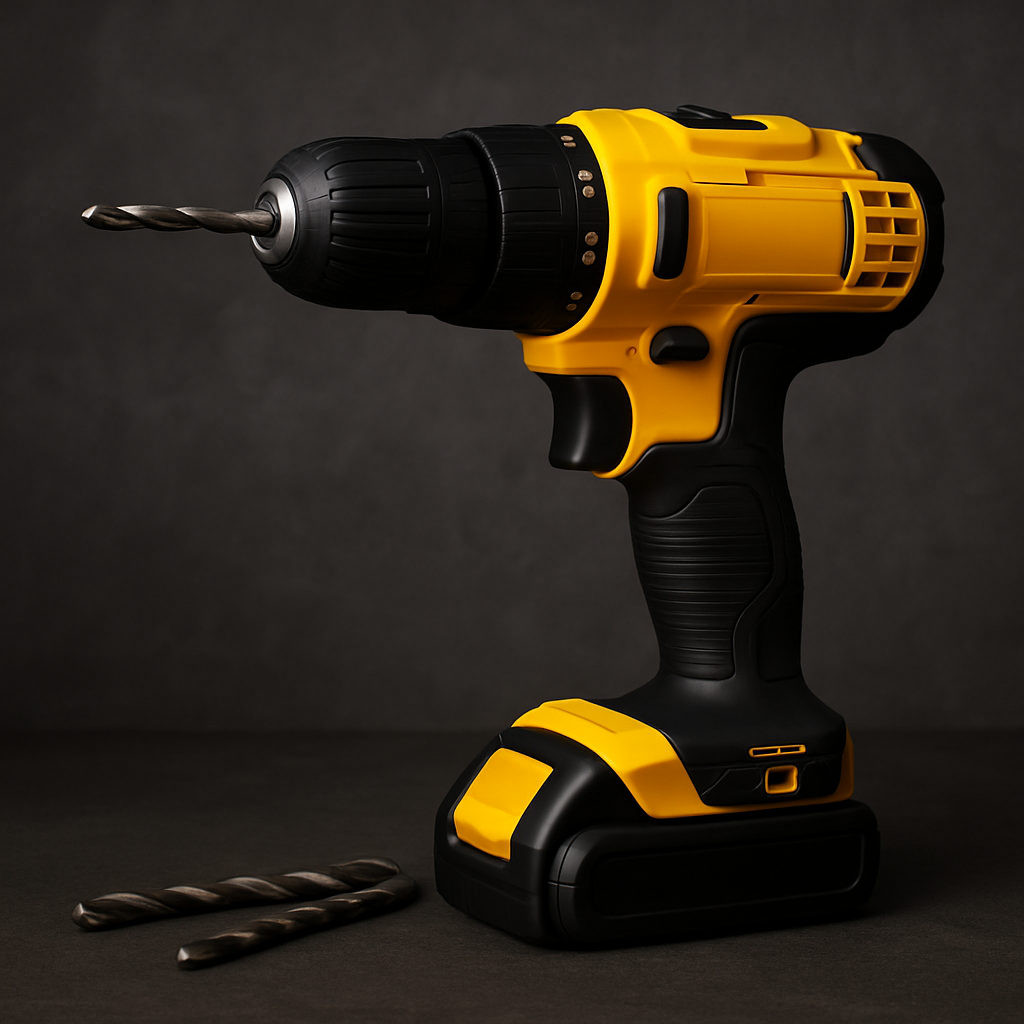
Electric Drills Explained: Selecting the Best Drill for Jobsite Efficiency

Selecting the right electric drills is one of the simplest levers to boost jobsite productivity and reduce total cost of ownership – yet procurement teams too often buy on price and leave crews with mismatched tools. This guide cuts through specs and vendor pitches to translate torque, battery platform, and service terms into real-world outcomes, with concrete examples, TCO math, and procurement checklists that support HUBZone and supplier diversity requirements. Learn which drill types, battery strategies, and sourcing rules will minimize downtime and make maintenance scalable across multiple sites.

1. Drill types and primary jobsite roles

Direct point: Different types of electric drills are not interchangeable on a jobsite — picking the wrong class costs time, bits, and batteries. Choose on the basis of material, hole diameter, and duty cycle, not sticker price.

Type-by-type roles, short and practical

  • Cordless standard drills: Designed for precise hole drilling and small-to-medium fastener work. Best for wood, light metal, and general-purpose tasks. Examples: DeWalt DCD791, Makita XFD10R.
  • Cordless hammer drills: Add a hammer action for masonry; still used for general drilling and fasteners on site. Use when you need occasional concrete drilling plus framing tasks. Examples: Milwaukee M18 FUEL 2804-20, Makita XPH07.
  • Rotary hammers (SDS): Engineered for heavy masonry and frequent anchor installation; trade portability for punch and longevity. Examples: Bosch RH328VC, Hilti TE 30.
  • Impact drivers: Built for driving screws and bolts quickly with minimal cam-out; not a substitute for controlled drilling or large-diameter holes. Examples: DeWalt DCF887, Milwaukee M18 Fuel impact driver.
  • Corded SDS/rotary hammers: When continuous, high-energy masonry work is routine; avoids battery-swapping and keeps productivity steady.

Practical trade-off: Compact electric drills like the DeWalt DCD791 win on weight and crew comfort but sacrifice sustained torque. If your crew needs repeated 1/2-inch holes in hardwood or frequent 3/8-inch anchors in block, step up to a full-size brushless drill or a rotary hammer — the nominal savings from a compact unit disappear once crews slow down and charge batteries more often.

Decision rule: For fastening-only work choose an impact driver; for precision holes up to ~1/2 inch in wood or metal use a standard cordless drill; for repeated drilling into concrete or holes above ~3/8 inch use an SDS-style rotary hammer. This rule aligns tool capability to the material hardness and hole diameter you face most.

Concrete example: A maintenance crew installing 1/2-inch wedge anchors in poured concrete for light racking will be faster and spend less on bit replacement using a Bosch RH328VC rotary hammer with SDS Plus bits than using a hammer-drill on a cordless platform. Conversely, the same crew framing temporary partitions should pair a DeWalt DCD791 for pilot holes with a DeWalt DCF887 for driving long screws to keep cycles short and fatigue low.

Impact drivers speed fastener work; drills control hole size and bit variety. Do not buy impact drivers hoping they will replace drills for hole-making.

Key takeaway: Standard cordless drills, hammer drills, rotary hammers, and impact drivers each solve distinct jobsite problems. Match tool class to the dominant material and hole size on your projects to minimize downtime and consumable costs.

Where to check availability: Standardize on platforms that give you coverage across these types — see cordless electric drill options and accessories at Hubzone Depot cordless drills and consult OSHA guidance for safe operation of power tools at OSHA power tools.

2. Key specifications that drive jobsite performance

Direct point: The numbers on a spec sheet are what turn an electric drill into a production tool or a liability on shift two. Focus on the specs that change outcome: torque and speed, impact energy for masonry, chuck capacity, battery voltage and amp-hours, and motor type.

Torque vs RPM: Torque determines whether a drill will move a large-diameter bit or stall under load; RPM determines how quickly a small bit clears material. Choose torque first for big holes and metal; choose RPM for fast small-diameter drilling in wood. In practice that means trading compact models for full-size brushless drills when crews regularly drill 1/2-inch holes or use large auger bits.

Concrete example (holes per battery): Using a Makita XFD10R 18V with a 2.0 Ah battery (18V × 2.0 Ah = 36 Wh usable energy), assume an average drilling load draws ~6 A at 18V (≈108 W). Runtime = 36 Wh ÷ 108 W ≈ 0.33 hours (20 minutes). If each 1/2-inch hole in pine takes ~30 seconds under load, theoretical holes ≈ 40; allow for idle time, bit changes, and inefficiency and plan on about 25–30 holes per 2.0 Ah pack. Use this simple math to size battery counts and spares for your crew.

Brushless vs brushed motors: Independent testing shows brushless designs typically give roughly 20–30 percent better runtime and noticeably less maintenance because they eliminate brush replacement—see testing summaries at Consumer Reports and Popular Mechanics. The tradeoff is higher upfront cost; for high-duty crews brushless almost always reduces total cost of ownership.

Impact energy, chuck size, and clutch: For masonry, impact energy (measured in joules) predicts whether an SDS-style rotary hammer will cleanly place anchors. As a rule of thumb, frequent 3/8-inch anchors and larger favor rotary hammers with higher J ratings rather than hammer-drill modes. Chuck size matters for bit range: choose 3/8-inch chucks for general work and 1/2-inch chucks when you regularly use larger bits or heavy-duty accessories. Adjustable clutch settings save rework on fasteners—insist on variable clutch for crews doing mixed fastening and drilling.

Battery tradeoffs and charging: Amp-hours matter more than voltage for runtime. Fast chargers are useful, but repeated rapid charging raises cell temperature and shortens cycle life; plan charging rotations and a 50–75 percent spare battery pool to avoid relying on constant fast charging. Standardize on one platform per fleet to reduce spares and simplify procurement—see cordless electric drill options at Hubzone Depot cordless drills.

  • What to prioritize in specs: Torque (for big bits), battery Ah (run time), brushless motor (efficiency/longevity).
  • Masonry rule: Prefer impact energy and SDS compatibility over hammer-drill RPM when anchors are frequent.
  • Ergonomics and weight: Lighter drills reduce fatigue but often mean lower sustained torque—match tool to duty cycle, not just comfort.
Key procurement metric: convert battery Wh into expected runtime under a representative load, then calculate spare batteries as a function of crew size and shift length. This simple step prevents underbuying packs that create downtime.

Next consideration: Use these spec-based filters to shortlist tools for pilot testing: convert spec into expected jobsite cycles (holes, fasteners, anchors) and validate with one-week crew trials before scaling procurement.

3. Matching tools to materials and tasks with model recommendations

Direct match matters: pick a drill for the material mix and the crew cadence, not for the lowest sticker price. A wrong match costs time in swapping tools, replacing bits, and charging batteries; the right match reduces cycles and consumables.

Jobsite scenarios and recommended kit

Wood framing + heavy fastening: For crews doing repetitive pilot holes and long screw runs, pair a compact brushless drill for precise holes with an impact driver for driving. Recommended set: DeWalt DCD791 for pilot holes and a DeWalt DCF887-style impact driver for fasteners. Accessory: high-torque clutch settings, coated auger bits for rough framing, and a quick-change bit holder to save seconds per cycle.

Masonry anchors and frequent concrete work: When anchors are routine or throughput matters, move to an SDS rotary hammer for durability and cleaner bits under load. Suggested models: Bosch RH328VC or Hilti TE 30 for heavy daily anchor work. Accessory: SDS Plus carbide masonry bits, dust-muffling shrouds, and a set of correct-length anchor bits to avoid bit chatter and early wear.

Metal framing and through-holes: Metal demands bits and sustained torque. Use a full-size brushless drill like the Milwaukee M18 FUEL with cobalt or carbide-tipped twist bits for up to light gauge steel; for consistent thicker steel, consider a corded right-angle drill or a magnetic drill. Accessory: step bits for thin-gauge panels and backer plates to prevent burrs.

  • Bits and accessories that matter: SDS Plus for most jobsite rotary hammers; SDS Max only when demolition or very large anchors are frequent
  • Metal drilling: cobalt or carbide-tipped bits and cutting oil for longevity
  • Wood work: auger and Forstner bits for clean large holes; keep a selection of brad-point bits for precision

When to step up: If your crew drills anchors or holes into masonry more than a few times per day or needs hole diameters that slow a compact drill to a crawl, upgrade to an SDS rotary hammer. If crews are driven by speed of fastening and strip-out reduction, add impact drivers but do not replace drills for larger-diameter hole work.

Practical limitation and tradeoff: Rotary hammers win on punch and bit life but cost more, are heavier, and require different bits and maintenance. That extra cost only pays off when utilization is high — if a tool sits most days, a hammer-drill or a heavy brushless drill plus scheduled rentals for peaks is often the smarter TCO choice.

Concrete example: A facilities crew that retrofits overhead supports across ten sites switched from hammer-drill rentals to two SDS rotary hammers and a shared spare battery pool. They cut average anchor installation time per location by nearly half and reduced repeated bit breakage from using wrong bits. The capital spent paid back in reduced rental days and fewer emergency callouts.

Match tool class to dominant tasks and frequency: compact drills for intermittent holes, full-size brushless for sustained torque needs, SDS rotary hammers when anchors are routine.

Procurement note: Standardize on a single battery platform where possible and require crews to trial shortlisted models for one week before fleet purchases; test against the specific materials and duty cycles you face. For platform options and procurement support see Hubzone Depot cordless drills and consult OSHA guidance at OSHA power tools.

4. Battery platform strategy and charging logistics

Direct point: Battery platform and charging design determine whether crews finish the shift or chase dead packs. Standardize thoughtfully—battery choices create operating patterns, spare inventories, and supplier dependencies that outlast a single tool purchase.

Platform trade-offs you need to weigh

Platform comparison: DeWalt 20V MAX, Milwaukee M18, and Makita 18V are the three practical ecosystems for procurement. Milwaukee M18 typically leads on heavy-duty runtime and broad pro accessories; DeWalt 20V MAX has deep availability and price tiers from consumer to pro; Makita 18V offers balance and wide international parts coverage. The real tradeoff is not Wh alone but ecosystem fit—how many tool types you can cover with the same battery, vendor lead times for replacements, and local service support.

Hidden cost and vendor risk: Consolidating to one platform cuts spare counts and simplifies charging, but it increases exposure if that vendor hits supply issues or changes pricing. For mission-critical fleets, require secondary-supplier compatibility or negotiated lead-time guarantees in contracts.

Sizing batteries and chargers — a practical formula

Sizing formula: Packs per tool = ceil((ShiftHours DutyFraction) / RuntimePerPack) + BackupPacks. DutyFraction is the fraction of shift the tool is actively under load (use 0.15–0.35 for intermittent drilling/fastening). RuntimePerPack* you derive from battery Wh and representative load. This turns vague needs into buy quantities you can justify.

Concrete example: For a 6-person crew, 8-hour shift, duty fraction 0.20, and a 5.0 Ah 18V pack (≈90 Wh) under a 120 W representative load → RuntimePerPack ≈ 0.75 hours. Per tool usage = 8 0.20 = 1.6 hours, Packs per tool = ceil(1.6 / 0.75) = 3. Total packs needed = 6 3 = 18. Add BackupPacks (recommend between 20–40 percent depending on charger access) to cover charger downtime and unexpected peaks.

  • Charger strategy: Use a mix of slow multi-port chargers for overnight normalization and a limited number of fast chargers for emergency top-ups. Avoid relying exclusively on rapid charging.
  • Charging infrastructure: Install a dedicated charging station per van or site with labeled racks, temperature-controlled storage for cold climates, and a simple log (paper or digital) for cycle tracking.
  • Lifecycle tracking: Track pack purchase date, cycles, and performance; retire packs that lose more than ~20 percent capacity or exhibit swelling.
Policy starter: Require battery serialization, a FIFO rotation, and a maximum service life by cycle count or years in your contract terms. Include charger type and minimum spare-pack rules in purchase orders so vendors price the real fleet cost.

Real-world use case: A municipal facilities team standardized on Milwaukee M18 across five vans, installed two smart multi-port chargers per van, and enforced a rotation where each pack was logged and returned to central storage after 250 cycles. The result: fewer mid-day tool failures, predictable annual replacement budgeting, and a measurable drop in emergency overnight orders.

Judgment: Standardize where utilization is steady and high; avoid platform lock-in for low-utilization fleets — in those cases, pair compact platform purchases with a rental policy for peak masonry or heavy-duty days. Next consideration: run a 30-day pilot capturing runtime and charger logs before committing to a single-vendor platform.

5. Total cost of ownership and procurement checklist

Bottom line: buy price is irrelevant if a tool creates crews that wait on chargers, swap bits constantly, or drive emergency replacements. Total cost of ownership for electric drills must convert technical specs into predictable fleet outcomes: dollars spent, hours available, parts consumption, and vendor support quality.

TCO components to measure

Cost component What to record Why it matters
Initial unit cost Tool kit price including battery and charger Sets baseline for capital outlay and per-tool depreciation
Battery fleet cost Number of packs, Ah rating, charger types, spare ratio Drives mid-shift availability and replacement cadence
Consumables and wear parts Bit lifespan, chuck replacements, brushes if applicable Recurring line items that scale with utilization
Service and warranty Warranty length, repair turnaround, loaner unit availability Affects downtime and unexpected spend
Operational downtime Hours lost per failure or recharge cycle valued at billed labor rate Often the largest hidden cost
Lifecycle and disposal Expected useful years, battery recycling costs Needed for budgeting and compliance

Practical tradeoff: cheaper brushed or low-capacity kits reduce initial spend but usually increase recurring costs in two ways: shorter usable runtime leading to more spare batteries and greater downtime exposure, and higher frequency of wear-part replacement. If your operation bills or measures crew time, those recurring costs dominate within a few quarters.

Concrete example: Compare two procurement choices for one crew over 3 years. Option A is an economical kit priced at $120 with a small 2.0 Ah battery; option B is a higher-grade brushless kit priced at $220 with a 5.0 Ah battery. Under a representative workload the economical kit forces an extra battery swap and causes an estimated 40 hours of lost productive time across the 3 years; the brushless kit produces an estimated 8 hours of lost time due to fewer midshift swaps and faster cycle completion. Assigning a conservative labor-cost value of $35 per hour, the additional downtime cost alone makes Option A roughly $1,120 more expensive over 3 years, before counting increased consumables and repairs. That pushes the break-even in favor of the brushless kit in under one year of normal use.

  1. Specify total-package pricing: demand quotes that list tool, each battery price, charger model and per-unit shipping so you can compare apples to apples.
  2. Require service SLAs and loaners: include maximum repair turnaround time and loaner-unit clauses for high-utilization fleets to avoid unplanned downtime.
  3. Mandate battery serialization and lifecycle reporting: require vendors to supply pack serial numbers and cycle-count data or accept periodic capacity reports so you can retire degraded packs proactively.
  4. Set spare battery policy in contract: specify spare ratio by crew or van and acceptable charger types; this prevents vendors from quoting kits that under-provision runtime.
  5. Include consumable forecasting: ask suppliers for realistic bit life under representative tasks and include that consumable spend in the P&L for the project.
  6. Negotiate volume price breaks and delivery windows: require lead-time guarantees for replacement tools and parts to reduce procurement risk from single-vendor shortages.
  7. Require HUBZone and supplier diversity documentation: include verification of HUBZone or woman-owned status and reporting templates so purchases count toward diversity goals. See Hubzone Depot HUBZone page for supplier documentation examples.
  8. Pilot requirement: require a 30-day pilot with defined acceptance criteria such as downtime, holes per battery, and number of repair events before full fleet roll-out.
  9. Training and adoption clause: include a minimum training session and basic maintenance checklist delivered by the vendor to reduce user-induced failures.
  10. End-of-life and recycling terms: mandate battery recycling or buyback options and a forecasted replacement schedule so you can budget future capital spend.
Actionable metric: require vendors to quote a three-year cost per usable-year number. Compute it as (Total 3-year cost including downtime and consumables) divided by 3. Use that metric in purchase decisions rather than unit price alone.

Judgment you will not get from a sticker: platform standardization saves spares and training, but it also concentrates risk if that vendor has a supply disruption. The pragmatic approach is to standardize where utilization is predictable and negotiate explicit supply and repair commitments; keep at least one alternate supplier on contract for mission-critical fleets.

Pay for uptime, not the lowest sticker price. Measure TCO as dollars per usable-year and lock vendor contracts to that metric while including HUBZone documentation and pilot acceptance criteria.

6. Maintenance, safety, and policies to preserve efficiency

Hard requirement: a purchased fleet of electric drills will only deliver promised uptime if you lock maintenance, safety, and repair policies into operations and procurement. Treat these as contract terms, not optional best practices.

Routine maintenance that actually prevents downtime

  • Daily quick-pass: wipe housings, check for loose fasteners, test keyless chuck lock and clutch stopping behavior, and swap packs back to the charging rack so you start each shift predictable.
  • Weekly service: clear cooling vents with compressed air or a soft brush, inspect bit shanks and remove damaged bits, confirm SDS or chuck retention is secure, and log battery state-of-health notes on the pack tag.
  • Monthly care: perform torque calibration checks on adjustable-clutch drills, bench-test hammer action under light load to detect chatter, replace worn brushes if the model uses them, and update the battery cycle ledger.
  • Policy point: serialize batteries, track cycles, and retire packs that show rapid capacity loss or physical deformity; ad-hoc replacement creates chronic mid-shift failures.

Safety controls that preserve tool life and crew health

Protect people and equipment together: require eye, hearing, and respiratory protection for masonry or metal drilling, and mandate dust extraction for hammer or rotary hammer work. Dust and debris are the fastest ways to ruin vents and gearboxes on both cordless and corded units.

  • PPE baseline: safety glasses, N95 or P100 masks for silica-generating work, and hearing protection for hammer modes or extended use.
  • Worksite controls: use HEPA-rated vacuums on masonry jobs, barricade drop zones for overhead drilling, and require mechanical clamping or anchors rather than one-handed holding of heavy material.
  • Corded/tool safety: enforce lockout for corded units during servicing and establish an approved-attachment list so crews do not jury-rig accessories that damage chucks or motors.

Spare parts and a repair flow procurement teams can enforce

Stock the small parts that stop a job: keep spare keyless chucks, SDS retention pins, common clutch assemblies, a few replacement carbon brushes for older models, and a measured buffer of batteries and chargers. Consumables like carbide masonry bits and cobalt metal bits should be replenished on a schedule tied to usage logs, not when crews complain.

  1. Field failure process: field user logs failure in the digital ticket system with photo, swaps to a pre-assigned loaner kit, and returns failed tool to central workshop within 24 hours.
  2. Triage & repair: central tech performs first-pass repair or routes to vendor warranty; if repair exceeds negotiated SLA, procurement charges vendor for a loaner replacement per contract.
  3. Escalation: after two repeat repairs in 90 days, initiate product-performance review with the supplier and require a replacement or upgraded model under warranty terms.

Practical tradeoff: a centralized maintenance desk saves money only when utilization and failure rates justify staff and bench equipment. For low-use fleets, short vendor SLAs plus mandatory loaner units and a stocked consumable kit in each van is a better use of budget.

Concrete example: a city facilities crew standardized check-in/out for electric drills, required crews to tag dead batteries and return them to a central charger pool, and contracted for vendor loaners on warranty claims. The result: fewer mid-shift tool swaps, predictable weekly charging routines, and clearer accountability for damaged bits and chucks — crews stopped improvising repairs and the procurement team tracked recurring failures back to a single model for replacement.

Key operational policy: include maintenance checkpoints, PPE requirements, serialized battery tracking, and vendor SLA/loaner obligations in purchase contracts. If a vendor will not sign these terms, they are not the right partner for a mission-critical fleet.

Takeaway: lock maintenance and safety requirements into procurement and operations—serialization, simple daily checks, required PPE and dust control, and vendor SLAs are the cheapest ways to protect uptime for your electric drills.

7. Sourcing strategy and vendor evaluation with HUBZone considerations

Start from supplier risk, not price. Buying electric drills at scale is about predictable uptime, not lowest unit cost. That means evaluating vendors for inventory reliability, repair turnaround, spelled-out loaner policies, and concrete HUBZone certification evidence before you sign anything.

A compact vendor scorecard you can use today

Criterion Weight (1-5) Example contract clause or evidence
Available stock and SKU coverage for electric drills and batteries 5 Vendor will hold X units for 30 days; monthly availability report
Lead time and emergency fulfillment 4 Max 48-hour emergency ship or loaner within 72 hours
Warranty, repair SLA and loaner policy 5 3-year tool warranty, 5-business-day repair cap, loaner for >48-hour repairs
Volume pricing and freight optimization 3 Tiered discounts at 25, 50, 100 units; consolidated weekly shipments to reduce parcel fees
HUBZone and supplier-diversity documentation 5 Signed HUBZone verification, owner attestation, and monthly spend report
Battery platform continuity and parts availability 4 Commitment to supply batteries and chargers for 3 years or provide cross-platform adapters
Local service network 3 List of certified repair partners within 100 miles of each site

Practical trade-off: certified HUBZone vendors are often smaller and add important supplier-diversity value, but they may not have the same SKU depth as a national distributor. You can preserve compliance without hurting uptime by negotiating inventory hold, agreed replenishment cadence, and explicit loaner units in the contract.

Concrete example: Hubzone Depot consolidated orders for a facilities program across 10 sites, negotiated a staged replenishment plan with weekly shippers, and secured a 15 percent volume discount plus a pool of three loaner kits. The procurement team replaced costly overnight emergency shipments with scheduled deliveries and saved on parcel fees while ensuring HUBZone spend tracked to compliance reports.

  1. Action plan template: Shortlist 3 vendors and request the scorecard evidence above for each.
  2. Run a 30-day pilot with one crew: capture holes per battery, mid-shift swaps, repair events, and user feedback.
  3. Evaluate pilot data, enforce SLA language (loaners, repair caps), and finalize platform standardization if utilization justifies it.
  4. Roll out phased purchases with serialized batteries, weekly replenishment schedules, and a reserved emergency pool to avoid ad-hoc overnight buys.

Judgment you should act on: do not treat HUBZone certification as a checkbox. It is valuable for compliance but not a substitute for operational guarantees. Always pair diversity objectives with measurable supply commitments in the purchase order so crews are not left to absorb shortages or longer lead times.

Negotiation starter (copy into RFP): require serialized battery lists, monthly HUBZone spend reports, a 72-hour loaner promise for repair events longer than 48 hours, and a documented replenishment schedule. Ask vendors to include Hubzone Depot HUBZone documentation and their procurement solutions as part of the response.

Next consideration: start the procurement cycle with the vendor scorecard and a 30-day operational pilot. If a supplier will not accept SLAs that protect uptime, you will pay for that gap in emergency orders and idle crew hours.

{
“@context”: “https://schema.org”,
“@type”: “BlogPosting”,
“mainEntityOfPage”: {
“@type”: “WebPage”,
“@id”: “https://shop.hubzonedepot.com/electric-drills-best-for-jobsite-efficiency”
},
“headline”: “Electric Drills Explained: Choose the Best for Efficiency”,
“description”: “Discover how to select the best electric drills for jobsite efficiency. Enhance your toolset with expert advice from Hubzone Depot.”,
“image”: {
“@type”: “ImageObject”,
“url”: “https://example.com/featured-image.jpg”,
“height”: 800,
“width”: 1200
},
“author”: {
“@type”: “Person”,
“name”: “Elisa”
},
“publisher”: {
“@type”: “Organization”,
“name”: “Hubzone Depot Shop”,
“logo”: {
“@type”: “ImageObject”,
“url”: “https://example.com/logo.jpg”,
“width”: 600,
“height”: 60
}
},
“datePublished”: “2023-10-24”,
“dateModified”: “2023-10-24”
}

article blockquote,article ol li,article p,article ul li{font-family:inherit;font-size:18px}.featuredimage{height:300px;overflow:hidden;position:relative;margin-top:20px;margin-bottom:20px}.featuredimage img{width:100%;height:100%;top:50%;left:50%;object-fit:cover;position:absolute;transform:translate(-50%,-50%)}article p{line-height:30px}article ol li,article ul li{line-height:30px;margin-bottom:15px}article blockquote{border-left:4px solid #ccc;font-style:italic;background-color:#f8f9fa;padding:20px;border-radius:5px;margin:15px 10px}article div.info-box{background-color:#fff9db;padding:20px;border-radius:5px;margin:15px 0;border:1px solid #efe496}article table{margin:15px 0;padding:10px;border:1px solid #ccc}article div.info-box p{margin-bottom:0;margin-top:0}article span.highlight{background-color:#f8f9fb;padding:2px 5px;border-radius:5px}article div.info-box span.highlight{background:0 0!important;padding:0;border-radius:0}article img{max-width:100%;margin:20px 0}
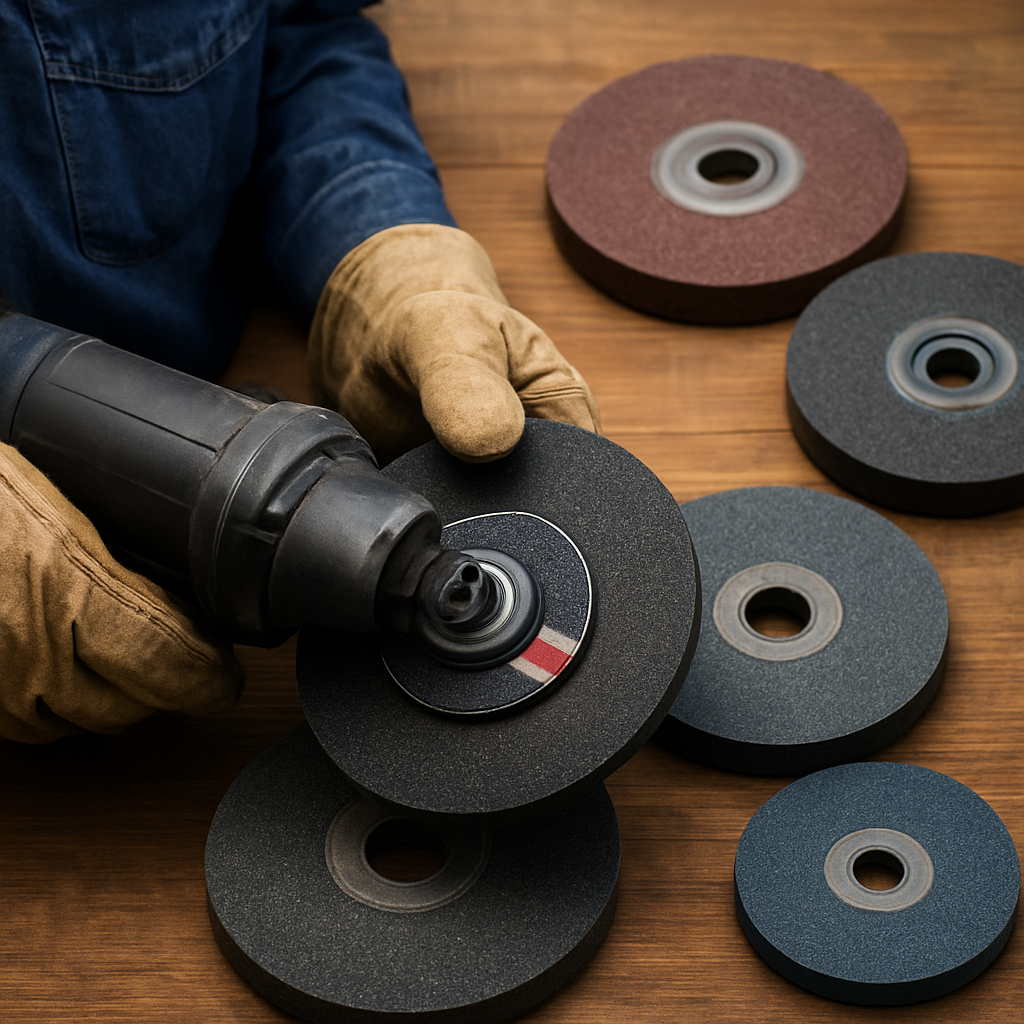
Power Drill Buying Guide: Features, Power, and What Businesses Should Consider

Buying a power drill for a fleet is not the same as grabbing a cordless drill off the shelf for weekend DIY. This guide strips vendor marketing and lays out what procurement teams must evaluate – drill types, motor and battery specs, runtime and torque, and the durability factors that drive downtime and repair costs. You will get a practical checklist, RFP questions, and a simple total cost of ownership calculator to standardize a battery platform, compare TCO, and write purchase terms that include service and HUBZone requirements.

Why business purchases differ from consumer purchases

Immediate price is the least relevant metric for procurement. Businesses buy a power drill for repeatable performance, predictable uptime, and manageable inventory costs, not for occasional weekend projects. The decision matrix shifts from retail features to total cost of ownership – batteries and chargers, spare inventory, repair turnarounds, and the time lost when a tool is out of service.

Hidden costs that sink a rollout

Procurement friction matters. SKU sprawl, mismatched battery platforms, and chargers scattered across crews multiply carrying costs and slow repairs. A cheap cordless drill with proprietary batteries can double fleet cost once you add spares and emergency replacements.

  • Inventory overhead: spare batteries, chargers, and replacement chucks add recurring capital and storage cost
  • Repair downtime: depot repairs without loaners create lost labor hours that are rarely captured in purchase approvals
  • Compatibility tax: mixing battery platforms forces purchases of adapters or duplicate tool families

Practical tradeoff: standardize on a reliable 18V to 20V battery platform with brushless motor drills when mobility and serviceability are important, but keep a small set of corded or higher-voltage machines for continuous heavy-duty tasks. Standardization reduces spare counts and shortens repair cycles; it does not eliminate the need to select the right tool type – drill driver, impact driver, hammer drill – for the job.

Concrete Example: A facilities team supporting 30 sites replaced consumer-grade cordless power drill kits with a unified 18V brushless platform. They purchased two batteries per operator and three chargers per crew rotation. The result was fewer emergency purchases, a 40 percent reduction in time waiting for charged batteries, and faster repair logistics because the vendor offered depot repairs and loaner tools.

Safety and compliance are procurement issues, not afterthoughts. Specify OSHA-aligned safety features and battery-handling procedures in contracts, and require vendors to document safe shipping and disposal practices for rechargeable drill batteries. For HUBZone or supplier diversity goals, require SAM registration and include HUBZone program proof up front.

Choosing on upfront price alone guarantees higher lifecycle cost; prioritize battery ecosystem, warranty terms, and repair SLAs.

Key procurement rule: plan batteries first, tools second. The right mix of spare batteries and chargers prevents most downtime problems and simplifies warranty claims.

Core drill types and where each belongs in a business toolkit

Match the drill to the job, not the marketing label. In commercial fleets the right decision starts with substrate and cycle: light wood and drywall, heavy timber and lag bolts, or masonry and reinforced concrete all demand different drilling actions – rotational speed, torque, and impact mechanism. Treat the word power drill as a family, not a single solution.

How to place each drill type in your fleet

Drill type Best business use Key limitation / procurement note
Drill driver (cordless/electric drill) General-purpose holes and light fastener work across wood, sheet metal, and plastics; daily maintenance tasks and assembly Not ideal for high-torque lag bolts or hammering into masonry; favor models with variable speed and good chuck retention
Impact driver High-torque fastening: hex-head screws, long lag bolts, and repetitive fastening where speed lowers cycle time Poor for precise, small-diameter drilling or when bit wobble matters; use as a complement to a drill driver rather than a replacement
Hammer drill (rotary hammer mode optional) Small-to-medium masonry anchors, brick, block and light concrete; faster hole making than a standard drill into masonry Reduced effectiveness on reinforced concrete and larger diameters; for frequent concrete work choose SDS rotary hammers
SDS rotary hammer Heavy concrete, chiseling, and large-diameter anchor holes on construction sites and structural retrofit jobs Heavier, more expensive, and often corded or high-voltage cordless; manage spare batteries and charging separately from light tools
Right-angle and compact drills Tight spaces, electrical and HVAC work where clearance is constrained Lower torque and shorter battery life on compact models; keep these as specialty units rather than fleet standards

Practical tradeoff: choose fewer tool types but match at least one specialized drill to recurring tasks. A standardized cordless platform reduces spare-battery complexity, but the wrong single-tool approach increases cycle time and forces emergency rentals for masonry or heavy concrete.

Concrete example: A property-management crew swapped several consumer kits for a two-tier approach: a variable-speed cordless drill driver for installations and trim work, an impact driver for door hardware and decking fasteners, and a rented SDS rotary hammer for scheduled anchor drilling during renovations. This reduced on-site delay because crews used the compact tools for daily tasks and only brought heavy-duty drilling equipment when the job required it.

What teams commonly misunderstand: buyers often treat hammer drills and SDS rotary hammers as interchangeable. In practice, an SDS unit changes the failure mode: it reduces bit breakage and worker fatigue on concrete but needs separate consumables, different PPE checks, and a maintenance plan because service intervals and wear parts are cost drivers.

Key takeaway: map tool types to the top three substrates your teams encounter and buy for those tasks first. Keep specialty drills available by crew or as rental options rather than standardizing the fleet around one high-capacity but impractical tool.

Power, motors, and batteries explained for procurement decisions

Bottom line: motor topology and battery strategy dictate real-world productivity more than nominal voltage on a spec sheet. Procurement teams should treat motors and batteries as the operational backbone of a power drill fleet, not as optional accessories.

Interpreting power specs so they map to real tasks

Key metrics over buzzwords: ignore voltage as a standalone score. Look at published torque (Nm or in-lbs), no-load RPM, and duty cycle under load. Those numbers predict how many holes or fasteners a crew can do per battery and how often the tool overheats or stalls.

  • Torque vs voltage: higher voltage can enable higher torque but manufacturers tune gear ratios and electronics – a modern 18V brushless drill can outperform older 20V brushed models.
  • Brushless motor tradeoff: brushless designs deliver better efficiency, less heat, and longer brushless life, but they complicate diagnostics and raise replacement-part costs compared with simple brushed motors.
  • Thermal management matters: continuous fastening work amplifies heat; tools with better heat sinks and current limiting preserve battery health and reduce unplanned downtime.

Practical consideration: when specing for crews that run repetitive fastening cycles, prioritize published torque curves or ask vendors for on-site cycle testing rather than relying on advertised voltage. Request sample runtime tests under your load profile as an RFP item.

Concrete example: a university facilities shop replaced mixed consumer cordless drills with a brushless 18V platform and specified 5Ah batteries for door hardware and furniture assembly. They standardized on three batteries per technician for 10-hour shifts, which eliminated mid-shift battery scrambling and reduced borrowed-tool requests during peak weeks.

Battery chemistry, capacity, and charging logistics

Capacity is a service metric: Ah tells you stored energy but not usable output under high current draws. Two 4Ah batteries will rarely equal one 8Ah in peak-demand situations if cells and C-rating differ. Ask vendors for sustained discharge performance data.

  1. Spare battery math: choose a baseline using measured runtime per task and charger recharge time – a pragmatic starting point is 2 to 3 charging cycles covered per operator per shift for heavy use.
  2. Charger strategy: fast chargers save time but shorten battery life if overused; balance fast and standard chargers across crews and monitor battery health quarterly.
  3. Platform lock-in cost: single-platform buys reduce stocking complexity, but expect price premiums for OEM high-capacity batteries and factor depot repair lead times into SLA negotiations.

Requiring vendor-provided runtime data under a defined load and a repair SLA for batteries prevents many procurement surprises.

Quick judgement: choose brushless motors and mid-to-high Ah batteries for most commercial crews, then tune the number of spares and charger types to measured runtime rather than rules of thumb.

Durability, warranty, and serviceability factors businesses must require

Warranty and service terms decide whether a power drill purchase is an asset or a recurring problem. Cheap initial unit cost becomes irrelevant once crews wait days for depot repairs or when batteries are excluded from coverage. Procurement needs contractual teeth — not polite promises.

Commercial versus consumer warranties matter. Insist on commercial-use warranty language that explicitly covers repeated jobsite use, battery failures, and wear items where appropriate; consumer one-year labels often exclude repeated-duty scenarios and battery degradation.

Key contract terms to require

  • On-site versus depot repair: specify acceptable circumstances for on-site repair and a maximum depot turnaround time measured in business days.
  • Loaner tool policy: require vendor-provided loaners for repairs longer than the agreed SLA to prevent crew downtime.
  • Battery coverage: include battery warranty duration and an explicit statement on capacity loss thresholds that qualify for replacement.
  • Parts availability guarantee: demand availability of critical spare parts (chucks, gear sets, electronic modules, batteries) for at least five years or a buyout/transition plan.
  • Repair-cost transparency: cap non-warranty repair charges or require purchase-order approval above a set dollar threshold.
  • Serialized asset tracking and firmware access: require unique serials on each unit and access to diagnostic logs to speed warranty claims.
  • Performance KPIs and remedies: define SLA metrics (turnaround days, repair first-pass rate) and financial remedies or service credits for missed targets.

Tradeoff to accept: on-site repairs shorten downtime but raise per-incident cost and create inventory of spare parts to manage. Depot repairs are cheaper for the vendor but transfer downtime risk to your operation. Negotiate loaners plus a modest on-site repair budget to balance risk and cost.

Practical Example: A mid-sized manufacturing maintenance team standardized on a brushless 18V cordless power drill platform but initially accepted a 10-business-day depot SLA. When recurring outages stalled an assembly line, they renegotiated: a 5-business-day depot SLA, two loaner tools per site, and a stocked spare-gear kit. The shorter SLA plus local loaners eliminated unplanned overtime and forced the vendor to maintain parts locally.

Serviceability detail most buyers miss: brushless motors reduce routine brush replacements but concentrate failure modes into electronics and gear trains. That means vendors must supply circuit boards and gear sets as field-replaceable modules; if a tool is glued or potted and requires full-unit replacement, total cost of ownership rises quickly. Ask for a parts breakdown and typical repair time per failure mode.

Require vendors to demonstrate their field footprint and repair times with real data before award; a service network map beats a long warranty clause on paper.

Minimum procurement demands: 2-year commercial warranty on tools, 1-year battery warranty with capacity threshold, depot SLA <= 5 business days or equivalent loaner coverage, and 5-year parts availability guarantee.

Next consideration: fold these warranty and service terms into your RFP and require proof — supply chain maps, repair-center addresses, sample repair tickets, and references from similar fleets. Use those documents as pass/fail criteria rather than hopeful commitments.

Practical procurement checklist and RFP template items

Start with pass-fail controls. Before scoring price, eliminate vendors who cannot meet a short list of non-negotiables: battery interchangeability on the nominated platform, documented depot or on-site repair SLA, HUBZone or SAM documentation if supplier diversity applies, and willingness to supply demo units for field testing. Making these pass-fail stops the common mistake of awarding on price to suppliers who lack service capacity.

Must-have RFP questions (use as pass-fail then scored)

  1. Platform compatibility: Does the drill model accept the specified battery family and chargers? Provide part numbers and cross-compatibility test results.
  2. Service and repair: What is your depot turnaround time, loaner policy for repairs > SLA, and nearest repair center addresses? Provide three similar-customer references.
  3. Battery policy: Battery warranty terms, replacement criteria for capacity loss, and cost per spare battery at volume pricing.
  4. On-site demo and testing: Can you supply sample units for a 2-day on-site cycle test simulating our load profile? Include test protocol and acceptance thresholds for torque retention and thermal behavior.
  5. Lead time and replenishment: Standard lead time for initial order and for staggered monthly replenishments; minimum order quantity and volume discount tiers.
  6. Parts availability: Commitment to keep critical service parts for at least five years or provide transition plan and buyout pricing.
  7. Data and serialization: Do tools ship with serial numbers and diagnostic logs accessible for warranty claims and asset tracking?
  8. Safety and shipping: Proof of safe battery shipping procedures and end-of-life recycling program.

Practical insight: Make on-site cycle testing a scored requirement, not optional. Advertised torque and Ah figures are misleading unless validated under your real-task load. Vendors who refuse full-load demos are often betting on marketing to cover up runtime or thermal shortcomings.

Evaluation weighting template

Criterion Suggested weight (%) Why it matters
Operational performance (torque, runtime under load, thermal stability) 35 Directly drives crew productivity and battery consumption
Serviceability and SLA (repair turnaround, loaners) 25 Reduces downtime cost and unplanned overtime
Battery ecosystem and spare cost 20 Controls inventory and replacement spend
Price and volume discounts 10 Important but secondary to uptime in commercial contexts
Lead time and supply resilience 10 Affects rollout schedule and contingency planning

Tradeoff to accept: weighting service and performance above unit price will reduce the number of low-cost offers, but it prevents the frequent treadmill of emergency buys and incompatible spare batteries. Expect to pay a premium for strong local repair coverage or rapid loaner availability.

Concrete Example: A facilities procurement team issued an RFP for 150 cordless drills with three spare batteries per technician. They required a two-day on-site demo and scored vendors using the table above. The selected supplier was 12 percent more expensive per unit but offered a 48-hour depot SLA with loaners and lower spare battery pricing; total first-year operational interruptions dropped sharply after rollout.

Require demo acceptance criteria in the RFP: measured holes per battery, torque decay after 50 cycles, and maximum tool-case temperature under sustained load.

RFP pass/fail checklist: battery compatibility, documented SLA and loaner policy, demo sample availability, HUBZone or SAM proof (if required), and five-year parts commitment.

Cost comparison matrix and simple total cost of ownership example

Start with use-hours, not sticker price. A drill that costs more at purchase will often cost less per productive hour once you include batteries, spares, repairs, and the labor lost when crews wait for a charged tool or a repaired unit.

How to construct a usable cost matrix

Method: pick a planning horizon (3 years is common), estimate expected productive hours per tool over that horizon, and list every cash and operational cost that affects availability. Those line items become rows in your matrix.

  • Essential cost lines: purchase price, initial battery set, charger, spare batteries purchased over horizon, routine repairs, major repairs, loaner costs (if vendor provides), expected resale/salvage value
  • Operational costs to quantify: lost labor hours due to downtime (use your internal labor rate), emergency rentals or overtime, inventory carrying cost for spares
  • Assumptions to document: hours per day the tool is used, charger recharge time, battery runtime per task, expected lifetime hours for the tool
Cost Component Consumer Cordless Kit (3 yr $) Commercial Brushless 18V (3 yr $) Notes
Purchase price 100 300 Tool only, retail-like unit cost
Initial spare batteries and charger 90 + 25 = 115 240 + 60 = 300 Two spare batteries assumed for each
Repair & maintenance (3 yr) 150 200 Depot repairs; pro includes parts availability
Downtime / lost labor 3,000 500 Valued at $50/hr; consumer higher due to failures and lack of loaners
Resale / salvage (credit) -10 -80 Estimated recoverable value after 3 years
Total 3-yr TCO 3,355 1,220 Sum of above
Estimated productive hours (3 yr) 600 2,500 Worked hours based on usage profile
Cost per productive hour 5.59 0.49 TCO divided by productive hours

Real-world comparison: A property maintenance fleet replaced mixed consumer kits with a commercial brushless 18V platform. Using measured runtimes and vendor loaner commitments they found the pro units reduced cost per productive hour from roughly $5.60 to $0.50. The big driver was reduced downtime and longer tool life, not the higher up-front cost.

Trade-off to expect: the commercial platform requires higher working capital up front (bigger batteries, more expensive chargers) and possibly OEM-only spare pricing. In practice those premiums are usually paid back quickly when you value avoided crew downtime and fewer emergency replacements.

If you can measure tool hours and place a dollar value on lost productivity, TCO becomes obvious. Without that measurement you will undercount downtime and overvalue low upfront price.

Practical instruction: build the matrix in a spreadsheet and force each vendor to supply three inputs for the same load profile: measured holes or fasteners per battery, mean time to repair, and loaner policy. Use those vendor-supplied numbers to populate the downtime and spare-battery rows before awarding.

Next consideration: after you run the numbers, include the matrix and assumptions in your RFP and require vendors to validate their runtime and repair SLAs with on-site demos. If supplier diversity or HUBZone status matters, include that requirement as pass/fail along with the financial matrix — you want price transparency and service guarantees to be comparable across bidders. See our power tools offerings for platform-aligned kits and spare-battery options.

Safety, training, and lifecycle maintenance

Safety is a procurement deliverable as much as an operations rule. Require vendors to supply safety training, documented handling procedures for rechargeable batteries, and evidence of a tested emergency response for thermal events as part of contract acceptance. Specify mandatory PPE, approved chuck retention checks, and torque-limiter use for crews that switch between drilling and fastening to reduce kickback incidents. For regulatory guidance, reference OSHA power tool guidance.

Training curriculum and who owns it

  • Basic operator training: correct grip, two-handed control, clutch settings, and bit maintenance
  • Battery handling: charging zones, avoiding extreme temperatures, identifying swelling or leakage, and safe transport
  • Preventive checks: daily visual checklists, chuck torque check, and run-away or stall recognition
  • Emergency procedures: isolating a failing battery, safe containment, and how to notify the vendor for warranty escalation
  • Record keeping and escalation: how to log serial number, runtime hours, and observed faults for warranty claims

Insist that vendor training be delivered to both frontline crews and at least one in-house trainer. Relying solely on vendor refresher sessions is a mistake; internal trainers keep standards consistent between vendor visits and when tools change hands.

Maintenance and inspection cadence

  1. Receive and baseline: tag new units, run a documented torque and runtime baseline, and record serial number and firmware version
  2. Daily quick check: visual damage, bit seating, smoke or smell, and battery temperature after use
  3. Weekly runtime log: record battery swaps and unusual stalls; flag units that need deeper inspection
  4. Quarterly preventive service: chuck lubrication, gear noise check, electrical connector inspection, and battery capacity test
  5. As-needed diagnostics: run vendor diagnostic app or thermal imaging for units that show abnormal behavior

There is a tradeoff: tighter inspection cadence reduces unexpected failures but raises administrative overhead. Use sampling plus remote telemetry where available to trim paperwork. Tools and smart batteries that provide diagnostic logs are worth a premium if your fleet scale makes manual inspections costly. Still, telemetry does not replace physical checks for swelling, denting, or contaminated chucks.

Concrete example: A regional facilities team added a weekly thermal-scan step to their inspection checklist. Thermal imaging revealed a pattern of elevated cell temperatures in one battery batch before visible damage occurred; the vendor replaced the affected batteries under warranty and the crew avoided several mid-job shutdowns. The change cost a short training slot and a handheld thermal camera but prevented repeated emergency battery purchases.

  • Decommissioning checklist: tag unit out of service, fully discharge following vendor guidance, segregate damaged batteries in approved containers, record end-of-life serial number and date, and transfer to a certified lithium-ion recycler
  • Warranty evidence: keep a time-stamped log and photos for any battery or tool failure to speed claims
  • Asset closure: remove from inventory, note resale or salvage value, and update procurement forecast for replacements
Key requirement: Include vendor-delivered hands-on training, access to diagnostic logs, and a documented battery end-of-life and recycling plan in your contract. Without those three items you will pay for safety failures or slow warranty outcomes.

Next step: add the training syllabus and inspection cadence to your RFP as scored items and require sample inspection logs from references. If you need help writing those requirements, see our procurement services at Hubzone Depot procurement services.

Supplier selection, supplier diversity, and how HUBZone fits into procurement

Start with operational capacity, then layer in supplier diversity. A HUBZone certification is valuable for meeting socio-economic goals and certain contracting priorities, but it does not replace proof that the vendor can meet your SLA, parts availability, and spare-battery needs for a power drill rollout.

Practical tradeoff: giving a HUBZone vendor preference usually narrows your bidder pool. If you award to a small HUBZone firm, expect to negotiate operational mitigations up front — consignment inventory, vendor-managed inventory (VMI), or guaranteed loaner tool coverage so crews do not pay for the supplier's scale limits.

How to verify and structure HUBZone credit in an RFP

Stop treating certification as a checkbox. Verify status in SAM and against the SBA HUBZone map, and require documentary proof of a qualifying principal office and employee residency where relevant. Include a contract clause that triggers a contingency plan if HUBZone status changes during the contract term.

  1. Verification steps: Confirm SAM registration and current SBA HUBZone listing, request a notarized statement of principal office location, and require an annual attestation for multi-year contracts.
  2. Operational safeguards: Require a VMI or consignment pilot for an initial period, define loaner-tool rules for repairs exceeding your SLA, and demand local parts stocking or a documented plan to stage spares within your region.
  3. Scoring example: Technical 60 points, commercial terms 25, supplier diversity 15 — within diversity allocate 10 points to HUBZone status and 5 points to other diversity commitments.

Concrete example: A municipal procurement included a HUBZone scoring credit and required a three-site consignment pilot. The awarded HUBZone supplier provided stocked batteries and chargers at each depot and a formal loaner program; as a result the city avoided emergency rentals and met its supplier diversity goal without disrupting operations.

Hard judgment: do not conflate diversity credit with reduced operational checks. Many procurement teams over-credit certification and under-scrutinize repair footprint, parts lead times, and battery supply. In practice the most successful HUBZone awards pair certification credit with performance guarantees and a named backup supplier to cover critical outages.

Legal pitfall: If a HUBZone firm subcontracts most performance, SBA rules may disqualify the award for HUBZone credit. Require a statement of work showing the HUBZone firm performs the majority of contract tasks and include audit rights to verify compliance.

Next consideration: choose whether HUBZone will be pass/fail or scored in your RFP, then draft contract terms that convert that preference into measurable operational commitments (VMI terms, loaner KPIs, parts staging) and name contingency vendors before award.

For verification resources see the SBA HUBZone overview at SBA HUBZone program and supplier-diversity options at Hubzone Depot supplier diversity.

{
“@context”: “https://schema.org”,
“@type”: “BlogPosting”,
“mainEntityOfPage”: {
“@type”: “WebPage”,
“@id”: “https://shop.hubzonedepot.com/power-drill-buying-guide”
},
“headline”: “Power Drill Buying Guide: Key Features & Business Tips”,
“description”: “Discover essential power drill features, power options, and key considerations for businesses. Shop smart with our expert guide.”,
“image”: {
“@type”: “ImageObject”,
“url”: “https://example.com/image.jpg”,
“height”: 800,
“width”: 1200
},
“author”: {
“@type”: “Person”,
“name”: “Elisa”
},
“publisher”: {
“@type”: “Organization”,
“name”: “Hubzone Depot Shop”,
“logo”: {
“@type”: “ImageObject”,
“url”: “https://example.com/logo.jpg”,
“width”: 600,
“height”: 60
}
},
“datePublished”: “2023-10-10”,
“dateModified”: “2023-10-10”
}

article blockquote,article ol li,article p,article ul li{font-family:inherit;font-size:18px}.featuredimage{height:300px;overflow:hidden;position:relative;margin-top:20px;margin-bottom:20px}.featuredimage img{width:100%;height:100%;top:50%;left:50%;object-fit:cover;position:absolute;transform:translate(-50%,-50%)}article p{line-height:30px}article ol li,article ul li{line-height:30px;margin-bottom:15px}article blockquote{border-left:4px solid #ccc;font-style:italic;background-color:#f8f9fa;padding:20px;border-radius:5px;margin:15px 10px}article div.info-box{background-color:#fff9db;padding:20px;border-radius:5px;margin:15px 0;border:1px solid #efe496}article table{margin:15px 0;padding:10px;border:1px solid #ccc}article div.info-box p{margin-bottom:0;margin-top:0}article span.highlight{background-color:#f8f9fb;padding:2px 5px;border-radius:5px}article div.info-box span.highlight{background:0 0!important;padding:0;border-radius:0}article img{max-width:100%;margin:20px 0}
How to Choose the Right Grinding Wheels: A Contractor’s Buyer’s Guide

Choosing the wrong grinding wheels costs time, money, and operator safety. This contractor focused buyer's guide shows how to match abrasive type, grit, bond, and wheel form to the material and task, verify RPM and arbor compatibility, and follow the inspection and mounting steps required by OSHA and ANSI. It also lays out simple cost per job math, procurement specs, and how to include HUBZone and supplier diversity requirements so your purchases survive inspections and keep crews working.

Match wheel type to material and task

Start with wheel form, not brand. Pick the wheel shape that solves the task first – heavy stock removal, beveling, cutoff, profile blending, or precision finishing – then match abrasive grain and bond. Form dictates contact area, heat generation, and operator technique; ignoring it is the most common real-world mistake that drives rework and extra changeovers.

Match forms to jobs

Practical mapping: bench grinder wheels for toolroom sharpening and deburring, cup grinder wheels for surface flattening or mortar removal, thin cutting discs for cutoff, angle grinder wheels and flap discs for weld cleanup and profile work, and diamond grinding wheels for hard masonry, tile, and carbide. Each form transfers heat differently and requires a bond that prevents glazing or loading for that use case.

  • Mild and structural steel: use aluminum oxide grinding wheels or zirconia alumina for faster removal on thicker sections
  • Stainless and high alloy steel: pick ceramic alumina or zirconia alumina to resist heat and preserve edge and metallurgy
  • Nonferrous metals and painted surfaces: use silicon carbide or non-loading resinoid discs to avoid clogging
  • Masonry, stone, tile: choose diamond grinding wheels or bonded silicon carbide designed for abrasive cutting
  • Finishing and blending: flap discs or polishing discs with finer grit 80-120 for consistent surface finish

Tradeoff to accept: more aggressive grains like zirconia or ceramic cut faster and last longer on hard jobs but cost more up front and require compatible bonds and cooler cutting technique to avoid burning thin sections. Cheaper aluminum oxide wheels are fine for occasional use but inflate labor cost when used as a daily production wheel.

Concrete example: a metal fabrication crew moved from 36 grit aluminum oxide bench discs to 24 grit zirconia alumina flap discs for daily weld grind-downs on A36 plates. Result: fewer wheel changes, 30 to 40 percent faster cycle time per weld, and visibly less wheel loading. The crew accepted a higher unit price because labor savings and reduced downtime paid the difference within a week on recurring work.

Compatibility note: thin cutting discs and reinforced resinoid wheels need verified RPM, correct flange spacing, and the right guard. Always match the wheel maximum RPM to the tool nameplate and confirm arbor size before selecting a cutting disc for an angle grinder – misfit is a safety and compliance failure under OSHA abrasive wheel rules.

When to pick flap disc over a grinding disc: choose flap discs for profile control, faster edge blending, and reduced secondary sanding. Choose grinding discs for raw material removal where flatness and volume removal matter more than finish.

Key point: match wheel form to task first, then choose abrasive grain and bond to control heat, loading, and lifecycle cost.

Understand grit, grade, and bond and how they affect performance

Grit, grade, and bond are not independent choices—they are a system. Change one and the others must compensate. In practice that means the wheel you pick determines how fast you remove metal, how the surface looks afterwards, how much heat you generate, and how often crews stop to change wheels.

Grit controls the cut pattern and speed. Coarser grit bites aggressively and moves stock quickly but leaves a pronounced scratch pattern and higher local heat. Finer grit smooths that pattern and reduces finish work, but you pay with slower removal and shorter life per cut when used for heavy grinding. Choose grit to match the operation you actually need, not the one you hope to do later.

Grade (hardness) behaves counterintuitively. Harder bonds keep a wheel's profile longer on soft, gummy materials; softer bonds release worn grains faster on hard alloys so fresh cutting edges expose. Many crews assume harder is always better—this leads to glazing, increased wheel loading, and reduced life on tough alloys.

Bond type sets the wheel's toughness and heat response. Vitrified bonds give precision and run cooler but are brittle and poor for impact or handheld high‑speed use. Resin or reinforced resin bonds tolerate shock and high RPMs, which is why cutting discs and thin bench wheels use them. The tradeoff: resin bonds can clog more and may need dressing or anti‑loading measures for nonferrous work.

How these variables interact in real work

Practical rule: for heavy removal pick a coarse abrasive in a tougher bond; for finish work pick a finer abrasive and a bond that preserves shape. If you move from flat bench work to angle grinder work, reassess bond toughness and wheel reinforcement—what works on a stationary grinder often fails on a handheld tool.

Concrete example: a facilities crew switching from a generic shop disc to a purpose-built ceramic flap disc for stainless handrail cleanup found fewer burn marks and less rework. The new wheel released dull grains sooner, keeping cutting action cooler and saving the team from replacing warped sections later.

Limitation to watch: specialty abrasives that cut fast and last long cost more per wheel and can tempt buyers to overuse them on thin sections. They can remove material so quickly you overheat or gouge parts. Buy for the job mix on your calendar and train operators on pressure and technique, not just the wheel spec.

Key takeaway: specify grit category, bond type, and grade together on purchase orders and require a 1–2 piece field trial before bulk buy. That prevents the usual mismatch between fast-cutting wheels and delicate jobs.

For technical selection guides and manufacturer comparisons consult resources like Norton Abrasives and test a matched pair—a removal wheel and a finishing wheel—on representative material before standardizing across crews.

Verify grinder compatibility: RPM, arbor, and machine class

Key point: compatibility failures are a common source of wheel breakage and wasted shifts. Focus on three distinct checks before you buy or mount a wheel: the wheel speed rating, the bore and flange interface, and whether the wheel is built for the machine class you will use it on.

Read the markings and match the tool

Wheels are stamped with several critical values – diameter, maximum surface speed or RPM, abrasive type, bond, grit, and reinforcement. Compare the stamped maximum RPM against the tool nameplate RPM. If the wheel rating is lower than the tool speed, the match is invalid. Also confirm the abrasive type and bond match the intended application before checking mechanical fit.

  • Bore and arbor fit: confirm the wheel bore equals the arbor diameter or use the correct adapter supplied by the wheel maker; common portable tool arbors include 5/8 inch and 7/8 inch but measure to be sure
  • Flange seating and thickness: thin cutting discs need full backer support and specific flanges; a mismatch causes eccentric loading and early failure
  • Machine class: bench grinders, angle grinders, die grinders, and stationary surface grinders impose different shock and speed demands – do not substitute a stationary wheel on a handheld high speed tool
  • Reinforcement rating: reinforced resin or fiberglass layers are required for thin cutoff wheels and some high speed discs – verify the reinforcement symbol on the stamp

Tradeoff to accept: wheels rated for higher RPM and reinforced designs increase safety margin but cost more and may be heavier or slower to install. For crews that use grinders across multiple machines, standardize on wheels rated for the highest tool RPM you run regularly to avoid tool specific inventory, but expect a unit price premium.

Practical limitation: die grinders often exceed 20,000 RPM and require purpose built consumables. Do not try to adapt cutoff wheels or bench wheels for die grinder use. The wrong wheel at elevated speed can fail without visible pre fault signs.

Concrete example: A maintenance crew was chasing vibration on an angle grinder. The root cause was a 3 mm cutting disc mounted with an adaptor that left the wheel cantilevered on the flange. Replacing the disc with a properly bored, reinforced disc and the correct flange removed the vibration and stopped rapid wheel wear. The fix cost less than a single lost shift.

Critical: verify wheel RPM rating exceeds tool RPM and confirm bore, flange, and reinforcement before mounting. For regulatory guidance see OSHA abrasive wheel rules and ANSI B7.1.

Quick compatibility checklist – 1. Read wheel stamp for max RPM and reinforcement. 2. Measure bore and confirm flange fit. 3. Confirm wheel form is specified for the machine class. 4. Use manufacturer recommended adapters and flanges. 5. Run a short guarded spin check before duty use.

Safety, inspection, mounting, storage, and disposal procedures

Hard fact: most wheel failures are preventable and come from poor inspection or bad mounting, not manufacturing defects. A consistent pre use routine reduces catastrophic breakage, minimizes downtime, and keeps crews compliant with OSHA abrasive wheel rules and industry practice.

Daily and pre use inspection

Visual and tactile checks first. Look for hairline fissures, chips at the working surface, glaze, or evidence of overheating. Do not mount if you see any irregular fracture lines running from inner bore outward. On vitrified wheels a tiny chip in the center is a discard condition; on some resin bonded discs an isolated peripheral nick might be tolerable if outside the contact area, but document the decision.

Tap test and alternate checks. Perform a light tap test by holding the wheel on the arbor hole and striking with a nonmetallic mallet for a clear ringing tone versus a dull thud. If ambient noise prevents a reliable tap test, run a short guarded spin at low speed and inspect for wobble or vibration. Measure bore runout with calipers if the wheel has a history of vibration.

Mounting, spin testing, and on the tool

  1. Prepare flanges: clean mating surfaces and remove burrs; use manufacturer specified flanges and do not mix tapered and flat designs.
  2. Seat, do not crush: tighten nuts to seat the wheel squarely but avoid over torque that can crack vitrified wheels; hand torque then follow tool maker guidance.
  3. Guarded spin test: after mounting, run the tool in a guarded area for one minute at operating speed to confirm stability before use.
  4. Record install: log wheel ID, install date, operator, and machine in a maintenance record for traceability and life tracking.

Practical limitation: in field jobs perfect storage and climate control are rare. Accept that wheels stored overnight on a truck can pick up moisture or knocks. Mitigate by keeping a small working stock on site in protective cases and rotating stock back to a dry shop overnight.

Concrete example: a shop foreman photographed and logged a small off center fracture found during the tap test, removed the wheel, and ran the job with a spare. During the guarded spin test the spare developed imbalance from a cracked flange adapter. Because both wheels had been recorded, the incident was traceable and prevented a field failure that would have cost a shift and risked injury.

Disposal and end of life. Retire wheels that are below minimum diameter, have structural damage, or show repeated glazing that cannot be dressed. Mark retired wheels, physically score or chip them so they cannot be remounted, and follow local waste rules for disposal. Some manufacturers accept old wheels for recycling; check supplier options during procurement to reduce disposal headaches.

Must do items before use: perform a visual check; run a tap or guarded spin test; use correct flanges and adapters; log the installation; store spares in protective cases. For procurement and product options see Hubzone Depot abrasives.

Key takeaway: make inspection, mounting, and simple recordkeeping a non negotiable step. The small time invested prevents the big failures that stop jobs and expose the company to safety and compliance risk.

Compare cost, life, and productivity to choose the best value

Unit price lies; cost per job tells the truth. Buying grinding wheels on sticker price alone guarantees higher operating cost when crews change wheels often, spend time dressing or struggling with loading, or rework parts because the finish is wrong.

Calculate two simple metrics before you buy: cost per part and cost per productive hour. Those two numbers capture the economics buyers actually pay for: consumable spend, operator time, and downtime for changeovers.

How to build the quick comparison

Measure three inputs from a field trial or manufacturer data: wheel price, wheel life (in hours or parts), and average parts removed per hour or cut time per feature. Add a conservative estimate for changeover and scrap when a wheel underperforms. This is not theoretical—run 5 representative cuts or grinds and average them.

Metric Economy wheel Premium wheel
Unit price $10 $18
Life (hours) 2 5
Parts per hour (typical) 4 7
Parts per wheel 8 35
Cost per part (wheel only) $1.25 $0.51

Concrete example: a foreman compared a $10 economy disc and a $18 premium ceramic disc on a recurring weld cleanup task. The economy disc made 4 parts per hour and lasted 2 hours (8 parts total); the premium made 7 parts per hour and lasted 5 hours (35 parts). Even before factoring reduced rework and faster cycle time, the premium wheel delivered a lower cost per part and fewer changeovers for the crew.

Practical tradeoff to accept: premium abrasive often lowers net cost but can be too aggressive for thin or heat-sensitive work. If you swap to a high‑performance grain across your fleet without operator retraining, you can increase scrap. Buy premium where throughput, rework, or downtime dominate cost; keep cheaper wheels for occasional touch-up or noncritical tasks.

  • Evaluation checklist: run a 1 day trial with measured parts produced; record wheel life and any dressing events; note operator technique differences.
  • Include hidden costs: changeover time, extra PPE or guards, scrap rate, and shipping/lead time for replacements from your supplier.
  • Procurement tip: request trial packs and small runs from potential suppliers and compare landed cost, not just list price. Leverage Hubzone Depot abrasives to consolidate trials and document HUBZone sourcing.

A common mistake is treating wheels as interchangeable. In practice, the right wheel reduces cycle time, reduces operator fatigue from repeated clamping and changeovers, and improves predictable throughput. Manufacturers marketing life claims are a starting point—validate with your material mix and tooling setup.

Key procurement rule: demand field-verified cost per part from suppliers before awarding a standard SKU. If a supplier cannot support a short paid trial or provide realistic life data on your materials, do not standardize them.

Takeaway: run short, measured trials and compare cost per part and changeover impact—not unit price—then buy the wheel that lowers total operating cost for the specific jobs your crews actually run.

Procurement checklist and integrating supplier diversity and HUBZone sourcing

Direct rule: put the technical spec and the supplier diversity requirement on the same purchase order line. If the PO only says grinding wheels you will get a mix of incompatible products, missed HUBZone credit, and extra administrative work chasing certificates.

Stepwise procurement checklist

  1. Define the part-level spec: abrasive type (aluminum oxide, zirconia, ceramic, silicon carbide), wheel form (flap disc, cutting disc, bench wheel, cup wheel, diamond wheel), grit range, bond type (vitrified, resinoid, reinforced resin), diameter, thickness, arbor/bore, maximum RPM, and manufacturer part number. Add one approved alternate.
  2. Require documentation up front: supplier must supply a Certificate of Conformance, MSDS, reinforcement/FR marking, and proof of HUBZone or small business status. If they claim ISO 9001, ask for scope and last audit date.
  3. Field trial clause: mandate a paid trial pack and measurable acceptance criteria — parts per wheel, cycle time, loading frequency, and acceptable scrap rate. Approvals are conditional on signed trial results from the foreman or maintenance lead.
  4. Logistics & packaging: state lead time, MOQ, return policy for defective lots, and whether supplier offers bin/consignment stock or scheduled replenishment. Call out palletization and labeling requirements if you route through a central store.
  5. Price & landed cost: quote unit price, freight terms, and small parcel auditing rules. Require the supplier to itemize freight to let procurement compare total landed cost, not sticker price.
  6. Performance & remedies: include SLA items for on-time delivery, replacement of nonconforming goods, and a short-term price lock for certified HUBZone suppliers during your first three months.
  7. Spend & compliance tracking: mandate that invoices include the supplier DUNS, HUBZone certification reference, and a PO field to tag HUBZone spend for your diversity reporting.
  8. Contingency planning: identify a secondary approved supplier (can be non-HUBZone) for emergency shipments and specify minimum emergency stock levels on site to avoid last-minute high-cost freight.

Tradeoff to accept: prioritizing HUBZone and diverse suppliers accomplishes regulatory and contracting goals but often narrows short-term supplier choices and can increase lead times. Compensate with trial packs, consignment bins, and a clear acceptance test so quality and availability do not suffer.

Concrete example: a mid‑size contractor standardized on a HUBZone supplier for flap discs and bench wheels. They required a two‑week paid trial and a consignment bin that the vendor replenished weekly. Result: the contractor documented HUBZone spend, avoided emergency overnight freight, and reduced procurement touchpoints — unit cost rose modestly but total landed cost fell once freight and admin time were counted.

Practical judgement: insist on field-verified life data before you award a recurring contract. Buyers who let cheap unit price drive awards see higher changeover costs, scrap, and safety exceptions. If a HUBZone vendor cannot provide short trials or traceable COAs, treat them as unproven and require a probationary purchase batch.

Procurement must-haves for abrasive orders: include part number + alternate, abrasive and bond type, grit range, diameter/thickness, bore/arbor, max RPM, COA requirement, HUBZone certification reference, trial acceptance metrics, lead time, freight terms, and SLA remedies.

Use Hubzone Depot supplier diversity to consolidate sourcing and document HUBZone spend, and run small paid trials organized through a single procurement contact to reduce administrative friction.

Final takeaway: write the technical spec and the diversity requirement into the PO, require a short paid trial with measurable acceptance criteria, and use consignment or dual sourcing to balance HUBZone goals with site reliability.

Common mistakes, troubleshooting, and real contractor examples

Straight fact: most grinding wheel failures trace to human decisions, not mysterious defects. Selecting grinding wheels by price, ignoring machine fit, or skipping an on site compatibility check creates the failures crews actually see: excessive heat, vibration, loading, and safety incidents.

Troubleshooting matrix

Symptom Most likely root cause Immediate action Permanent corrective step
Wheel glazing and slow cut Wrong bond or grit for material; low operator pressure or clogged grain Stop, change to a coarser grit or anti loading disc; clean workpiece Specify open structured grain or zirconia/alumina with appropriate bond; train on technique
Severe vibration or chatter Poor bore fit, wrong flange, runout on wheel or spindle Remove wheel, measure bore and runout, swap to spare with correct arbor Standardize flanges, use correctly bored wheels, check spindle bearings
Rapid flank wear or wheel disintegration Over speed, incompatible wheel for tool class, or impact damage Stop use immediately, quarantine wheel, use wheel rated for tool RPM Match wheel max RPM to tool, require reinforced/resinoid construction for handheld work
Loading and clogging on nonferrous or painted surfaces Incorrect abrasive chemistry or bond; resin bond glazing Switch to silicon carbide or anti loading bonded discs; reduce pressure Buy non loading formulations or use polishing discs; schedule dressing or cleaning
Burn marks or heat discoloration on stainless or thin stock Too aggressive grit or wrong abrasive type generating heat Swap to ceramic or finer grit, reduce pressure and use intermittent contact Specify ceramic alumina or Cubitron II type products for stainless and train on low pressure technique

Practical tradeoff: buying a high performance abrasive usually improves cycle time and life, but it also magnifies poor technique. Faster cutting wheels remove metal quickly which exposes operator errors like excessive pressure or poor fixturing. If you upgrade wheels, budget one short training session and a measured field trial so crews adjust pressure and feed rates.

Real contractor example: A structural crew was burning paint and gouging thin channel when they adopted a premium ceramic cutting disc without operator retraining. After swapping to a finer grit ceramic disc for that task and coaching operators to use lighter passes, paint damage and scrap dropped sharply and the crew kept the premium discs for heavy stock work.

Second example: A road crew used a diamond cup wheel designed for hard aggregate on crumbly concrete, producing chatter and spalling. They replaced the wheel with a segmented cup designed for softer matrix and adjusted travel speed; the spalling stopped and productivity rose because the correct bond avoided overloading the diamond layer.

  • Field triage steps: Stop the job and make the tool safe before inspecting the wheel
  • Check mounting: verify bore, flange seating, and adapter correctness in that order
  • Swap and compare: run the same cut with a known good wheel to isolate tool versus wheel issues
  • Document: photograph the wheel stamp and damage, record operator and machine for traceability
Mandatory action on suspected fracture: do not attempt to continue cutting. Quarantine the wheel, tag it, photograph the fracture, and log it in maintenance records. Report the incident per your safety procedure and keep the wheel for vendor analysis if requested. For regulatory context see OSHA abrasive wheel rules.

Final takeaway: stop treating grinding wheels as interchangeable. When a symptom appears, use the matrix above to isolate immediate risk, then fix the procurement or training gap that allowed the mismatch. The quickest, cheapest fix is often a short field trial plus an operator coaching session, not another box of the same cheap discs.

{
“@context”: “https://schema.org”,
“@type”: “BlogPosting”,
“mainEntityOfPage”: {
“@type”: “WebPage”,
“@id”: “https://shop.hubzonedepot.com/choosing-right-grinding-wheels-guide”
},
“headline”: “How to Choose the Best Grinding Wheels: Buyer’s Guide”,
“description”: “Discover expert tips on selecting the right grinding wheels for your projects. Enhance efficiency and performance with our contractor’s guide.”,
“image”: [
{
“@type”: “ImageObject”,
“url”: “https://example.com/path/to/image.jpg”,
“caption”: “Photo realistic image of five types of grinding wheels laid out on a workbench.”
}
],
“author”: {
“@type”: “Person”,
“name”: “Elisa”
},
“publisher”: {
“@type”: “Organization”,
“name”: “Hubzone Depot Shop”,
“logo”: {
“@type”: “ImageObject”,
“url”: “https://shop.hubzonedepot.com/logo.jpg”
}
},
“datePublished”: “[publish date]”,
“dateModified”: “[modify date]”,
“@id”:”https://shop.hubzonedepot.com/choosing-right-grinding-wheels-guide#blogpost”
}

article blockquote,article ol li,article p,article ul li{font-family:inherit;font-size:18px}.featuredimage{height:300px;overflow:hidden;position:relative;margin-top:20px;margin-bottom:20px}.featuredimage img{width:100%;height:100%;top:50%;left:50%;object-fit:cover;position:absolute;transform:translate(-50%,-50%)}article p{line-height:30px}article ol li,article ul li{line-height:30px;margin-bottom:15px}article blockquote{border-left:4px solid #ccc;font-style:italic;background-color:#f8f9fa;padding:20px;border-radius:5px;margin:15px 10px}article div.info-box{background-color:#fff9db;padding:20px;border-radius:5px;margin:15px 0;border:1px solid #efe496}article table{margin:15px 0;padding:10px;border:1px solid #ccc}article div.info-box p{margin-bottom:0;margin-top:0}article span.highlight{background-color:#f8f9fb;padding:2px 5px;border-radius:5px}article div.info-box span.highlight{background:0 0!important;padding:0;border-radius:0}article img{max-width:100%;margin:20px 0}

The Essential Guide to Buying Electrical Tools for Facility and Maintenance Teams

If you manage facilities or maintenance teams, buying electrical tools is less about brand loyalty and more about reducing safety risk, unplanned downtime, and total cost of ownership. This guide provides a procurement-ready framework with spec language, model-level recommendations, calibration and inventory practices, and vendor selection criteria aligned to NFPA 70E, OSHA, and HUBZone requirements. You will get checklists and sample PO snippets to deploy insulated hand tools, testers, and cordless power tools across multi-site operations without guesswork.

1. Define Safety and Compliance Requirements Before Buying

Start with the standard, not the salesperson. Require compliance language up front so every bid is evaluated against the same safety floor rather than brand promises.

Specify alignment with NFPA 70E and OSHA electrical rules as mandatory baseline by referencing the standards directly in POs and RFPs. For insulated hand tools require certification to IEC 60900 or VDE with a 1000 volt rating when the work could encounter energized conductors. For test instruments require stated CAT ratings and traceable calibration documentation.

Minimum procurement items to include

  • Standards clause: Items must meet NFPA 70E and OSHA electrical requirements (OSHA electrical).
  • Insulated tools: IEC 60900 or VDE marking, 1000 volt rating for tools used near live parts.
  • Test equipment: Required CAT rating for intended use (CAT III for distribution panels, CAT IV for service entrance), stated accuracy, and annual calibration traceable to an accredited lab.
  • Delivery evidence: Batch certificate for insulated tool sets and accredited calibration certificate for instruments on delivery.

Trade-off to accept: Specifying the highest CAT and insulation ratings for everything raises acquisition cost and can force heavier, less ergonomic tool choices. The right approach is task-based: require the higher rating for equipment that will see service-entrance, switchgear, or outdoor distribution work and permit lighter general-purpose tools for safe, de-energized tasks.

Practical limitation: A 1000 volt insulated screwdriver does not make energized work safe by itself. Insulated tools reduce shock risk but do not replace proper PPE, lockout-tagout, or training. Treat insulation ratings as one element of a layered safety spec, not a substitute for procedures.

Concrete Example: A university facilities team replacing aging panelboards specified insulated pliers to IEC 60900, a Fluke-class DMM with CAT III 600V rating, and required an ISO/IEC 17025 traceable calibration certificate on delivery. That procurement language prevented substitutions of cheaper, non-insulated tool sets and saved two days of rework when incoming tools failed vendor inspection.

Require batch certificates for insulated tools and accredited calibration certificates for instruments on delivery – this is the single fastest way to avoid nonconforming shipments.

Procurement-ready snippet: Items must comply with NFPA 70E and OSHA 1910.335. Insulated hand tools: IEC 60900/VDE marked, 1000V. Multimeters and clamp meters: minimum CAT rating specified per use, accuracy declared, and an ISO/IEC 17025 calibration certificate provided at delivery. Vendor must supply product datasheets and lot traceability.

Next consideration: After locking the safety and compliance language, the next practical step is to map those requirements to a short list of approved models and vendors so procurement and field teams use the same language when buying or approving substitutions.

2. Core Hand Tools and Insulated Tool Sets

Insulated hand tools are safety equipment, not premium giveaways. Buy them with the same controls you apply to PPE and test instruments: defined purpose, inspection schedule, and replacement triggers. Treat any insulated tool set as the minimum item for tasks that might encounter energized conductors up to 1000 volts, and keep a separate fleet of lighter, non-insulated hand tools for routine, de-energized work to preserve ergonomics and reduce cost.

What a practical core set looks like

  • Insulated combination pliers: for gripping, twisting, and cutting medium-gauge conductors
  • Insulated diagonal cutters (side cutters): keep one pair sized for copper and one pair for heavier cable
  • Insulated long-nose (needle-nose) pliers: work in tight panel spaces and for bending small conductors
  • Insulated screwdriver set: include flat, Phillips, and at least one torque-limiting driver for terminal screws
  • Insulated adjustable wrench with guarded jaw: useful for conduit fittings when torque control matters
  • Cable/bolt cutters with insulated handles: choose models with clear voltage-rating markings and robust cutting capacity

Trade-off to accept: Insulated tools are heavier and often bulkier than their non-insulated equivalents, which hurts speed and causes fatigue on multi-hour jobs. The real-world answer is a two-tiered inventory: reserve insulated sets for live work or where the electrical isolation of conductors is uncertain, and issue lighter hand tools for planned shutdowns and mechanical tasks.

Inspection and lifecycle rules that actually work. Require a visual check before each use, a documented dielectric test at defined intervals (commonly 12 months under regular use, shorten to 6 months for high-frequency or harsh-site use), and immediate quarantine after any drop, handle crack, or solvent exposure. Tag tools with the last dielectric-test date and a QR code that links to the asset record so technicians can confirm status on a phone.

Concrete Example: A plant electrician noticed a hairline split in the molded handle of an insulated screwdriver during the pre-job check. The tool was quarantined, dielectric-tested, and removed from service; an inspection of the crew's toolbox identified two more compromised handles from solvent contact. That one inspection prevented tools with degraded insulation from being used on a live feeder.

Acceptance checks on delivery (practical, not academic): verify the voltage rating is stamped or molded into the handle, confirm presence of a standards mark such as VDE or equivalent, inspect for consistent insulation thickness and fully bonded handles, and record the supplier part and lot number in your asset system. If you require supplier test reports, insist those reports identify the lot and test method rather than a generic compliance statement.

Key operational rule: standardize one approved insulated set per technician role and hold a small shared spare pool. This reduces substitution errors, simplifies training, and keeps dielectric-test scheduling predictable.

Next consideration: map the insulated sets to job families (panel work, distribution, instrument wiring) and include the assigned set and last-test date on the work order so procurement and operations share a single source of truth.

3. Essential Test and Measurement Instruments

Test instruments drive correct decisions. A cheap or mis-specified multimeter will send a crew chasing the wrong fault and extend downtime. Buy instruments as diagnostic assets: specify expected measurement capability, protective ratings, and service support the same way you buy motors or PLCs.

Practical selection framework

  • Safety for the task: Define the measurement category required for the location (for example, Category III for distribution panels, Category IV for service entrance). Match that to the instrument's input protection, not the salesperson's flyer.
  • Measurement fidelity: Require True RMS for anything that measures non-sinusoidal or VFD-driven loads. State the minimum accuracy at the ranges you care about (for example 0.5% + 2 digits at 600 V).
  • Range and functionality scope: Pick instruments that cover the common job set; a DMM that lacks low-current or low-resistance capability will force extra tools and slow troubleshooting.
  • Ruggedness and environment: Specify IP rating, drop tolerance, and battery runtime for field use. If techs work outdoors or in washdown areas, insist on sealed housings and replaceable batteries with stocked spares.
  • Service and calibration support: Require delivery with an accredited calibration report and define the expected turnaround time for repair or recalibration.

Trade-off to accept: Higher CAT-rated meters and larger clamp meters are safer in exposure but heavier and less precise at low currents. In practice standardize two classes: a rugged fleet for distribution and switchgear, and a lighter, higher-resolution fleet for panel-level and electronics work.

Instrument Recommended model (example) Key spec to demand Typical use case
Digital multimeter (bench/field) Fluke 117 / Fluke 87V True RMS, CAT III/600 V or CAT IV where needed, stated accuracy at 600 V Voltage checks, continuity, resistance troubleshooting, motor-start diagnostics
Clamp meter Fluke 325 600 A range, inrush/peak capability, CAT III protection Load balancing, motor current, fault isolation without disconnecting conductors
Non-contact voltage detector Klein NCVT-2 Sensitivity and false-positive behavior documented Quick presence checks before opening enclosures; not a substitute for full verification
Insulation tester (megohmmeter) Megger MIT series Test voltages to match equipment class, selectable ramps, and guarded measurements Cable and motor winding insulation assessment during preventive maintenance
Thermal spot camera FLIR TG165 Thermal sensitivity and field resolution, battery life Hot-spot detection on panels and terminations to prioritize repairs

Concrete Example: A manufacturing site had recurrent tripping on a feeder that intermittent diagnostics missed. The tech used a Fluke 117 to verify phase voltages and a Fluke 325 clamp meter to capture short-duration current spikes. Logged readings plus a vendor-stamped calibration report helped the plant prove component failure under warranty and avoid replacing the upstream transformer unnecessarily.

Common misunderstanding: Non-contact testers are treated as proof an assembly is de-energized. In reality they are a screening tool with false negatives around shielded conductors and damp insulation. Always follow a verification sequence that ends with a rated, calibrated meter on the actual conductor.

Procurement snippet: Specify model number, required measurement ranges and stated accuracy, applicable measurement category, documented environmental rating, and an accredited calibration report supplied at delivery. Require vendor repair or loaner turnaround times and a one-year minimum warranty. See our test and measurement collection for approved models: Test & Measurement.

Next consideration: After you fix the model list, lock in a calibration cadence and a small spare pool. In practice, a compact, well-supported instrument fleet reduces mean-time-to-repair far more than buying the cheapest meter for every tech.

4. Thermal Inspection and Circuit Locators

Thermal imaging and circuit locators speed fault finding, but they work as a system—not a magic fix. Buy these electrical tools to shrink troubleshooting time and to prioritize repairs, not to replace hands-on verification. Expect false positives from reflected heat and missed faults from low-emissivity surfaces unless the operator understands the device limits.

Procurement specs that matter

  • Thermal imager minimums: resolution (at least 160×120 for spot checks; 320×240+ for diagnostic work), thermal sensitivity/NETD (<50 mK preferred), and radiometric JPEG output to capture measurements.
  • Battery and runtime: specify run time ≥3 hours under field conditions and hot-swappable or replaceable batteries because long PM rounds kill single-battery workflows.
  • Circuit locator features: selectable signal frequencies, depth-read capability, clamp-on current tracing, and a mode to reject adjacent parallel conductors.
  • Ruggedness and service: IP54 or better, a shock-drop rating, and a documented manufacturer calibration or radiometric check interval (require re-certification after a hard impact).
  • Training and deliverables: require vendor-led onsite training, a quick-start SOP for your techs, and sample radiometric images from representative site hardware.

Trade-off to accept: higher-resolution thermal cameras and advanced locators cost more up front but cut iteration and truck rolls. Cheap spot thermometers or low-res imagers produce ambiguous images that increase follow-up invasive inspections. Buy fit for use: spot tools for routine PMs, higher-spec imagers for root-cause and warranty evidence.

Real-world use case: A maintenance crew used a handheld imager to flag a hot lug on a distribution panel; the thermal image provided a time-stamped, radiometric file that the vendor accepted under warranty. A tracer followed to confirm the feeder routing and locate a buried splice before excavation, avoiding disruptive exploratory digging.

Practical limitation: circuit tracers struggle in multi-conductor bundled conduits and where passive couplings exist; locators using active tones can mislead unless you switch frequencies and confirm with a clamp-on current trace. Pair locator signals with visual and current measurements for reliable diagnosis.

Use thermal imagers to prioritize and document problems; use circuit locators to minimize invasive work. Do both poorly and you only create more work.

Procurement snippet: For thermal imagers require radiometric output, ≥160×120 native resolution, NETD <50 mK, replaceable batteries, IP54, and vendor-led training. For locators require multi-frequency tracing, depth read, clamp mode, and an operations SOP with examples from your site. Delivery must include product datasheets and lot traceability. See approved test gear collection: Test & Measurement.

Next consideration: budget for operator training and a small high-spec spare pool. The best value from thermal cameras and locators comes from consistent use and correctly interpreted images, not the lowest purchase price.

5. Power Tools, Cutters and Conduit Tools Relevant to Electrical Work

Power tools are productivity devices, not accessories. For electrical teams they change how fast you install boxes, terminate conduit, and recover from failures — but they also create new failure modes (battery availability, bit wander, metallic debris in panels) that procurement must anticipate.

Platform standardization matters more than the brand. Buying a mixed fleet of cordless drills and impact drivers increases spare battery count, charger types, and warranty complexity. Specify one battery chemistry and one platform family per site cluster so chargers, spare packs, and charger turnaround are predictable.

Tools and specs you should require

  • Drill drivers and impact drivers: prefer brushless motor models (for example Milwaukee M18 Fuel, DEWALT DCF887) with torque control, 2-speed ranges, and a battery runtime spec matching your average job length.
  • Cutters and saws: battery-powered reciprocating saws and compact circular saws for conduit and trunking; insist on tool-less blade changes and metal-cut blades rated for stainless or EMT where needed.
  • Conduit tools: Greenlee-style mechanical conduit benders, knockout punches, and battery-powered hydraulic punches for quick retrofit work — require calibrated degree stops or torque-limited drives for repeatability.
  • Oscillating multitools and grinders: choose variable-speed models with metal dust guards and dust-extraction compatibility for panel work.
  • Portable power and site support: compact generators only when corded tools are required; require GFCI protection and secure fuel handling procedures.

Safety and environment constraints you must buy against. Never assume insulated handles on a power tool make it safe for live work. Specify GFCI on temporary power, non-sparking accessories where flammable atmospheres exist, IP rating for dusty or outdoor sites, and clear warnings in the PO that corded tools should not be used within live panels unless de-energized and properly guarded.

Trade-off to accept: cordless wins for mobility and confined spaces but raises management overhead. Corded tools avoid battery downtime and deliver constant torque for heavier knockout work, yet they add trip and snag hazards. In practice, maintain a small pool of corded heavy hitters for shop or planned shutdowns and a standardized cordless fleet for field installs and quick repairs.

Concrete Example: A facilities crew standardized on the M18 platform across drills, impact drivers, and an oscillating tool. They stocked two spare 5.0 Ah battery packs and one rapid charger per two technicians. When a large retrofit required 200 knockouts, they staged corded hydraulic punches in the shop and used the cordless fleet for field runs — eliminating mid-shift battery shortages and reducing truck rolls.

Inventory rule: treat batteries and chargers as critical spares with lifecycle tracking. A failed battery is a failed tool in operations.

Procurement-ready acceptance items: specify battery chemistry and platform, minimum IP rating, no-load speed and torque range, warranty length, replaceable brushes or serviceable components, and a minimum three-year parts availability commitment. Require vendor-supplied spare parts pricing and lead times with the bid.

Practical judgment: cheap cordless tools save pennies today and cost hours tomorrow. Buy fewer models, pay for one reliable battery platform, and invest in extra battery packs and a charger pool. Next consideration: map which jobs need corded torque versus cordless mobility and lock that into your approved tool list so purchasers and crews do not make ad hoc substitutions.

6. Labeling, Lockout Tagout and PPE Essentials

Clear labeling, enforced lockout-tagout, and the right PPE change how crews treat electrical tools and panels on day one. Treat these items as operational controls, not optional extras, and require them in the same purchase order that buys multimeters, insulated pliers, or cordless drills.

Labeling that prevents mistakes

Durable identification matters more than a pretty label. Specify labels and printers that survive oil, heat near enclosures, and UV on outdoor panels. Require wire-wrap labels for individual conductors, laminated panel markers for distribution boards, and tamper-evident serial tags for calibrated instruments so asset records stay reliable.

  • Minimum label specs: thermal-transfer or laminated labels, temperature rating to 120 C for inside panels, chemical-resistant adhesive for oily environments
  • Printer examples: BMP21-PLUS for handheld jobs and PT-E550 for structured wiring and cable jackets
  • Data to include: asset ID, calibration due date, vendor part and lot, and a QR code linking to the tool record

Practical trade-off: printed laminated labels last longer but cost more per label and need a small stock of ribbons and tapes. For many sites, invest in one reliable labeler per region and ration high-durability labels to safety-critical assets.

Lockout-tagout kits and station strategy

Kits should be role-appropriate and serialized. Issue a compact personal LOTO kit to each electrician and maintain larger LOTO stations at mechanical rooms and high-voltage switchrooms. Serialized padlocks and tagged hasps remove ambiguity at handoff and simplify audit trails.

  • Master Lock safety padlock set with unique keying and tag holders
  • Breaker and circuit lockouts for common panel types, insulated hasps, and cable lockouts for multi-point isolation
  • Durable written LOTO tags, a lock box for group LOTO, and a labeled station cabinet with a pick list

Limitation to budget for: comprehensive LOTO stations and serialized inventory increase upfront procurement and storage needs. The operational payoff is fewer unauthorized re-energizations and clean audit trails. The sweet spot is a hybrid approach: small personal kits plus a central station per facility area.

Concrete Example: A midmarket campus bundled Master Lock padlocks and a Brady lockout station with a first shipment of insulated tool sets. Technicians received serialized padlocks tied to their employee ID and panels were relabeled with laminated markers. The campus cut ambiguous tag disputes during shift changes and reduced emergency re-energizations that previously caused repeat work.

PPE to specify with electrical tool purchases

Buy PPE as part of the tool procurement package so crews are ready to work safely the day tools arrive. Require arc-rated clothing with the stated ATPV or arc rating, insulating gloves marked to class with leather protectors, face shields sized for helmet mounts, and dielectric footwear where required by your hazard analysis.

Judgment call: higher arc ratings reduce injury risk but add heat stress, cost, and reduced mobility. Specify the lowest arc rating that satisfies your task hazard analysis in line with NFPA 70E and provide lighter ensembles for brief inspections and heavier gear for exposure during rework.

Bundle labeling, a personal LOTO kit, and minimum PPE with each issued tool set to enforce consistent field behavior and simplify audits.

Operational requirement example: Deliveries of electrical tools must include a labeled asset tag, one serialized personal LOTO lock with tag, and PPE sized per technician. Provide datasheets and a declaration of conformity to NFPA 70E for arc-rated clothing and evidence of glove class marking on insulating gloves.

7. Procurement Checklist and Sample Specification Templates

A tight procurement checklist is the single operational control that prevents time-wasting substitutions and unsafe tool deliveries. Build your solicitations so a vendor either meets the bar on delivery evidence and service, or the bid is nonresponsive — anything fuzzy invites bad tools onto the floor.

Procurement checklist (copy-paste into RFPs and POs)

  • Standards and compliance: Must meet NFPA 70E and OSHA electrical rules; insulated hand tools require IEC 60900/VDE marking. See NFPA 70E.
  • Model-level callout: Provide exact model and manufacturer part number; no substitutions without written approval.
  • Safety rating: State CAT rating, voltage rating, IP rating, and any insulation class required for the task.
  • Delivery evidence: Include ISO/IEC 17025 accredited calibration certificate for test instruments and batch dielectric test certificate for insulated tools.
  • Warranty and service: Minimum one-year warranty, vendor repair SLA, and loaner instrument availability during calibration or repair.
  • Spare parts and consumables: List required spare batteries, charger type, fuse/bit sets, and lead times for spares.
  • Supplier credentials: Provide HUBZone certification or certified reseller documentation and DUNS/UEI for federal compliance.
  • Lead time and penalties: Firm lead time, expedited options, and liquidated damages or price reduction clause for late delivery.
  • Acceptance testing: Visual inspection, sample dielectric test, and functional verification on arrival; define reject-replace timeline.

Trade-off to accept: Tight acceptance evidence reduces nonconforming arrivals but commonly extends lead time and narrows the vendor pool. Plan a staggered buy: critical spares on immediate stock, higher-spec fleets via scheduled RFPs to preserve supplier competition.

Sample specification snippets (paste into specs)

  • Multimeter (example): Fluke 117 class or equivalent; True RMS; CAT III 600 V (or CAT IV where required); accuracy ±0.5% at 600 V; deliver with ISO/IEC 17025 calibration certificate dated within 90 days of shipment.
  • Clamp meter (example): 600 A range, inrush capture, True RMS, CAT III 600 V; vendor must offer loaner unit within 5 business days during repair/calibration.
  • Insulated tool set (example): IEC 60900 marked, 1000 V rating, VDE or equivalent certification; supplier to provide dielectric batch test report and lot number traceability on delivery.
  • Thermal imager (example): Radiometric output, ≥160×120 native resolution, NETD <50 mK, replaceable battery; include vendor-led onsite training and sample radiometric files from representative site equipment.
  • Circuit tracer (example): Multi-frequency tracing, clamp-on current mode, depth estimate; supply operation SOP and two-tone trace files from field test.

Concrete Example: A municipal facilities buyer required ISO/IEC 17025 calibration certificates and vendor loaners in their RFP for multimeters. One incumbent bidder could not meet the loaner SLA and lost the award; the winning supplier delivered calibrated Fluke-class meters and loaners, preventing a scheduled shutdown from slipping when two meters entered calibration.

Scoring rubric (practical): Evaluate bids with numeric weights: Safety & compliance 30, Calibration and loaner support 25, Lead time 15, Price 15, Spare parts availability 10, HUBZone/diversity 5. Score each item on 0–10 and multiply by weight; prioritize suppliers that can demonstrate calibration traceability and loaner turnaround over the lowest price.

Require calibration certificates and a vendor loaner SLA. In practice, loaners reduce outage risk and are worth 2–3% premium on critical instruments.

Operational directive: Insert the checklist and at least two sample spec snippets in every electrical tools PO. Link deliveries to your asset system via QR-tagged calibration certificates so acceptance is procedural, not discretionary.

8. Inventory, Calibration, and Lifecycle Management

Inventory discipline is the difference between predictable maintenance and constant firefighting. Treat electrical tools and test instruments as traceable assets with controlled issuance, not consumables to be replaced when missing.

Core operational rules

Tag and control every item that affects safety or uptime. Use durable QR or barcode tags tied to your CMMS or asset tracker (for example ToolWatch, GigaTrak, or Asset Panda). For calibrated instruments show the next-cal due date and a link to the ISO/IEC 17025 certificate on the asset record so techs can verify status on a phone before use.

  1. Acquire and onboard: Record manufacturer, model, serial, lot, required CAT or insulation rating, and assigned custodial owner into the asset system at receipt.
  2. Control issuance: Issue meters, insulated tool sets, and battery packs through a checkout workflow that blocks any asset with an expired calibration or failed dielectric test.
  3. Calibration schedule by risk: Set intervals using a risk matrix (criticality, frequency of use, environment) rather than a blanket annual rule; high-use or warranty-critical instruments get shorter cycles, bench spares get longer.
  4. Rotation and loaners: Maintain a small calibrated spare pool; route items to calibration on a staggered schedule so loaners cover downtime and prevent mission-critical gaps.
  5. Retire versus repair: If repair plus remaining calibration cycles costs more than ~40% of replacement, retire and replace. Track failure modes to adjust procurement specs.

Practical trade-off: Tighter control and shorter calibration intervals cut measurement risk but increase administrative and downtime costs. The operational sweet spot is predictable rotations plus vendor loaners — pay for continuity, not panic purchases.

Concrete Example: A midmarket plant tagged every multimeter and required an ISO/IEC 17025 link on the asset page. When three meters went to calibration, the system auto-assigned loaners from a central pool and prevented a scheduled shutdown from slipping. The buyer could show the calibration chain to a warranty claim and recover component cost from the OEM.

Repair vs replace judgment: In practice, small fleets (under ~200 calibrated instruments a year) should outsource calibration and loaners. Larger programs justify an on-site bench for quicker turnaround only if you have predictable volume and trained personnel to maintain accreditation.

Block issuance on any instrument with an overdue calibration or a failed dielectric test. This single control prevents most mis-measurement incidents.

Operational requirement: Include asset ID, next-cal due, and a QR-linked calibration certificate with every delivery. Tie vendor loaner SLAs and repair turnaround times into the PO so instrument downtime is a scored procurement criterion. See procurement support options here: procurement services.

What teams normally underestimate: Batteries, probes, leads, and dielectric caps are lifecycle drivers as important as the instrument itself. Track battery cycle counts and stock compatible spare probes; a dead battery is an out-of-service meter just as surely as a broken display.

Next consideration: Build the lifecycle rules into procurement language—require loaner SLAs, spare-pack quantities, and calibration evidence in bids so the inventory and calibration plan is enforced before tools arrive, not as an afterthought.

9. Total Cost of Ownership and Supplier Selection with HUBZone Considerations

Reality check: the invoice price for electrical tools is a down payment, not the true expense. Over a 3 to 5 year operating window the real drivers are calibration and repair, consumables and spare batteries, lost production during tool outages, and the administrative cost of managing assets across sites.

What to count in a practical TCO

Break the math into discrete buckets. Capture: purchase, expected calibration cycles and cost per cycle, spare parts and consumables, mean time to repair including vendor loaner costs, training and documentation, and estimated downtime cost per hour multiplied by expected failure hours. Treat battery replacement cycles and probe/lead replacement as recurring line items.

  • Purchase price: unit cost and any platform lock-in fees
  • Ongoing service: calibration, accredited certificates, and typical turnaround time
  • Operational spares: batteries, chargers, probes, blades and consumables
  • Failure impact: cost of a delayed repair or missed preventive check expressed in labor hours or lost production
  • Administrative overhead: asset tagging, issuing, and record-keeping

Important trade-off: paying a premium for a supplier that bundles calibration, loaner equipment, and a predictable repair SLA often costs less than absorbing one unplanned shutdown. In other words, pay for continuity, not just hardware.

Selecting suppliers with HUBZone or diversity requirements

Selection criteria that actually matter. Evaluate vendors on availability of calibration services, documented repair and loaner SLAs, spare parts depth, demonstrated lead times for bulk and expedited orders, platform compatibility for batteries and chargers, and proof of HUBZone status. Require evidence up front: a current HUBZone certificate plus DUNS/UEI where needed.

  • Operational guarantees: calibrated items shipped with ISO/IEC 17025 certificates and a 48 to 72 hour loaner guarantee for critical meters
  • Inventory commitments: agreed minimum stock levels for consumables and spare batteries
  • Commercial terms: volume pricing tiers, extended warranty and fixed-price calibration bundles
  • Logistics advantage: local or regional stocking reduces freight time and emergency expedite costs

Judgment: the assumption that HUBZone-certified suppliers are slower or more expensive is often wrong in practice. Partnering with a certified distributor who consolidates orders, offers calibration, and manages small parcel auditing will meet supplier diversity goals while reducing total acquisition friction. The trick is to require the operational guarantees in the contract, not trust a checkbox.

Concrete Example: A campus procurement team awarded a bundled contract to a HUBZone certified distributor that supplied insulated tool sets and Fluke-class multimeters. The supplier included annual calibration bundles and a 72 hour loaner promise; when three meters went to calibration simultaneously the campus used loaners to keep scheduled shutdown work on track and avoided two days of overtime costs.

Key action: quantify downtime impact and require vendor SLAs that address it. Build calibration turnaround, loaner guarantees, spare-part lead times, and HUBZone certification into bid evaluation as scored criteria.

Treat calibration and loaner support as procurement line items. Buyers who skip this bake risk into every work order.

{
“@context”: “https://schema.org”,
“@type”: “BlogPosting”,
“mainEntityOfPage”: {
“@type”: “WebPage”,
“@id”: “https://shop.hubzonedepot.com/essential-guide-electrical-tools”
},
“headline”: “Essential Guide to Buying Electrical Tools for Teams”,
“description”: “Discover top electrical tools for facility and maintenance teams. Shop the best selection at Hubzone Depot for quality and efficiency.”,
“image”: {
“@type”: “ImageObject”,
“url”: “https://example.com/image.jpg”,
“width”: 800,
“height”: 600
},
“author”: {
“@type”: “Person”,
“name”: “Elisa”
},
“publisher”: {
“@type”: “Organization”,
“name”: “Hubzone Depot Shop”,
“logo”: {
“@type”: “ImageObject”,
“url”: “https://example.com/logo.jpg”
}
},
“datePublished”: “2023-10-12T08:00:00+00:00”,
“dateModified”: “2023-10-12T09:20:00+00:00”
}

article blockquote,article ol li,article p,article ul li{font-family:inherit;font-size:18px}.featuredimage{height:300px;overflow:hidden;position:relative;margin-top:20px;margin-bottom:20px}.featuredimage img{width:100%;height:100%;top:50%;left:50%;object-fit:cover;position:absolute;transform:translate(-50%,-50%)}article p{line-height:30px}article ol li,article ul li{line-height:30px;margin-bottom:15px}article blockquote{border-left:4px solid #ccc;font-style:italic;background-color:#f8f9fa;padding:20px;border-radius:5px;margin:15px 10px}article div.info-box{background-color:#fff9db;padding:20px;border-radius:5px;margin:15px 0;border:1px solid #efe496}article table{margin:15px 0;padding:10px;border:1px solid #ccc}article div.info-box p{margin-bottom:0;margin-top:0}article span.highlight{background-color:#f8f9fb;padding:2px 5px;border-radius:5px}article div.info-box span.highlight{background:0 0!important;padding:0;border-radius:0}article img{max-width:100%;margin:20px 0}

Audit Logistics: Uncovering Hidden Savings in Your Supply Chain

Carrier fees, accessorial proliferation, and opaque billing are quietly inflating logistics costs across retail, manufacturing, healthcare, and public-sector contracting. This how-to guide on audit logistics lays out a repeatable, hands-on framework to find, quantify, and capture hidden savings across small parcel, freight, warehousing, and carrier contracts. You will get clear steps for data intake, re-rating and anomaly detection, dispute and recovery, and turning findings into durable contract and operational changes, plus practical KPIs, vendor examples, and an illustration of how a HUBZone-certified provider like Hubzone Depot integrates audits with supplier diversity reporting.

Why run an audit logistics program now

Immediate rationale: Shipping and distribution budgets are under sustained pressure from rising published rates, expanded accessorial categories, and frequent carrier rule changes that shift cost onto shippers. These are not theoretical risks; they create recurring billing noise that erodes margin and hides inside routine GL variances.

Trigger events that justify acting now: Mergers or network consolidations, persistent quarter over quarter shipping overruns, new dimensional weight policies from carriers, or a formal requirement to increase spend with diverse suppliers are practical moments to commission an audit logistics program rather than postpone it.

Light touch versus full engagement

Practical tradeoff: A two to four week self re-rate sample can surface obvious leaks quickly but will not replace the deeper analytics or contractual work needed to lock in savings. Small parcel audits tend to return actionable credits faster because invoices are high volume and standardized. Freight and network reviews cost more up front and require operational changes to realize durable savings.

  • Do a light self-audit when you have clear invoice files and need a rapid reality check on billing accuracy.
  • Commission a focused small parcel audit when you have high parcel volume, multiple carriers, or sudden rate changes; see Hubzone Depot small parcel auditing for a workflow example.
  • Hire a full freight and network audit when you are consolidating lanes, renegotiating carrier contracts, or planning a TMS overhaul.

Data limitation to plan for: The single biggest blocker is fragmented data. If invoices, manifests, and ERP records live in different systems with inconsistent IDs, then normalization consumes most of the project budget. Expect the normalization step to reveal process fixes such as missing tracking integration or incorrect order linkage before any re-rating can succeed.

Concrete example: An operations team engaged Hubzone Depot to run a two week re-rate sample after a carrier changed dimensional weight thresholds. The audit flagged thousands in misapplied DIM charges, produced evidence packages, and secured carrier credits while the client updated cartonization logic to prevent recurrence.

Judgment you will not hear often: Audits are rarely a one time windfall. Recoveries matter, but the sustainable value comes from converting findings into contract language, SLA enforcement, and packing or routing changes. If your goal is recurring savings, plan equal effort for remediation as you do for recovery.

Key takeaway: Start an audit logistics program when you have either repeated unexplained shipping variance or a structural change to your network or carrier rules. A fast parcel re-rate buys time and clarity; a coordinated freight and contract review delivers durable savings but takes more time and cross functional alignment.

For background on systemic cost drivers and practical approaches to capture value, see research from McKinsey and common recovery patterns documented by Refund Retriever.

Hidden cost categories that audits expose

Direct observation: An effective audit logistics effort surfaces dozens of small, recurring billing errors that quietly add up—these are not exotic failures, they are routine mismatches between what your contracts promise and what you are billed. Audit work should separate one-off mistakes from systemic leakages you can fix in process or contract language.

Where money typically leaks and how audits find it

Cost category What to watch for Audit logistics technique
Dimensional charge errors Weights or dims reinterpreted after a rate change; cartonization mismatches Re-rate shipments to contract logic and compare billed DIM to recorded dims
Accessorial stacking and misapplication Duplicate handling charges, improper detention, or liftgate applied in error Extract accessorial line items and validate eligibility against proof-of-service
Pricing and discount leakage Published discounts not applied or vendor-negotiated tariffs ignored Run negotiated-rate re-rating across a representative sample
Third-party and pass-through mistakes Brokerage or broker-to-carrier markups billed twice or to wrong party Reconcile invoices against carrier manifests and bill-of-lading
Returns and reverse-logistics charges Return freight billed to shipper, not the customer or wrong service class Match return RMA records to inbound freight bills and PODs
Cross-system data gaps ERP, WMS, and carrier records don’t align producing misallocations Normalize identifiers and perform line-level join/variance checks

Practical tradeoff: Chasing every penny is tempting but costly. Set a recoverable threshold and a remediation threshold. For low-dollar recurring errors (for example, dozens of small surcharge mischarges), automate identification and push operational fixes. For higher-dollar or high-frequency failures, escalate into formal disputes and contractual remediation. The wrong decision is treating both cases the same—either you waste auditor time, or you leave systemic leakage unaddressed.

Concrete example: A mid-market apparel distributor found that returns processed through a third-party reverse logistics vendor were being billed with residential surcharges because the RMA EDI flag failed to translate into the carrier manifest. A sample audit of one month identified the pattern, the team gathered PODs and RMA logs, secured carrier credits for the misbilled surcharges, and then corrected the EDI mapping so the error stopped recurring.

Judgment that matters: Audits are most valuable when they prioritize root causes over one-time recoveries. Recovering a credit is good, but preventing repeated billing by fixing EDI mappings, cartonization logic, or the invoicing feed is where durable savings come from. In practice, teams that treat audits as a discovery-to-remediation workflow capture far more value than teams that only file disputes.

  • Under-the-radar categories to add to your scope: freight recons for multi-leg shipments, carrier fuel-surcharge layering errors, customs and brokerage miscoding on import shipments, 3PL consolidation breaks that trigger minimum-weight charges, and missed negotiated volume rebates.
  • Operational note: Some categories require cross-team evidence—billing teams alone cannot prove an RMA-to-POD mismatch; expect to involve WMS, customer service, and procurement during validation.
Action to take now: Add a short list of 6–8 target leak types into your first audit sprint and set two thresholds—one for automated remediation and one for formal disputes. Build contract language early that requires carriers to provide detailed electronic invoices and dispute windows; see Hubzone Depot small parcel auditing for an example workflow you can adapt.

Audit logistics framework step by step

Direct instruction: Treat audit logistics as a gated workflow with clear handoffs and deliverables at each gate — scoping, data plumbing, automated re-rating, triage, dispute, recovery, remediation, and monitoring. Running these gates in sequence prevents analysis paralysis and converts findings into durable savings rather than one-off credits.

Gates and expected outputs

  1. 1. Define scope and success metrics: Document objectives (recoveries, contract enforcement, process fixes), time window, carriers, and acceptance thresholds; deliverable = scope sheet with KPIs and decision rules for escalation.
  2. 2. Map and normalize data: Ingest invoices, manifests, tracking events, and ERP order lines; deliverable = normalized dataset with common IDs and a column map so re-rating runs reliably across systems.
  3. 3. Build re-rate and rule engine: Implement contract logic, surcharges, and DIM rules to re-rate shipments; deliverable = discrepancy table showing billed vs re-rated amounts and severity flags.
  4. 4. Triage anomalies: Categorize by recoverability and root cause (billing error, process gap, contract mismatch); deliverable = prioritized remediation backlog with estimated dollar impact.
  5. 5. Assemble evidence packages: For every dispute create a packet containing invoice extract, tracking timeline, POD, and relevant contract excerpt; deliverable = carrier-ready audit bundle for each claim.
  6. 6. Execute disputes and negotiation: Push claims through carrier channels, escalate using SLA or contract clauses where needed; deliverable = documented credits/offsets and a negotiation log.
  7. 7. Lock in prevention: Convert frequent failures into contract language, operational fixes, or SLA penalties; deliverable = amended contract language and implementation tasks assigned to owners.
  8. 8. Institutionalize monitoring: Deploy dashboards and threshold alerts for accessorial spikes, invoice accuracy rate, and dispute lead time; deliverable = recurring audit cadence and owner list.

Practical tradeoff: The deeper you go, the more cross-team effort is required. A full-lane freight re-rate uncovers bigger absolute dollars but needs ops, legal, and procurement to act. A parcel sprint delivers quicker cash recovery with less coordination — choose the approach that matches your ability to execute remediation work.

Limitation to budget for: Expect data normalization to consume the majority of early project hours. If your ERP, WMS, and carrier feeds lack consistent identifiers, plan 2–4 weeks just to join records reliably; skipping this causes noisy false positives and wasted dispute effort.

Concrete example: A regional healthcare distributor ran a six-week parcel sprint focused on one carrier. The re-rate identified hundreds of late-delivery refunds that were never claimed because tracking events were not mapped to invoices; the team created evidence packets, recovered credits, and added an SLA clause requiring a daily EDI 214 feed to prevent recurrence. The effort paid for itself within one quarter because remediation stopped the repeat error.

Minimum artifacts per dispute: include the carrier invoice line, manifest/tracking timeline, proof of delivery, the relevant contract clause or tariff, and a short reconciliation table showing billed vs re-rated amounts.

Judgment call most teams miss: Start narrow and iterate. Run a focused re-rate on high-volume, standardized invoices first, prove you can reliably convert findings into credits and process fixes, then expand scope. Trying to re-rate everything at once creates a backlog that kills momentum.

Next consideration: Commit to a 4–8 week pilot with one carrier and an accountable remediation owner in operations — pilots that include both recovery and at least one contract or process change are the only ones that produce lasting savings. For a parcel-focused workflow example you can adapt, see Hubzone Depot small parcel auditing.

Tools, metrics, and vendor examples for effective audits

Practical rule: match tools to the audit gate you are solving for — data ingestion, automated re-rating, visibility/claims, negotiation, or long-term monitoring. Trying to force a single platform to do all five usually produces partial results and longer time to value.

Trade-off to accept: best-of-breed point solutions discover issues faster; integrated TMS/ERP re-rating reduces handoffs but requires heavier IT and contract change work. If you are mid-market with good integration capability, assemble a small toolchain; if you are a global enterprise with a TMS, prefer TMS-level re-rating and visibility baked into procurement processes.

Tool fit and practical limits

What works in practice: use a parcel audit specialist for high-volume standardized invoices, a visibility platform for delivery-failure detection, and an analytics partner for network or carrier-contract strategy. Automation finds anomalies; humans convert anomalies into evidence, disputes, and contract language.

Tool / Vendor Best-fit audit phase Practical limitation or caution
Refund Retriever (case studies) Parcel re-rating and automated refund recovery Excellent for high-volume parcels but less useful for complex multi-leg freight
Convey Delivery experience, claims orchestration Detects failed promises quickly; requires reliable tracking event feeds
Project44 / FourKites Real-time visibility used to validate late delivery and detention claims Visibility helps evidence packages but does not re-rate invoices
Oracle Transportation Management / BluJay TMS-level re-rating and contract enforcement Powerful at scale; integration and license costs are substantial
Cass / Freight payment vendors Freight bill payment, auditing, and payment verification Good for finance controls; dispute work still needs operations to supply evidence
Chainalytics / logistics consultancies Network optimization and carrier strategy Generates recommendations; realizing savings needs operational follow-through
  • Selection checklist: confirm ability to ingest your invoice formats (EDI 210, CSV, PDF OCR), expose re-rate logic, and export carrier-ready evidence packets.
  • Fee model judgment: contingency fees accelerate adoption but can bias toward recoveries over prevention; if you care about durable savings, demand transparent pricing for remediation work.
  • Integration test: pilot with a two-week sample to validate false positive rate before rolling vendor into your dispute pipeline.

Concrete example: A regional retailer used Refund Retriever to re-rate six weeks of UPS small-parcel invoices. The platform flagged unclaimed late-delivery refunds and duplicate surcharges; the retailer bundled the evidence packets, recovered credits, and then connected daily tracking feeds to the WMS so the same errors stopped recurring.

Meaningful judgment: software alone does not close audits. In practice, vendors that provide both automated detection and a clear, carrier-ready evidence export win disputes faster. If a vendor cannot produce a formatted evidence bundle with invoice line references and tracking timelines, you will spend more internal hours per claim than any projected recovery is worth.

Key operating metric to track: the Savings Capture Rate = realized credits after fees divided by gross identified recoveries. Target a capture rate above 65 percent for parcel pilots; lower rates mean your dispute process or evidence packages are failing and need redesign.

Real-world examples and practical scenarios

Practical starting point: audit logistics returns value in distinct shapes depending on whether your goal is fast cash recovery, operational containment of recurring errors, or long term network savings. Each scenario requires a different lead team, evidence depth, and stakeholder cadence.

Tradeoff to plan for: chasing high-volume parcel credits gives quick ROI but will not fix structural issues that cause repeat billing. If you want durable savings, budget equal effort for remediation work that changes packing, EDI, or contract language.

Three realistic scenarios you can run this quarter

  • Quick-win parcel sprint: run a two to four week re-rate on a single carrier to recover unclaimed late delivery refunds and duplicate surcharges. Deliverables: evidence bundles for refunds, a list of packing fixes, and a weekly dispute cadence with finance.
  • Freight contract compliance check: target the five highest-cost lanes and validate NMFC classification, accessorial application, and minimum-weight billing for those lanes. Deliverables: prioritized disputes, lane-level cost drivers, and suggested contract amendments tied to SLA penalties.
  • HUBZone and procurement-aligned audit: combine an audit logistics engagement with supplier diversity reporting so that audit spend and deliverables feed your HUBZone compliance package. Deliverables: documented spend trail, audit outcomes, and a recommended procurement clause for future RFPs.

Concrete example: A public-sector buyer commissioned a focused small parcel audit with Hubzone Depot to align savings work with HUBZone spend goals. The engagement collected six weeks of invoices and tracking feeds, re-rated shipments to contract logic, and produced carrier-ready evidence packets. The team used the same deliverables to document spend for procurement compliance and to negotiate a daily tracking file requirement with the carrier so the error class stopped recurring.

Limitation to accept: carriers often resolve disputes on billing cycles that are weeks or months long, so do not expect immediate cash-on-hand for every claim. This lag matters when you are using contingency-fee vendors – long dispute lifecycles reduce present-value recoveries and complicate quarter-to-quarter finance reporting.

Judgment you can act on: contingency pricing speeds adoption but creates a bias toward easy recoveries rather than prevention. If your priority is long term cost avoidance, negotiate a hybrid fee model that includes a modest fixed engagement fee for remediation work and lower contingency fees for pure recoveries.

Operational note: assign a single remediation owner in operations or logistics for every pilot. Without a named owner, identified fixes stall in cross-functional handoffs and the audit becomes an exercise in reporting rather than savings capture.

Next step to try: pick one scenario above, scope it for a single carrier or lane, and run a focused pilot with clear success criteria: recoveries validated, remediation tasks assigned, and at least one contract clause drafted to prevent recurrence. For a parcel workflow template you can adapt, see Hubzone Depot small parcel auditing.

Turning audit findings into durable savings

Immediate action: Turn claims and credits into process and contract changes before the next rate cycle. Recoveries are useful, but the durable value is stopping the leak so the same error never reappears. That requires three concurrent tracks: validated disputes, operational remedy, and a contractual enforcement path.

Practical levers to convert findings

Operational fixes first: If an audit flags repeated DIM, packing, or manifest-mapping errors, implement the cheapest, highest-impact operational change immediately – cartonization rules, scanner prompts at pack stations, or an EDI mapping correction. Operational fixes typically cost far less than the annualized leakage they prevent.

  • Prioritize by recurrence and effort: Rank findings by expected annual run-rate exposure and the effort to remediate; fix high-run-rate/low-effort items first.
  • Convert patterns into contract language: Insert short, enforceable clauses that tie credits to SLA failures, data delivery requirements, and electronic invoice formats. Sample clause: Carrier will issue credit within 45 days for validated late-delivery incidents where tracking shows delivery after the agreed service window.
  • Create an owner and a timeline: Assign an accountable person for each remediation task with a 30/60/90 day checkpoint and a visible remediation board.
  • Close the loop with carriers: Use carrier escalation ladders and, when necessary, procurement leverage during rate negotiations to lock in changes.
  • Automate prevention where possible: Add real-time alerts for accessorial spikes and automated re-rate checks before invoices hit AP.
  • Measure and report durable savings: Distinguish one-time recoveries from prevented spend and report both to finance with a run-rate projection.

Consideration – finance and timing: Carriers resolve some disputes on slow billing cycles and credits may lag. That matters for forecasting and for contingency-fee vendors whose payout depends on actual cash applied. Build a finance-friendly measurement that reports realized credits by period and a separate prevented-costs estimate annualized for budgeting.

Concrete example: A mid-sized electronics distributor discovered repeated liftgate surcharges billed on dock deliveries. The audit created evidence packets, secured interim credits, and produced a short remediation plan: update pickup instructions, add a manifest flag to suppress liftgate when dockcode is present, and require a daily EDI 214. Within one quarter the client recovered historical charges and reduced new liftgate incidents by 70 percent.

Judgment you need: Prioritize prevention over pure recovery when remediation cost is less than projected annual leak. Many teams chase every possible credit and leave remediation to a backlog that never gets staffed. The opposite error is to accept recurring small leaks because dispute overhead seems high; both approaches waste money. Balance immediate recoveries with a clear remediation pipeline and enforceable contract changes.

Turn audit output into enforceable actions: evidence packages, named remediation owners, and short contract clauses are the minimum combination required to convert one-time recoveries into lasting savings.

Action item: For your next audit sprint, require three deliverables for each high-priority finding: a carrier-ready evidence packet, an assigned remediation owner with a 30/60/90 plan, and proposed contract language or SLA to prevent recurrence. Track progress in your carrier scorecard.

Audit logistics checklist and minimum data template

Start with the minimum that lets you re-rate reliably. Most projects stall because teams try to ingest every available field before running a single re-rate. Define mandatory columns first, run a short re-rate sample, then iterate on optional fields that improve dispute conversion or root-cause analysis.

Minimum data template (CSV column set)

Field Format / Type Why it matters Sample value
InvoiceNumber string Links billed amount to carrier invoice for AP and dispute reference INV-2026-00421
InvoiceDate YYYY-MM-DD Establish bill timing and dispute window eligibility 2026-03-04
Carrier string Determines rate logic and surcharge rules UPS
TrackingNumber string Essential to match events, PODs, and service timelines 1Z9999W99999999999
BilledAmount decimal What AP paid; baseline for re-rate comparison 74.85
BilledWeight decimal (lbs) Used for rate table lookups and DIM checks 12.5
Dimensions LxWxH (inches) Needed for DIM re-rating and cartonization checks 18x12x8
ServiceClass string Maps to contract service windows for late-delivery checks Ground
AccessorialCodes comma-separated Supports sift for likely dispute types like liftgate or detention LGT,DET
OrderID string Connects shipment to ERP/POS for cost-to-serve allocation ORD-55120
POD_Link URL or boolean Speeds evidence package creation or flags missing PODs https://s3.company.com/pods/1Z9999.pdf
  1. Checklist: essential artifacts to collect before a pilot – carrier invoices for the target window, shipment manifests or EDI 214/210 feeds, contract rate sheets or negotiated tariffs, and one month of ERP order lines for matching.
  2. Evidence add-ons – tracking event logs, proof-of-delivery files or URLs, packing slip or cartonization records, and any photos for damage claims.
  3. Ownership and timing – name a dispute owner, agree cadence with AP (weekly), and set a 45 to 90 day dispute resolution goal to keep momentum.
  4. Data quality steps – capture source file format, note OCR confidence for PDFs, and flag records with missing key identifiers for remediation.
  5. Privacy and compliance – redact or tokenise customer PII before sharing outside your org and document retention rules for evidence.
  6. Pilot constraints – pick a high-volume, single-carrier slice for the first 2 to 4 week re-rate to validate your template and dispute workflow.

Tradeoff to plan for: richer datasets improve root-cause analysis but increase onboarding time and cost. If you want quick wins, accept a lean template and focus on repeatable matching logic; expand fields only after you prove dispute conversion works. Also plan for OCR noise and missing PODs as practical limitations that inflate reviewer time.

Collect enough fields to re-rate and build evidence packets — everything beyond that is optional for a first sprint.

Concrete example: A mid-market medical supplier used the template above to run a three-week re-rate on one carrier. The team matched 92 percent of invoices to tracking numbers, produced carrier-ready evidence for late-delivery refunds, and recovered credits that funded the next phase of EDI cleanup. They then added NMFC or commodity fields in round two to tackle freight classification issues.

Minimum operating rule: before wide rollout, validate your CSV template with a two-week sample and require the vendor or internal team to produce a formatted evidence packet for at least 25 disputes. If the packet requires manual assembly, fix the template or automation — otherwise dispute throughput will bottleneck.

Next consideration: run the template, measure your match rate and dispute conversion for one sprint, then widen the template to include fields that materially raise the Savings Capture Rate or shorten time-to-credit. See the Hubzone Depot parcel workflow for a ready-to-adapt template at Hubzone Depot small parcel auditing and sample recovery patterns in Refund Retriever case studies.

{
“@context”: “https://schema.org”,
“@type”: “BlogPosting”,
“headline”: “Audit Logistics: Unlock Hidden Supply Chain Savings”,
“image”: {
“@type”: “ImageObject”,
“url”: “https://shop.hubzonedepot.com/images/audit-logistics-cover.jpg”,
“height”: 800,
“width”: 1200
},
“author”: {
“@type”: “Person”,
“name”: “Elisa”
},
“publisher”: {
“@type”: “Organization”,
“name”: “Hubzone Depot Shop”,
“logo”: {
“@type”: “ImageObject”,
“url”: “https://shop.hubzonedepot.com/logo.png”,
“width”: 250,
“height”: 60
}
},
“datePublished”: “2023-10-15T08:00:00+00:00”,
“dateModified”: “2023-10-15T08:00:00+00:00”,
“mainEntityOfPage”: {
“@type”: “WebPage”,
“@id”: “https://shop.hubzonedepot.com/audit-logistics-uncover-hidden-savings”
},
“description”: “Discover how audit logistics can reveal hidden savings in your supply chain. Optimize processes and reduce costs effectively.”,
“@id”:”https://shop.hubzonedepot.com#audit-logistics-blog”
}

article blockquote,article ol li,article p,article ul li{font-family:inherit;font-size:18px}.featuredimage{height:300px;overflow:hidden;position:relative;margin-top:20px;margin-bottom:20px}.featuredimage img{width:100%;height:100%;top:50%;left:50%;object-fit:cover;position:absolute;transform:translate(-50%,-50%)}article p{line-height:30px}article ol li,article ul li{line-height:30px;margin-bottom:15px}article blockquote{border-left:4px solid #ccc;font-style:italic;background-color:#f8f9fa;padding:20px;border-radius:5px;margin:15px 10px}article div.info-box{background-color:#fff9db;padding:20px;border-radius:5px;margin:15px 0;border:1px solid #efe496}article table{margin:15px 0;padding:10px;border:1px solid #ccc}article div.info-box p{margin-bottom:0;margin-top:0}article span.highlight{background-color:#f8f9fb;padding:2px 5px;border-radius:5px}article div.info-box span.highlight{background:0 0!important;padding:0;border-radius:0}article img{max-width:100%;margin:20px 0}

Small Parcel Package Solutions: Optimize Your Shipping Strategy

If your small parcel package spend keeps climbing and invoices feel irreconcilable, this guide provides a practical, step-by-step playbook to cut costs and improve on-time delivery. You will get a data-first framework: baseline parcel audits, right-sizing and packaging automation, multi-carrier strategy and smarter rate negotiation, plus the technology and governance to lock in savings while meeting supplier diversity and HUBZone requirements. Expect concrete KPIs, vendor examples, and a 90-day implementation roadmap focused on quick wins and measurable recovery rather than vague promises.

1. Establish a Baseline with a Comprehensive Small Parcel Audit

Start with recoverables, not hypotheticals. The first, highest-return outcome of a small parcel package audit is identifying billing errors and missed credits you can claim now. Treat those recoveries as seed funding: use the refunds to pay for packaging pilots, software trials, or a short-term audit vendor engagement.

What a useful audit actually does

Concrete scope: A practical audit reconciles invoices to tracking and manifest data across carriers (UPS, FedEx, USPS and regional carriers), flags duplicate or incorrectly rated shipments, verifies dimensional weight application, identifies late-delivery and surcharge errors, and produces lane-level cost drivers. Pull data directly from carrier portals or APIs — see carrier pages like UPS and FedEx — and normalize it into a single ledger for analysis.

  • Data sources: invoices (PDF/EDI 210), tracking events (214/CSV), shipping manifests, and warehouse weigh/measure logs
  • Key metrics to calculate: recovered dollars, invoice error rate, average cost per parcel by lane, refund response time from carrier
  • Sampling rule: start with a 90-day rolling window; expand to 12 months for seasonally skewed operations

Tradeoff to plan for. Manual audits deliver insight but scale poorly; third-party auditors accelerate recovery and handle claims but typically take a contingency fee and require access to billing credentials. If you have the internal analyst capacity and strong legal controls over carrier credentials, run in-house audits and reserve third-party services for contested recoveries or as a parallel validation.

Practical limitation: Carriers impose short claim windows and require precise evidence (tracking timestamps, PODs, and signed BOLs). If your invoice retention or tracking capture is incomplete, many recoverable credits evaporate. Fix the intake and retention rules as part of the audit project.

Concrete Example: A mid-market distributor mapped 6 months of UPS and regional carrier invoices to warehouse weigh-and-measure logs and discovered a repeated dimensional weight mismatch for a set of lightweight, high-volume SKUs. The refunded credits covered the cost of a Packsize proof-of-concept and a small labeling rule change that reduced dimensional weight incidents going forward.

Focus your first 30 days on assembling clean data and submitting outstanding claims. That sequence creates quick, auditable wins and buys time for deeper packaging and carrier strategy changes.

If you need a simple starter workflow, use this order: collect invoices -> normalize tracking/events -> run automated rule checks (duplication, DIM, late delivery) -> submit claims -> record recoveries and adjust KPIs. See Hubzone Depot audit services for a vendor-assisted path: small parcel auditing.

2. Reduce Dimensional Weight and Packaging Spend with Right-Sizing

Direct point: Most avoidable parcel cost comes from boxes that are too large for the contents. For a small parcel package program, right-sizing is not cosmetic — it is the operational change that directly reduces dimensional weight charges from carriers like UPS and FedEx and lowers material and transport waste.

Tactical moves that actually work

Measure first, guess later. Start with a ranked list of SKUs by shipped cube (volume * frequency). Target the top 20 to 30 SKUs that account for the majority of cubic volume and pilot solutions on them before a site-wide rollout.

  • Right-size hardware: install handheld dimensioners or scale integrations at packing stations so measured data flows to the label and audit ledger.
  • On-demand boxes: use multi-depth corrugate or on-demand box systems where SKU profiles justify the capital outlay.
  • Rule-based packing: implement carrier-aware packing rules in your WMS/OMS so the packer sees recommended box, orientation, and void-fill options at pick-pack.
  • Supplier controls: require inbound packaging specifications from vendors for fragile or lightweight items to prevent double-boxing at the DC.

Trade-off to budget for. Automation like on-demand packaging has upfront costs and maintenance. It delivers predictable cube reduction when SKU mix is stable. If your business ships many one-off or oversized items, software-driven packing rules plus better training will give more immediate, cheaper wins than full automation.

Practical limitation: reducing box size raises the risk of damage if you skimp on protective materials. The right metric is not lowest box cost — it is lowest landed cost per sale, which includes damage rate, return handling, and customer experience impact.

Concrete Example: A consumer-electronics retailer replaced a catch-all mailer policy with three graded packaging sizes and a simple orientation rule for circuit-board items. Within eight weeks the retailer saw a clear drop in DIM surcharges on those SKUs and a small decline in shipping material spend; damage claims were unchanged because protective inserts were standardized as part of the new packing spec.

What most teams get wrong: people focus only on box size and ignore pack-process. Training, label prompts, and measuring actual packer behavior are where most programs fail. Automation without governance drifts back to old habits in 60–90 days.

  1. Collect 30 days of measured length/width/height from packing stations and identify top cubic offenders.
  2. Pilot a packing rule and one physical intervention (multi-depth boxes or mailer set) on the top 10 SKUs.
  3. Track DIM charges, material cost, and damage rate weekly; iterate rules or hardware after four packing shifts.
Key takeaway: Right-sizing combines measurement, rules, and selective automation. Start where volume and cube concentrate, control for damage risk, and make packer-facing rules the enforcement mechanism.

3. Build a Multi-Carrier Strategy and Negotiate Smarter Rates

Carrier mix is an operational lever, not just a sourcing checkbox. You will not sustainably lower small parcel package spend by signing a single national contract and hoping for the best. The real savings come from combining lane-level analysis, targeted regional carriers, and contract language that limits surprise surcharges.

Practical carrier-selection criteria

  • Landed cost per lane: model total cost including surcharges, accessorials, and return flows — not just base rates.
  • Density and parcel profile: prioritize carriers for lanes where average dimensions and residential mix fit their cost model.
  • Operational fit: account for POD requirements, weekend delivery, and customer SLA tolerances.
  • Integration burden: include IT and label-format work required to onboard a regional carrier in your WMS/OMS/TMS.
  • Contract transparency: prefer carriers willing to put surcharge calculators and DIM methodologies in writing.

Negotiation tactics that work in practice. Bring lane-level run rates, measured DIM distributions, and peak-season forecasts to the table. Ask carriers for a modeled net effective rate — have them show how fuel, residential delivery, and dimensional weight affect cost across three representative lanes. Push for fixed or capped surcharge constructs on the highest-cost accessorials where possible.

Trade-off to plan for. Adding regional carriers reduces price on specific lanes but increases operational complexity: more label formats, separate dispute processes, and additional reconciliation work. If your team cannot absorb that complexity, the nominal discount will be eaten by higher exception handling and invoice reconciliation costs.

Real-world use case: A mid-market e-commerce company modeled their west-coast residential lane and found a regional carrier offered a 12 percent lower landed cost after accounting for DIM and residential surcharges. They ran a 60-day pilot on 20k shipments, integrated the label template into their OMS, and reduced transit time variance while keeping their customer SLA unchanged. The pilot also revealed a billing reconciliation overhead that they automated with an audit feed.

  1. Map and model: export 90 days of shipment-level data and calculate landed cost by lane (include returns and accessorials).
  2. Pilot selectively: run a controlled test on one origin and two destination clusters before scaling.
  3. Negotiate with evidence: present measured DIM, average weight, and volume commitments; insist on surcharge caps or formula transparency.
  4. Operationalize: automate label templates, update packing rules, and add the carrier to parcel audit workflows.

Key point: focus negotiations on net landed cost per lane and contractual clarity on dimensional weight and surcharges — headline discounts are meaningless without that.

Negotiation checklist: lane-level volume file, DIM and weight distribution, peak season multiplier, desired service levels, sample label/EDI specs, surcharge cap requests, and a dispute-resolution SLA. Keep this checklist attached to every RFP and contract amendment.

Next consideration: run a 60–90 day lane pilot with clear success metrics (net landed cost, transit variance, invoice error rate) before committing volume — that sequence separates real savings from accounting illusions.

4. Implement Technology for Rate Shopping, Labeling, and Analytics

Direct point: Technology becomes the control plane for your small parcel package program — but it only helps when measurements are reliable and business rules are tight. Rate shopping, automated labeling, and analytics are not separate projects; they must be implemented together so the label you print matches the carrier you chose and the invoice you expect.

Three-tier technology stack

Tier Core function Example platforms / integrations
Rate shopping and rules engine Evaluate carriers and services in real time, enforce business rules (SLA, returns, supplier diversity) ShipEngine, ShipStation, in-house rules via TMS
Labeling and manifesting Generate carrier-correct labels, validate barcodes, manage manifests and EDI ShipStation connectors, Loftware or native carrier APIs (UPS, FedEx)
Analytics and audit feed Normalize billed vs quoted rates, feed parcel audit, lane-level dashboards Power BI, Tableau, Refund Retriever or internal audit pipelines; integrate with small parcel auditing

Critical integration points: ERP or OMS for order intent, WMS for measured weight and dimensions, packing-station dimensioners via API, carrier rate and tracking APIs, and a realtime audit feed that compares quoted versus billed across carriers. Without the measurement feed from packing stations, rate shopping is guessing and will often pick the wrong service for dimensional weight cases.

  • Data quality requirement: feed actual length/width/height and weight from station hardware to the rate shopper before quotes are returned.
  • Rules to encode: acceptable transit window, returnability, insured value threshold, and supplier diversity or HUBZone preference as a tiebreaker.
  • Label validation: run a pre-print check for barcode readability and service-specific fields to prevent reprints and carrier rejections.
  • Fallback logic: define a safe default carrier when API rate calls fail or label validation returns errors.

Trade-off and limitation: Fully automated rate shopping reduces average cost but increases operational surface area: label format mismatches, carrier-specific manifesting rules, and exception handling rise with every new carrier you add. In practice, choose automation only after you can guarantee dimension and weight accuracy and after you have a plan to absorb the extra reconciliation work or automate that too.

Concrete example: A mid-market manufacturer implemented ShipEngine for rate shopping and tied it to handheld dimensioners at packing stations. The rules engine prioritized regional carriers on specific ZIP clusters and defaulted to national carriers for oversized items. Within the pilot, the team reduced lane costs on targeted ZIP clusters and discovered a 1.5 percent label validation failure; that failure was fixed by adding a pre-print checksum and a second validation call to the manifest API.

Meaningful judgment: Rate shopping is effective only when you treat it as decision automation, not a cost arbitrage toy. If your objective is purely price, you will erode service and increase returns. If your objective is landed cost per order, encode returns, damage cost, and SLA penalties into the rules and measure the full cycle — that is what separates durable savings from accounting illusions.

Operational KPIs to monitor in live dashboards: percent of shipments auto-assigned by rules, variance between quoted and billed rate, label validation failure rate, time to reconcile carrier invoice anomalies, and percent of lanes with alternate carrier coverage. Track these weekly during pilot and daily once scaled.

Start small and close the loop: pilot rate shopping on one origin and two destination clusters, require measured dims at packing stations, run dual-label prints (new flow and legacy flow) for 2 weeks, and feed billed results into your audit pipeline. Use recovered credits to fund next-stage integration and expand rules only after label fail rates are below your threshold.

Next consideration: schedule a governance review 30 days after pilot start to decide which carriers to keep, which rules to relax, and whether the marginal savings justify the operational overhead. Do not expand the carrier set until label validation and invoice reconciliation are under control.

5. Recover Costs with Ongoing Small Parcel Auditing and Dispute Management

Recurring audits are a cashflow tool, not a one-time cleanup. For a small parcel package program the principal value of auditing is continuous, measurable recovery plus the behavioral signal it sends to carriers and operations. Treat audit dollars as a funding source for packaging pilots, software integrations, or staffing the next round of dispute work.

Audit and dispute lifecycle you can operationalize

Detection starts with normalized shipment-level data and ends with booked recoveries. Build automated rule sets that flag exceptions – incorrect service level, discrepancy between billed and manifest DIM, duplicate invoice lines, or missing delivery evidence – then attach a templated evidence packet and route the case to the right owner. Keep the workflow short and visible.

  1. Define thresholds: set a minimum claim size and expected effort threshold so low-value claims are automated or batched.
  2. Evidence template: require tracking timeline, manifest, proof of delivery, and packing-station measure record before any submission.
  3. Submission cadence: auto-submit straightforward claims weekly; escalate contested claims monthly with an executive escalation path.
  4. Recovery accounting: record realized cash separately from booked credits and reconcile monthly to the GL.

Practical trade-off: automating every small claim increases vendor fees and reconciliation noise. Manual submissions capture higher-value or complex disputes better. In practice a hybrid model works best – automate the high-volume, low-dollar rules and hand off high-effort disputes to an experienced operator or third-party auditor.

Concrete example: A government contracting team integrated an automated audit feed into their invoice ledger and configured rules to detect misapplied residential surcharges across FedEx and USPS. Routine cases were auto-filed and recovered without manual intervention, while contested cases were escalated to a third-party auditor who handled carrier negotiation and documentation. The program funded its own tooling within the first two quarters and materially reduced repeat billing errors.

Make recovered credits show up in the same dashboard as shipping spend so procurement can see net landed cost in near real time.

Key operational metric: Recovery yield = realized recoveries / audited spend. Track both monthly cadence and cumulative year to date to judge whether to expand automation or outsource more cases.

Judgment call: third-party auditors excel when you lack bandwidth or need leverage against carriers, but they charge contingency and require credential sharing. If you run audits in-house, lock down credential governance and set hard ROI thresholds for manual work. For a practical vendor path see Hubzone Depot small parcel auditing at small parcel auditing and review carrier rules on service credits at UPS when preparing evidence packages.

6. Optimize Reverse Logistics and Returns to Minimize Net Cost

Direct point: Returns are where front-office revenue decisions and back-office costs collide. If you only measure gross shipping spend, you miss that returns, disposition, and reprocessing can turn parcel savings into net losses — especially for lightweight, high-return SKUs common in small parcel package programs.

Operational levers that cut net cost

Triage early: Capture condition, reason code, and disposition decision at first intake. The faster you decide resale, refurbish, repair, or scrap, the less you pay in touches, storage, and obsolescence. Set a 48-hour SLA from receipt to final disposition for high-volume returns.

  • Return rules by SKU: define thresholds where you offer prepaid labels, returnless refunds, or customer-paid returns based on unit value and margin.
  • Localize return points: use store drop-off, lockers, or third-party return networks to avoid costly reverse long-hauls and speed time-to-resale.
  • Automate RMA and routing: feed RMA decisions into your OMS/WMS so carriers and disposition centers receive the right label and packing instructions.
  • Resale channels: build direct refurb/marketplace flows before liquidation; refurbished inventory preserves margin and reduces write-offs.

Trade-off to consider: Generous, free returns lift conversion but raise net landed cost. The right approach segments SKUs by return economics: accept liberal returns for high-LTV customer cohorts and stricter/return-fee policies on low-margin, high-returns items.

Practical limitation: International returns are expensive and slow. For cross-border small parcel returns, prefer local refurb partners or require regional return labels. Centralizing international returns without a local hub usually destroys the recovery math.

Concrete Example: A consumer apparel e-commerce operator routed weekend drop-offs to a third-party network using Happy Returns and automated RMAs through Narvar. They cut average carrier cost per return by 28 percent and increased the recovery rate by triaging 40 percent of returns to quick-refurb, which returned inventory to sellable status within three days.

Meaningful judgment: Most teams treat returns as a customer-service issue; treat them instead as an inventory-finance problem. Speed and correct disposition beat perfectly free return transport. Invest in quick triage, low-touch refurbishment, and resale channels before expanding prepaid-label programs.

Key metrics to track: return rate by SKU, cost per return (carrier + handling), time to disposition, and recovery rate by disposition channel. Tie these to parcel audit dashboards (see small parcel auditing) so returns impact your net landed cost KPIs.

Next consideration: Pilot a disposition hub and a third-party drop-off network for your top 10 highest-return SKUs for 60 days, measure net recovery per return, then expand only where the incremental operational complexity produces positive net margin.

7. Leverage HUBZone and Supplier Diversity in Contracting and Sourcing

Hard requirement, operational opportunity. When your RFPs and sourcing decisions explicitly prioritize HUBZone and diverse suppliers you gain two practical advantages: compliant bid positioning for public work and a predictable partner pipeline for specialized small parcel package needs such as residential last-mile, returns handling, and small package logistics support.

Contract language and evaluation levers that matter

Write procurement terms that translate supplier diversity intent into measurable actions. Do not stop at a checkbox that says vendor is certified. Require transaction-level reporting, operational KPIs, and clear remedies if diversity commitments are not met. Include these items in the SOW or subcontracting plan so sourcing and operations can enforce them.

  • Mandatory proof: monthly supplier diversity report with spend by invoice, carrier, and tracking number so you can reconcile small parcel package spend to claims.
  • Performance KPIs: percent spend with HUBZone suppliers, invoice error rate for shipments handled by the supplier, and on-time pickup/delivery targets tied to fee adjustments.
  • Capacity & ramp clauses: minimum acceptable throughput, escalation windows, and a short-term backup carrier requirement for peak season to avoid supply shocks.

Trade-off to accept up front. HUBZone or small diverse suppliers often bring compliance benefits and local knowledge but may need operational support to meet enterprise SLAs. Budget a short onboarding program: label templates, manifest file formats, and a 30- to 60-day dual-run where the prime shares manifest and audit feeds to validate processes. That upfront effort prevents downstream invoice disputes and late-delivery credits.

Concrete Example: A public-sector prime included a percent-spend target in its RFP and required monthly audit-quality reporting from the HUBZone parcel partner. The partner handled regional small parcel courier lanes and provided manifest and parcel-level reconciliation. The prime used the partner data to substantiate subcontracting plan performance during contract review and to resolve carrier billing exceptions faster because the HUBZone partner had direct access to origin manifest records.

Procurement teams should treat HUBZone status as an operational prerequisite, not a marketing line item: require the same technical integrations and audit access you would of any parcel provider.

Judgment: If your objective is both cost control and compliance, use diversity requirements as negotiation levers rather than constraints. Offer guaranteed lane volume or faster payment terms in exchange for documented audit access, discounted small parcel courier rates on targeted ZIP clusters, or shared investment in packing rule automation. Small suppliers will often trade price for predictable, administrative simplicity.

Key action: Add two contract clauses to every sourcing package – a monthly transaction-level diversity report (invoice, carrier, tracking) and a 60-day onboarding/dual-run requirement with label and manifest templates. These two items make supplier diversity verifiable and operationally enforceable.

8. 90-Day Implementation Roadmap and Quick Wins

Start fast, measure brutally. A 90-day push should produce cash recoveries, lower near-term landed cost on priority lanes, and a repeatable governance gate for anything that adds operational complexity.

Phased 90-day plan

Break the timeline into three decision-focused sprints. Each sprint has a narrow objective, explicit success criteria, and a rollback condition so pilots do not become permanent sources of friction.

  1. Days 1–30 — Baseline and recover: Normalize 90–180 days of invoice, tracking, and packing-station measures; submit high-confidence carrier claims; publish a lane-level heatmap of DIM exposure and invoice error hotspots.
  2. Days 31–60 — Targeted pilots: Run two parallel pilots: one packaging intervention on top cubic SKUs and one carrier pilot on a single origin-to-cluster lane. Enforce dual-run printing (pilot + legacy) for reconciliation.
  3. Days 61–90 — Automate and decide: Wire a ruleset into the rate shopper or labeler for validated pilots, lock or cancel carrier additions based on go/no-go metrics, and prepare an executive report tying savings to P&L and supplier-diversity outcomes.

Practical trade-off: Pursuing both packaging automation and new carriers at once multiplies operational risk. If you must choose, prioritize packaging changes that reduce dimensional weight first—they lower costs across carriers and simplify rate-shopping logic.

High-impact quick wins (to execute in week 1–4)

  • File outstanding claims for clear-cut billing errors discovered during normalization and earmark recoveries for pilot funding (use small parcel auditing if you lack capacity).
  • Right-size top 10 SKUs with packer-facing prompts so the label and DIM reflect measured dims before a carrier quote is returned.
  • Run a 30-day regional-carrier trial on a single ZIP cluster with volume caps and an invoice-reconciliation SLA.
  • Enable a daily exception dashboard that flags quoted vs billed variance over a configurable threshold so you catch regressions fast.
  • Create a rollback plan for each pilot that specifies how to revert labels, packing rules, or carrier volumes within 72 hours if invoice error rates or damage claims rise.

Owner + success-metrics template

Role Action Success metric Target timeline
Logistics Lead Normalize invoices and submit high-confidence claims Claims submitted / recoverable dollars posted Days 1–30
Operations Manager Deploy packer prompts for top SKUs Percent of top-SKU shipments using new box template Days 31–60
Sourcing/Carrier Manager Run regional carrier pilot and reconcile invoices Net landed cost delta by lane; invoice error rate Days 31–60
Finance / PMO Produce executive P&L tile linking recoveries to budget Net shipped cost impact on monthly P&L Days 61–90

Concrete example: A regional medical-supplies distributor followed a 90-day plan where week 1 recovered misrated residential surcharges, weeks 3–6 implemented packer prompts for five high-volume SKUs, and weeks 7–12 ran a west-coast carrier pilot. By the end of day 90 the team had documented a lower zone-average landed cost and a stable label-validation rate; the pilot either scaled or was rolled back using the pre-defined criteria.

Focus pilots on interventions that reduce the number of decisions downstream. Lower dimensional weight incidents simplify rate shopping, reduce billing disputes, and make carrier pilots less risky.

Action to take now: assign a single owner for the 90-day program with weekly standups, a frozen scope for pilots, and authority to stop a pilot if billed-vs-quoted variance exceeds your agreed threshold.

{
“@context”: “https://schema.org”,
“@type”: “BlogPosting”,
“headline”: “Small Parcel Package Solutions: Optimize Your Shipping”,
“description”: “Discover effective small parcel package solutions to enhance your shipping strategy. Save time and costs with our expert tips.”,
“url”: “https://shop.hubzonedepot.com/small-parcel-package-solutions-optimize-shipping”,
“mainEntityOfPage”: {
“@type”: “WebPage”,
“@id”: “https://shop.hubzonedepot.com/small-parcel-package-solutions-optimize-shipping”
},
“author”: {
“@type”: “Person”,
“name”: “Elisa”
},
“publisher”: {
“@type”: “Organization”,
“name”: “Hubzone Depot Shop”,
“logo”: {
“@type”: “ImageObject”,
“url”: “https://shop.hubzonedepot.com/logo.png”
}
},
“datePublished”: “”,
“dateModified”: “”,
“@typeAdditionalTypeList”:[
{
“@type”:”FAQPage”,
“@context”:”https://schema.org”,
“@graph”:[
{
“@type”:”Question”,
“name”:”How do I decide between in-house auditing and a third-party auditor?”,
“acceptedAnswer”:{
“@type”:”Answer”,
“text”:”Use in-house audits when you need quick, tactical fixes and you already ingest packing-station dimensions into your WMS. Choose a third-party auditor when your invoices come from many carriers and formats, or when you lack the staff to sustain monthly reconciliation and claims follow-through.”
}
},
{
“@type”:”Question”,
“name”:”Will packaging right-sizing hurt delivery quality or break supplier diversity goals?”,
“acceptedAnswer”:{
“@type”:”Answer”,
“text”:”Right-sizing reduces dimensional weight but it can increase handling if materials are too light or protective padding is removed. Trade-off: smaller boxes lower transport cost but may increase damage rates if testing and supplier packaging standards are not enforced. Make a short pilot that tracks damage rate per SKU for 90 days before widescale roll-out.”
}
},
{
“@type”:”Question”,
“name”:”When is a regional carrier the right choice?”,
“acceptedAnswer”:{
“@type”:”Answer”,
“text”:”Choose regionals for lanes where their density produces a lower landed cost and superior residential performance. They fail when your volume is thin, your contracts require national-level claims SLAs, or when you must consistently prove nationwide coverage for government procurements.”
}
},
{
“@type”:”Question”,
“name”:”What do teams commonly misunderstand about carrier surcharges and dimensional weight?”,
“acceptedAnswer”:{
“@type”:”Answer”,
“text”:”Many assume surcharges are static; carriers change rules and apply surcharges differently by service and account tier. Relying on published rate sheets alone is risky — you need invoice-level reconciliation and contract-anchored tests to catch misapplied fees. Reference carrier guidance when disputing claims.”
}
},
{
“@type”:”Question”,
“name”:”What KPIs should appear on the dashboard for executives?”,
“acceptedAnswer”:{
“@type”:”Answer”,
“text”:”Prioritize cost-per-parcel by lane, invoice error rate, recovery dollars realized, average dimensional weight, and percent spend with certified diverse suppliers. Those metrics tie operational changes to P&L and supplier diversity commitments.”
}
}
]
}
],
“_speakable” : [
{
“@context” : [“https://schema.org”, {“@language” : “”}],
“@type” : [“SpeakableSpecification”],
“_speakable”:[“A mismeasured small parcel package or unmanaged carrier surcharge quietly inflates costs…”,
Direct answers for operators. Below are concise, operational responses to the questions decision-makers actually bring…”]
}
]
}article blockquote,article ol li,article p,article ul li{font-family:inherit;font-size:18px}.featuredimage{height:300px;overflow:hidden;position:relative;margin-top:20px;margin-bottom:20px}.featuredimage img{width:100%;height:100%;top:50%;left:50%;object-fit:cover;position:absolute;transform:translate(-50%,-50%)}article p{line-height:30px}article ol li,article ul li{line-height:30px;margin-bottom:15px}article blockquote{border-left:4px solid #ccc;font-style:italic;background-color:#f8f9fa;padding:20px;border-radius:5px;margin:15px 10px}article div.info-box{background-color:#fff9db;padding:20px;border-radius:5px;margin:15px 0;border:1px solid #efe496}article table{margin:15px 0;padding:10px;border:1px solid #ccc}article div.info-box p{margin-bottom:0;margin-top:0}article span.highlight{background-color:#f8f9fb;padding:2px 5px;border-radius:5px}article div.info-box span.highlight{background:0 0!important;padding:0;border-radius:0}article img{max-width:100%;margin:20px 0}