



 MAIN MENU
 My Supplies
 Get Help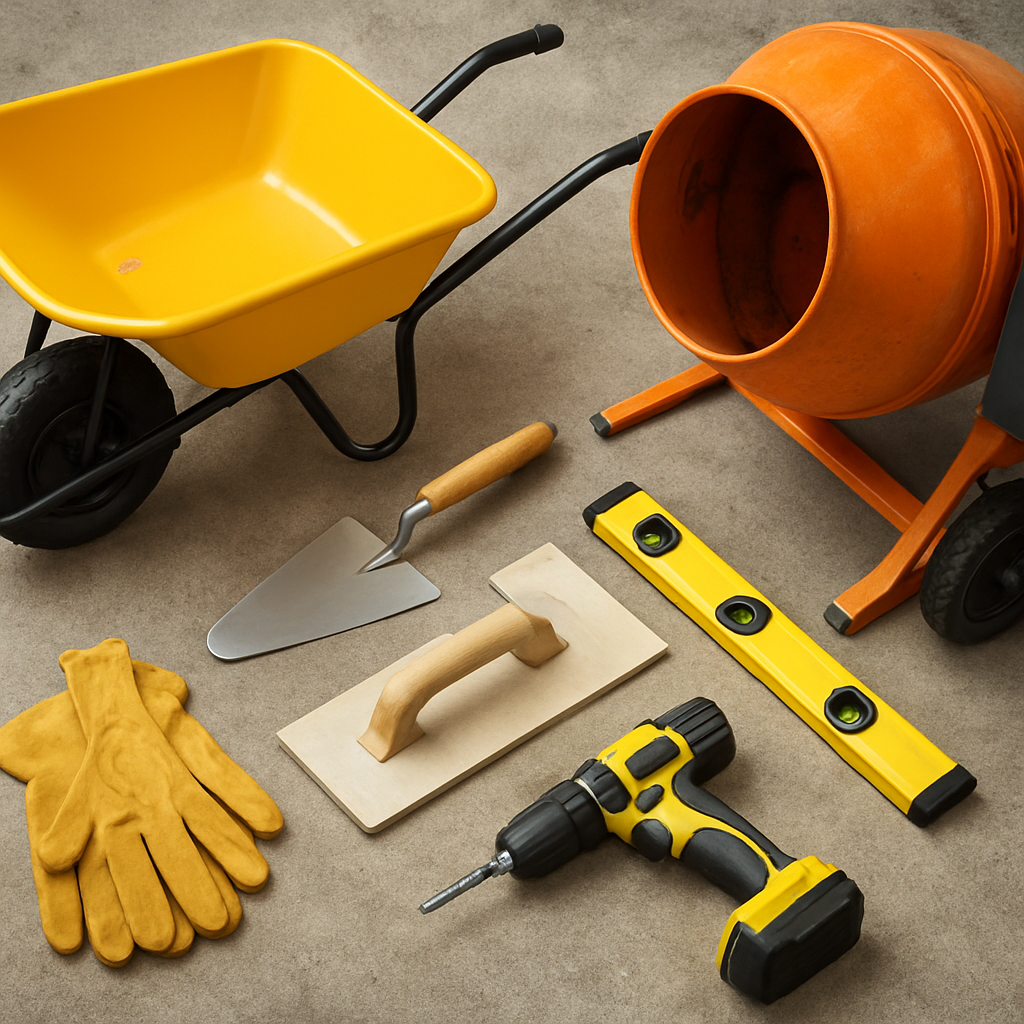
Essential Concrete Tools for Construction Teams: A Practical Procurement Guide
Getting the right concrete tools separates durable work from expensive rework. This practical procurement guide supplies procurement-ready specs, buy versus rent thresholds, vendor and spare-parts criteria, and the safety and silica compliance callouts construction teams must enforce. Expect prioritized tool lists, brand and model examples, and sample RFP language you can drop into bids and purchase orders.
Procurement planning for concrete operations
Start with demand, not catalogs. Define how many crews, what project types, and the expected monthly hours for each core activity before you spec tools. Procurement that begins with brands or price lists wastes budget on low-use equipment and invites downtime when service or parts are distant.
Buy versus rent is a function of utilization and risk. Use a utilization threshold such as 200 hours per year for large items (power trowels, large mixers, ride-on saws). Below that, rental plus delivered setup is almost always cheaper when you include maintenance, storage, and replacement-part risk.
A practical procurement framework
- Define scope and cadence: List project types (sidewalks, slabs-on-grade, structural pours) and how often they occur over 12 months.
- Map tasks to tools: For each task record the minimum crew configuration and which concrete tools are mission critical versus optional.
- Set purchase triggers: Specify utilization thresholds, lead-time risk tolerance, and local service requirements that push an item to buy.
- Capture TCO elements: Purchase price, expected life in hours, routine maintenance cost, parts lead time, storage and transport costs.
- Lock vendor performance clauses: Lead times for spares, guaranteed response windows, and required certification paperwork including silica control guidance.
Practical tradeoff to watch for. Buying reduces recurring rental fees but increases exposure to maintenance and obsolescence. If your sites are regionally dispersed, the true cost of ownership is usually dominated by logistics and parts availability, not the sticker price.
| Item | Task | Purchase Trigger | Spare Parts to Order with First Unit |
|---|---|---|---|
| Internal vibrator (probe set) | Consolidation for structural slabs | >250 hours/year or multiple simultaneous pours | 2 probe tips, 1 spare hose, 1 throttle cable |
| Portable cement mixer (3.5 cu ft) | Small pours, repairs, form work | <200 hours/year, use rental for large pours | Drive belt, engine air filter, mixing paddles |
| Concrete saw (walk-behind) | Control joints, remedial cutting | Buy if >150 cuts/year and local blade supply is reliable | 2 diamond blades, water pump spare parts |
Concrete Example: A municipal contractor running sidewalk and curb programs discovered frequent delays from rented power trowel availability. They purchased one ride-on trowel because their schedule required weekend pours; the purchase paid for itself in two projects by eliminating transit and setup delays. They still rent a second unit during peak season to avoid overcapitalizing.
Include safety and compliance deliverables in the procurement package such as vendor-provided silica control recommendations and PPE compatibility. See OSHA crystalline silica rules at OSHA Silica.
Handheld finishing and layout tools
Key point: the right handheld tools remove variability at the end of the process. Small differences in a float trowel or edger translate to visible surface defects and callbacks, so procurement should treat finishing hand tools as precision consumables rather than generic hardware.
- Bull float (long-handled): buy magnesium or aluminum models with replaceable strike edges for large slabs; prefer models with corrosion-resistant pivot fittings and modular handles from suppliers like Bon Tool or Kraft.
- Screed tools and blade runners: select hardened aluminum or light-steel screeds with replaceable blades; look for blade coupling systems that make field replacement quick.
- Trowels for concrete (steel and finishing): spec blade temper, edge profile, and ergonomic handles; Marshalltown is a reliable source for both edging and finishing blades — see Marshalltown.
- Concrete edger and groover: choose sizes that match joint spacing and include spare groover knives; prefer adjustable depth stops on groovers for consistent joint depth.
- Finishing broom and texturing mats: specify synthetic or tampico bristles depending on final texture, and order at least two sizes of mats for decorative work.
- Kneeboards and long-handled corner finisher: inexpensive but mission-critical; require reinforced edges and non-slip surfaces to reduce operator fatigue.
Procurement criteria to demand: ask vendors for blade temper grade, corrosion finish (galvanized or stainless options), handle attachment warranty, and availability of replacement blades or knives. Buy tools with replaceable components. If a trowel is cheap but welded as a single piece, you will be buying another one after the handle breaks on day two.
Trade-off judgment: stainless blades resist rust but are softer and can need more frequent re-sharpening; tempered carbon steel holds an edge longer but requires drying and light oiling after use. For crews working multiple pours per week, tempered carbon steel with a planned maintenance routine gives the best finish for the dollar.
Concrete Example: on a fast-track warehouse slab project the superintendent specified an extra set of Marshalltown float trowels, two magnesium bull floats, and three groovers per crew. When a weekend pour ran late, the spare trowels prevented a half-day delay while one set was cleaned and reconditioned; the minor upfront spend avoided rental fees and kept the finishing team productive.
Quantities, storage, and spare-parts policy
Recommended baseline for a 10-person finishing crew: 6 finishing trowels, 2 edging trowels, 2 groovers, 1 bull float, 2 screed blades, 2 kneeboards, and 2 finishing brooms. Increase trowel count by 25% for high-turnover schedules or abrasive aggregates.
Storage and maintenance: require corrosion control – hanging racks in a ventilated cabinet, quick-clean brushes, and a 6-month sharpening/reconditioning cadence. Include spare blade packs and broom heads in the first delivery so crews are not forced to use worn tools mid-project.
Practical limitation: premium handheld tools improve outcomes only if paired with trained finishers and a simple maintenance routine. Buying the top brand does not substitute for crew skill or scheduled tool care.
Power equipment for mixing, cutting, and grinding
Immediate point: failures in power equipment create stop-work conditions far faster than shortages of handheld tools. A clogged pump on a walk-behind saw or a worn mixing paddle on a portable cement mixer will idle crews for hours, so specify machines for uptime, not just specs on paper.
Procurement callouts that matter
- Engine and drive compatibility: match engine horsepower and fuel type to expected duty cycles; prefer easy-start diesel or proven Honda engines on mixers and vibrators where continuous runtime matters.
- Cutting and grinding containment: buy or require water-feed kits and shrouds for saws and grinders to control silica — wet cutting reduces airborne dust and aligns with OSHA rules (OSHA Silica).
- Blade and disk ecosystem: specify arbor size, blade diameter, and diamond bond types in the contract so vendors supply compatible spares quickly; demand two spare diamond blades with first delivery.
- Service network over specs: prioritize dealers with regional service coverage and stocked wear parts; a high-spec saw is worthless if the nearest dealer is two days away.
- Vibration and ergonomics: for grinders and saws require anti-vibe handles and clear M/Hz or RPM specs to limit operator fatigue and tool drift on precision cuts.
Trade-off to accept: high-end, heavy-duty units reduce cycle time but increase transport and maintenance demands. For intermittent or short runs prefer rental of large mixers and ride-on trowels; buy when equipment sees consistent use across projects or when schedule risk from rentals outweighs capital cost.
Concrete Example: a concrete contractor handling multi-day road repairs kept a Husqvarna K770 for daily joint cutting and purchased a 3.5 cu ft Multiquip Whiteman mixer for quick patch work. For foundation pours they rented a larger volumetric mixer delivered for the job; this split reduced capital tied up in rarely used large mixers while ensuring the crew had a reliable walk-behind saw on site.
Practical limitation: cordless concrete grinders and battery saws are convenient but battery runtime and torque fade under sustained loads. Use cordless for detail and tight access; use corded or petrol units for continuous surface prep and long cuts to avoid mid-shift battery swaps and unexpected downtime.
Judgment call: when choosing between similar models, pick the one with documented spare-parts lead times and a dealer that will commit to guaranteed response windows. In practice, that reduces repair time more than a small advantage in advertised RPM or engine HP.
Consolidation, testing, and curing equipment
Immediate reality: poor consolidation or inadequate curing is the single most common procurement-driven cause of early-age cracking and low compressive strength you will see in the field. Buy and spec the right hardware and materials up front because fixing these failures costs more than the equipment that prevents them.
Consolidation equipment specifics to require: internal vibrator probe sets with clear Hz and amplitude ratings, spare probe tips, and hose assemblies rated for repeated flexing. Lock in probe diameters (e.g., 25 mm, 35 mm, 50 mm) and at least two lengths per probe type to match slab and column thicknesses. Require vendors to state motor RPM and vibration frequency and to supply a maintenance kit with replacement tips and hose couplings on first delivery.
What often goes wrong and how to avoid it
Practical trade-off: high-frequency vibrators speed air release but can cause segregation if the operator over-works the concrete; lower frequency, larger amplitude probes consolidate denser mixes better in deep sections. Specify probe selection guidance from the vendor and include an on-site training hour requirement in the contract so crews use the right probe for the right mix.
Testing gear procurement notes: buy calibrated slump cones, air meters, thermometer kits, and a field-capable data logger for time-stamped test records. Require calibration certificates within 30 days of delivery and a vendor commitment for annual recalibration. For nuclear or electronic moisture/density gauges, insist on vendor-supplied calibration curves and local service availability.
Curing materials and application equipment: specify curing compounds by coverage rate (ft2/gal), VOC class if relevant to site regulations, and minimum recoat time. For water curing prefer portable sprinkler systems or low-pressure curing pumps with timed controllers; when using membrane-forming curing compounds require sprayers with uniform output (nozzles listed) and a backup sprayer in the first shipment.
| Equipment | Critical specs to lock in | Procurement red flags |
|---|---|---|
| Internal vibrator (probe) | Freq/amp, probe diameters, hose flex rating, spare tips included | No stated Hz/amp specs, or single probe length fits all |
| Field test kit | Calibration certificate, data logger with exportable CSV, spare cones | Delivered without calibration paperwork or limited data export |
| Curing compound + sprayer | Coverage rate, VOC class, nozzle type, backup sprayer | Vendor won't state coverage or lacks nozzle specification |
Concrete Example: On a multi-bay industrial slab the contractor specified 40 mm and 25 mm vibrator probes, a vendor training hour, and a dedicated curing-sprayer with a spare pump. During a hot-weather pour the crew swapped to the larger probe in thicker bays and used the timed sprayer overnight; early-age strength tests met design values and plastic shrinkage cracking was minimal compared with past projects where neither probe sizing nor timed curing were enforced.
Procurement judgement: require probe frequency/amplitude data, calibration certificates, and a vendor training hour as contract deliverables. These items reduce project risk more reliably than buying the most expensive unit on paper.
Next consideration: tie warranty and service language to measurable outcomes: require vendors to commit to replacement part lead times and provide a one-page troubleshooting guide for field crews. If the vendor resists these operational terms, treat that as a red flag on reliability.
Reinforcement and formwork tooling
Immediate reality: rebar and formwork tooling determine whether a pour starts on time and finishes within tolerance. The wrong tying tool, incompatible form tie, or missing consumable will stall a crew faster than a broken trowel ever will. Procurement should treat these items as schedule-critical equipment, not incidental hardware.
Rebar tying tools – what to require: pick cordless tiers with documented ties per charge and a recommended battery-spares ratio. Demand compatibility data for common bar sizes and spacing patterns, a vendor-stated cycle time per tie under load, and a charging infrastructure plan so crews do not cannibalize batteries midshift. The tradeoff is clear: cordless tiers cut fatigue and speed but shift risk to battery logistics and replacement-battery cost.
Formwork tooling – practical considerations: prefer modular hardware that fits multiple panel systems, but recognize the vendor-lock risk. Proprietary form ties and clamp systems speed setup and reduce tiebacks, yet they create long-term parts dependency and higher upfront spend. If your organization rotates projects across multiple general contractors, specify universal connector options or require the vendor to stock adaptors.
Cutting and bending for rebar: for site benders and cutters choose machines rated for the largest bar you will bend plus one size above for margin. Hydraulic units give throughput and reduced operator effort, pneumatic units simplify service in shops with compressed air, and electric bench units reduce onsite noise but demand stable power. Maintenance availability and replacement jaw lead times are more important than 5 percent faster cycle claims.
Concrete Example: a mid-size contractor moved from manual tying to a cordless rebar tier fleet. Initial runs cut tying time by roughly half, but after two weeks the crew experienced downtime because batteries were not charged and spare packs were insufficient. The remedy was simple and procurement driven – add two spare batteries per tool, a locking charging cart, and require vendors to ship an initial spare-battery set with first delivery.
Operational clauses to include in purchase orders
Include these contract items: vendor throughput verification tests, list of compatible rebar sizes and tie counts per charge, spare-parts lead times in days, one onsite training hour per 10 tools, and a three year parts availability commitment. Link the vendor to your logistics by requiring battery inventory tagging and a basic charging-rotation SOP to be supplied on day one. Use Hubzone Depot sourcing if you need supplier diversity and documented HUBZone credentials – see Hubzone Depot procurement solutions.
Next consideration: align your spare-parts and consumable buys with the tooling contract rather than on an ad hoc basis. That single change reduces stoppage risk and administrative overhead more than chasing marginal unit-cost savings at bid time.
Safety, PPE, and regulatory compliance
Immediate requirement: treat PPE and silica controls as line-item deliverables, not optional extras. Procurement decisions here influence schedule risk, insurance exposure, and regulatory penalties — so specify controls, filters, and training in the contract language up front.
What to lock into purchase orders and rental agreements
Contract deliverables to demand: require vendor-supplied documentation that includes a site-specific silica control plan, manufacturer certification for respirator cartridges or P100 filters, and an equipment maintenance schedule showing expected service intervals. Also require proof of dealer or technician coverage within your service radius and a one-hour vendor-led toolbox talk on using the supplied controls.
Trade-off to plan for: wet cutting and water-fed shrouds reduce airborne silica but create slurry and wastewater that must be contained and disposed of to local regulations. Local exhaust ventilation (LEV) systems avoid slurry but add upfront cost, demand power, and need routine filter changes. Choose the control that fits site logistics and then buy the consumables and waste-management hardware for it.
Concrete Example: a road-repair subcontractor specified a Husqvarna K770 with its factory water kit, then added a supplier clause requiring two spare pump seals and 12 replacement P100 filters on delivery. The vendor also conducted a one-hour on-site training on wet-cut setup and slurry capture. That procurement language prevented a three-day stoppage the week the pump seal failed and eliminated a near-miss for unprotected cutting.
| Requirement | Sample procurement clause |
|---|---|
| Silica control plan | Vendor shall provide a written silica control plan for cutting/grinding operations within 5 business days of award, referencing OSHA Silica, and certify implementation steps. |
| Respirators and filters | Supply NIOSH-approved respirators and 12 P100 cartridges per 10 units delivered; vendor to provide certification labels and one year of filter part numbers. |
| Training and documentation | Deliver one on-site 60-minute tool-and-control training per delivery, plus PDF SOPs for daily checks, filter replacement, and emergency procedures. |
| Service and spares | Confirm dealer within 100 miles with spare-parts lead time ≤72 hours for critical components or provide loaner equipment until repairs are complete. |
Takeaway: make silica controls, respirator supplies, vendor training, and dealer service commitments contractual line items — that single change cuts the largest legal and schedule risks tied to concrete tools.
Procurement checklist, RFP language, and TCO templates
Immediate point: turn the tool list into measurable contract deliverables. For concrete tools procurement, the line items that matter are not just make and model but spare-kits, response times, acceptance tests, and a documented plan for consumables and training. Vendors who will not commit to those operational terms are rarely reliable partners in the field.
- Define functional spec: list required performance metrics – ties per charge, probe Hz and amplitude, blade diameter, and expected throughput.
- Set buy versus rent rule: include a utilization trigger and logistics cost factor instead of a blanket rule.
- Require spare-kit on first delivery: minimum list for that class of tool and required quantities.
- Service SLA: maximum travel time or parts lead time and vendor obligation to provide loaner equipment for critical outages.
- Acceptance testing: onsite functional test with checklist and signoff window.
- Preventative maintenance schedule: vendor-supplied intervals and labor rates for PMs.
- Consumables commitment: list filters, blades, tips with initial quantities and unit part numbers.
- Warranty with remedies: clear response times and remedies for missed SLAs.
- HUBZone and diversity preference: contract language and required certification documents.
- Freight and installation terms: responsibilities, crating, and unpacking checks.
- Training and documentation: number of onsite training hours and deliverable SOPs.
- End of life and spare parts window: guaranteed parts availability period and notice requirements.
Sample RFP language you can drop into purchase orders
Sample Warranty Clause: Vendor shall warrant equipment for a minimum of 12 months from acceptance. Vendor must respond to critical repair requests within 48 hours, provide a loaner unit for mission-critical items if repair exceeds 72 hours, and supply an initial spare-kit defined in Appendix A. Remedies for failure to meet SLA shall include reimbursement of documented downtime costs up to the lesser of actual loss or 10 percent of equipment value per incident.
Lead Time and Parts Clause: Vendor must disclose stocked part numbers and commit to parts delivery within 72 hours to locations within the service radius. If parts cannot be delivered within 72 hours, vendor will provide a temporary replacement or expedite shipping at vendor cost. Supplier shall include a current dealer map and single point of contact for escalations.
HUBZone Preference Clause: Buyer prefers HUBZone certified suppliers and will award additional evaluation credit for verified HUBZone status. Supplier shall attach a current HUBZone certification document and provide a traceable invoicing tag for spend reporting. See Hubzone Depot procurement solutions for supplier matching services.
| Cost Component | Initial (Year 0) | Annual (Years 1-N) | Notes |
|---|---|---|---|
| Purchase price | Enter unit cost | – | Include installation and training |
| Initial spare-kit | List parts and cost | – | Required on first delivery |
| Preventative maintenance | – | Annual PM labor + parts | Vendor schedule and rates |
| Consumables | Stock for first 6 months | Replenish per usage | Filters, blades, tips |
| Transport and storage | Crating and delivery | Onsite storage cost | Include rack or charging cart |
| Estimated downtime cost | Model lost hours x labor rate | Adjust yearly | Use project-specific hourly burden |
| Residual value / disposal | Estimated resale value | – | Useful life assumption |
Concrete Example: a campus renovation RFP required a walk-behind saw with two spare diamond blades, a 72-hour parts SLA, and one onsite training hour. During the second week of cutting a blade shattered; the vendor shipped a replacement the same day under the SLA and loaned a blade so the crew continued work without delay. The small upfront spend on spares and SLA avoided a multi-day schedule ripple and unbudgeted overtime.
Vendor shortlist and how Hubzone Depot supports sourcing
Practical reality: a tight vendor shortlist removes procurement ambiguity and forces vendors to compete on uptime and support, not just unit price. Choose suppliers that can document parts availability, regional service coverage, and a clear spare-kit policy up front.
Curated vendor shortlist (what to expect from each)
- Marshalltown – excellent for finishing hand tools and replaceable blades; procurement caveat is limited heavy-equipment support so bundle with a service dealer for power tools.
- Husqvarna – industry-standard concrete saws like the
K770; strong blade ecosystem and aftermarket parts, but verify local dealer SLA for emergency blades. - Wacker Neuson – rollers, power trowels, and internal vibrators with robust dealer networks; prioritize models with documented spare-parts lists and local technician coverage.
- Multiquip Whiteman – dependable portable mixers and pumps; check fuel/engine options to match site logistics and request spare drive belts with first delivery.
- Max USA – cordless rebar tiers and charging infrastructure; confirm battery spare ratios and replacement cycle commitments before fleet purchase.
- Troxler / Humboldt – testing and field instrumentation; require calibration certificates and on-site calibration turnaround time in the contract.
- Bon Tool / Kraft – long-handled floats, screeds, and edging tools; good for modular handle systems and replaceable strike edges.
Tradeoff to manage: prioritize vendors that commit to parts and service over those offering the lowest sticker price. In practice, a 3-5 percent premium for a vendor with a 24-48 hour parts SLA and local technicians reduces schedule risk materially.
Hubzone Depot role: we do supplier discovery and compliance validation so you do not trade speed for diversity. Services include HUBZone supplier matching, verification of certification documentation, spend analytics to find duplication, and small-parcel auditing to cut freight waste. If you need a HUBZone-certified source for a Husqvarna K770 or Marshalltown finishing kit, Hubzone Depot will validate certification, confirm dealer maps, and attach spare-kit requirements to the PO via our procurement services portal – see Hubzone Depot procurement solutions.
Concrete Example: A municipal crew needed saws, internal vibrators, and rebar tiers for a sequence of traffic-control pours. Hubzone Depot matched them with a HUBZone-certified dealer who delivered two K770 saws with a starter blade pack, supplied two spare vibrator probe tips per probe size, and provided onsite equipment orientation. The result: no lost days from delayed blades and documented spend that met diversity reporting requirements.
Judgment: dual-source critical classes. Use a primary OEM for parts depth and a certified HUBZone or small-business partner as a short-lead backup or for consumables consignment. That combination secures both uptime and supplier-diversity objectives without creating single-vendor exposure.
Require a written parts lead-time commitment and an initial spare-kit in every award. Vendors that refuse this are a procurement risk, regardless of brand reputation.
{
“@context”: “https://schema.org”,
“@type”: “BlogPosting”,
“mainEntityOfPage”: {
“@type”: “WebPage”,
“@id”: “https://shop.hubzonedepot.com/concrete-tools-procurement-guide”
},
“headline”: “Top Concrete Tools for Construction Teams | HubZone Depot”,
“description”: “Discover essential concrete tools every construction team needs. Explore our practical guide for smart procurement at HubZone Depot.”,
“image”: [
“https://shop.hubzonedepot.com/images/concrete-tools.jpg”
],
“author”: {
“@type”: “Person”,
“name”: “Elisa”
},
“publisher”: {
“@type”: “Organization”,
“name”: “Hubzone Depot Shop”,
“logo”: {
“@type”: “ImageObject”,
“url”: “https://shop.hubzonedepot.com/logo.png”
}
},
“datePublished”: “2023-10-01”,
“dateModified”: “2023-10-01”
}article blockquote,article ol li,article p,article ul li{font-family:inherit;font-size:18px}.featuredimage{height:300px;overflow:hidden;position:relative;margin-top:20px;margin-bottom:20px}.featuredimage img{width:100%;height:100%;top:50%;left:50%;object-fit:cover;position:absolute;transform:translate(-50%,-50%)}article p{line-height:30px}article ol li,article ul li{line-height:30px;margin-bottom:15px}article blockquote{border-left:4px solid #ccc;font-style:italic;background-color:#f8f9fa;padding:20px;border-radius:5px;margin:15px 10px}article div.info-box{background-color:#fff9db;padding:20px;border-radius:5px;margin:15px 0;border:1px solid #efe496}article table{margin:15px 0;padding:10px;border:1px solid #ccc}article div.info-box p{margin-bottom:0;margin-top:0}article span.highlight{background-color:#f8f9fb;padding:2px 5px;border-radius:5px}article div.info-box span.highlight{background:0 0!important;padding:0;border-radius:0}article img{max-width:100%;margin:20px 0}