



 MAIN MENU
 My Supplies
 Get Help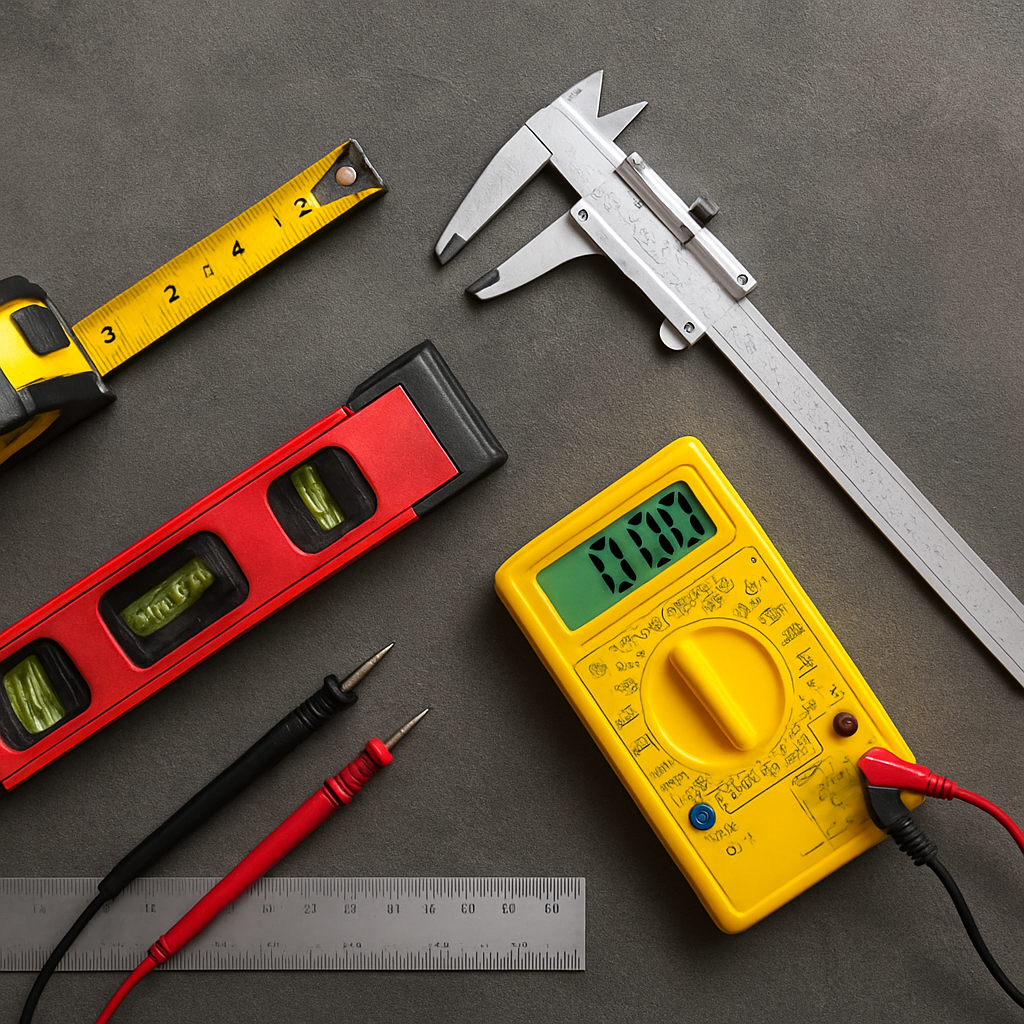
Small measurement mistakes create outsized costs in shipping, returns, and production downtime. This pragmatic checklist of essential measuring tools shows procurement managers which instruments to standardize, which brands and SKUs to favor, and how each tool reduces receiving, quality, and shipping risk. Expect actionable specs, calibration intervals, price bands, and stocking recommendations you can use to tighten vendor compliance and cut avoidable spend.
1. Stanley FatMax 25-Foot Tape Measure
Practical reality: a rugged 25-foot tape lives on every receiving bay and gets used more than any precision instrument. The Stanley FatMax 25-foot is not glamorous, but it reduces mistakes that cost time and money because it is fast, durable, and easy for any dockhand to use correctly.
Why procurement should standardize on this model
Key procurement point: standardize on a single 25-foot tape model across locations to remove variability in dimension checks. Consistency trims handling time, reduces dimensional disputes with carriers and suppliers, and simplifies replacement purchasing and inventory tracking.
- Specs to insist on: 25 ft length, minimum 1 inch blade width for rigidity, dual-side markings preferred, magnetic hook if your team handles metal skids.
- Durability features that matter: reinforced hook rivet, impact-resistant casing, and anti-rust coating on the blade to survive daily warehouse abuse.
- Price-and-sourcing: expect $10 to $25 each; buy through Stanley Black & Decker distributors or consolidate orders via Hubzone Depot Shop to combine spend and simplify supplier diversity reporting.
Limitation and trade-off: tape measures are coarse tools. They are excellent for cartons, pallet profiles, and quick clearance checks but unreliable for any tolerance-driven inspection. If incoming parts require millimeter-level certainty, pair tapes with calipers or micrometers rather than upgrading the tape itself.
Care and SOP integration: include a visual inspection in your receiving checklist each quarter — look for kinks, peeled markings, loose hooks, and corrosion. Replace rather than repair: a warped blade directly causes measurement error and false claims.
Concrete example: a mid-size parts distributor standardized on the Stanley FatMax across three satellite warehouses. Receiving clerks used the same tape for pallet footprint checks and packing dimension entries; the standardization eliminated inconsistent carton measurements that had triggered repeated dimensional-weight carrier disputes and cut the time to process inbound claims by roughly half.
Practical judgement: buy function over features. A well-built FatMax is a better value for receiving than an expensive digital tape; digital features rarely survive warehouse knocks and complicate replacement and calibration tracking.
2. Mitutoyo 500-196-30 Digital Caliper
Direct point: the Mitutoyo 500-196-30 is the sensible standard for precision receiving work where parts need repeatable inside, outside, depth and step measurements without the overhead of a full metrology bench. Buy this model when your rejection risk comes from dimensional variance, not operator guesswork.
What procurement should insist on
| Feature | Procurement action |
|---|---|
| Range & Resolution (0 to 150 mm / 6 in; 0.01 mm / 0.0005 in) | Specify the 150 mm version for general shop use; reserve longer calipers only if you inspect large castings. Insist on 0.01 mm resolution as the minimum for incoming part control. |
| Material & Build (stainless steel body) | Require hardened stainless construction and supplied protective case to reduce service calls and blade wear in a dock environment. |
| Digital readout and optional data output | If you feed inspection results into SPC, buy the data-output SKU and confirm cable or Bluetooth compatibility with your MES. For low-volume lines skip data output and save on upfront cost. |
| Calibration traceability | Mandate annual calibration with NIST traceability and request the certificate on delivery. Tie the tool to your asset tag and calibration schedule immediately. |
Practical limitation: a caliper is only as good as the operator and the environment. Dirt, burrs, and sloppy measuring habits create repeatability errors larger than the instrument resolution. Treat calipers as inspection instruments, not layout tools; use them in a clean area, train inspectors on consistent seating and pressure, and lock the jaws before reading.
Trade-off to accept: data-output calipers cost more and require integration work, but they cut transcription errors and save audit time. For a high-mix supplier approval process, the premium pays off quickly; for intermittent checks on noncritical parts, the manual model is lower total cost.
Concrete example: a contract manufacturer caught a 0.08 mm undersize on a batch of mating shafts during first-article incoming inspection using a Mitutoyo caliper. Blocking those parts prevented a line stoppage that would have cost several hours of downtime and expedited freight. The caliper itself cost less than one hour of assembly downtime, so the ROI is immediate.
Procurement judgement: buy at least one Mitutoyo caliper per inspection station and one spare per three stations; require the data-output option only where results are routinely logged to SPC. Source from authorized Mitutoyo distributors or consolidate purchasing through Hubzone Depot Shop to capture HUBZone spend and simplify calibration bundles.
3. Mitutoyo Outside Micrometer
Direct point: Micrometers catch dimensional errors that calipers cannot — they are the last-line inspection tool for parts with tight diametral or thickness tolerances. If a rejected part at assembly costs more than a micrometer, buy the micrometer.
What this tool does in practice: A 0 to 1 inch outside micrometer with 0.0001 inch resolution gives repeatable thickness and outside-diameter readings for turned, ground, or stamped parts. The ratchet stop and hardened anvils reduce operator-applied variation; the trade-off is range. Micrometers are slow compared with calipers and you will need multiple ranges or a set to cover a production line.
Procurement and calibration details
Choose Mitutoyo or Starrett outside micrometers with a ratchet stop and hardened measuring faces. For most receiving and first-article work buy a 0 to 1 inch (0 to 25 mm) micrometer plus 1 to 2 and 2 to 3 inch increments if you inspect larger parts. Decide between analog thimble micrometers for durability or digital micrometers with data output if you must log measurements automatically into SPC.
- Resolution and ranges: insist on 0.0001 inch (0.001 mm) resolution for critical fits; where tolerances are looser, a lower-resolution tool is acceptable but keep standards documented.
- Calibration interval: schedule biannual calibration for high-use inspection tools and annual for moderate use; require NIST-traceable certificates and keep them attached to the asset record. See NIST calibrations for traceability guidance.
- Environment and handling: measure in a temperature-stable area, avoid touching anvils with bare hands before measurement to prevent thermal drift, and train inspectors on consistent seating and torque using the ratchet stop.
- Procurement note: buy authorized-distributor SKUs to ensure calibration support and spare parts. Cheap imports create false precision and short-lived consistency.
Practical limitation: Micrometers require clean, burr-free contact surfaces. If your incoming parts have burrs or surface roughness, micrometer readings will vary and give misleading assurance. Use them where the part finish is controlled or after a quick de-burr step in receiving.
Concrete example: A regional gearbox assembler introduced a Mitutoyo 0 to 1 inch micrometer at first-article inspection and caught a supplier batch of shafts undersize by 0.0008 inch on average. Stopping that batch before assembly avoided repeated gearbox failures and warranty returns; the micrometer and a single corrective shipment saved the company multiple hours of downtime and significant replacement costs.
Buy the right number of ranges and insist on traceable calibration. One precise micrometer that is calibrated and used correctly will protect more value than ten uncalibrated cheap units.
4. Bosch GLM 50 C Laser Distance Measure
Straight answer: A mid‑range laser distance meter like the Bosch GLM 50 C buys you speed and repeatability for pallet, room, and package footprint measurements — but it is a tool for dimensional surveying, not a one‑size replacement for every dock measurement.
What it does for procurement teams: The GLM 50 C records single distances, area, volume, and indirect Pythagorean measurements and pushes readings via Bluetooth to apps or spreadsheets. That reduces transcription errors at packing stations and speeds dimensional-weight auditing when you need repeatable inputs for carrier dispute workflows.
Procurement checklist and on-the-job caveats
- Buy the pro model with connectivity: prioritize the Bluetooth-enabled GLM 50 C for data capture; avoid cheaper no‑connect variants if you plan to feed measurements into WMS or a packing optimization app.
- Insist on usable accuracy spec and conditions: confirm the accuracy will meet your workflow needs and specify a target plate for long or low‑reflectivity runs because reflective plastic, glass, or dark surfaces degrade readings.
- Include a physical target and case: a small target plate and a shockproof case reduce failed readings and field damage — inexpensive accessories that save returns and re-measure time.
Practical limitation: Laser meters are sensitive to surface finish and angle. On irregular pallet loads, soft stretch wrap, or glossy stretch film the laser can scatter and give optimistic single‑point readings; when in doubt, cross‑check with a tape or measure from multiple reference points and record the method in your SOP.
Integration trade-off: Bluetooth and vendor apps promise frictionless logging, but in practice pairing and device‑management create overhead. If your packing stations are locked down tablets, validate compatibility before rolling out a fleet. The time saved on manual data entry is real — but only if the connectivity is reliable and supported by IT.
Concrete example: A mid‑sized distributor used the GLM 50 C to capture pallet footprints before carrier pickup. By standardizing the measuring method and exporting readings into their parcel auditing workflow, they eliminated inconsistent dimension entries that previously triggered dimensional weight charge disputes. The device paid for itself within a quarter in avoided carrier refunds and fewer reweigh requests.
Vendor note: source Bosch units through authorized channels to preserve warranty and calibration pathways; see Bosch Professional and consolidate orders via Hubzone Depot Shop when supplier diversity or HUBZone reporting matters.
5. Accuteck ShipPro Digital Shipping Scale
Straight assessment: Weight mistakes are low-friction errors that add up—overpaying carriers, losing disputes, and accepting mis-declared supplier shipments. The Accuteck ShipPro family solves that by putting repeatable, auditable weight reads where packing decisions are made.
Key procurement trade-off: Capacity versus resolution. A 150 lb platform that reads to 0.1 oz looks useful, but the higher the capacity you buy, the more the fine-grained resolution and repeatability usually suffer. Buy the smallest certified capacity that covers your typical parcel mix rather than one oversized unit that hides small overweights.
What to insist on when you buy
- Integration-ready: prefer models with USB, RS232, or Ethernet for direct capture to your packing app or parcel-audit tool to eliminate manual entry.
- Platform and form factor: bench scales for single-parcel lanes; larger floor or pallet variants only where you handle bulky freight — match the platform to the workflow.
- Certification clarity: if scale readings will be used for invoicing or formal carrier claims, require a model that can be registered or supplied with trade verification from an accredited lab.
- Serviceability: pick vendors with local calibration partners or on-site recertification options and require replacement load cells availability for five years.
Practical limitation: scales are mechanical and environmental. Vibration from conveyors, draft from dock doors, and uneven bench tops introduce noise. Locate your ShipPro on a stable surface, add an anti-vibration mat if the lane is noisy, and standardize a single placement point for parcels to keep repeatability tight.
Real-world use case: A three-lane ecommerce pack station added Accuteck ShipPro bench scales and enforced an auto-tare plus unit-weight verification step before label print. Within six weeks they cut dimensional-weight disputes by forcing repacks for marginal items and logged weights that proved a recurring supplier under-declared carton weights. The scale hardware paid for itself in one quarter of avoided carrier overcharges and fewer manual audits.
Operational judgment: networked scales are powerful but increase IT and security overhead. If you cannot support device management and firmware updates, opt for USB/serial capture to a locked workstation rather than exposing devices directly to the network.
Next consideration: decide whether scale readings will be authoritative for billing or only for internal control—your certification and support requirements change depending on that choice.
6. Starrett 12-Inch Combination Square
Direct value: The Starrett 12‑inch combination square is the fastest low-cost instrument to detect out-of-square faces, incorrect depths, and sloppy fixture setup that silently cause assembly misfits and packaging errors. Use it as a go/no-go audit tool at receiving and on test benches rather than as a substitute for micrometers or calipers.
What it measures: The tool provides repeatable 90 and 45 degree checks, depth and step measurements, basic centering, and a scribing guide. Its hardened-steel rule and locking head make the checks quick to repeat across multiple inspectors and bays.
Procurement and specification pointers
- Buy the hardened-steel rule model: prioritize Starrett 12 inch variants with a locking head and clear graduations to survive warehouse knocks.
- Optional features worth paying for: a precision-machined head (less slip), a center-finder insert if you do shaft work, or a protractor head for angle verification on welded parts.
- Price-to-life trade-off: spend a bit more up front for genuine Starretts — cheaper squares deform or develop head slop that creates measurement drift and hidden rework costs.
Practical limitation: Combination squares are about form and relative geometry, not micro-tolerance. If your incoming acceptance criteria are +/-0.05 mm on a machined face, rely on calibrated micrometers or a CMM. Use the square to catch larger setup and assembly-affecting errors early.
Concrete example: A contract manufacturer received an engineered bracket batch whose mating holes aligned poorly with a downstream weld jig. A quick 12‑inch square check showed the flanges were 3 mm out of perpendicular on average. Catching that in receiving forced a supplier corrective action and avoided a full-day production stop and a dozen reworked assemblies.
Usage tip that matters: Train inspectors to lock the head and reference the same surface point every time, and document the reference location in your SOP. Teams that skip a consistent seating method introduce operator variation larger than the tool's accuracy.
7. Stabila 9-Inch Torpedo Level
Clear, low-cost control: a 9-inch Stabila torpedo level is the fastest way to verify immediate level and plumb geometry during installs, short-run fixture checks, and tight-space packing operations. It is not a metrology instrument — it is a risk-control tool that catches the kinds of alignment errors that create dropped pallets, damaged stock, and safety incidents.
Why procurement should treat torpedo levels as operational controls, not incidental giveaways
Procurement insight: buy the professional model with sealed vials, shock-absorbing end caps, and a magnetic base option. The small premium over cheap plastic levels buys repeatability in a warehouse environment and reduces silent failures where a bubble has drifted and inspectors never notice.
- Key specs to require: 9 in length, three vials (horizontal, vertical, 45-degree), vial accuracy around 0.5 mm/m or better, and a rubberized frame for drop resistance.
- Accessories that matter: magnetic strip for metal racking checks, a protective pouch for tool cribs, and high-visibility vial colors for low-light bays.
- Procurement actions: source Stabila through authorized distributors or consolidate via Hubzone Depot Shop to capture HUBZone spend and simplify warranty/certification paperwork.
On-the-job trade-off: the 9-inch length is perfect for confined checks and pallet-top verification but cannot replace longer levels for long-run straightness or floor flatness surveys. If you need to validate long spans, pair the torpedo with a 48-inch or longer box level rather than buying more torpedoes.
Field verification method: flip the level end-for-end on a known flat surface and compare readings; a repeatable offset above ~0.5 mm/m indicates vial drift and replacement. Record that check quarterly in your receiving SOP to maintain auditability without formal lab calibration.
Concrete example: during a racking installation at a distribution center, an inspector used a Stabila 9-inch level to find the uprights were 4 mm out of plumb over a single bay. Correcting the shim before stocking prevented a leaning rack that would have damaged three high-value pallets and created a workplace hazard. The replacement cost and downtime avoided were multiple times the cost of the levels and the brief inspection time.
Use torpedo levels as part of a simple gate: quick check at install, check after every significant relocation, and a quarterly verification flip test logged to your asset record.
8. Hubzone Depot Shop Measuring Tools Starter Kit
Direct outcome: a curated starter kit removes procurement friction, enforces a single inspection method across sites, and gives procurement a packaged calibration and paperwork path for audits. Buying tools one by one creates inconsistent accuracy, missing certificates, and extra POs; the kit solves those operational gaps.
What the starter kit contains and why each piece matters
The Hubzone Depot starter kit bundles practical, high-use instruments so receiving teams have immediate capability for coarse and precision checks plus weight capture. Typical contents: Stanley FatMax 25 ft tape, Mitutoyo 500-196-30 digital caliper, Accuteck ShipPro bench scale (capacity chosen to match your 95th percentile parcel), Starrett 12-inch combination square, Stabila 9-inch torpedo level, and a TEKTON feeler gauge set. The kit also includes asset tags, a durable carry case, and an optional annual calibration contract.
- Basic kit – ready to deploy: tools, case, asset tags; price band roughly $550 to $900 depending on chosen scale capacity and caliper model.
- Calibrated kit – adds factory or NIST-traceable calibration on calipers and scales at purchase: expect an incremental $150 to $400 for initial certificates and tagging.
- Modular subscription – quarterly calibration and spare replacement plan billed annually; best for high-use locations that need audit-ready traceability.
Practical trade-off: the one-size kit speeds rollout but wastes budget if small sites never use the high-end items. For low-volume receiving, opt for the Basic kit plus a central calibrated scale rather than shipping a bench scale to every bay. Conversely, high-volume pack lanes justify the calibrated subscription because certification lapses cost more than the service.
Procurement detail that matters: require the kit delivery to include calibration certificates attached to each serialized asset and an electronic copy uploaded to your asset management system. Use the kit SKU to simplify PO lines, and capture HUBZone documentation by buying through the Hubzone Depot Shop so supplier diversity reporting is straightforward. See the Hubzone Depot Shop for kit purchasing and consolidation options: Hubzone Depot Shop Measuring Tools.
Concrete example: a regional distributor purchased 10 calibrated starter kits and assigned them to five receiving docks plus a central spare pool. Standardized tools and uploaded certificates reduced inbound measurement disputes with carriers and suppliers, and the central spare pool cut downtime when a caliper needed repair. The procurement team closed its quarterly supplier diversity report faster because the kits were bought from a HUBZone-certified vendor and came with the right paperwork.
Kits accelerate compliance and reduce PO noise, but decide up front whether you want a single SKU for audit simplicity or a modular approach that avoids overbuying for low-use sites.
{
“@context”: “https://schema.org”,
“@type”: “BlogPosting”,
“mainEntityOfPage”: {
“@type”: “WebPage”,
“@id”: “https://shop.hubzonedepot.com/top-measuring-tools-every-procurement-manager-needs”
},
“headline”: “Top Measuring Tools Every Procurement Manager Needs”,
“description”: “Discover essential measuring tools every procurement manager should stock and learn why they matter for efficiency and precision.”,
“image”: [
“https://shop.hubzonedepot.com/images/featured-image.jpg”
],
“author”: {
“@type”: “Person”,
“name”: “Elisa”
},
“publisher”: {
“@type”: “Organization”,
“name”: “Hubzone Depot Shop”,
“logo”: {
“@type”: “ImageObject”,
“url”: “https://shop.hubzonedepot.com/logo.png”
}
},
“datePublished”: “2023-10-01”,
“dateModified”: “2023-10-01”,
“articleBody”: “
Measuring tools cut receiving errors, prevent packing mistakes, and stop costly dimensional and weight disputes before items leave the dock. This checklist prioritizes eight essential tools procurement managers should stock and delivers procurement-ready detail: recommended brands and SKUs, expected accuracy and price bands, calibration cadence, and sourcing tips that support supplier diversity and HUBZone reporting. You will get clear decision criteria for tape measures, calipers, micrometers, laser distance meters, scales, and inspection gauges so teams can reduce inspection time, lower shipping spend, and tighten audit traceability.
1. Stanley FatMax 25-Foot Tape Measure
Practical point: the Stanley FatMax 25-foot tape is the simplest, lowest-friction way to capture coarse dimensions on pallets, cartons, doorways and racking during receiving and packing. It is not a precision instrument, but it is the tool that teams reach for 10 times a day — so choose one that survives drops, friction and frequent hooks to steel.
Specs, SKU and procurement notes
Core specs: 25 ft length, roughly 1 inch blade width, double-sided markings and heavy-duty casing with a reliable hook. Example SKU: Stanley 33-725 (common distributor listing). Purchase through your usual industrial supplier or consolidate orders via the Hubzone Depot Measuring Tools collection to capture HUBZone spend.
- Price band: $10 to $25 per unit depending on quantity and vendor.
- Key feature to prefer: magnetic or reinforced hook and a 1 in blade for stiffness — these save time when one person measures tall stacks.
- Stocking tip: keep one per receiving bay plus one spare per three bays to avoid downtime from lost or damaged units.
Maintenance and limits: visually inspect blades quarterly for kinks, check that the hook returns flat, and retire tapes with bent blade edges. There is no formal calibration requirement for a tape used for coarse checks, but record inspections in your receiving SOP and reference NIST calibration guidance when you formalize traceability for dimensional audits.
“,
“@type”: [“FAQPage”],
“mainEntity”:[
{
“@type”:”Question”,
“name”:”What calibration interval should procurement set for calipers and micrometers?”,
“acceptedAnswer”:{
“@type”:”Answer”,
“text”:”Annual calibration is sufficient for low to moderate use; move to six-month cycles in busy inspection stations.”
}
},
{
“@type”:”Question”,
“name”:”Are legal-for-trade shipping scales necessary for parcel auditing?”,
“acceptedAnswer”:{
“@type”:”Answer”,
“text”:”Only if the scale reading will be used for billing or regulatory filings.”
}
},
{
“@type”:”Question”,
“name”:”How many of each tool should a procurement manager stock?”,
“acceptedAnswer”:{
“@type”:”Answer”,
“text”:”Plan one tape measure per receiving bay; one caliper per inspection station; a central bench scale per packing lane.”
}
},
{
“@type”:”Question”,
“name”:”Can laser distance meters replace tape measures in receiving?”,
“acceptedAnswer”:{
“@type”:”Answer”,
“text”:”No. Laser distance meters are faster but tapes remain superior in tight spaces.”
}
},
{
“@type”:”Question”,
“name”:”What documentation should be retained for measuring tools?”,
“acceptedAnswer”:{
“@type”:”Answer”,
“text”:”Purchase invoices, calibration certificates with traceability to NIST.”
}
},
{
“@type”:”Question”,
“name”:”How does buying from a HUBZone supplier like Hubzone Depot help procurement?”,
“acceptedAnswer”:{
“@type”:”Answer”,
“text”:”Purchasing from a HUBZone-certified vendor provides documented small-business spend for diversity reporting.”
}
}
],
“@context”:[“https://schema.org”],
“@graph”:[
{
“@context”:[“https://schema.org”],
“@type”:[“SpeakableSpecification”],
“xpath”:[
“/html/head/title”,
“/html/head/meta[@name=’description’]/@content”
]
}
]
}article blockquote,article ol li,article p,article ul li{font-family:inherit;font-size:18px}.featuredimage{height:300px;overflow:hidden;position:relative;margin-top:20px;margin-bottom:20px}.featuredimage img{width:100%;height:100%;top:50%;left:50%;object-fit:cover;position:absolute;transform:translate(-50%,-50%)}article p{line-height:30px}article ol li,article ul li{line-height:30px;margin-bottom:15px}article blockquote{border-left:4px solid #ccc;font-style:italic;background-color:#f8f9fa;padding:20px;border-radius:5px;margin:15px 10px}article div.info-box{background-color:#fff9db;padding:20px;border-radius:5px;margin:15px 0;border:1px solid #efe496}article table{margin:15px 0;padding:10px;border:1px solid #ccc}article div.info-box p{margin-bottom:0;margin-top:0}article span.highlight{background-color:#f8f9fb;padding:2px 5px;border-radius:5px}article div.info-box span.highlight{background:0 0!important;padding:0;border-radius:0}article img{max-width:100%;margin:20px 0}