



 MAIN MENU
 My Supplies
 Get Help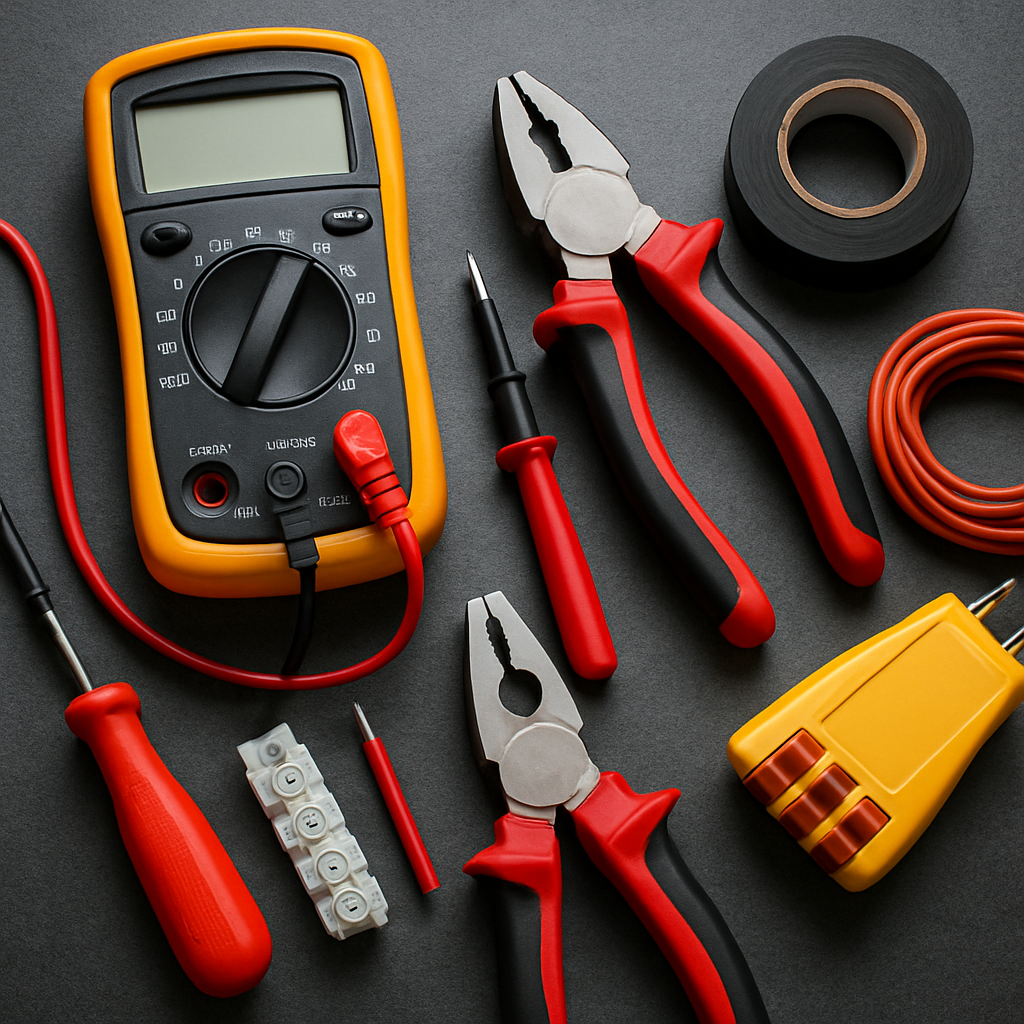
If you manage facilities or maintenance teams, buying electrical tools is less about brand loyalty and more about reducing safety risk, unplanned downtime, and total cost of ownership. This guide provides a procurement-ready framework with spec language, model-level recommendations, calibration and inventory practices, and vendor selection criteria aligned to NFPA 70E, OSHA, and HUBZone requirements. You will get checklists and sample PO snippets to deploy insulated hand tools, testers, and cordless power tools across multi-site operations without guesswork.
1. Define Safety and Compliance Requirements Before Buying
Start with the standard, not the salesperson. Require compliance language up front so every bid is evaluated against the same safety floor rather than brand promises.
Specify alignment with NFPA 70E and OSHA electrical rules as mandatory baseline by referencing the standards directly in POs and RFPs. For insulated hand tools require certification to IEC 60900 or VDE with a 1000 volt rating when the work could encounter energized conductors. For test instruments require stated CAT ratings and traceable calibration documentation.
Minimum procurement items to include
- Standards clause: Items must meet NFPA 70E and OSHA electrical requirements (OSHA electrical).
- Insulated tools: IEC 60900 or VDE marking, 1000 volt rating for tools used near live parts.
- Test equipment: Required CAT rating for intended use (CAT III for distribution panels, CAT IV for service entrance), stated accuracy, and annual calibration traceable to an accredited lab.
- Delivery evidence: Batch certificate for insulated tool sets and accredited calibration certificate for instruments on delivery.
Trade-off to accept: Specifying the highest CAT and insulation ratings for everything raises acquisition cost and can force heavier, less ergonomic tool choices. The right approach is task-based: require the higher rating for equipment that will see service-entrance, switchgear, or outdoor distribution work and permit lighter general-purpose tools for safe, de-energized tasks.
Practical limitation: A 1000 volt insulated screwdriver does not make energized work safe by itself. Insulated tools reduce shock risk but do not replace proper PPE, lockout-tagout, or training. Treat insulation ratings as one element of a layered safety spec, not a substitute for procedures.
Concrete Example: A university facilities team replacing aging panelboards specified insulated pliers to IEC 60900, a Fluke-class DMM with CAT III 600V rating, and required an ISO/IEC 17025 traceable calibration certificate on delivery. That procurement language prevented substitutions of cheaper, non-insulated tool sets and saved two days of rework when incoming tools failed vendor inspection.
Require batch certificates for insulated tools and accredited calibration certificates for instruments on delivery – this is the single fastest way to avoid nonconforming shipments.
Next consideration: After locking the safety and compliance language, the next practical step is to map those requirements to a short list of approved models and vendors so procurement and field teams use the same language when buying or approving substitutions.
2. Core Hand Tools and Insulated Tool Sets
Insulated hand tools are safety equipment, not premium giveaways. Buy them with the same controls you apply to PPE and test instruments: defined purpose, inspection schedule, and replacement triggers. Treat any insulated tool set as the minimum item for tasks that might encounter energized conductors up to 1000 volts, and keep a separate fleet of lighter, non-insulated hand tools for routine, de-energized work to preserve ergonomics and reduce cost.
What a practical core set looks like
- Insulated combination pliers: for gripping, twisting, and cutting medium-gauge conductors
- Insulated diagonal cutters (side cutters): keep one pair sized for copper and one pair for heavier cable
- Insulated long-nose (needle-nose) pliers: work in tight panel spaces and for bending small conductors
- Insulated screwdriver set: include flat, Phillips, and at least one torque-limiting driver for terminal screws
- Insulated adjustable wrench with guarded jaw: useful for conduit fittings when torque control matters
- Cable/bolt cutters with insulated handles: choose models with clear voltage-rating markings and robust cutting capacity
Trade-off to accept: Insulated tools are heavier and often bulkier than their non-insulated equivalents, which hurts speed and causes fatigue on multi-hour jobs. The real-world answer is a two-tiered inventory: reserve insulated sets for live work or where the electrical isolation of conductors is uncertain, and issue lighter hand tools for planned shutdowns and mechanical tasks.
Inspection and lifecycle rules that actually work. Require a visual check before each use, a documented dielectric test at defined intervals (commonly 12 months under regular use, shorten to 6 months for high-frequency or harsh-site use), and immediate quarantine after any drop, handle crack, or solvent exposure. Tag tools with the last dielectric-test date and a QR code that links to the asset record so technicians can confirm status on a phone.
Concrete Example: A plant electrician noticed a hairline split in the molded handle of an insulated screwdriver during the pre-job check. The tool was quarantined, dielectric-tested, and removed from service; an inspection of the crew's toolbox identified two more compromised handles from solvent contact. That one inspection prevented tools with degraded insulation from being used on a live feeder.
Acceptance checks on delivery (practical, not academic): verify the voltage rating is stamped or molded into the handle, confirm presence of a standards mark such as VDE or equivalent, inspect for consistent insulation thickness and fully bonded handles, and record the supplier part and lot number in your asset system. If you require supplier test reports, insist those reports identify the lot and test method rather than a generic compliance statement.
Next consideration: map the insulated sets to job families (panel work, distribution, instrument wiring) and include the assigned set and last-test date on the work order so procurement and operations share a single source of truth.
3. Essential Test and Measurement Instruments
Test instruments drive correct decisions. A cheap or mis-specified multimeter will send a crew chasing the wrong fault and extend downtime. Buy instruments as diagnostic assets: specify expected measurement capability, protective ratings, and service support the same way you buy motors or PLCs.
Practical selection framework
- Safety for the task: Define the measurement category required for the location (for example, Category III for distribution panels, Category IV for service entrance). Match that to the instrument's input protection, not the salesperson's flyer.
- Measurement fidelity: Require True RMS for anything that measures non-sinusoidal or VFD-driven loads. State the minimum accuracy at the ranges you care about (for example 0.5% + 2 digits at 600 V).
- Range and functionality scope: Pick instruments that cover the common job set; a DMM that lacks low-current or low-resistance capability will force extra tools and slow troubleshooting.
- Ruggedness and environment: Specify IP rating, drop tolerance, and battery runtime for field use. If techs work outdoors or in washdown areas, insist on sealed housings and replaceable batteries with stocked spares.
- Service and calibration support: Require delivery with an accredited calibration report and define the expected turnaround time for repair or recalibration.
Trade-off to accept: Higher CAT-rated meters and larger clamp meters are safer in exposure but heavier and less precise at low currents. In practice standardize two classes: a rugged fleet for distribution and switchgear, and a lighter, higher-resolution fleet for panel-level and electronics work.
| Instrument | Recommended model (example) | Key spec to demand | Typical use case |
|---|---|---|---|
| Digital multimeter (bench/field) | Fluke 117 / Fluke 87V | True RMS, CAT III/600 V or CAT IV where needed, stated accuracy at 600 V | Voltage checks, continuity, resistance troubleshooting, motor-start diagnostics |
| Clamp meter | Fluke 325 | 600 A range, inrush/peak capability, CAT III protection | Load balancing, motor current, fault isolation without disconnecting conductors |
| Non-contact voltage detector | Klein NCVT-2 | Sensitivity and false-positive behavior documented | Quick presence checks before opening enclosures; not a substitute for full verification |
| Insulation tester (megohmmeter) | Megger MIT series | Test voltages to match equipment class, selectable ramps, and guarded measurements | Cable and motor winding insulation assessment during preventive maintenance |
| Thermal spot camera | FLIR TG165 | Thermal sensitivity and field resolution, battery life | Hot-spot detection on panels and terminations to prioritize repairs |
Concrete Example: A manufacturing site had recurrent tripping on a feeder that intermittent diagnostics missed. The tech used a Fluke 117 to verify phase voltages and a Fluke 325 clamp meter to capture short-duration current spikes. Logged readings plus a vendor-stamped calibration report helped the plant prove component failure under warranty and avoid replacing the upstream transformer unnecessarily.
Common misunderstanding: Non-contact testers are treated as proof an assembly is de-energized. In reality they are a screening tool with false negatives around shielded conductors and damp insulation. Always follow a verification sequence that ends with a rated, calibrated meter on the actual conductor.
Next consideration: After you fix the model list, lock in a calibration cadence and a small spare pool. In practice, a compact, well-supported instrument fleet reduces mean-time-to-repair far more than buying the cheapest meter for every tech.
4. Thermal Inspection and Circuit Locators
Thermal imaging and circuit locators speed fault finding, but they work as a system—not a magic fix. Buy these electrical tools to shrink troubleshooting time and to prioritize repairs, not to replace hands-on verification. Expect false positives from reflected heat and missed faults from low-emissivity surfaces unless the operator understands the device limits.
Procurement specs that matter
- Thermal imager minimums: resolution (at least 160×120 for spot checks; 320×240+ for diagnostic work), thermal sensitivity/NETD (<50 mK preferred), and radiometric JPEG output to capture measurements.
- Battery and runtime: specify run time ≥3 hours under field conditions and hot-swappable or replaceable batteries because long PM rounds kill single-battery workflows.
- Circuit locator features: selectable signal frequencies, depth-read capability, clamp-on current tracing, and a mode to reject adjacent parallel conductors.
- Ruggedness and service: IP54 or better, a shock-drop rating, and a documented manufacturer calibration or radiometric check interval (require re-certification after a hard impact).
- Training and deliverables: require vendor-led onsite training, a quick-start SOP for your techs, and sample radiometric images from representative site hardware.
Trade-off to accept: higher-resolution thermal cameras and advanced locators cost more up front but cut iteration and truck rolls. Cheap spot thermometers or low-res imagers produce ambiguous images that increase follow-up invasive inspections. Buy fit for use: spot tools for routine PMs, higher-spec imagers for root-cause and warranty evidence.
Real-world use case: A maintenance crew used a handheld imager to flag a hot lug on a distribution panel; the thermal image provided a time-stamped, radiometric file that the vendor accepted under warranty. A tracer followed to confirm the feeder routing and locate a buried splice before excavation, avoiding disruptive exploratory digging.
Practical limitation: circuit tracers struggle in multi-conductor bundled conduits and where passive couplings exist; locators using active tones can mislead unless you switch frequencies and confirm with a clamp-on current trace. Pair locator signals with visual and current measurements for reliable diagnosis.
Use thermal imagers to prioritize and document problems; use circuit locators to minimize invasive work. Do both poorly and you only create more work.
Next consideration: budget for operator training and a small high-spec spare pool. The best value from thermal cameras and locators comes from consistent use and correctly interpreted images, not the lowest purchase price.
5. Power Tools, Cutters and Conduit Tools Relevant to Electrical Work
Power tools are productivity devices, not accessories. For electrical teams they change how fast you install boxes, terminate conduit, and recover from failures — but they also create new failure modes (battery availability, bit wander, metallic debris in panels) that procurement must anticipate.
Platform standardization matters more than the brand. Buying a mixed fleet of cordless drills and impact drivers increases spare battery count, charger types, and warranty complexity. Specify one battery chemistry and one platform family per site cluster so chargers, spare packs, and charger turnaround are predictable.
Tools and specs you should require
- Drill drivers and impact drivers: prefer brushless motor models (for example Milwaukee M18 Fuel, DEWALT DCF887) with torque control, 2-speed ranges, and a battery runtime spec matching your average job length.
- Cutters and saws: battery-powered reciprocating saws and compact circular saws for conduit and trunking; insist on tool-less blade changes and metal-cut blades rated for stainless or EMT where needed.
- Conduit tools: Greenlee-style mechanical conduit benders, knockout punches, and battery-powered hydraulic punches for quick retrofit work — require calibrated degree stops or torque-limited drives for repeatability.
- Oscillating multitools and grinders: choose variable-speed models with metal dust guards and dust-extraction compatibility for panel work.
- Portable power and site support: compact generators only when corded tools are required; require GFCI protection and secure fuel handling procedures.
Safety and environment constraints you must buy against. Never assume insulated handles on a power tool make it safe for live work. Specify GFCI on temporary power, non-sparking accessories where flammable atmospheres exist, IP rating for dusty or outdoor sites, and clear warnings in the PO that corded tools should not be used within live panels unless de-energized and properly guarded.
Trade-off to accept: cordless wins for mobility and confined spaces but raises management overhead. Corded tools avoid battery downtime and deliver constant torque for heavier knockout work, yet they add trip and snag hazards. In practice, maintain a small pool of corded heavy hitters for shop or planned shutdowns and a standardized cordless fleet for field installs and quick repairs.
Concrete Example: A facilities crew standardized on the M18 platform across drills, impact drivers, and an oscillating tool. They stocked two spare 5.0 Ah battery packs and one rapid charger per two technicians. When a large retrofit required 200 knockouts, they staged corded hydraulic punches in the shop and used the cordless fleet for field runs — eliminating mid-shift battery shortages and reducing truck rolls.
Inventory rule: treat batteries and chargers as critical spares with lifecycle tracking. A failed battery is a failed tool in operations.
Practical judgment: cheap cordless tools save pennies today and cost hours tomorrow. Buy fewer models, pay for one reliable battery platform, and invest in extra battery packs and a charger pool. Next consideration: map which jobs need corded torque versus cordless mobility and lock that into your approved tool list so purchasers and crews do not make ad hoc substitutions.
6. Labeling, Lockout Tagout and PPE Essentials
Clear labeling, enforced lockout-tagout, and the right PPE change how crews treat electrical tools and panels on day one. Treat these items as operational controls, not optional extras, and require them in the same purchase order that buys multimeters, insulated pliers, or cordless drills.
Labeling that prevents mistakes
Durable identification matters more than a pretty label. Specify labels and printers that survive oil, heat near enclosures, and UV on outdoor panels. Require wire-wrap labels for individual conductors, laminated panel markers for distribution boards, and tamper-evident serial tags for calibrated instruments so asset records stay reliable.
- Minimum label specs: thermal-transfer or laminated labels, temperature rating to 120 C for inside panels, chemical-resistant adhesive for oily environments
- Printer examples:
BMP21-PLUSfor handheld jobs andPT-E550for structured wiring and cable jackets - Data to include: asset ID, calibration due date, vendor part and lot, and a QR code linking to the tool record
Practical trade-off: printed laminated labels last longer but cost more per label and need a small stock of ribbons and tapes. For many sites, invest in one reliable labeler per region and ration high-durability labels to safety-critical assets.
Lockout-tagout kits and station strategy
Kits should be role-appropriate and serialized. Issue a compact personal LOTO kit to each electrician and maintain larger LOTO stations at mechanical rooms and high-voltage switchrooms. Serialized padlocks and tagged hasps remove ambiguity at handoff and simplify audit trails.
- Master Lock safety padlock set with unique keying and tag holders
- Breaker and circuit lockouts for common panel types, insulated hasps, and cable lockouts for multi-point isolation
- Durable written LOTO tags, a lock box for group LOTO, and a labeled station cabinet with a pick list
Limitation to budget for: comprehensive LOTO stations and serialized inventory increase upfront procurement and storage needs. The operational payoff is fewer unauthorized re-energizations and clean audit trails. The sweet spot is a hybrid approach: small personal kits plus a central station per facility area.
Concrete Example: A midmarket campus bundled Master Lock padlocks and a Brady lockout station with a first shipment of insulated tool sets. Technicians received serialized padlocks tied to their employee ID and panels were relabeled with laminated markers. The campus cut ambiguous tag disputes during shift changes and reduced emergency re-energizations that previously caused repeat work.
PPE to specify with electrical tool purchases
Buy PPE as part of the tool procurement package so crews are ready to work safely the day tools arrive. Require arc-rated clothing with the stated ATPV or arc rating, insulating gloves marked to class with leather protectors, face shields sized for helmet mounts, and dielectric footwear where required by your hazard analysis.
Judgment call: higher arc ratings reduce injury risk but add heat stress, cost, and reduced mobility. Specify the lowest arc rating that satisfies your task hazard analysis in line with NFPA 70E and provide lighter ensembles for brief inspections and heavier gear for exposure during rework.
Bundle labeling, a personal LOTO kit, and minimum PPE with each issued tool set to enforce consistent field behavior and simplify audits.
7. Procurement Checklist and Sample Specification Templates
A tight procurement checklist is the single operational control that prevents time-wasting substitutions and unsafe tool deliveries. Build your solicitations so a vendor either meets the bar on delivery evidence and service, or the bid is nonresponsive — anything fuzzy invites bad tools onto the floor.
Procurement checklist (copy-paste into RFPs and POs)
- Standards and compliance: Must meet NFPA 70E and OSHA electrical rules; insulated hand tools require IEC 60900/VDE marking. See NFPA 70E.
- Model-level callout: Provide exact model and manufacturer part number; no substitutions without written approval.
- Safety rating: State CAT rating, voltage rating, IP rating, and any insulation class required for the task.
- Delivery evidence: Include ISO/IEC 17025 accredited calibration certificate for test instruments and batch dielectric test certificate for insulated tools.
- Warranty and service: Minimum one-year warranty, vendor repair SLA, and loaner instrument availability during calibration or repair.
- Spare parts and consumables: List required spare batteries, charger type, fuse/bit sets, and lead times for spares.
- Supplier credentials: Provide HUBZone certification or certified reseller documentation and DUNS/UEI for federal compliance.
- Lead time and penalties: Firm lead time, expedited options, and liquidated damages or price reduction clause for late delivery.
- Acceptance testing: Visual inspection, sample dielectric test, and functional verification on arrival; define reject-replace timeline.
Trade-off to accept: Tight acceptance evidence reduces nonconforming arrivals but commonly extends lead time and narrows the vendor pool. Plan a staggered buy: critical spares on immediate stock, higher-spec fleets via scheduled RFPs to preserve supplier competition.
Sample specification snippets (paste into specs)
- Multimeter (example): Fluke 117 class or equivalent; True RMS; CAT III 600 V (or CAT IV where required); accuracy ±0.5% at 600 V; deliver with ISO/IEC 17025 calibration certificate dated within 90 days of shipment.
- Clamp meter (example): 600 A range, inrush capture, True RMS, CAT III 600 V; vendor must offer loaner unit within 5 business days during repair/calibration.
- Insulated tool set (example): IEC 60900 marked, 1000 V rating, VDE or equivalent certification; supplier to provide dielectric batch test report and lot number traceability on delivery.
- Thermal imager (example): Radiometric output, ≥160×120 native resolution, NETD <50 mK, replaceable battery; include vendor-led onsite training and sample radiometric files from representative site equipment.
- Circuit tracer (example): Multi-frequency tracing, clamp-on current mode, depth estimate; supply operation SOP and two-tone trace files from field test.
Concrete Example: A municipal facilities buyer required ISO/IEC 17025 calibration certificates and vendor loaners in their RFP for multimeters. One incumbent bidder could not meet the loaner SLA and lost the award; the winning supplier delivered calibrated Fluke-class meters and loaners, preventing a scheduled shutdown from slipping when two meters entered calibration.
Scoring rubric (practical): Evaluate bids with numeric weights: Safety & compliance 30, Calibration and loaner support 25, Lead time 15, Price 15, Spare parts availability 10, HUBZone/diversity 5. Score each item on 0–10 and multiply by weight; prioritize suppliers that can demonstrate calibration traceability and loaner turnaround over the lowest price.
Require calibration certificates and a vendor loaner SLA. In practice, loaners reduce outage risk and are worth 2–3% premium on critical instruments.
8. Inventory, Calibration, and Lifecycle Management
Inventory discipline is the difference between predictable maintenance and constant firefighting. Treat electrical tools and test instruments as traceable assets with controlled issuance, not consumables to be replaced when missing.
Core operational rules
Tag and control every item that affects safety or uptime. Use durable QR or barcode tags tied to your CMMS or asset tracker (for example ToolWatch, GigaTrak, or Asset Panda). For calibrated instruments show the next-cal due date and a link to the ISO/IEC 17025 certificate on the asset record so techs can verify status on a phone before use.
- Acquire and onboard: Record manufacturer, model, serial, lot, required CAT or insulation rating, and assigned custodial owner into the asset system at receipt.
- Control issuance: Issue meters, insulated tool sets, and battery packs through a checkout workflow that blocks any asset with an expired calibration or failed dielectric test.
- Calibration schedule by risk: Set intervals using a risk matrix (criticality, frequency of use, environment) rather than a blanket annual rule; high-use or warranty-critical instruments get shorter cycles, bench spares get longer.
- Rotation and loaners: Maintain a small calibrated spare pool; route items to calibration on a staggered schedule so loaners cover downtime and prevent mission-critical gaps.
- Retire versus repair: If repair plus remaining calibration cycles costs more than ~40% of replacement, retire and replace. Track failure modes to adjust procurement specs.
Practical trade-off: Tighter control and shorter calibration intervals cut measurement risk but increase administrative and downtime costs. The operational sweet spot is predictable rotations plus vendor loaners — pay for continuity, not panic purchases.
Concrete Example: A midmarket plant tagged every multimeter and required an ISO/IEC 17025 link on the asset page. When three meters went to calibration, the system auto-assigned loaners from a central pool and prevented a scheduled shutdown from slipping. The buyer could show the calibration chain to a warranty claim and recover component cost from the OEM.
Repair vs replace judgment: In practice, small fleets (under ~200 calibrated instruments a year) should outsource calibration and loaners. Larger programs justify an on-site bench for quicker turnaround only if you have predictable volume and trained personnel to maintain accreditation.
Block issuance on any instrument with an overdue calibration or a failed dielectric test. This single control prevents most mis-measurement incidents.
What teams normally underestimate: Batteries, probes, leads, and dielectric caps are lifecycle drivers as important as the instrument itself. Track battery cycle counts and stock compatible spare probes; a dead battery is an out-of-service meter just as surely as a broken display.
Next consideration: Build the lifecycle rules into procurement language—require loaner SLAs, spare-pack quantities, and calibration evidence in bids so the inventory and calibration plan is enforced before tools arrive, not as an afterthought.
9. Total Cost of Ownership and Supplier Selection with HUBZone Considerations
Reality check: the invoice price for electrical tools is a down payment, not the true expense. Over a 3 to 5 year operating window the real drivers are calibration and repair, consumables and spare batteries, lost production during tool outages, and the administrative cost of managing assets across sites.
What to count in a practical TCO
Break the math into discrete buckets. Capture: purchase, expected calibration cycles and cost per cycle, spare parts and consumables, mean time to repair including vendor loaner costs, training and documentation, and estimated downtime cost per hour multiplied by expected failure hours. Treat battery replacement cycles and probe/lead replacement as recurring line items.
- Purchase price: unit cost and any platform lock-in fees
- Ongoing service: calibration, accredited certificates, and typical turnaround time
- Operational spares: batteries, chargers, probes, blades and consumables
- Failure impact: cost of a delayed repair or missed preventive check expressed in labor hours or lost production
- Administrative overhead: asset tagging, issuing, and record-keeping
Important trade-off: paying a premium for a supplier that bundles calibration, loaner equipment, and a predictable repair SLA often costs less than absorbing one unplanned shutdown. In other words, pay for continuity, not just hardware.
Selecting suppliers with HUBZone or diversity requirements
Selection criteria that actually matter. Evaluate vendors on availability of calibration services, documented repair and loaner SLAs, spare parts depth, demonstrated lead times for bulk and expedited orders, platform compatibility for batteries and chargers, and proof of HUBZone status. Require evidence up front: a current HUBZone certificate plus DUNS/UEI where needed.
- Operational guarantees: calibrated items shipped with ISO/IEC 17025 certificates and a 48 to 72 hour loaner guarantee for critical meters
- Inventory commitments: agreed minimum stock levels for consumables and spare batteries
- Commercial terms: volume pricing tiers, extended warranty and fixed-price calibration bundles
- Logistics advantage: local or regional stocking reduces freight time and emergency expedite costs
Judgment: the assumption that HUBZone-certified suppliers are slower or more expensive is often wrong in practice. Partnering with a certified distributor who consolidates orders, offers calibration, and manages small parcel auditing will meet supplier diversity goals while reducing total acquisition friction. The trick is to require the operational guarantees in the contract, not trust a checkbox.
Concrete Example: A campus procurement team awarded a bundled contract to a HUBZone certified distributor that supplied insulated tool sets and Fluke-class multimeters. The supplier included annual calibration bundles and a 72 hour loaner promise; when three meters went to calibration simultaneously the campus used loaners to keep scheduled shutdown work on track and avoided two days of overtime costs.
Treat calibration and loaner support as procurement line items. Buyers who skip this bake risk into every work order.
{
“@context”: “https://schema.org”,
“@type”: “BlogPosting”,
“mainEntityOfPage”: {
“@type”: “WebPage”,
“@id”: “https://shop.hubzonedepot.com/essential-guide-electrical-tools”
},
“headline”: “Essential Guide to Buying Electrical Tools for Teams”,
“description”: “Discover top electrical tools for facility and maintenance teams. Shop the best selection at Hubzone Depot for quality and efficiency.”,
“image”: {
“@type”: “ImageObject”,
“url”: “https://example.com/image.jpg”,
“width”: 800,
“height”: 600
},
“author”: {
“@type”: “Person”,
“name”: “Elisa”
},
“publisher”: {
“@type”: “Organization”,
“name”: “Hubzone Depot Shop”,
“logo”: {
“@type”: “ImageObject”,
“url”: “https://example.com/logo.jpg”
}
},
“datePublished”: “2023-10-12T08:00:00+00:00”,
“dateModified”: “2023-10-12T09:20:00+00:00”
}
article blockquote,article ol li,article p,article ul li{font-family:inherit;font-size:18px}.featuredimage{height:300px;overflow:hidden;position:relative;margin-top:20px;margin-bottom:20px}.featuredimage img{width:100%;height:100%;top:50%;left:50%;object-fit:cover;position:absolute;transform:translate(-50%,-50%)}article p{line-height:30px}article ol li,article ul li{line-height:30px;margin-bottom:15px}article blockquote{border-left:4px solid #ccc;font-style:italic;background-color:#f8f9fa;padding:20px;border-radius:5px;margin:15px 10px}article div.info-box{background-color:#fff9db;padding:20px;border-radius:5px;margin:15px 0;border:1px solid #efe496}article table{margin:15px 0;padding:10px;border:1px solid #ccc}article div.info-box p{margin-bottom:0;margin-top:0}article span.highlight{background-color:#f8f9fb;padding:2px 5px;border-radius:5px}article div.info-box span.highlight{background:0 0!important;padding:0;border-radius:0}article img{max-width:100%;margin:20px 0}