



 MAIN MENU
 My Supplies
 Get Help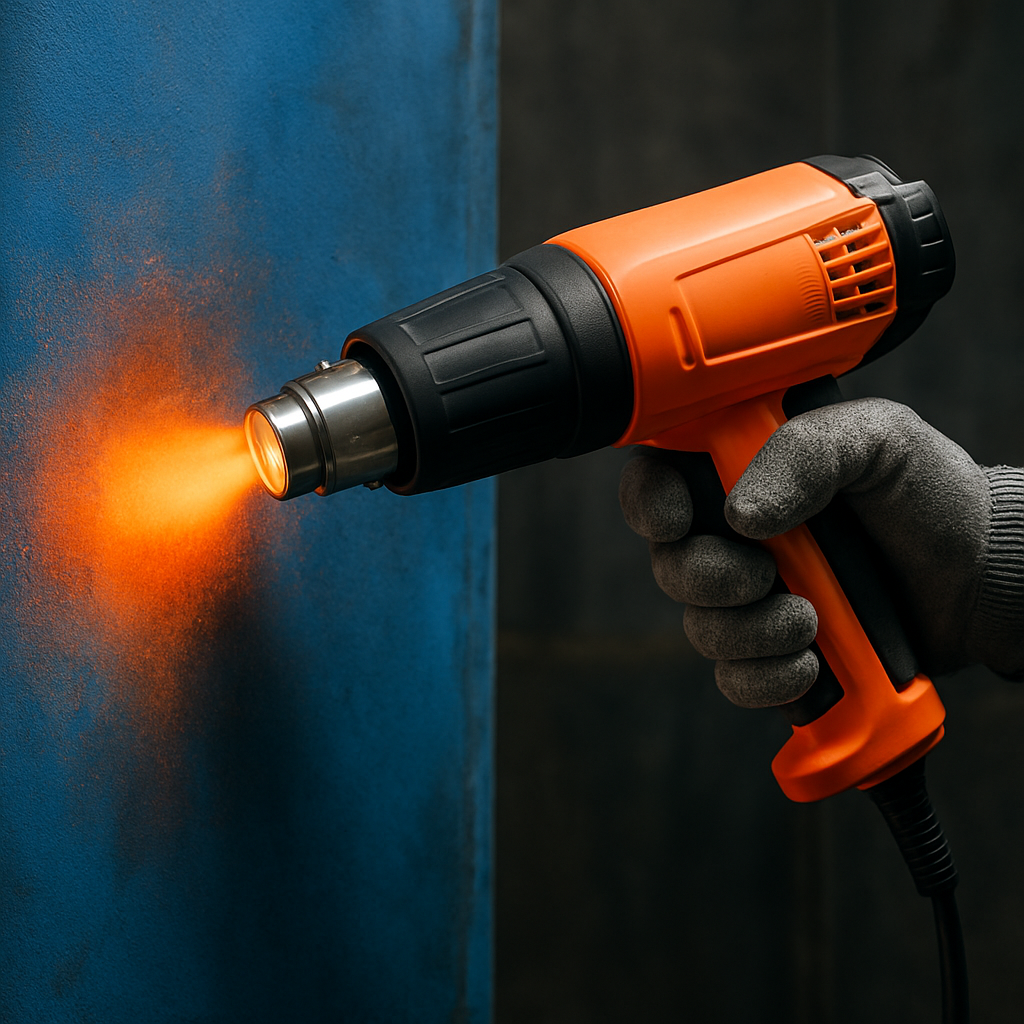
Heat Guns 101: Uses, Safety Tips, and Best Picks for Industrial Work
For procurement and maintenance teams, selecting heat guns for industrial use is not the same as buying a consumer hobby tool; mis-specifying duty cycle, temperature control, or serviceability guarantees extra downtime and safety risk. This guide lays out the specs that matter, immediate safety controls to enforce on site, spare-parts and maintenance practices, and a short set of recommended models with procurement notes and a checklist you can drop into a purchase order. Read on for actionable criteria and model picks that prioritize continuous-use reliability, worker safety, and total cost of ownership.
How industrial heat guns differ from consumer models
Concrete point: Industrial applications treat heat guns as process equipment, not disposable hobby tools. That changes what you buy: the expectation is continuous-duty performance, predictable output under load, and a service pathway when a heating element or fan fails.
Temperature control matters differently. Consumer hot air guns often have crude high/low switches; industrial and professional heat guns provide variable temperature control, digital setpoints, and sometimes closed-loop feedback so you can reproduce the same surface temperature across shifts. The tradeoff is complexity: digital controls improve repeatability but add parts that wear and increase repair costs if the unit is not serviceable.
Airflow, nozzles, and repeatability
Airflow and nozzle systems are where process repeatability is earned. Industrial work rarely uses a one-size-fits-all cone. Swappable nozzles, focused vs broad flows, and measurable CFM at set temperatures let you tune a thermal profile. A high-power thermal blower without compatible nozzles wastes energy and produces inconsistent results.
Practical example: On a steel bridge maintenance shift, crews stripping failed coatings use an industrial heat gun with a reflector nozzle and a stable 500 C output. The nozzle concentrates heat so the operator reaches the paint softening point without overheating surrounding steel; a consumer mini heat gun would take longer and risk local overheating or inconsistent stripping, creating rework and fire hazards.
Power-source trade-offs are practical procurement questions. Corded high-power heat guns deliver sustained wattage for continuous lines; cordless models like M18 systems buy mobility for hoists and remote repairs but require battery-pool management and spare batteries for shift coverage. If you expect multi-hour runs, plan for battery switchover logistics or stick with corded units.
- Serviceability ask: Request replaceable heating element and fan assemblies and clear part numbers so maintenance can swap parts on-site.
- Proof point: Require vendor duty-cycle data and mean time between failure (MTBF) or similar test results on the quote.
- Calibration: Ask whether the unit supports or needs calibration and whether the manufacturer supplies calibration procedures or spare LCD/thermostat modules.
Common mistake: Equating surface temperature readouts on a digital heat gun with actual workpiece temperature. Use an infrared thermometer for verification and specify acceptable delta between setpoint and measured surface temperature.
Next consideration: when you draft specs for procurement, require vendor-provided duty-cycle testing and spare-part lead times on the PO so purchasing decisions reflect real operational readiness, not only sticker wattage or temperature ranges. For vendor selection and supplier diversity options, see procurement solutions and verify safety expectations against OSHA guidance.
Common industrial uses and real-world workflows
Straight talk: heat guns are most valuable when treated as part of a repeatable work process, not a grab-and-go tool. A reliable workflow ties the tool, nozzle, PPE, verification instrument, and spare parts into the job card so output and safety are consistent across teams and shifts.
Workflow pattern: set the thermal target, choose the nozzle and airflow profile, run timed passes, and verify with an infrared thermometer or contact probe. Temperature alone rarely guarantees success; nozzle geometry and dwell time determine whether paint softens, shrink film flows, or a thermoplastic bends without scorching.
Practical tradeoff: high-power industrial heat guns and thermal blowers speed throughput on packaging and large-scale paint removal but increase fume volume and energy draw. That means you must budget for local exhaust, more frequent element replacements, and larger spare-part inventories versus using mini heat guns for precise, low-volume tasks.
Concrete example: On a shop floor restoring wooden exterior doors, crews use a variable temperature heat gun with a wide-flare nozzle for even heating, an extraction hood to capture fumes, and an infrared thermometer to confirm surface temps before scraping. The team staggers work so one operator heats while another scrapes; this halves cycle time compared with intermittent single-operator passes and reduces overexposure to fumes.
Three short, repeatable workflows
- Packaging line shrink wrapping: Use a high-power heat gun or thermal blower with broad nozzle and conveyor hood; set temperature to the lowest effective setpoint, run continuous duty-rated units, and schedule element swaps during planned line pauses.
- Electrical harness work: Choose a digital heat gun with low-temperature range and ESD-safe nozzles; clamp fixtures, use timed cycles, and verify shrink with a handheld thermometer — mobility matters, so a cordless heat gun can be justified if battery logistics are resolved.
- Plastic forming and repair: For thermoforming small panels, use a professional heat gun with focused nozzles and variable airflow; perform incremental heating and allow parts to cool on jigs to retain shape and avoid warp.
What people get wrong: procurement teams often chase the highest max temperature on spec sheets and ignore duty cycle and nozzle ecosystems. In practice, a lower-temperature, serviceable unit with a matched nozzle kit and documented MTBF will deliver fewer surprises and lower total cost of ownership.
Final consideration: when you write the work order or purchase spec, name the workflow you intend the heat gun to support (for example shrink-wrapping pallets versus electronics rework) and require vendors to confirm nozzle compatibility and spare-part lead times. For procurement help and HUBZone supplier options, see procurement solutions and check OSHA guidance on heat controls at OSHA Heat.
Key specifications buyers must require
Start with testable metrics, not brand copy. Put measurable acceptance criteria into the purchase order so vendors cannot hide behind marketing terms like high-power or professional. Require vendor data sheets, spare-part lists with part numbers, and a short on-delivery acceptance test that your maintenance techs can run with an infrared thermometer and a stopwatch. For procurement support and supplier options consider procurement solutions and verify safety controls against OSHA guidance.
| Specification | What to require on the PO | Acceptance test (on delivery) |
|---|---|---|
| Temperature range & stability | State required low and high setpoints and accuracy; e.g., 100 C to 600 C and stability ±5 C at common setpoints | Run at three setpoints for 30 minutes each; verify surface temps with an IR thermometer and note drift |
| Airflow and nozzle ecosystem | List required nozzle types and CFM or velocity where applicable; demand interchangeability and part numbers | Attach each nozzle and measure concentrated vs broad spread; check mounting fit and heat pattern |
| Power, duty cycle and runtime | Specify continuous duty or explicit on/off cycles and expected service hours per shift | Run unit to the declared duty window and confirm temperature and fan stability without cooldown faults |
| Serviceability & spares | Require replaceable heating elements, fan modules, and explicit lead times for spare parts | Confirm element is user-replaceable and that vendor provides part numbers and a repair contact |
| Certifications & safety features | Ask for ESD-safe options if used in electronics; list required IP rating and thermal cutoff features | Check for ESD marking, inspect thermal cutoff presence, and request a certificate copy |
| Cordless specifics | State battery platform, minimum runtime per battery, and required spare-battery count per tool | Charge a battery to operational level and confirm runtime against vendor claim in realistic cycles |
Procurement red flags to watch for. Avoid tools sold as non-serviceable sealed units if you expect heavy use; they lower capex but raise downtime and replacement frequency. Warranties that exclude wear items like heating elements are common — insist on clarity about consumables and lead times. Also be skeptical of single-line claims like high wattage without duty-cycle data.
Concrete example: A packaging line buyer specified a continuous-duty heat gun with a broad-flare nozzle and a spare-element kit on the initial PO. On delivery the tech ran the vendor-specified acceptance test: 20 minutes at the line setpoint, nozzle fit check, and an IR reading across three points of the shrink film. The unit passed if surface temps stayed within the ±5 C band and the nozzle remained secure.
Judgment call that matters. Digital and closed-loop controls are worth the extra procurement scrutiny — they reduce rework when process repeatability matters. But they also add electronic failure modes and replacement costs. If your operation values uptime over lowest purchase price, require user-replaceable control modules or an authorized repair SLA in the contract.
Safety protocols every site must enforce
Clear rule first: Treat heat guns as controlled hot work equipment, not a casual hand tool. Every use must map to a documented control set that matches the task hazard: ventilation, fume testing, fire controls, PPE, and a permit or clearance tied to the specific unit and nozzle in use.
Layered control framework
Engineering controls over PPE. Prioritize local exhaust ventilation and mobile fume capture for coating removal and adhesive work. Respirators are a stopgap and must not be the primary control where capture is feasible. The tradeoff is cost and footprint: extraction systems reduce long term exposure and cleanup but require maintenance and space planning.
- Permits and risk matrix: Require a hot-tool permit for any work above a low-temperature threshold you set. The permit should list the heat gun model, duty-cycle constraints, nozzle type, and required controls.
- Air monitoring and documentation: For paint or adhesive removal run pre and post task air checks. Log results and keep them with the job card for compliance and trend analysis.
- Fire controls and fire watch: Assign a trained fire watch whenever work is done near combustibles. Keep Class B and C extinguishers staged and test response time during drills.
- Tool-specific controls: Tag tools out while cooling, verify thermal cutoffs monthly, and require IR verification of surface temperature if a digital heat gun is used as the temperature authority.
- Training and competency: Require hands-on training that covers nozzle selection, dwell time, fume hazards, and an equipment acceptance test using an IR thermometer.
Practical tradeoff to plan for. Cordless units improve access but complicate controls: battery swaps during a hot job create opportunities for improper breaks in procedure. If mobility is needed, include battery pool management and formal handover steps in the permit.
Concrete example: For lead paint stripping on a maintenance outage, set up a negative-pressure enclosure with a portable fume extractor, use a high-flow industrial heat gun with a reflector nozzle, fit operators with NIOSH-approved respirators selected from air sampling results, assign a dedicated fire watch, and bag waste as hazardous material for disposal. Record air sample results and the tool serial number on the job permit for future audits.
What teams get wrong. Many sites rely on the heat gun built-in thermostat as sole verification. In practice LCD readouts drift and can be wrong under load. Require a cross-check with an infrared thermometer during acceptance and periodic calibration records in the equipment file.
Next consideration: Put these protocol elements into the purchase order and SOP for any heat gun procurement so vendors confirm compatibility with your LEV and supply spare elements and nozzle part numbers before the tool arrives. For site-level guidance see OSHA Heat and NIOSH Heat and stock appropriate PPE from your safety equipment supplier.
Maintenance, spare parts, and lifecycle management
Direct point: uptime for industrial heat guns is driven more by spare-part strategy and repair pathways than by initial price. Plan maintenance and parts around actual duty hours and MTTR goals, not best-case manufacturer specs.
Four-stage lifecycle framework
Build a simple lifecycle that your procurement and maintenance teams can follow. The choice between stocking parts on-site or buying an SLA with guaranteed turnarounds is a tradeoff: stocking reduces downtime but increases inventory cost and obsolescence risk; SLAs shift cost to service fees and require trust in vendor lead times.
- Procure for serviceability: Specify replaceable heating elements, fan modules, and nozzle part numbers on the PO so spares are identifiable and swappable without a shop-floor visit.
- Baseline and tag: On delivery run the vendor acceptance tests, tag each unit with serial, record initial run-hours, and attach the spare-part kit to the tool asset entry.
- Preventive cadence: Define inspection intervals tied to hours-in-service (see rule-of-thumb below). Use a simple log: date, hours, element condition, nozzle wear, and any thermal cutoff trips.
- End-of-life policy: Set retirement triggers (e.g., >3 element replacements in 12 months or persistent thermostat drift) and recycling/disposal steps for heating coils and batteries.
Concrete example: On a 24/7 shrink-wrap line a heating element failed mid-shift. The line had two on-site spare elements and a standing repair SLA with 48-hour replacement delivery. Operators swapped the element in 12 minutes, resumed production, logged the incident against the tool serial, and inventory automatically triggered a reorder through the vendor portal. That spare-part and SLA mix kept the line running while avoiding expensive overnight freight.
| Critical part | Rule-of-thumb stocking | Procurement action |
|---|---|---|
| Heating element | 2 per continuous-duty unit; 1 per intermittent unit | Include part numbers on initial PO and price-breaks for bulk spares |
| Nozzle kit | 1 kit per 3 tools or per workcell | Require interchangeable mounting and provide spare-kit SKU |
| Fan / motor assembly | 1 per 5 tools (longer lead item) | Negotiate repair turnaround or loaner unit clause |
| Battery pack (cordless) | 1.5x batteries per operator per shift | Specify battery platform and minimum runtime in PO |
| Thermostat / control module | 1 per 10 units (electronic failure mode) | Confirm replaceability and vendor calibration support |
Inspect heating elements after roughly 80-120 operational hours under heavy loads; if you run continuous shifts use hour-meter data to trigger proactive swaps rather than waiting for visible failure.
Best picks for industrial work and procurement notes
Direct recommendation: Buy heat guns as equipment matched to the process, not as generic hand tools. Specify the model, nozzle kit, spare-part SKUs, and a vendor acceptance test on the PO so the tool arrives ready for your workflow and shift profile.
Shortlist: models that work in real industrial workflows
- Milwaukee M18 Fuel 2688-20 — cordless mobility for field repairs: Strong for remote maintenance where access to power is limited. Strengths: integrates with M18 battery fleet and is balanced for one-handed use. Limitation: runtime drops under continuous high-load heating; procurement note — require minimum runtime per battery on the quote and budget 1.5x batteries per operator per shift.
- DEWALT 20V MAX DCE530B — platform convenience for shops tied to 20V systems: Good middle ground when your fleet already uses DEWALT batteries; tool-free nozzle swaps reduce downtime. Weakness: not intended for continuous multi-hour production use. Procurement note — confirm duty-cycle guidance and nozzle part numbers on delivery paperwork.
- Steinel HL 2010 E — industrial, closed-loop temperature control: Best where repeatable surface temps and continuous runs matter (composite repairs, paint stripping). Strengths: digital setpoints and serviceable elements. Tradeoff: higher capex and requires spare heating elements on-site. Procurement note — request element part numbers, MTBF data, and authorized repair center list.
- Makita HG6031VK — precision workshop tool for plastic forming: Ergonomic and stable for thermoforming and woodworking tasks. Limitation: optimized for bench use rather than conveyor lines. Procurement note — insist vendor includes nozzle compatibility statement and warranty terms for workshop use.
- Wagner HT1000 series — cost-effective for packaging and shrink-wrap lines: Broad airflow and easy nozzle swaps make it a pragmatic choice for high-throughput shrink applications. Weakness: not suitable for ESD-sensitive electronics. Procurement note — pair with local extraction and schedule element swaps during planned line stops.
If you must choose one spec that prevents the most operational headaches, require replaceable heating elements with part numbers on the PO. Non-serviceable sealed units look cheap now but cost more in downtime.
Practical example: A facilities team chose the Steinel HL 2010 E for scheduled structural steel paint removal. They ordered two spare elements and an authorized repair SLA on the initial PO; when an element began to show drift after 90 hours of heavy use, maintenance swapped it in 15 minutes and logged the event — the line stayed on schedule and the SLA covered the longer repair.
Next consideration: Before issuing the PO run the vendor acceptance test with your maintenance tech using an IR thermometer and the nozzle types you need, and work with a HUBZone supplier like Hubzone Depot for consolidated invoicing, spare-part sourcing, and supplier-diversity documentation — see procurement solutions for options.
Procurement checklist and supplier considerations for buyers
Start with outcomes, not models. Specify the work the heat guns must perform, the acceptable downtime window, and who will maintain them. That single decision drives whether you buy serviceable industrial units, cordless tools with battery pools, or inexpensive disposable models for occasional tasks.
Supplier evaluation scorecard
Quick operational rubric: use a simple weighted scorecard during vendor selection so procurement decisions reflect operations, not marketing. Weights below are a template; adjust to your priorities.
- Duty-cycle credibility (30%): vendor must supply tested runtime curves and on/off recommendations under load
- Spare-part availability (20%): lead times for heating elements, fan assemblies, and nozzles; part numbers provided
- Repair network and SLA (15%): authorized centers, turnaround times, and loaner-unit options
- Warranty and consumables policy (10%): clarity on wear-item coverage and replacement pricing
- Mobility logistics (10%): battery platform, minimum runtime, and recommended spare-battery counts for cordless offerings
- Compliance & documentation (10%): ESD declarations, IP ratings, certificates, and job-card compatibility
- Supplier diversity / HUBZone status (5%): verified certifications and ability to supply required documentation for contracting
Practical tradeoff: prioritizing low purchase price often pushes you toward sealed, non-serviceable units. That saves capex but increases MTTR and spare-part spend. If downtime costs more than a spare element, insist on replaceable parts and a repair SLA.
Concrete example: a municipal water plant needed heat guns for pipe thawing across remote sites. They picked a corded industrial hot air gun with replaceable elements, negotiated a 48-hour spare-element delivery window, and required the supplier to provide one on-site startup and two operator training sessions. When an element failed in winter, crews performed the swap in 20 minutes and avoided emergency rental fees.
Logistics, lifecycle and supplier commitments
- Onboarding deliverables: delivery must include nozzle kit, two spare elements (or battery extras for cordless), an infrared thermometer recommendation, and a one-page SOP for your job types
- Reverse logistics: require a prepaid RMA process for failed parts and a loaner-unit clause when lead times exceed your MTTR threshold
- Training and documentation: vendor must supply at least one hands-on session and digital manuals; insist on calibration instructions for LCD/temperature controls
- Data and traceability: capture serial numbers, initial run-hours, and maintenance logs in your asset system at handover
Judgment call on HUBZone suppliers. Working with a HUBZone partner can simplify supplier-diversity reporting and consolidate invoicing, but do not accept status alone as proof of capability. Require the same technical evidence from HUBZone vendors as you do from incumbent national brands — MTBF data, spare-part SKUs, and repair SLA commitments — and use procurement solutions to document compliance.
Next consideration: before issuing a blanket PO, run a short pilot: acceptance test the unit on an actual job, time a serviceable element swap, and verify your hot-work controls integrate with the tool. That single pilot finds mismatches faster than negotiations and prevents costly retrofits later. For safety references, consult OSHA Heat.
Three short buyer scenarios with recommended approaches
Concrete assertion: Most industrial purchases fall into three practical buyer types — mobile field crews, ESD-sensitive assembly shops, and compliance-driven government contracts — and each needs a different procurement pattern, not the same generic heat guns.
Scenario 1 — Field maintenance and remote repairs
Recommended approach: Choose a cordless, high-power hot air gun that integrates with your battery fleet and treat batteries as consumables. Specify minimum runtime under load, require spare-battery provisioning on the PO, and include fast-change nozzle compatibility so crews can adapt on site.
Tradeoff to accept: Cordless brings accessibility but increases logistics. If you cannot guarantee charged spares and a battery rotation plan, a corded industrial heat gun will deliver predictable continuous runtime and simpler acceptance testing.
Concrete example: A district utilities crew adopted a cordless M18 heat gun for pole-top repairs. They formalized a handover step: a charged battery always accompanies an active tool and a simple bench acceptance (30 seconds at high setting plus IR verification) is performed at shift start; unscheduled downtime due to dead batteries dropped significantly.
Scenario 2 — Electronics assembly and heat-shrink work
Recommended approach: Buy a low-temperature, digital heat gun with ESD-safe nozzles and an adjustable heat curve. Require vendor ESD declarations and part numbers for nozzle materials so maintenance can replace like-for-like without introducing charge risks.
Practical limitation: High airflow industrial blowers damage small components and create particulate movement. For harnessing and desoldering, prefer focused airflow and timed cycles over raw maximum temperature or CFM.
Concrete example: On a contract run of control panels, the assembler switched to a digital heat gun with closed-loop setpoints and ESD accessories. Operators followed a two-pass timed cycle and used an IR spot-check; rework from overheated shrink tubing fell by half over the pilot week.
Scenario 3 — Government contracting with supplier-diversity requirements
Recommended approach: Work with a HUBZone supplier but demand the same technical evidence as any incumbent: duty-cycle data, spare-part SKUs, repair SLA, and a loaner-unit clause for critical tools. Put spares on the initial PO and require the vendor to upload certification documents and acceptance-test results to your procurement portal.
Judgment call: Supplier-diversity status is valuable for compliance, but it does not substitute for operational guarantees. Always bind performance items to payment milestones and keep repair turnaround times measurable in the contract.
Concrete example: A government contractor purchased a production heat gun through a HUBZone partner and included two replacement heating elements and a 72-hour repair SLA in the contract. During an audit the documentation showed serial-tracked acceptance tests and spare usage logs, closing the compliance loop without operational interruption.
Quick enforcement point: Make the acceptance test non-negotiable at delivery — if the unit cannot hold setpoint for the vendor-declared duty cycle, return it or negotiate an on-the-spot remedy.
Takeaway: Match the tool to the workflow and lock operational guarantees into the contract — specify duty-cycle proof, spare SKUs, and an acceptance test so the heat gun you receive actually performs in your environment. For procurement support, see procurement solutions and confirm site safety plans against OSHA Heat.
{
“@context”: “https://schema.org”,
“@type”: “BlogPosting”,
“mainEntityOfPage”: {
“@type”: “WebPage”,
“@id”: “https://shop.hubzonedepot.com/heat-guns-uses-safety-tips-best-picks”
},
“headline”: “Heat Guns 101: Top Uses, Safety Tips & Best Industrial Picks”,
“description”: “Discover essential uses, safety tips, and top picks for industrial heat guns. Enhance your toolkit with expert advice from HubZone Depot.”,
“image”: “https://example.com/path-to-image.jpg”,
“author”: {
“@type”: “Person”,
“name”: “Elisa”
},
“publisher”: {
“@type”: “Organization”,
“name”: “Hubzone Depot Shop”,
“logo”: {
“@type”: “ImageObject”,
“url”: “https://example.com/path-to-logo.jpg”
}
},
“datePublished”: “2023-10-15”,
“dateModified”: “2023-10-15”
}article blockquote,article ol li,article p,article ul li{font-family:inherit;font-size:18px}.featuredimage{height:300px;overflow:hidden;position:relative;margin-top:20px;margin-bottom:20px}.featuredimage img{width:100%;height:100%;top:50%;left:50%;object-fit:cover;position:absolute;transform:translate(-50%,-50%)}article p{line-height:30px}article ol li,article ul li{line-height:30px;margin-bottom:15px}article blockquote{border-left:4px solid #ccc;font-style:italic;background-color:#f8f9fa;padding:20px;border-radius:5px;margin:15px 10px}article div.info-box{background-color:#fff9db;padding:20px;border-radius:5px;margin:15px 0;border:1px solid #efe496}article table{margin:15px 0;padding:10px;border:1px solid #ccc}article div.info-box p{margin-bottom:0;margin-top:0}article span.highlight{background-color:#f8f9fb;padding:2px 5px;border-radius:5px}article div.info-box span.highlight{background:0 0!important;padding:0;border-radius:0}article img{max-width:100%;margin:20px 0}